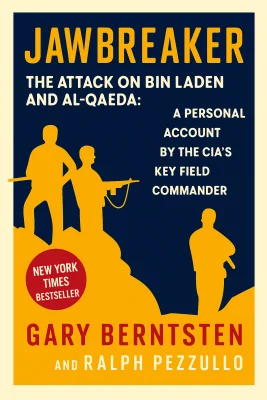
Jawbreaker
The Attack on Bin Laden and Al-Qaeda: A Personal Account by the CIA's Key Field Commander
Categories
Nonfiction, Biography, History, Audiobook, Military Fiction, Military History, War, Terrorism, Espionage, Middle East
Content Type
Book
Binding
Paperback
Year
2006
Publisher
Crown
Language
English
ASIN
0307351068
ISBN
0307351068
ISBN13
9780307351067
File Download
PDF | EPUB
Jawbreaker Plot Summary
Introduction
# From Troublemaker to Warrior: The Gary Berntsen Story In the pre-dawn darkness of Afghanistan's treacherous mountains, a former Long Island troublemaker found himself leading one of the CIA's most critical counterterrorism operations in modern history. Gary Berntsen's journey from high school dropout with a dismal 65.6 grade point average to commanding Operation Jawbreaker represents one of the most extraordinary personal transformations in American intelligence. His story unfolds against the backdrop of September 11th's aftermath, where a small team of operatives would reshape the global war on terror through sheer determination and strategic brilliance. Berntsen's evolution from beer-drinking teenager who lost friends to violence and crime into a seasoned intelligence warrior hunting the world's most dangerous terrorists reveals the profound power of personal reinvention. Through his experiences, readers witness the gritty reality of modern espionage, where success depends not on Hollywood gadgets but on cultural understanding, language skills, and the ability to forge unlikely alliances in deadly political landscapes. His journey illuminates the making of a warrior mindset, the complexities of international counterterrorism, and the extraordinary sacrifices required of those who stand guard against threats most Americans never see.
Chapter 1: Transformation: From Long Island Rebel to CIA Operative
Gary Berntsen's early life in Smithtown, Long Island, seemed destined for tragedy rather than triumph. As a teenager in the mid-1970s, he embodied suburban rebellion at its worst, drinking beer by the six-pack, engaging in street fights, and causing trouble wherever he went. His academic performance matched his behavior, graduating near the bottom of his class with a catastrophic 65.6 grade point average. The night before his sixteenth birthday, while working at a local restaurant, his friends crashed a stolen Cadillac into a tree at seventy miles per hour, killing his best friend Ben and sending another to prison for hijacking trucks. The pivotal moment came on January 30, 1976, during his first day of Air Force basic training at Lackland Air Force Base, Texas. Standing in formation with a hangover, Berntsen experienced what he described as a consciousness-altering revelation where a veil lifted from his eyes. For the first time, he saw his life with brutal clarity, recognizing how he had squandered opportunities and failed those around him. This moment of awakening sparked an immediate and total transformation that would define the rest of his life. The young man who had been functionally illiterate in high school became an insatiable learner, stopping drinking entirely and enrolling in college courses while serving as a crash firefighter in South Korea. His thirst for knowledge extended beyond academics to physical challenges, as he took up skydiving and intensive fitness training. He devoured biographies of great leaders like Winston Churchill, Teddy Roosevelt, and Golda Meir, studying their methods and mindsets with the intensity of someone making up for lost time. This period of radical self-improvement laid the foundation for his eventual recruitment into the CIA's Directorate of Operations in 1984. The agency valued his military experience, language studies in Russian, and proven ability to transform himself under pressure. His entry into the CIA marked the completion of his remarkable metamorphosis from street thug to professional intelligence officer, setting the stage for a career that would take him to the world's most dangerous places in pursuit of America's enemies.
Chapter 2: East Africa Bombings: First Encounters with Al-Qaeda
The morning of August 7, 1998, shattered any illusions Berntsen might have harbored about the nature of his enemies when simultaneous bombings devastated American embassies in Nairobi, Kenya, and Dar es Salaam, Tanzania. These coordinated attacks marked al-Qaeda's emergence as a global threat capable of striking American interests across continents with devastating precision. Within hours of receiving the 4:23 AM phone call alerting him to the attacks, Berntsen was assembling an Emergency Deployment Team to hunt down the perpetrators, his wife's immediate question about packing reflecting the reality of life married to a counterterrorism operative. Leading the investigation in Tanzania, Berntsen demonstrated the methodical approach that would define his career. Rather than relying solely on forensic evidence from blast sites, he immediately began building networks of local contacts and sources. Working with a mysterious figure known only as Nelson, described as an African version of Harvey Keitel's character in Pulp Fiction, Berntsen established the intelligence infrastructure necessary to track the bombers. His insistence on casting wide nets for suspects, examining airline manifests, and identifying potential escape routes proved prescient when key arrests followed. The investigation revealed al-Qaeda's sophisticated operational methods, including their exploitation of charitable organizations as cover for terrorist activities. The arrest of Wadih El Hage, bin Laden's personal secretary operating under the cover of "Help Africa People," exposed how terrorists manipulated humanitarian work to transfer money, build bombs, and move personnel. This discovery would later inform Berntsen's approach to identifying terrorist networks in Afghanistan, where he learned to look beyond obvious military targets to the NGOs and charitable fronts that sustained terrorist operations. Perhaps most significantly, the East Africa bombings investigation marked Berntsen's first encounter with the bureaucratic obstacles that would plague American counterterrorism efforts. Despite successful captures of multiple bombers and clear evidence of al-Qaeda's responsibility, the Clinton administration's response was limited to ineffective cruise missile strikes that missed their primary targets. This experience taught Berntsen that technical intelligence and successful investigations meant little without the political will to act decisively against terrorist sanctuaries and state sponsors.
Chapter 3: Leading Jawbreaker: Command in Afghanistan's Panshir Valley
When Berntsen assumed command of the Jawbreaker team in Afghanistan's Panshir Valley in November 2001, he inherited a mission that would test every skill developed over seventeen years in the CIA's Directorate of Operations. Unlike his predecessor Gary Schroen, who focused on building relationships and gathering intelligence, Berntsen arrived with explicit orders from CTC Chief Cofer Black to "make war" against al-Qaeda and the Taliban. Black's warning that Berntsen would "probably lose at least one third of your men" underscored the deadly nature of the mission ahead. The Panshir Valley, a natural fortress carved by centuries of erosion, had never been conquered by foreign invaders, including the Soviet Union during its decade-long occupation. Here, among remnants of destroyed tanks and graves of fallen warriors, Berntsen would build the foundation for America's campaign against the Taliban and al-Qaeda. His leadership style reflected his transformation from street fighter to strategic thinker, delegating critical responsibilities while maintaining overall strategic control. Berntsen assigned his deputy George to the front lines with Special Forces, positioned Arabic speaker Amir to handle the treacherous warlord Abdul Rasul Sayyaf, and tasked Davis with hunting high-value targets including bin Laden and Ayman al-Zawahiri. This distribution of responsibilities allowed Berntsen to focus on broader coordination between CIA teams, Northern Alliance commanders, and CENTCOM planners. The complexity of managing multiple battlefields while maintaining relationships with fractious Afghan allies tested his diplomatic and military skills simultaneously. His confrontation with General Fahim during meetings with General Tommy Franks revealed his willingness to challenge Afghan leaders when they attempted to manipulate American support for their own political ends. When Fahim tried negotiating additional payments for offensive operations, Berntsen's blunt response in Farsi, telling him not to "negotiate like this," helped establish clear boundaries for the relationship. His insistence on sharing all intelligence with Special Forces counterparts represented a revolutionary approach to inter-agency cooperation that proved essential to rapid success in northern Afghanistan.
Chapter 4: Building Coalitions: Navigating Afghan Tribal Politics
The challenge of forging an effective coalition from Afghanistan's fractured tribal landscape required Berntsen to master the intricate art of Afghan politics, where loyalty was temporary, betrayal common, and survival depended on reading constantly shifting power balances. The Northern Alliance was less a unified force than a loose confederation of Tajiks, Uzbeks, Hazaras, and Pushtuns, each with their own agendas and historical grievances. Berntsen's success in maintaining this fragile coalition while pursuing American objectives demonstrated his evolution from tactical operator to strategic leader. His relationship with Engineer Aref, the Northern Alliance intelligence chief, exemplified the delicate balance required to work with Afghan partners. When Aref attempted to blame translator errors for General Fahim's poor performance during negotiations with General Franks, Berntsen saw through the deception but chose not to confront it directly. Instead, he used the incident to establish clear expectations for future cooperation while maintaining the working relationship essential to intelligence sharing and operational coordination. The complexity of Afghan tribal dynamics became apparent in Berntsen's handling of various warlords and commanders. His decision to engage with Abdul Rasul Sayyaf, despite the warlord's history with bin Laden and role in Massoud's assassination, reflected the pragmatic realities of Afghan politics. Rather than rejecting Sayyaf outright, Berntsen assigned Arab-American team member Amir to "play him out," gathering intelligence while avoiding commitments that might strengthen Sayyaf's position in post-Taliban Afghanistan. Berntsen's management of financial resources became a crucial tool in maintaining coalition unity and effectiveness. His decision to distribute cash directly to field commanders rather than channeling it through General Fahim prevented the Northern Alliance leader from using American money to reward political allies at the expense of military effectiveness. The successful purchase of Taliban commander Mohammad's surrender, including his thousand-man force, demonstrated how financial incentives could achieve strategic objectives more efficiently than military force alone.
Chapter 5: Tactical Leadership: Coordinating Airstrikes and Ground Operations
Berntsen's mastery of modern warfare's technical complexities proved essential to the rapid collapse of Taliban resistance across northern Afghanistan. His ability to coordinate between CIA intelligence, Northern Alliance ground forces, and American airpower created a synergy that overwhelmed enemies who had successfully resisted conventional military approaches for decades. The integration of human intelligence, signals intercepts, and precision-guided munitions represented a new model of warfare that would influence military operations for years to come. The challenge of targeting in a fluid battlefield environment required Berntsen to develop innovative solutions bridging the gap between Afghan capabilities and American technology. His request for Dari-language GPS devices allowed Northern Alliance operatives to mark precise coordinates of enemy positions deep behind Taliban lines. These modified GPS units enabled Afghan sources to infiltrate Kabul, identify Taliban facilities in unmarked buildings, and provide targeting data that resulted in devastating precision strikes against enemy command centers. Berntsen's coordination with R.J.'s Team Alpha during the battle for Mazar-e Sharif demonstrated his ability to manage multiple simultaneous operations across vast distances. When Taliban forces began retreating south from the fallen city, threatening to reinforce positions on the Shomali Plains, Berntsen immediately contacted CENTCOM to redirect airpower against the fleeing columns. His quick identification of mountain passes where retreating forces could be trapped and destroyed prevented significant reinforcement of Taliban positions around Kabul. The technical complexity of coordinating close air support while managing multiple intelligence sources and maintaining communications with headquarters required Berntsen to function as both battlefield commander and intelligence analyst. His late-night coordination of a Predator strike against Taliban intelligence chief Mullah Akhund showcased this integration of capabilities. Working with Air Force combat controller Reno, tech specialist A.C., and Afghan source Hafiz, Berntsen guided the unmanned aircraft to its target using real-time intelligence and satellite imagery, demonstrating the deadly effectiveness of properly coordinated intelligence and military operations.
Chapter 6: The Hunt for Bin Laden: Tora Bora and Missed Opportunities
The intelligence pointing to Osama bin Laden's presence in the Tora Bora mountains represented the culmination of months of painstaking work and the best opportunity to capture or kill the world's most wanted terrorist. Berntsen deployed his most experienced operatives to the rugged mountain complex, where they would direct devastating airstrikes against al-Qaeda positions while coordinating with Afghan allies on the ground. The stakes could not have been higher, with the eyes of the world focused on this remote corner of Afghanistan where justice might finally be served. The terrain of Tora Bora presented extraordinary challenges, with its network of caves and mountain passes providing numerous escape routes into Pakistan. Berntsen's team, working with Special Forces soldiers, established observation posts on strategic peaks to direct precision bombing campaigns against al-Qaeda positions. The effectiveness of these strikes was remarkable, with hundreds of terrorists eliminated in a matter of days. However, the rugged geography and limited ground forces made it impossible to seal all potential escape routes. Berntsen's repeated requests for additional ground troops, particularly U.S. Army Rangers, to block escape routes into Pakistan were denied by military commanders who preferred to rely on Afghan allies and Pakistani border forces. This decision would prove to be one of the most controversial aspects of the entire Afghanistan campaign, as it allowed bin Laden and key al-Qaeda leaders to escape when they might otherwise have been captured or killed. The frustration of having the enemy within grasp only to see them slip away haunted Berntsen and his team. The reliability of Afghan allies became a critical factor in the battle's outcome. While some commanders like Babrak proved trustworthy and effective, others appeared more interested in financial gain than military victory. Reports of Afghan forces allowing al-Qaeda fighters to escape in exchange for bribes highlighted the challenges of conducting warfare through proxy forces whose motivations did not always align with American objectives. Despite these setbacks, the Battle of Tora Bora succeeded in destroying al-Qaeda's primary sanctuary in Afghanistan and eliminating hundreds of trained terrorists, though the escape of bin Laden meant the war would continue far beyond these mountains.
Summary
Gary Berntsen's transformation from Long Island troublemaker to one of America's most effective counterterrorism operatives demonstrates that character is not destiny, but rather the product of conscious choices made in moments of crisis and clarity. His journey from the bottom of his high school class to leading critical operations against the world's most dangerous terrorists proves that personal reinvention is possible for those willing to confront their failures honestly and commit themselves completely to a higher purpose. The lessons from Berntsen's career extend beyond the specialized world of intelligence operations to anyone facing seemingly insurmountable challenges or seeking to make meaningful contributions in complex environments. His emphasis on cultural understanding, language skills, and building trust with local partners offers a model for effective leadership in our increasingly interconnected world. His willingness to take calculated risks, accept responsibility for difficult decisions, and prioritize mission success over personal advancement provides a template for principled leadership in high-stakes situations where conventional approaches prove inadequate.
Best Quote
Review Summary
Strengths: The review highlights Gary Berntsen's insightful analysis of the US war in Afghanistan, particularly his critique of the CIA's political leadership and military decisions. Berntsen's narrative is praised for its detailed recounting of events, his understanding of regional dynamics, and his broader perspective on combating terrorism. His bravery and achievements are acknowledged, with recognition of his CIA intelligence star award. Weaknesses: The review notes a perceived bias in Berntsen's criticism, particularly his reluctance to critique the Bush administration. The narrative is described as somewhat long-winded and overly detailed, with some readers finding his style overly macho and focused on finger-pointing. Overall: The book is considered enlightening and comprehensive, offering a detailed account of the conflict in Afghanistan. While some readers may find it overly detailed or biased, it is recommended for those interested in military and intelligence operations.
About Author

Gary Berntsen
Berntsen reflects on the intricate dynamics of counterterrorism through his direct and operational writing style, providing a no-nonsense perspective on intelligence work. His books, including the notable "Jawbreaker: The Attack on Bin Laden and Al Qaeda", delve into the complexities and challenges faced by intelligence operatives in high-stakes environments. By combining personal experiences with policy analysis, Berntsen offers readers a deeper understanding of the realities of intelligence operations and the bureaucratic hurdles encountered by agents. His ability to weave personal anecdotes with broader strategic insights positions his work as a valuable resource for those interested in national security.\n\nHis fiction, such as "The Walk-In: A Novel", explores themes of espionage and the moral dilemmas faced by intelligence officers, reflecting his extensive career in the CIA's Clandestine Service. Berntsen's career spanned over two decades, during which he played pivotal roles in counterterrorism efforts, notably leading the CIA’s "Jawbreaker" team in Afghanistan post-9/11. Meanwhile, his non-fiction work, "Human Intelligence, Counterterrorism, and National Leadership", provides practical advice on leadership in counterterrorism, benefiting readers seeking insights into the strategic facets of intelligence work.\n\nWidely recognized as one of the CIA's most decorated officers, Berntsen has received numerous accolades, including the Distinguished Intelligence Medal and the Intelligence Star. His contributions extend beyond his career, as he continues to share his expertise as an author and commentator on national security issues. This bio provides a glimpse into the life of a man whose work continues to impact the field of intelligence and beyond, offering invaluable perspectives for those interested in the intricacies of global security.
Read moreDownload PDF & EPUB
To save this Black List summary for later, download the free PDF and EPUB. You can print it out, or read offline at your convenience.
Jawbreaker
by Gary Berntsen
