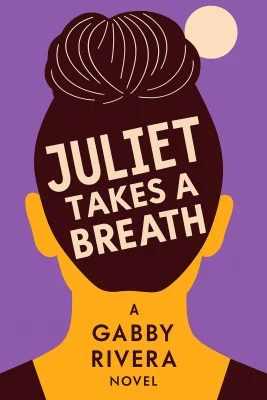
Juliet Takes a Breath
Categories
Fiction, Feminism, Romance, Young Adult, Contemporary, Coming Of Age, LGBT, Queer, Lesbian, Latinx
Content Type
Book
Binding
Kindle Edition
Year
2016
Publisher
Riverdale Avenue Books
Language
English
ASIN
B01ATCAZHQ
ISBN13
9781626012509
File Download
PDF | EPUB
Juliet Takes a Breath Plot Summary
Introduction
The screech of steel against steel pierced the air as the subway train curved around the elevated tracks. Beneath a moonless summer sky, Juliet Milagros Palante clutched her dog-eared copy of "Raging Flower: Empowering Your Pussy by Empowering Your Mind" while enduring another subway delay in the Bronx. With thick curls framing her face and a purple composition notebook in her lap, nineteen-year-old Juliet was hours away from the most important dinner of her life. Tonight, she would come out as a lesbian to her Puerto Rican family before flying across the country to Portland, Oregon, where feminist author Harlowe Brisbane awaited her arrival. The internship was a dream come true—an escape from the cramped Bronx apartment she shared with her parents and little brother, a chance to explore her identity, and an opportunity to learn from the white woman whose book had changed her life. What Juliet couldn't know was that her summer would be a tempest of self-discovery—one that would force her to confront the complexities of race, sexuality, feminism, and family loyalty. The journey ahead would test every certainty she thought she possessed. As she pressed her forehead against the train window, Juliet breathed in the familiar scents of her neighborhood one last time, unaware that when she returned, both she and her understanding of the world would be fundamentally transformed. The path to finding her voice would lead through heartbreak, betrayal, and the bittersweet recognition that freedom comes only when we stop seeking validation from others and claim the power to define ourselves.
Chapter 1: Coming Out and Breaking Away: Leaving the Bronx Behind
The Palante dining room pulsed with the rhythm of family dinner. Juliet sat wedged between her abuela and her little brother Melvin, while her parents held court at the ends of the maple table. Titi Wepa, her aunt and a fierce NYPD officer, regaled them with tales of chasing criminals through the Bronx streets. The scene was familiar—the arroz con maíz steaming on plates, the overlapping voices, the outdoor sounds of the #2 and #5 trains screeching in the distance. "So I see this asshole rob an old lady by Yankee Stadium," Titi Wepa boasted, gesturing with her fork. "I might have tits but I've got brains too. Got him down on the ground and cuffed his ass." The laughter and clinking of glasses washed over Juliet as she picked at her food. The weight of what she needed to say pressed against her chest like a stone. Earlier that day, she'd endured yet another catcall incident at the bodega, where a group of men had cornered her by the canned vegetables. When one suggested she "needed the good D," she'd blurted out she was gay—the first time she'd said it aloud to strangers. "Boys don't know how else to say they like you," Titi Mellie offered, her pink acrylic nails matching her lipstick and halter top. "Like me? No boy on the block is talking about his junk because he likes me as a person," Juliet countered, heart hammering. "Besides, I told him I was a lesbian and he backed off." The table fell silent for a beat before Titi Wepa clapped her hands. "Ah, the dyke-n-dodge trick. I've used that so many times." Her mother frowned. "Why didn't you just tell them you have a boyfriend?" "Why lie? I don't have a boyfriend. I think I'm a lesbian," Juliet said, the words hanging in the air like smoke. No earthquake followed her revelation. No dramatic gasps. Only Titi Wepa joking that if not having a boyfriend made people lesbians, Titi Mellie "would be running her own parade." Laughter bubbled around the table. "Ok, enough of this crazy talk," her mother said, raising her glass. "Tonight Juliet is leaving the Bronx for an amazing internship. Let's toast to her college career." "Stop. Everyone just stop," Juliet pushed her plate away. "I am gay. Gay gay gay. I've been dating Lainie for the past year. This isn't a joke." The silence that followed was deafening. Her mother stared at her from across the table, her voice heavy but not accusatory. "It's this book, isn't it? This book about vaginas has you messed up in the head and confused." "No, it's not Raging Flower. I love Lainie. It's never felt like this with a boy," Juliet said, tears betraying the little strength in her voice. Her mother retreated upstairs without another word. The dinner dissolved around her as family members awkwardly dispersed. Hours later, as Titi Wepa drove her to JFK, Juliet still had not received a hug goodbye from her mother—only a photo slipped under the bedroom door and words through wood: "You'll always be that baby to me, so forgive me if I can't accept what you've said tonight." At the curb, Lil' Melvin pressed a brown paper bag into her chest. "Don't open this until you need to, sister," he said. The airport swallowed Juliet whole as she watched her family drive away, the weight of her mother's closed door still heavy on her heart. The moonless sky offered no guidance as she boarded her flight to Portland, only the promise of escape.
Chapter 2: Culture Shock: Navigating Portland's White Feminist Landscape
Harlowe Brisbane's patchouli-scented embrace at the Portland airport was nothing like Juliet had imagined. With bright red hair and magnetic blue eyes, Harlowe lifted Juliet off the ground in greeting. "Oh Juliet, you're here," she exclaimed. "Sweet girl, your aura smells so fresh." The drive to Harlowe's house in a daisy-painted pink pickup truck opened Juliet to a Portland unlike anything she'd known in the Bronx. No bars on windows. Unlocked doors. The silence of streets without sirens or train rumbles. Harlowe's cypress-shaded house had a chalkboard front step with scribbled quotes about American imperialism. Morning brought Juliet's first glimpse of her internship—a cardboard box full of scraps of paper with women's names, photos, and clippings. "These are clues to the lives of our unknown and underappreciated women," Harlowe explained, lighting incense. "This is the beginning of a masterpiece." Panic rose in Juliet's throat. This disorganized collection was her project? Where was the structure, the clear instructions? Her lung-tightening anxiety was interrupted by the appearance of a naked Asian man in the kitchen window. "Phen, did you ask Juliet if she's okay with your nudity?" Harlowe called. "Juliet, are you okay with my nudity?" Phen asked without changing his humorless expression. "I'm good, yo. Be as naked as you wanna be," Juliet replied, though she'd never seen a flaccid penis before in real life. "You could be naked and free too, Juliet," Phen offered. "You must first let go of your internalized fear of nudity and the societal pressures placed upon women to have perfect figures." That first morning established the pattern of Juliet's disorientation. When Phen asked about her "preferred gender pronouns" and how she "identified," Juliet froze in confusion. "I'm just Juliet," she answered, feeling stupid and small. The words he used weren't in her vocabulary. When he questioned whether she was "even really gay," suggesting she was just "feeling trendy," memories of Puerto Rican kids questioning if she was "Puerto Rican enough" flooded back. Later, exploring downtown Portland with Phen, Juliet discovered Powell's Books, where a life-sized cardboard cutout of Harlowe Brisbane greeted her. "Portland's own Harlowe Brisbane brings her Raging Flower to Powell's Bookstore!" proclaimed the sign. A hundred copies of Raging Flower lined a mahogany table. "Juliet, right now in this town and along the West Coast, Harlowe is the white lady authority on pussy, feminism, healing, and lesbianism," Phen informed her with a smugness that grated on her nerves. The day ended with Phen abandoning Juliet downtown after she declined to attend an "action for union rights" with his friends. "You're not ready for Portland," he declared before walking away, leaving her to find her way back to Harlowe's alone. On the night bus, Juliet noticed something different—instead of dirty white hippies, the bus was populated with brown and black faces, all looking as tired as she felt. A small piece of the Bronx existed in this sad, little night bus, and she found comfort riding it to the end of the line, delaying her return to Harlowe's empty house.
Chapter 3: Research and Heartbreak: Finding Forgotten Women and Losing Love
The heat of summer intensified as Juliet settled into research at the Multnomah Library. From the scrap pile of forgotten women, she'd chosen Lolita Lebrón—a name she liked the sound of but knew nothing about. What she discovered left her shaken: Lebrón had led an armed attack on the U.S. House of Representatives in 1954, shouting "¡Viva Puerto Rico Libre!" as she fired shots in the name of Puerto Rican independence. "I didn't come to kill anyone. I came here to die for Puerto Rico," Lebrón had said upon arrest. How had Juliet never heard of this revolutionary Puerto Rican woman? Why had her parents taught her about Star Trek but never about Lolita Lebrón? The revelation opened questions about whose histories get preserved and whose get erased. At the library, Juliet also met Kira—a tattooed junior librarian with jet-black hair, thick bangs, and green eyes that made Juliet's heart flutter. When Kira invited her to Harlowe's reading at Powell's, then offered a ride home on her vintage Harley, Juliet discovered a spark unlike anything she'd felt with Lainie. Wrapped around Kira's waist, racing through Portland streets, Juliet felt free from self-doubt. That freedom crashed when she returned to Harlowe's to find a package waiting. Inside was a letter from Lainie: "I love you, Juliet, but I haven't been honest with you. I've been seeing Sarah and I'm in love. She's the one I want my parents to meet as my girlfriend because I think she's my forever person." The betrayal crushed Juliet. For three days, she hid under blankets in Harlowe's attic, barely eating, phone off, heart splintered. Phrases from Lainie's letter—particularly "forever person"—echoed cruelly in her mind. When she finally called her cousin Ava in Miami, the tears flowed without restraint. "Stop. I can't not shop there. Don't be ridiculous, Jules," Lainie had told her just before the breakup, when Juliet tried to explain how "Banana Republic" capitalized on U.S. imperialism in Latin America. Through the fog of heartbreak, Juliet absorbed the complex relationship dynamics unfolding around her. Harlowe and her partner Maxine practiced polyamory, with Maxine also seeing a woman named Zaira. The three maintained a delicate balance until tensions erupted after Maxine missed a designated night with Harlowe. "I refuse to look at this as a fuck-up," Maxine insisted when confronted. "Well what else do you call it when you don't show up for our night and you don't even call?" Harlowe countered. Their argument, civilized but pointed, offered Juliet temporary distraction from her own pain. On her fourth day of wallowing, Harlowe pulled her from bed, insisting, "Today is a new day, Juliet. Today you will not lie in bed." While sorting through Harlowe's fan mail, Juliet finally called Lainie's voicemail, declaring, "I'm not going to let her hear me cry or feel the weight of my rage and sadness. If she thinks about me at all this summer, I'd rather it be with a question mark pressing down on her rib cage." Harlowe smiled. "And if she thinks about you all summer, she might just see what a foolish mistake she's made and come running back with another mix tape. Or maybe for the rest of her life, you'll be the one that got away." The idea of being Lainie's biggest regret soothed Juliet's soul, if only momentarily.
Chapter 4: The Breaking Point: When Allies Become Adversaries
Powell's Bookstore buzzed with anticipation as seventy-five people awaited Harlowe Brisbane's reading. Juliet, nervous and excited, spotted Kira and her friends in the audience. Before the event, she found Harlowe backstage, pacing with stage fright. "I'm the queen of stage fright," Harlowe confessed. "In my guts, I know it's going to be fine but then I get freaked out and I feel like that 'crazy lady' all over again." "Well, then, fuck them. Right?" Juliet offered. "Right, fuck them," Harlowe laughed, tension broken. "You're good, you know? It's been good having you here." Juliet joined Kira in the audience as Harlowe took the stage. The room fell silent during a moment honoring survivors of sexual abuse. Harlowe spoke of reclaiming the female body from patriarchal control, of feminism beyond victimhood, of women building countries and slaying dragons. When she read Juliet's favorite passage about coming together in sisterhood, Juliet felt her heart burst open with love and admiration. During the Q&A, Zaira stood up. "Harlowe, do you really think that tacking on a message of unity and solidarity for queer and trans women of color at the end of Raging Flower was powerful enough to make a difference? Do you think that this message is enough to rally non-white women to your particular brand of feminism?" The room held its breath. Harlowe cleared her throat. "I believe in my heart that we can all be blood sisters," she began. "I know someone right now sitting in this room who is a testament to this, someone who isn't white, who grew up in the ghetto, dodging bullets and crackheads, someone who is lesbian and Latina and fought for her whole life to make it out of the Bronx alive and to get an education. She grew up in poverty and without any privilege. No support from her family, especially after coming out, and that person is here today. That person is Juliet Milagros Palante." People turned their heads, searching for the poor child raised in the violent ghetto. Juliet felt suffocated. Was that who she was to Harlowe? Her chest tightened, a wheeze burning through her lungs. Without a word, she stood and fled. She ran until she reached the Steel Bridge, where the night air cooled her flushed skin. Harlowe had used her as a prop, had stereotyped her life to win an argument. The woman whose book had transformed Juliet's understanding of her body had reduced her to a caricature. Juliet had believed they were blood sisters. She'd been foolish. Kira found her on the bridge and took her home. As they showered together, the weight of the evening slid from Juliet's skin. Kira's hands moved over her body, her lips exploring, erasing everything but sensation. In Kira's bed, Juliet gave herself to the present moment, letting Harlowe and Portland fade into background noise. In the morning, she called Ava. "Let's book the flight right now," she said, tears streaming. "I just want to see you." Before Maxine drove her to the airport, Juliet left her copy of Raging Flower on the bed in Harlowe's attic—a quiet surrender of a dream that had soured into something unrecognizable.
Chapter 5: Miami Revelations: Learning to Love the Margins
Miami's heat wrapped around Juliet like an embrace as Ava, dressed in a black T-shirt with "Bruja" emblazoned across the front, pulled her into a fierce hug at the airport. The cousins hadn't seen each other in three years, but their bond remained unbroken. Ava's black Mustang, nicknamed "the Bullet," roared down State Route 953 to Coral Gables, windows down, Selena and Snoop Dogg blasting from the speakers. Titi Penny met them at the door of her sprawling house, auburn hair styled in loose banana curls, red lipstick kisses covering Juliet's face. "Ay, Juliet, it's been too long," she cried. "You get more beautiful every time I see you." Over plates of arroz con gandules and tostones, Juliet spilled the details of her Portland ordeal—from her disastrous coming out to her mother's rejection, from Lainie's breakup letter to Harlowe's betrayal at Powell's. Titi Penny and Ava listened, their reactions a blend of outrage and understanding. "So you're some poor little ghetto girl stuck in the Bronx, huh?" Titi Penny laughed. "And so after stereotyping my beautiful niece, this lady hasn't checked in on you beyond one phone call?" Later, in Ava's bedroom adorned with posters of Mi Vida Loca and Rosario Dawson, Juliet received an education she hadn't gotten in Portland. Ava explained that PGPs were preferred gender pronouns, though she disliked the term. "Whatever pronouns a person chooses, if they choose any at all, are their right. Not a fucking preference," Ava stated. She taught Juliet about trans identities, about Sylvia Rivera and Marsha P. Johnson, about the Stonewall riots—which Juliet had thought was just a bar that hosted Lesbo-A-Go-Go parties. Ava handed Juliet a list of books about feminism not written by white women. "Harlowe didn't make queer and or trans women of color a priority in her work," Ava explained. "She assumed we could all connect through sisterhood, as if sisterhood looked the same for everyone. As if all women had vaginas." "Um, Ava, don't all women have vaginas?" Juliet asked. "Fuck no. We just talked about this," Ava replied. "This is why I can't fuck with Harlowe. For me, womanhood is radical enough for anyone who dares to claim it." The revelation stunned Juliet. So much of what she'd accepted from Harlowe now seemed incomplete at best, harmful at worst. But the biggest surprise came from Titi Penny, who revealed her own past love affair with a woman named Magdalena. "I didn't judge myself for loving her, ever," Titi Penny shared. "I didn't have a name for it so I just let myself feel it. I didn't feel confused about my sexuality or who I was. I've always just been Penny and that was enough for me." On Juliet's final night in Miami, Ava took her to a Clipper Queerz party—an underground event exclusively for queer and trans people of color. The in-ground pool shimmered as music pulsed through the air. Juliet met Florencio, who used she/they pronouns, and watched as Luz Ángel, the object of Ava's affection, delivered a passionate speech. "We're here to chill, get sick haircuts, and dance," Luz Ángel proclaimed. "But let's not forget our fallen camaradas who've been brutalized by police and lovers or left for dead in the street. We will never assimilate. We will riot, and party, and honor our ancestors and no one can stop us." The atmosphere at the party was electric—vibrant and open. Everyone defied society's expectations, existing in the fullness of their identities. Blue Lips, a stocky, alcapurria-brown barber in a vintage Prince T-shirt, gave Juliet an undercut, shaving the bottom half of her head while leaving the top long. "I'm afraid of looking like a dyke," Juliet confessed. "Are you a dyke?" Blue Lips asked. "I think so." "Then no matter what you do with your hair, you're gonna look like a dyke," Blue Lips replied with a smile. Later, in the pool, Blue Lips found Juliet and kissed her. The night unfolded in a blend of connection and revelation, leaving Juliet transformed inside and out. On the flight back to Portland, she left a voicemail for Lainie: "Lainie, it's me, Juliet. Listen, I want you to know that it's all okay. Really and truly okay. You didn't make any mistakes. We are beautiful. And you need nights like the one I had, a night to be free and surrounded by queer family. I know we will later, I know that when I see you at school, I'm going to hug you and I'm going to love you without being in love with you."
Chapter 6: Returning with Voice: Confronting Truth and Claiming Space
Harlowe met Juliet at PDX in the exact same spot as before, gushing over her "rad dyke haircut" and taking pictures of their feet next to each other on the airport carpet. The drive back to Harlowe's was quieter than Juliet's first arrival. Noticeably absent was any mention of the reading at Powell's. The homecoming felt like a weird trip, a glitch in the feminist internship machine. At Harlowe's house, the absence of Maxine's belongings confirmed what Juliet had sensed immediately—Maxine had moved out. Harlowe broke down, explaining that Maxine had left the day after the reading. Their relationship had been fracturing for months; Harlowe's behavior at Powell's was simply the final straw. Neither Maxine nor Zaira had waited afterward to talk to Harlowe. The polyamorous arrangement that had seemed so enlightened now lay in ruins. Throughout Harlowe's tearful confession, Juliet noticed something crucial: at no point did Harlowe ask how Juliet had felt when it all went down. The connection between them seemed permanently altered, the trust fractured. On a hike to the Sandy River for "the cleansing"—an annual ritual where Harlowe, Maxine, Zaira, and their friends Lupe and Ginger Raine rode the current as a form of spiritual rebirth—Juliet found herself alone with Harlowe in the woods. Wheezing from exertion and without her inhaler, Juliet grew frustrated when Harlowe insisted she hug a tree to calm her breathing. "I'm not hugging the damn tree, Harlowe," Juliet snapped. "I can't breathe." The tension between them finally broke. "I was so fucking mad at you for saying what you said at the reading, that I was dodging bullets and grew up in the ghetto," Juliet admitted. "I never said anything to you like that, never made my life out to be rough like that. Ever. You just made up some shit so that you wouldn't look stupid in front of everyone." Harlowe looked down. "That burns, Juliet." "So say it," Juliet demanded. "Say that it's everywhere. Say that even someone like you with all your beautiful words about womanhood and feminism and faeries everything—" "Can still be a racist moron?" Harlowe asked, furrowing her brow. "Yes," Juliet laughed despite herself. "Yes, that even someone like you could still be a racist moron." "Juliet, I am a racist fucking moron and any white person living in this damn country, if any of us tell you otherwise, is a liar and not to be trusted," Harlowe confessed. "But like, just know that I really do love you and I'm sorry about all of it." The acknowledgment didn't erase what had happened, but it created space for honesty. At the river, Juliet watched as Maxine, Zaira, and Harlowe climbed against the current, then let their bodies ride the flow back down. Despite her fear and lack of experience with rivers, Juliet decided to join them. She made it to the stop point, looked to her left, and saw the marker tree. Turning onto her back, she rested her head on the water and unstuck her heels from the riverbed. Her body rocketed down the current like lightning through clouds. Weightless. Fearless. For a moment, she panicked. Her foot caught against rocks, and she slipped under, water flooding her nose and mouth. But in that moment of submersion, everything became clear. Harlowe had taught her to envision her body as an entity controlled by mind and heart. Lupe had shown her the power of spiritual healing. Zaira had awakened her creativity. Maxine had pushed her to question herself and her actions. Ava had revealed countless ways to be queer and brown without apology. Her mother had reminded her of her power through love and protection. Juliet spun her body over, spit out the water, and steadied herself with her heels. She rode the current until it deposited her at the edge of the river, where she lay alone, finally understanding what it meant to just breathe.
Chapter 7: The River's Cleansing: Becoming Juliet Milagros Palante
Back at JFK, the entire Palante clan met Juliet at the airport. She hugged her mother tight while Mom both criticized and complimented her undercut. The distance between them hadn't disappeared, but a bridge had begun to form. At home, with the familiar rumble of trains in the distance, Juliet sat down to write a letter to herself: "Dear Juliet, Repeat after me: You are a bruja. You are a warrior. You are a feminist. You are a beautiful brown babe. Surround yourself with other beautiful brown and black and indigenous and morena and Chicana, native, Indian, mixed race, Asian, gringa, boriqua babes. Let them uplift you. Rage against the motherfucking machine. Question everything anyone ever says to you or forces down your throat or makes you write a hundred times on the blackboard. Question every man that opens his mouth and spews out a law over your body and spirit. Question every single thing until you find the answer in a daydream. Don't question yourself unless you hurt someone else. When you hurt someone else, sit down, and think, and think, and think, and then make it right. Apologize when you fuck up. Live forever. Consult the ancestors while counting stars in the galaxy. Hold wisdom under tongue until it's absorbed into the bloodstream. Do not be afraid. Do not doubt yourself. Do not hide. Be proud of your inhaler, your cane, your back brace, your acne. Be proud of the things that the world uses to make you feel different. Love your fat fucking glorious body. Read all the books that make you whole. Read all the books that pull you out of the present and into the future. Read all the books about women who get tattoos, and break hearts, and rob banks, and start heavy metal bands. Read every single one of them. Kiss everyone. Ask first. Always ask first and then kiss the way stars burn in the sky. Trust your lungs. Trust the Universe. Trust your damn self. Love hard, deep, without restraint or doubt. Love everything that brushes past your skin and lives inside your soul. Love yourself. In La Virgen's name and in the name of Selena, Adiosa." Before the summer began, Juliet had been searching for something outside herself—validation from Harlowe, from Lainie, from her mother. She'd wanted Raging Flower to change her world. But standing in the river, she'd finally understood what her mother had tried to tell her: "Only you can change your world." The box of forgotten women's names still existed. Lolita Lebrón's story would now be told. The words of Sophia/Wisdom would reach new ears. But the most important story Juliet had uncovered was her own—not as Harlowe's token Latina from the ghetto, not as Lainie's discarded girlfriend, but as Juliet Milagros Palante, a woman capable of defining herself.
Summary
In the end, Juliet's journey wasn't about becoming the perfect feminist or the ideal lesbian. It wasn't about pleasing Harlowe Brisbane or winning back Lainie. It was about finding the courage to speak her truth, to question authority, and to claim space in a world determined to define her on its terms. From the closed door of her mother's bedroom to the crowded aisles of Powell's Books, from the waters of the Sandy River to the pulsing energy of the Clipper Queerz party, Juliet had navigated the complex intersections of identity with growing confidence. The undercut that now framed her face was more than a haircut—it was a declaration that she would no longer hide. As summer faded and college beckoned, Juliet carried with her the voices that had shaped her transformation: Harlowe's flawed but passionate feminism, Ava's radical politics, Maxine's challenge to take responsibility, Kira's tender acceptance, and her mother's unwavering love. The purple composition notebook that had accompanied her from the Bronx to Portland and back was filled with questions still unanswered, with stories still unfinished. But Juliet no longer needed someone else to provide the answers. She had found her voice—raw, imperfect, and entirely her own. In claiming it, she had finally learned to breathe free.
Best Quote
“Reading would make me brilliant, but writing would make me infinite.” ― Gabby Rivera, Juliet Takes a Breath
Review Summary
Strengths: The novel is praised for its exuberant and charming storytelling, with humorous and moving prose that resonates with readers, particularly those who identify as queer people of color. The writing is described as superb, and the book is noted for its unique approach and relatability within queer and feminist communities. Weaknesses: The review highlights issues with the book's editing, citing excessive didactic prose on queer topics that slow the narrative. Additionally, the lack of a clear plot and polarizing content may detract from its appeal for some readers. Overall: The book elicits mixed reactions, with some readers finding it outstanding and others viewing it as incoherent. Despite this, it is recommended for its engaging storytelling and unique perspective, though it may not suit all tastes.
About Author

Gabby Rivera
Rivera crafts narratives that champion joy and empowerment, reflecting her dedication to creating vibrant and inclusive stories. Her pioneering work as the first Latina to write for Marvel Comics with the series "America" positions her as a trailblazer in diversifying superhero landscapes. Through the character of America Chavez, a queer Latina powerhouse, Rivera not only expands representation but also delves into themes of identity and resilience. Meanwhile, her novel "Juliet Takes a Breath" is celebrated for its bold exploration of queer identity and self-discovery, praised by Roxane Gay as "f"cking outstanding." This book highlights Rivera's commitment to writing authentic and relatable stories for marginalized communities.\n\nBeyond the page, Rivera employs her platform to advocate for LGBTQ youth and emphasizes the significance of joy in QTPOC (Queer and Trans People of Color) communities. By creating the comic series "b.b. free" with BOOM! Studios, she continues to innovate, focusing on stories that prioritize adventure and freedom. Her methods often involve interweaving personal experiences and cultural narratives, thereby offering readers insights into diverse perspectives. Fans of her work benefit from the depth and authenticity she brings to her characters, encouraging a broader understanding and acceptance within the literary world.\n\nRivera's writing resonates with those seeking stories that reflect their experiences and inspire joy. Her bio reflects a purposeful journey that bridges gaps in representation, ensuring that voices often marginalized in mainstream media find a place in the spotlight. As she expands her reach with projects like the anticipated "joy revolution" podcast, Rivera continues to impact the literary and cultural landscape, offering both escapism and empowerment through her vibrant storytelling.
Read moreDownload PDF & EPUB
To save this Black List summary for later, download the free PDF and EPUB. You can print it out, or read offline at your convenience.
Juliet Takes a Breath
by Gabby Rivera
