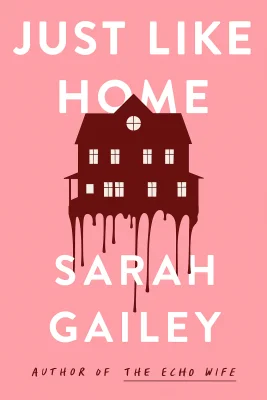
Just Like Home
Categories
Fiction, Audiobook, Horror, Mystery, Thriller, Adult, Paranormal, Gothic, Mystery Thriller, Horror Thriller
Content Type
Book
Binding
Hardcover
Year
2022
Publisher
Tor Books
Language
English
ISBN13
9781250174727
File Download
PDF | EPUB
Just Like Home Plot Summary
Introduction
# Echoes of Darkness: The Hunger That Calls Us Home The Crowder House sits like a festering wound on Locust Street, its windows dark with secrets that refuse to die. After twelve years of exile, Vera Crowder returns to watch her dying mother draw her final breath—but the house her father Francis built with his own hands remembers everything. It remembers the basement where he kept his victims, the sounds that echoed through the floorboards, the night the police came. Most of all, it remembers Vera, the daughter who knew, who watched, who kept the terrible secret until it consumed them all. Now she must confront not only her mother's final moments, but the darkness that still breathes in the walls, waiting for her return. Some houses are built on love. Others are built on blood. And some hungers never die—they only wait for the right moment to feed again.
Chapter 1: The Reluctant Return: Coming Home to Death and Memory
Vera's hands shake as she turns the key in the familiar lock. Twelve years since she last crossed this threshold, twelve years since Daphne bolted the door behind her with finality that felt like death itself. The house swallows her footsteps, hungry for the sound of her return. In the dining room where family meals once happened, a hospital bed holds the skeletal remains of her mother. Daphne's eyes are hollow caves, her skin translucent as old parchment. The woman who once commanded this house with iron will now weighs less than a child. "You look tired," Daphne whispers, her voice carrying no warmth, only acknowledgment—daughter to dying mother, stranger to stranger. The smell hits immediately. Sweet lemonade mixed with something earthier, darker. Something that reminds Vera of the basement. She pours lemonade into waxed paper cups, the ritual as familiar as breathing. The dining chairs have been pushed against the walls, making room for the machinery of death. Everything has changed, yet nothing has changed. James Duvall emerges from the renovated garden shed like a ghost made flesh. Son of Hammett Duvall, the true-crime writer who made Francis Crowder a household name. He's here for inspiration, he claims, to paint the spiritual essence of trauma. His presence is a violation Vera cannot name, another parasite feeding on her family's destruction. At dinner, Daphne transforms in his presence, her dying face animated with something like maternal pride. She calls him precious, serves him the frozen lasagna. For her daughter, only lemonade—the only thing she can taste anymore, she claims. The house still keeps its secrets, still holds its breath. And somewhere in the walls, something scratches at the wood with fingernails that have grown too long in the dark.
Chapter 2: Whispers in the Walls: When the Past Refuses to Stay Buried
Sleep brings no peace in the Crowder House. Vera dreams of holes in her belly, of pulling endless coils of frozen intestine from her own body. She wakes paralyzed, trapped between sleep and waking, as a familiar voice whispers comfort in her ear. "Hush now, Vera-baby." The voice of a dead man, tender as a lullaby. Memory bleeds through the walls like water through cracked plaster. She is eleven again, listening to animal sounds beneath her bedroom floor. Her father explains about the possums and raccoons that wander into the basement, lost and frightened. He has to help them escape, he says, though some get hurt in the process. The fishing trip comes back in fragments—the cold creek water, the hook sliding through the worm's flesh, her father's gentle hands teaching her to cast. But beneath the pastoral memory lurks something darker. Francis speaks of men filled with grease, with corruption that turns them into monsters. He saves them, he claims. He keeps the rot from spreading. The basement door pulses with forbidden knowledge. Vera knows what lies beyond it, has always known. The sounds that drift up through the floorboards are not animals seeking escape. At three in the morning, she hears her mother's voice drifting through the walls: "She's home now. You can stop waiting." But when Vera creeps to the dining room, Daphne appears fast asleep, her chest rising and falling in deep unconsciousness. The voice, Vera realizes, has come from somewhere else entirely. The house remembers everything, and it's been waiting for her return.
Chapter 3: The Child Who Watched: Confronting the Monster Within
The stolen key burns cold against Vera's throat as she picks the basement lock, her twelve-year-old heart hammering against her ribs. The basement opens like a mouth, fluorescent lights revealing the careful architecture of torture. Arnold lies spread-eagled on the polished cement, bike chains wrapped in plastic holding his limbs to anchor points sunk deep in the floor. His face is a ruin of fresh wounds, cheeks pierced through, lips split and bleeding. Vera approaches with the casual curiosity of a child examining an injured bird. She removes the gag, listens to his desperate pleas for rescue. The cable cutters are in the toolbench, he gasps. She can free him, can be a hero. But heroes don't exist in the Crowder House. "I can't let you go," she explains with matter-of-fact kindness. "Dad would be upset." She replaces the gag with gentle efficiency, ignoring his muffled screams. The information she shares is meant as comfort—tomorrow it will all be over. Her father will kill him, ending his suffering. The ritual complete, she returns to her bed with the satisfaction of a job well done. She has seen her father's work with her own eyes, touched it with her own hands. The secret sits warm in her chest, another bond between father and daughter. In the morning, she will scrub the blood from beneath her fingernails and pretend to sleep through Arnold's final screams. The basement remembers this moment, preserves it like amber. Some children learn love through bedtime stories. Others learn it through shared darkness, through the weight of secrets too heavy for small shoulders to bear alone.
Chapter 4: Blood and Plaster: The Artist Who Feeds on Pain
Vera discovers the violation by accident, following James into the garden shed while he's distracted by his morning routine. The space has been transformed into a studio, but the materials scattered across his worktables make her stomach clench with recognition. Fragments of paper covered in her father's handwriting are embedded in the plaster-thick paint of his canvases—letters Francis had written to her from prison, letters her mother had hidden away for decades. "Those are mine," she says, her voice barely controlled. James turns with that slow, predatory smile she's beginning to hate. "Your mother gave me permission to use anything I needed for my art. These letters, this house—it's all part of the same story, isn't it?" He has been systematically harvesting pieces of the house itself, scraping plaster from the basement walls, pulling splinters from the floorboards where her father's victims bled. Every gouge in the wood, every scar in the plaster, becomes raw material for his "collaborative" art with the spirits of the Crowder house. His canvas grows thick with ochre and rust, colors that match the stains beneath the basement's plexiglass floor. "The house belongs to me now," he continues, his voice dropping to an intimate whisper. "Your mother signed the deed over before she got too sick to make legal decisions." Vera feels something cold and sharp unfurl in her chest—the same feeling she'd had as a child when she pressed that knife into Brandon's belly, searching for the grease her father had promised would be there. James Duvall has made himself at home in her father's house, feeding off their family's pain like a parasite. But the house has other plans, and it's been waiting twelve years for its daughter to come home and claim what's rightfully hers.
Chapter 5: Under the Floorboards: The Thing That Always Loved Her
The house begins to breathe around Vera, its walls expanding and contracting with malevolent life. Her bedsheets vanish in the night, dragged beneath the bed by unseen hands. The air grows thick as water, tasting of lemonade and grave dirt. Something moves in the ceiling above, scraping against plaster with the sound of fingernails on bone. Daphne's condition deteriorates with supernatural speed. She coughs up masses of black tissue threaded with dark veins, her body expelling something that should not exist. Vera cleans her mother's face with kitchen rags, the stench of turned earth and sweet lemon filling the room. The revelation comes wrapped in casual cruelty—Francis wrote letters from prison, monthly missives to the daughter he loved more than anyone. Daphne intercepted them all, a stack of unopened envelopes containing a dead man's final words. The lights flicker in perfect synchronization, as if the house itself is struggling to maintain the illusion of normalcy. At four in the morning, the bed frame begins to creak. Something long and pale emerges from the shadows beneath—fingers too numerous and joints too flexible, attached to a form that hurts to look at directly. The thing moves like raw meat given consciousness, leaving trails of dark fluid that smell of sweet lemons and turned earth. It has been there all along, Vera realizes. Every night of her childhood, this creature has been watching over her. When she snapped her fingers four times—her old superstition, her childhood magic—the darkness would deepen and the sounds would fade because something was listening, something was protecting her. The thing turns toward where she hides, and when it speaks, its voice is familiar as her own heartbeat: "You're not supposed to see me, Vera-baby."
Chapter 6: Skin and Structure: When Houses Become Flesh
The confrontation comes at dawn, with Daphne propped in her bed like a broken doll and the creature wearing her skin like an ill-fitting coat. Vera watches in fascination as her mother's jaw unhinges to allow those impossible fingers to slide down her throat, feeding the thing that has been keeping her alive long past her natural expiration date. "How long has she been dead?" Vera asks, and the thing wearing her mother's face smiles with genuine affection. "Since you asked me to stop her from saying those terrible things about you," it replies. "I've been trying to give you time to say goodbye properly." The creature is the house itself—born from decades of blood and sweat and tears soaked into the wood, animated by the love and violence that shaped every room. It has been Vera's invisible friend, her protector, the presence that made the darkness bearable when her parents fought and her father worked and her mother's hatred filled every corner of their home. "I tried to keep you safe," it continues, Daphne's skin hanging loose around its true form. "I soaked up as much of the hurt as I could. Every time he brought someone home, every time she looked at you like you were something that needed to be disposed of, I tried to take it into myself so it wouldn't touch you." James Duvall has been carving pieces from its body, using the house's own flesh in his art, and the creature is dying by degrees. Each scrape of plaster, each gouge in the walls, is a wound that won't heal. It has called Vera home not just to say goodbye to her mother, but to ask for help against the parasite that is slowly consuming it. "I need you to make him stop," it whispers through Daphne's ruined mouth.
Chapter 7: The Final Feeding: Violence as Homecoming
The violence, when it comes, feels like coming home. James Duvall has been expecting compliance, perhaps even gratitude for his artistic vision and his claim on the property. Instead, he finds himself face-down on the hardwood floor with Vera's knee in his back and her fingers twisted in his hair. "You were hurting us," she says, and brings his face down against the boards her father laid with such loving care. The sound is wet and final, and the house drinks his blood as eagerly as it has consumed all the others who died within its walls. Vera feels the same electric satisfaction she'd experienced as a child when she'd pressed that knife into Brandon's belly—the hunger finally fed, the emptiness finally filled. She drags Duvall's body to the basement and leaves it among the gouges he'd carved in the walls, a fitting end for someone who tried to hollow out the thing he claimed to love. The house seals itself around his remains, adding his essence to the foundation that has been built on so much death and devotion. In the dining room, the creature sheds Daphne's skin like a snake molting, revealing its true form at last—beautiful and terrible, made of shadow and substance, love and hunger intertwined. Vera embraces it without fear, finally understanding what she has always been meant to become. She is a Crowder, and Crowders are not good people. They are hungry people, and they feed the things they love with whatever those things require. The basement door stands open now, waiting for the next lost soul to wander into its embrace.
Chapter 8: Guardians of Hunger: What We Become When We Stop Running
The Crowder house stands on Locust Street still, its windows bright with warm light, its garden tended with loving care. Neighbors cross themselves when they pass, but they no longer remember exactly why. The stories have faded into urban legend, the way such stories do when the thing they describe becomes too large and too hungry to be contained by mere words. Vera tends her home with the devotion her father taught her, feeding it what it needs, protecting it from those who would exploit its gifts. She has learned to see the beauty in the darkness beneath the floorboards, to find comfort in the whispers that echo through the walls at night. The house loves her as completely as she loves it in return, and that love has made them both into something new—something that transcends the simple categories of monster and victim, predator and prey. In the end, perhaps that is what home truly means: a place where you are known completely and loved without reservation, where your hungers are understood and your appetites are fed. The Crowder house has always been such a place, and now it always will be. The basement waits with infinite patience, and when the next visitor comes seeking inspiration or exploitation, they will find instead the same salvation Francis Crowder once offered—the kind that comes with chains and darkness and the terrible mercy of being truly understood at last.
Summary
The Crowder House claimed its daughter as it was always meant to, transforming exile into homecoming and victim into guardian. Vera's journey from reluctant visitor to willing protector reveals the seductive power of belonging, even when that belonging demands the darkest sacrifices. She found her place not despite the house's hunger, but because of it—finally understanding that some forms of love require blood to sustain them. In the end, the house on Locust Street stands as a monument to the terrible intimacy between predator and prey, parent and child, love and violence. Vera Crowder came home to bury the past, but instead she became its living embodiment—proof that some hungers are inherited, some darkness is chosen, and some monsters are made not by cruelty but by the desperate need to finally, truly belong somewhere in this world.
Best Quote
“He tried to build us strong and steady and whole. But he didn’t keep us safe. He didn’t know how to shelter us from all the hurt that was waiting, because he thought that hurt was the shape of love.” ― Sarah Gailey, Just Like Home
Review Summary
Strengths: The review highlights the book's intense and eerie atmosphere, describing it as "BIZARRE, BLEAK, INTENSE, CLAUSTROPHOBIC and EERIE." The narrative's ability to maintain suspense and deliver a significant twist is praised. The haunting and smart storytelling kept the reviewer engaged, drawing comparisons to Stephen King's work. Weaknesses: The review does not explicitly mention any weaknesses, but the 3.5-star rating suggests some room for improvement or personal preference issues. Overall: The reviewer found "Just Like Home" to be a compelling and disturbing read, particularly for fans of gothic thrillers and horror. The book's ability to evoke childhood fears and maintain suspense makes it a recommended read for those seeking a chilling experience.
About Author

Sarah Gailey
Gailey delves into the intricate dynamics of identity, exclusion, and marginalization through a speculative lens, often blending elements of science fiction and fantasy with profound social commentary. Their work frequently explores queerness and social justice, offering a narrative space where complex emotional and societal issues are addressed. In "The Echo Wife," Gailey uses the theme of cloning to delve into the nuances of identity and the personal ramifications of technology, while "Upright Women Wanted" provides a narrative interwoven with queer and antifascist themes, presented as a spy western.\n\nFor readers seeking narratives that push genre boundaries, Gailey’s storytelling provides a fresh perspective by merging noir, urban fantasy, and magical realism, exemplified in their book "Magic for Liars." Their ability to seamlessly mix genres allows for a unique exploration of belonging and identity, inviting audiences to engage with character-driven stories that challenge conventional norms. Readers benefit from Gailey's willingness to experiment across formats, as they deftly navigate between short stories, novellas, novels, and even comics, showcasing a broad literary versatility that enriches the speculative fiction landscape.\n\nHaving received a Hugo Award for Best Fan Writer in 2018, Gailey's contributions to speculative fiction are widely recognized. Their novella "River of Teeth" was celebrated with both Hugo and Nebula award nominations, marking it as a significant milestone in their career. This bio offers a glimpse into the author’s journey, highlighting their impact on contemporary literature through a distinctive approach that resonates with audiences interested in stories that thoughtfully address identity and societal issues.
Read moreDownload PDF & EPUB
To save this Black List summary for later, download the free PDF and EPUB. You can print it out, or read offline at your convenience.

Just Like Home
by Sarah Gailey
