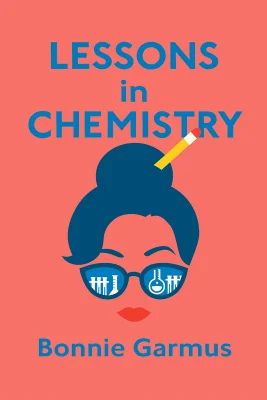
Lessons in Chemistry
Categories
Fiction, Audiobook, Feminism, Historical Fiction, Romance, Adult, Book Club, Historical, Contemporary, Adult Fiction
Content Type
Book
Binding
Paperback
Year
2023
Publisher
Language
English
ASIN
B0C9SHLTPM
ISBN13
9798851272608
File Download
PDF | EPUB
Lessons in Chemistry Plot Summary
Introduction
# Lessons in Chemistry: A Life Rebuilt Through Science and Courage The laboratory door slammed shut with the finality of a coffin lid. Elizabeth Zott stood in the hallway of Hastings Research Institute, her termination papers clutched in one hand, her swollen belly a testament to the scandal that had just cost her everything. Three months pregnant and suddenly unemployed, she was no longer Dr. Elizabeth Zott, brilliant chemist on the verge of breakthrough discoveries about the origin of life itself. She was just another fallen woman, cast out from the sterile world of science into an uncertain future. But Elizabeth Zott had never been ordinary. In a world that expected women to smile sweetly and fetch coffee, she had demanded respect for her mind. She had loved deeply and lost catastrophically. She had been betrayed by colleagues who stole her research and dismissed by superiors who saw her only as a liability. Yet from the wreckage of her scientific career would emerge something unprecedented: a cooking show that would teach an entire nation that chemistry wasn't confined to laboratories, that intelligence wasn't limited by gender, and that sometimes the most important reactions happen in the most unexpected places. Her journey from disgraced researcher to unlikely television pioneer would prove that when life's formula goes wrong, courage can be the catalyst for extraordinary transformation.
Chapter 1: The Collision: Love and Loss in the Laboratory
The beakers were what brought them together. Elizabeth needed equipment for her abiogenesis research, and Calvin Evans had more than he could use in his pristine laboratory five floors above hers. She marched into his domain without invitation, past warning signs and locked doors, driven by the desperate pragmatism of an underfunded scientist. Calvin looked up from his work, safety goggles reflecting the harsh fluorescent lights, and saw a tall woman with hair the color of burnt coffee secured with a pencil. "You can't be here," he said, but Elizabeth was already examining his surplus supplies with the calculating eye of someone who knew exactly what she needed. When he assumed she was someone's secretary, her response was sharp enough to cut glass. "I am the chemist," she declared, loading beakers into a cardboard box with the efficiency of a battlefield medic. Calvin Evans, Hastings' golden boy with his rowing trophies and published papers, found himself speechless. Their courtship unfolded in the language of molecular bonds and protein synthesis. They debated enzyme kinetics over dinner, discussed chemical reactions during long walks, made love with the intensity of atoms seeking equilibrium. Calvin had grown up in orphanages, learning early that people left and love was a luxury he couldn't afford. Elizabeth had survived a father who used religion as a weapon and a professor who confused mentorship with assault. Together, they created something neither had believed possible: a partnership built on intellectual equality and uncompromising honesty. The morning Calvin died, fog hung over the water like a shroud. He clipped the new leash to Six-Thirty's collar, their brilliant dog who understood more words than most humans. Elizabeth had insisted on the leash after new city regulations, a simple gesture of care that would become an instrument of tragedy. The police sirens came from nowhere, screaming through the quiet dawn. Six-Thirty bolted in terror. The leash snapped taut. Calvin's neck broke with the sound of a branch snapping in winter wind. Elizabeth found them on the asphalt, her lover's gray eyes staring at nothing, her dog howling a grief that would echo in her bones forever. The future they had planned together evaporated like steam from a broken beaker, leaving her alone with nothing but memories and the child growing inside her.
Chapter 2: Chemical Breakdown: Tragedy, Termination, and Single Motherhood
The pregnancy test showed positive three weeks after the funeral. Elizabeth stared at the pink line with scientific detachment, her hand moving instinctively to her still-flat stomach. Inside her, Calvin's child was dividing and multiplying according to the same cellular mathematics that governed all life. She was carrying the future in a world that had suddenly lost all meaning. Miss Frask from Personnel delivered the termination notice with barely concealed satisfaction. Pregnant and unwed, Elizabeth had become a liability to Hastings' pristine reputation. The institute had standards, Frask explained with mock sympathy, and those standards didn't include unmarried mothers. Elizabeth's years of groundbreaking research into abiogenesis meant nothing now. She was just another fallen woman, a cautionary tale whispered in sterile hallways. Madeline arrived on a Tuesday, gray-eyed like her father, with his serious expression and long limbs. The name came from Elizabeth's exhausted snap at the hospital nurse who kept asking for the baby's name. "Mad," she had said, because that's what she was—furious at Calvin for leaving, at the world for its cruelty, at herself for being so utterly unprepared for motherhood. The nurse wrote it down literally, and Mad Zott became official. The baby cried with a ferocity that seemed to shake the walls. Elizabeth held her daughter and felt the weight of responsibility settle on her shoulders like lead. She had never wanted children, had built her life around the precise, predictable world of chemistry. Now she was responsible for this small, demanding creature who required constant attention and gave nothing back but noise and mess and an endless stream of needs Elizabeth had no idea how to meet. Harriet Sloane appeared like an answer to prayers Elizabeth hadn't known she was praying. The neighbor from across the street had watched Elizabeth's struggles with growing concern, and when she finally knocked on the door, she found Elizabeth collapsed on the kitchen floor, overwhelmed and exhausted. Harriet took charge with the efficiency of a field general, changing Mad's diaper, making coffee, and somehow making Elizabeth feel less alone in a world that had abandoned her.
Chapter 3: Molecular Reconstruction: Building Life from Kitchen Chemistry
The sledgehammer felt solid in Elizabeth's hands, purposeful in a way nothing else had since Calvin's death. At two in the morning, with Mad finally asleep and the world quiet around her, she began the systematic destruction of her kitchen. Cabinet doors splintered under her assault, countertops cracked and fell away, and slowly, methodically, she began building something new from the wreckage. The transformation took months. Elizabeth installed stainless steel surfaces, professional-grade equipment, and safety features that would have made any university laboratory proud. She taught herself plumbing and electrical work, driven by desperate need to create something, to prove she still had value. Six-Thirty became her assistant, learning to operate equipment with the precision of a trained technician. Word spread through the scientific community about Elizabeth's home laboratory. Former colleagues who had ignored her at Hastings now appeared at her door with problems they couldn't solve, briefcases full of data they couldn't interpret, and wallets full of cash they were willing to part with for her expertise. She charged by the hour, double for weekend consultations, triple for anyone who mentioned Calvin. The work kept them afloat financially, but more importantly, it kept Elizabeth connected to the world of serious research. In her kitchen laboratory, surrounded by beakers and Bunsen burners, she felt like herself again—not just Mad's mother or Calvin's former girlfriend, but Elizabeth Zott, scientist. Mad grew up thinking every kitchen contained centrifuges, learned to walk by pulling herself up on laboratory equipment, learned to count using test tubes. Walter Pine found Elizabeth by accident, arriving to complain about his daughter's lunch-stealing habits. But when he saw Elizabeth in her white lab coat, her authoritative presence filling the doorway like a force of nature, he forgot all about lunch. Here was someone who could command attention, someone who could teach, someone who could save his failing television career with a cooking show unlike anything the world had ever seen.
Chapter 4: Catalytic Television: Teaching Science Through Supper at Six
The KCTV studio reeked of desperation and stale cigarettes when Elizabeth arrived for her first taping. Walter Pine, the harried producer whose career hung by a thread, looked at her with the wild hope of a drowning man spotting driftwood. Their previous cooking show host had quit without notice, and they needed someone immediately. Elizabeth was educated, articulate, and desperate enough to take anything. "Just smile and cook," Walter instructed, handing her an apron. "Keep it simple. These are housewives, not rocket scientists." Elizabeth looked at the artificial kitchen, the cameras, the studio audience of women who had been told their entire lives that their minds didn't matter. She thought of Mad at home with Harriet, of bills piling up, of Calvin's research gathering dust. She tied the apron around her waist and made a decision that would change everything. "Hello," she said to the camera, her voice steady and sure. "My name is Elizabeth Zott, and this is Supper at Six. Today we're going to talk about the chemical bonds that hold our food—and our lives—together." The audience stirred. This wasn't what they expected from a cooking show. Elizabeth picked up a wooden spoon and began explaining the molecular structure of butter, the way heat transformed proteins, the science behind every sizzle and bubble. She spoke to them as if they were capable of understanding complex concepts, as if their minds mattered, as if they deserved more than recipes and smiles. The ratings started modest, but something was happening. Women across Southern California began tuning in with notebooks in hand, hungry for knowledge they had been told they didn't need. Elizabeth wasn't just teaching them to cook—she was teaching them to think. The show's success was unprecedented. Letters poured in from viewers sharing their own stories of dreams deferred and potential wasted. Mrs. George Fillis stood up during a live taping and revealed her secret dream of becoming a heart surgeon. The audience's thunderous applause said everything about what Elizabeth's show had become—not entertainment, but revolution disguised as dinner preparation.
Chapter 5: Under Pressure: Fame, Scrutiny, and Standing Ground
Fame arrived like a chemical reaction Elizabeth couldn't control. Supper at Six spread beyond California, syndicated to stations across the country. Women wrote letters by the thousands, calling Elizabeth their inspiration, their teacher, their friend. But success brought scrutiny that threatened to destroy everything she had built. Life magazine came calling with promises of a cover story celebrating her achievement. The reporter, Franklin Roth, seemed sympathetic, asking thoughtful questions about her work and philosophy. Elizabeth, naive about journalism's cruel mathematics, told him the truth about everything—her relationship with Calvin, her firing from Hastings, her struggles as a single mother. She had no idea she was providing ammunition for her own destruction. The article that appeared bore little resemblance to their conversation. Life magazine painted her as "Luscious Lizzie," a lab technician who had seduced the famous Calvin Evans and was now capitalizing on his memory. They quoted former colleagues who described her as manipulative and unqualified. They published Mad's innocent family tree drawing from school, turning a child's homework into evidence of dysfunction. The backlash was swift and brutal. Religious groups protested outside the studio, calling her a godless communist. Sponsors threatened to pull support. Death threats arrived by the dozen. Elizabeth had committed the unforgivable sin of being a woman who refused to apologize for her intelligence, and the world was determined to make her pay. But something unexpected happened. For every letter of condemnation, two letters of support arrived. Women who had been told they were too stupid to understand science wrote to thank her for proving them wrong. Mothers who had abandoned their dreams wrote to say she had inspired them to try again. The very controversy meant to destroy her had instead revealed a hunger that existed—for knowledge, for respect, for the simple acknowledgment that women's minds mattered.
Chapter 6: Bonds Revealed: Discovering Calvin's Hidden Family Legacy
The truth about Calvin's past emerged slowly, like a photograph developing in darkness. Mad, working on a school project about family trees, had written to the Parker Foundation—the mysterious benefactor that had funded Calvin's boys' home. Her letter, innocent and direct, reached Avery Parker herself, a woman who had spent decades searching for the son she had been told was stillborn. Avery Parker was not what Elizabeth expected. Wealthy but worn down by years of grief and searching, she had been seventeen when she gave birth, unmarried and disgraced, sent away to a Catholic home for unwed mothers. When she refused to sign adoption papers, they punished her by leaving her alone during labor, then telling her the baby had died. Only years later did she learn the truth—her son had been adopted, then orphaned, then sent to All Saints Boys' Home in Iowa. The meeting took place in Calvin's old laboratory at Hastings, now under new ownership thanks to Avery's acquisition of the research institute. Elizabeth stood in the room where she had first met Calvin, where they had fallen in love over stolen beakers and shared dreams, and listened to a mother's story of loss and regret. The Parker Foundation had been sending money to All Saints for years, believing they were honoring a dead child's memory. "I funded his memorial before he was dead," Avery said, her voice breaking. "I buried him twice." The science books, the rowing equipment, the educational opportunities that had eventually led Calvin to Cambridge—all of it had come from a mother who thought she was mourning a son she would never meet. Elizabeth felt the pieces of Calvin's life clicking into place like molecules finding their proper bonds. His brilliance, his anger, his capacity for love—all of it made sense now. He had been shaped by abandonment and loss, but also by the invisible hand of a mother's love, reaching across years and miles to touch his life in ways neither of them had understood. The family tree that had caused so much trouble suddenly revealed its true meaning—not as evidence of dysfunction, but as proof of the complex bonds that hold families together across time and space.
Chapter 7: Return to Elements: Reclaiming Scientific Identity and Purpose
The decision to leave Supper at Six came not from defeat, but from molecular recognition. Elizabeth stood before the cameras for the final time, looking out at an audience that had become her extended family, and made an announcement that shocked everyone, including herself. "I'm leaving," she said simply. "I'm returning to scientific research, where I belong." The audience erupted in protest, but Elizabeth held firm. She had spent two years teaching chemistry disguised as cooking, proving that women could understand complex concepts if given the chance. Now it was time to practice what she had preached—to stop accepting limitations and reclaim her true calling. The show had served its purpose, transforming not just her viewers but herself. Avery Parker made the return possible. With the resources of the Parker Foundation behind her, Elizabeth returned to Hastings as the new director of chemistry. Donatti, the man who had stolen her research and destroyed her career, was unceremoniously fired. The laboratory that had once been Calvin's became hers, filled with new equipment and unlimited possibilities for discovery. But the real victory was smaller and more personal. Mad, now old enough to understand, sat in the lab after school, watching her mother work with the same intensity she had once brought to television. Six-Thirty, older and grayer but still brilliant, lay at Elizabeth's feet as she bent over her microscope, searching once again for the origins of life itself. The family she had built was unconventional but unbreakable. Harriet, finally free from her abusive marriage and engaged to Walter Pine. The rowing team of determined women who had found their voices. And at the center of it all, Avery Parker, the fairy godmother who had been there all along, invisible but essential, like the chemical bonds that hold molecules together. Elizabeth picked up her pencil—always a number two, always ready to erase and begin again—and returned to her equations. The mystery of abiogenesis still waited to be solved, the question of how life began from lifeless matter. But she was no longer searching alone.
Summary
Elizabeth Zott's journey from grieving scientist to television pioneer proved that transformation, like chemistry, follows its own unpredictable laws. She had lost everything that defined her old life—the husband, the career, the respect of her peers—but in the wreckage discovered something more valuable: the courage to define success on her own terms. Through Supper at Six, she had taught women that intelligence wasn't limited by gender, that their minds deserved respect, that they were capable of understanding the complex forces that governed their world. The bonds she broke and remade weren't just chemical—they were social, personal, revolutionary. In her kitchen laboratory, she had proven that the most important reactions often happen outside traditional spaces, guided by unconventional wisdom and fueled by uncompromising love. Her formula for change became a catalyst for countless other women who learned to see themselves not as supporting characters in someone else's story, but as the brilliant protagonists of their own lives. The mystery of abiogenesis might remain unsolved, but Elizabeth had unlocked something equally profound: the secret of how extraordinary life could emerge from the most ordinary circumstances, given enough heat, pressure, and the willingness to risk everything for the chance to become who you were always meant to be.
Best Quote
“Whenever you feel afraid, just remember. Courage is the root of change - and change is what we're chemically designed to do. So when you wake up tomorrow, make this pledge. No more holding yourself back. No more subscribing to others' opinions of what you can and cannot achieve. And no more allowing anyone to pigeonhole you into useless categories of sex, race, economic status, and religion. Do not allow your talents to lie dormant, ladies. Design your own future. When you go home today, ask yourself what YOU will change. And then get started.” ― Bonnie Garmus, Lessons in Chemistry
About Author

Bonnie Garmus
Garmus investigates the intersections of gender roles and scientific inquiry with a sharp wit and incisive social commentary. Her professional background in copywriting and creative direction across diverse fields such as technology, medicine, and education imbues her writing with a multifaceted perspective. In her debut book, "Lessons in Chemistry," she uses humor and intelligence to challenge societal norms through the lens of her protagonist, thereby resonating deeply with readers and establishing herself as a formidable voice in contemporary literature.\n\nThrough her eloquent prose, Garmus navigates the intricacies of human relationships and self-discovery, inviting readers to question and reflect on the world around them. Her narrative style seamlessly combines humor with poignant social critique, offering both entertainment and introspection. As an author, she continues to enrich her storytelling with authenticity, drawing inspiration from her personal interests in open-water swimming and rowing, as well as her role as a mother. Readers who seek a blend of incisive commentary and engaging storytelling will find her work particularly rewarding, as it challenges them to consider broader societal issues while being entertained.\n\nGarmus's impact on the literary genre is marked by her ability to engage and resonate with a wide audience. Her debut novel has not only achieved bestseller status but also underscores her skill in blending complex themes with relatable narratives. Currently residing in London, she continues to draw from her diverse experiences and surroundings, enriching her work with depth and authenticity. This short bio captures her journey and contributions, inviting readers to delve into the compelling worlds she creates.
Read moreDownload PDF & EPUB
To save this Black List summary for later, download the free PDF and EPUB. You can print it out, or read offline at your convenience.
Lessons in Chemistry
by Bonnie Garmus
