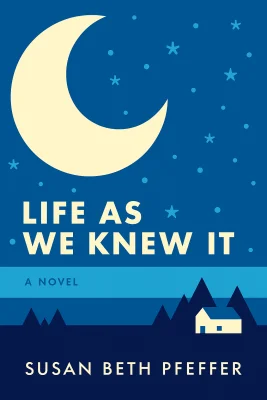
Life As We Knew It
Categories
Fiction, Science Fiction, Audiobook, Young Adult, Fantasy, Teen, Survival, Post Apocalyptic, Dystopia, Apocalyptic
Content Type
Book
Binding
Paperback
Year
2006
Publisher
HMH Books for Young Readers
Language
English
ASIN
B0DT147H1F
File Download
PDF | EPUB
Life As We Knew It Plot Summary
Introduction
# When the Moon Drew Near: A Chronicle of Survival The asteroid struck at 9:37 PM on a Tuesday in May, and sixteen-year-old Miranda Evans was writing in her journal about swimming practice when the world ended. She watched from her Pennsylvania driveway as the cosmic collision knocked the moon from its ancient orbit, sending it lurching closer to Earth like a marble struck by a hammer. What began as a celestial light show became humanity's final exam in survival. The impact triggered tsunamis that swallowed coastlines whole. New York City vanished beneath walls of water. Volcanoes erupted across continents, choking the sky with ash. Within hours, the bloated moon hanging overhead had rewritten the rules of physics and civilization alike. The Evans family found themselves trapped in a dying world where electricity flickered and failed, where food became currency, and where each sunrise felt like a small miracle stolen from an indifferent universe.
Chapter 1: The Night Everything Changed: Impact and Immediate Aftermath
The moon swelled in the sky like an infected wound, its craters visible to the naked eye. Miranda pressed her face to the cold window, watching neighbors who had been celebrating moments before now screaming at the tilted lunar surface that hung thirty percent larger than it should. The celebration died on their lips as emergency broadcasts crackled through their radio, reporting devastation that sounded like science fiction. Tsunamis twenty feet high had swallowed the eastern seaboard. The Statue of Liberty swept out to sea. Cape Cod completely submerged. Miami drowning under walls of water that refused to recede. The death toll climbed past hundreds of thousands before dawn, and Miranda's mother Laura moved through their house with manic purpose, making lists with military precision. Food, water, batteries, medical supplies. She understood what the others couldn't yet grasp. This wasn't temporary. The power grid failed three days later, plunging their small town into darkness that felt permanent. Miranda's father called from Springfield, his voice tight with relief that they were safe, that they were inland, that they had survived the first night of the world's ending. But outside their windows, ash clouds thickened like gray wool, blocking sunlight and beginning the temperature drop that would kill more people than the initial floods. The old world of school dances and swimming practice had vanished as completely as the drowned cities. What remained was the brutal arithmetic of survival, and Miranda's family huddled around candles, pretending this was just another storm while the changed moon pulled at their planet with monstrous, alien force.
Chapter 2: Adapting to Scarcity: New Rules for a Broken World
The supermarkets became battlefields within a week. Laura had been smart enough to stockpile early, waking Miranda and Jonny before dawn with fifty-dollar bills pressed into their hands. They moved through the chaos like generals, filling carts with anything that wouldn't spoil while armed cashiers demanded exact change and people fought over canned goods with desperate fury. Their elderly neighbor Mrs. Nesbitt joined their shopping expeditions, her Depression-era wisdom suddenly more valuable than any government emergency broadcast. She taught them to preserve food without refrigeration, to heat water on wood-burning stoves, to make soap from ash and animal fat. The old woman's practical knowledge became their lifeline as civilization's infrastructure crumbled around them. Miranda's older brother Matt threw himself into physical preparations with obsessive determination, chopping firewood as if enough split logs could hold back the approaching winter. Their dining room became a lumber yard, stacked floor to ceiling with wood that might keep them alive when the natural gas stopped flowing. Seventeen-year-old Jonny struggled with the loss of his normal teenage life, no more baseball practice, no more friends who had either fled south or simply vanished into the chaos. The family rationed everything now. Food, water, even hope. Miranda learned to stretch a can of soup across two meals, to make a bar of soap last a month, to find warmth in layers of clothing when the heating oil ran low. The rules of civilization rewrote themselves in real time, and the Evans family adapted or died.
Chapter 3: As Darkness Falls: When the Skies Turned Gray
The sun disappeared behind volcanic ash that stretched across continents, casting everything in perpetual twilight the color of old pewter. Temperatures dropped twenty degrees in a week, and what had been their vegetable garden withered overnight under killing frost that arrived in August. The world turned gray, gray sky, gray snow, gray faces of the few neighbors still alive. Miranda's friends scattered like leaves in a hurricane. Some fled south toward rumors of warmth that probably didn't exist. Others retreated into religious fervor or the arms of older men who promised safety in exchange for companionship that made Miranda's skin crawl. The few teachers who remained gathered thirty-one high school students in a music room and admitted they had no idea what to teach or why. School became a memory. Phone lines went dead. Radio stations vanished into static, leaving them isolated with no way to know if the rest of the world still existed. Miranda's father had driven west with his pregnant wife Lisa, searching for her parents in Colorado, and his letters stopped coming. They might be dead. They might be thriving. There was no way to know. The electricity came and went unpredictably, sometimes for minutes, sometimes for hours, never long enough to depend on. When it worked, they did laundry frantically and pretended normalcy might return. When it failed, they returned to their candlelit existence, measuring time by the wood stove's hunger and the slow consumption of their supplies. Miranda's world shrank to the size of their house, then to the size of the kitchen where they spent their days near the stove's warmth.
Chapter 4: The Bitter Cold: Family, Sacrifice, and Survival
Winter arrived in September, bringing temperatures that would have been shocking in December. The natural gas stopped flowing, leaving them dependent on Matt's stockpiled firewood and whatever warmth they could generate from their own bodies huddled together. The family moved into the sunroom, the only space they could keep warm, four mattresses on the floor and the constant smell of unwashed bodies and cooked canned food. Food became their obsession, their currency, their constant source of anxiety. They ate one meal a day now, sometimes less. Laura tried to hide how little she was eating, but Miranda noticed the way her mother's clothes hung loose, the way her wedding ring slipped on her finger. Miranda caught herself stealing chocolate chips from their dwindling supplies and faced her mother's cold fury as punishment. The first blizzard in December buried their world under four feet of gray snow, stained with ash that left residue on everything it touched. Matt and Jonny worked for hours to dig out the doors, to clear the roof before it collapsed under the weight. Their neighbor Mrs. Nesbitt died quietly in her sleep, and Miranda found her body during a routine check, filling bags with the old woman's canned goods and precious bottles of water. Privacy became a luxury they couldn't afford. Tempers frayed in their cramped living space. Small arguments exploded into fights that left everyone exhausted and ashamed. But somehow, impossibly, they endured. They played cards by candlelight and told stories that made them laugh, sharing their meager food with the stubborn hope that someone, someday, would want to know how ordinary people had faced the end of everything.
Chapter 5: Fighting Death: Disease and Desperation
The flu arrived like a biblical plague in the depths of winter, striking down the weakened survivors with ruthless efficiency. First Laura collapsed, burning with fever and barely conscious. Then Jonny fell into delirium, his body convulsing with chills. Matt fought the sickness longer, but eventually succumbed, leaving sixteen-year-old Miranda alone to care for three dying people. She had no training, no medicine beyond aspirin and hope. She forced fluids down their throats, bathed their burning skin with alcohol, and kept the fire burning through nights that seemed endless. When the wood stove backfired and filled the room with smoke, she dragged her unconscious family to safety and fought to restart the fire that kept them all alive. For days, Miranda existed in a nightmare of responsibility. She was starving and terrified, but she was all that stood between her family and death. She fed them soup spoonful by spoonful, changed their soaked bedding, and whispered prayers to a God who seemed to have abandoned the world. The fever broke slowly, first for Laura, then for Matt and Jonny. They woke weak and confused, but alive. Miranda had saved them all, though the effort left her hollow and aged beyond her years. She'd learned that love could be measured in sleepless nights and spoonfuls of broth, in the simple act of refusing to let go when everything else had been lost. But their victory against disease was temporary, and outside their windows, the world continued its relentless slide toward death.
Chapter 6: The Edge of Starvation: Miranda's Final Journey
By March, they were dying by degrees. The food was nearly gone, a few cans, some dried goods, nothing that would last more than days. Laura had stopped eating entirely, saving every scrap for her children. Matt grew weaker daily, unable to climb the stairs to his old bedroom. The family that had survived the moon's impact, the floods, the cold, and the plague was finally succumbing to simple starvation. Miranda made the decision to walk to town one last time, knowing she probably lacked the strength to return. She told herself she was looking for news of her father, for some sign that life continued somewhere beyond their dying house. But really, she was choosing where to die, away from home, so her family could maintain the illusion that she might return. The journey nearly killed her. She fell repeatedly in the deep snow, pushed herself forward on hands and knees when walking became impossible. The town was a graveyard of empty buildings and frozen corpses. The post office was sealed shut. Hope died with each step through the ash-stained drifts. But then she saw the yellow paper dancing in the wind, a notice that the city hall was open, that food was being distributed to survivors. The mayor and his assistant couldn't believe she'd walked four miles through the snow. They loaded her with bags of canned goods, drove her home on a snowmobile, and promised weekly deliveries. The family that had been hours from death suddenly had enough food to last weeks, pulled back from the edge by Miranda's desperate gamble.
Chapter 7: Finding Meaning: Small Victories in a Diminished World
The food deliveries continued through the spring, a lifeline thrown to the few families still clinging to existence in their rural corner of Pennsylvania. The Evans family survived, but survival came with a price measured in lost innocence and broken dreams. Miranda would never again be the carefree teenager who worried about figure skating and school dances. Matt carried the weight of responsibility in his permanently bent shoulders. They were alive, but the world they'd known was gone forever. The moon still hung too close in the sky, a constant reminder that some changes couldn't be undone. Cities remained drowned, governments had collapsed, and millions had died. The lucky few who remained faced the long work of rebuilding civilization from scratch, one family, one community, one act of stubborn hope at a time. In her journal, Miranda wrote about butterflies, imagining a future where they might grow large and beautiful in the changed world. It was a small hope, perhaps foolish, but it was hope nonetheless. They had learned that survival wasn't just about food and shelter, but about maintaining the connections that made them human. They played cards by candlelight, shared stories that made them laugh, and found ways to be grateful for small mercies. The family had discovered reserves of strength they never knew they possessed, and bonds of love that proved stronger than hunger, cold, or fear. In the end, that might be enough to build something new from the ashes of what was lost.
Summary
Miranda's chronicle stands as testament to the stubborn resilience of ordinary people facing extraordinary circumstances. Her family learned to live without electricity, without abundance, without certainty about tomorrow, discovering that love could be measured in spoonfuls of broth and sleepless nights spent tending the sick. They had become different people in a different world, harder and more precious to each other than they had ever imagined possible. The moon-shifted Earth had taken everything from them, their friends, their future, their faith in tomorrow, but it had also revealed something unbreakable in the human spirit. Miranda's words capture not just the mechanics of survival, but its emotional cost and unexpected rewards, reminding us that even when civilization collapses, humanity endures in the simple acts of sharing food, telling stories, and choosing to love each other through the longest, darkest nights.
Best Quote
“I guess I always felt even if the world came to an end, McDonald's would still be open.” ― Susan Pfeffer, Life As We Knew It
About Author

Susan Beth Pfeffer
Pfeffer investigates the human condition through the lens of post-apocalyptic scenarios, emphasizing the resilience and adaptability of individuals in dire circumstances. Her work, particularly in "The Life as We Knew It Series," often called "The Last Survivors" or "Moon Crash" series, delves into the dynamics of survival when society collapses, highlighting how ordinary people cope with extraordinary challenges. This thematic focus is central to her writing, as she reframes familiar life settings into speculative narratives that question what is essential for human survival.\n\nWhile her early career spanned a variety of young adult and science fiction genres, it was this series that captured wider attention, with some books appearing on The New York Times Best Seller list. Pfeffer's method of weaving emotional depth into speculative frameworks allows readers to explore complex emotional landscapes while engaging with thrilling, often unsettling storylines. This dual approach enriches the reading experience, offering both entertainment and profound reflection on societal dependencies and individual fortitude.\n\nReaders benefit from Pfeffer's books through the exploration of personal and communal resilience in the face of catastrophe, making her work relevant to young adults and those interested in speculative fiction. Her narratives not only entertain but also provide a platform for introspection on contemporary issues through the speculative situations she constructs. This short bio captures how Pfeffer’s authorial vision extends beyond mere storytelling to encourage readers to ponder their place within the larger world, making her a significant voice in the genre.
Read moreDownload PDF & EPUB
To save this Black List summary for later, download the free PDF and EPUB. You can print it out, or read offline at your convenience.
Life As We Knew It
by Susan Beth Pfeffer
