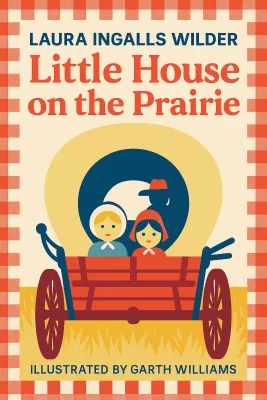
Little House on the Prairie
Categories
Fiction, Classics, Audiobook, Historical Fiction, Young Adult, Family, Historical, Childrens, Middle Grade, Juvenile
Content Type
Book
Binding
Paperback
Year
1993
Publisher
HarperTrophy
Language
English
ASIN
B001OLU644
File Download
PDF | EPUB
Little House on the Prairie Plot Summary
Introduction
The canvas wagon creaked to a halt on the endless sea of grass, and Pa Ingalls stepped down into a silence that stretched beyond the horizon. Behind him, Ma held baby Carrie close while Mary and Laura pressed their faces against the wagon sides, eyes wide at the vast emptiness of Kansas Territory. This was 1870, when the frontier was still a dangerous gamble and the government's promises about Indian lands shifted like prairie winds. Pa had sold everything in the Big Woods of Wisconsin for this chance—a homestead where a man could breathe freely under an enormous sky. But the prairie held secrets darker than the rich soil beneath the grass. Creek bottoms whispered with the movements of displaced Osage warriors, and the federal authorities in Washington seemed to have forgotten their own settlers existed. What had begun as a family's search for prosperity would become a test of survival, where the line between civilization and wilderness blurred with each passing storm.
Chapter 1: Leaving the Big Woods: The Journey West
The morning frost still clung to the Wisconsin pines when Pa loaded the last bundle into their covered wagon. Laura pressed her face against the small window one final time, watching their snug log cabin disappear behind the oak trees. She was only five, but already she understood that some journeys have no return. Jack, their faithful bulldog, trotted beneath the wagon as they rolled westward through Minnesota, Iowa, and Missouri. The familiar woods gave way to rolling prairies that seemed to swallow the wagon whole. Each night, Pa would unhitch Pet and Patty, their sturdy mustangs, and build a fire in the vast darkness while Ma cooked salt pork and cornbread. The stars hung so low Laura thought she could pluck them like berries. The real test came at a swollen creek where the spring floods had turned peaceful water into a roaring torrent. Pa stripped down and swam alongside the horses, guiding them as the wagon lurched and swayed through the muddy current. When they finally reached the far bank, gasping and soaked, Jack was nowhere to be seen. Laura's heart broke as they called his name into the empty twilight. But that night, as they sat defeated by their campfire, two green eyes appeared at the edge of the firelight. Jack limped into the circle, caked with mud but alive, his stub tail wagging weakly. He had fought the current for miles to find them. Pa swept him up with a laugh that rang across the prairie, and Laura knew that nothing could separate their little family as long as they stayed together.
Chapter 2: Claiming the Prairie: Building a Home from Nothing
The Kansas prairie stretched endlessly in every direction, unmarked except for a faint Indian trail that passed dangerously close to where Pa decided to build. He paced off the dimensions of their future home, then set to work with his ax, felling logs from the creek bottoms and hauling them up the bluffs with Pet and Patty straining against their traces. Mr. Edwards appeared one morning like a lean scarecrow materialized from the tall grass. This Tennessee bachelor could spit tobacco juice farther than seemed humanly possible and claimed he was "a wildcat from Tennessee." More importantly, he knew how to notch logs and raise walls, and he worked with the steady rhythm of a man who understood that winter on the prairie showed no mercy to the unprepared. Together, they built the house one log at a time, each piece fitting snugly into place until four solid walls rose from the earth. When Ma's ankle was crushed beneath a falling log, she gritted her teeth and kept cooking while Pa and Edwards continued their work. The roof went on piece by piece, then came the door with its wooden latch and leather string, then windows cut square and true to let in the boundless Kansas light. The night they moved in, wolves howled from the creek bottoms and the wind tested every chink in their walls. But inside, the fireplace cast dancing shadows on the puncheon floor, and Ma's china shepherdess stood proudly on the mantel. They had carved a home from raw prairie, and for the first time in months, Laura felt truly safe. The wilderness had accepted them, or so they thought.
Chapter 3: Wild Neighbors: Adapting to Life on the Frontier
The prairie teemed with life that city folks never imagined. Jackrabbits bounded through the grass in great silver arcs, while prairie chickens led their broods in busy parades past the cabin door. Laura learned to distinguish the calls of meadowlarks from the harsh cries of curlews, and she could spot the tiny striped gophers that popped up like wooden pegs from their holes. But the prairie's beauty carried constant menace. One scorching afternoon, Pa returned early from hunting with his face grim and his rifle ready. A panther had been stalking the creek bottoms, its scream splitting the night air like a woman's dying cry. For days, Pa tracked the great cat through the timber while Laura and Mary stayed locked inside, listening to every scratch and whisper beyond their walls. The fever came with the hot winds of late summer, dropping the entire family like wheat before a scythe. They lay delirious for days while mosquitoes rose in clouds from the creek and their bodies burned with the ague. Dr. Tan, a black army doctor traveling to Independence, found them more dead than alive and nursed them back to health with bitter medicines and steady hands. Mrs. Scott, their nearest neighbor, arrived to help tend the family, her face creased with worry over this strange plague that seemed to follow the watermelon harvest. When Laura finally sat up in her bed, weak but clear-headed, she saw how close they had come to disappearing entirely into the prairie's indifferent vastness. But Pa was already back on his feet, his eyes bright with plans for winter preparations. The land tested every family that dared to claim it, and they had passed—barely, but they had passed.
Chapter 4: Uneasy Coexistence: Encounters with Native Americans
The first Indians appeared like shadows made flesh, two tall warriors materializing in the cabin doorway while Pa was away hunting. Their brown skin gleamed with bear grease, and fresh skunk pelts hung from their waists, filling the cabin with a stench that made Laura's eyes water. They gestured at the cornbread cooling on the hearth, and Ma quickly served them every morsel while Mary clutched Carrie and Laura hid behind a wooden slab. These were Osage warriors, Pa explained when he returned, displaced from their traditional hunting grounds by the government's shifting policies. They came and went like smoke, sometimes friendly, sometimes sullen, always expecting food and tobacco. Ma learned to keep most of their supplies hidden and locked away, offering just enough to avoid trouble while her heart hammered against her ribs. The tall Indian who had pointed his rifle at Jack became a regular visitor, his eagle feathers dancing in the prairie wind as he rode his paint pony along the ancient trail. He spoke a mixture of French and Osage that Pa could not understand, but his meaning was always clear: this was still Indian country, and the white settlers remained here by sufferance, not by right. Tensions thickened as more tribes gathered in the creek bottoms for their spring buffalo hunt. Their campfires dotted the landscape like fallen stars, and their voices carried on the wind in languages old when the first Europeans stumbled onto these shores. Laura found a handful of colored beads scattered around their abandoned fire rings—blue and red and white glass that had traveled impossible distances to end up in a little girl's palm on the Kansas frontier.
Chapter 5: Nature's Challenges: Surviving Fire, Illness, and Beasts
The prairie fire came like the end of the world, a wall of orange flame racing across the grassland faster than horses could run. Pa saw it first as a dark smudge on the southern horizon, then grabbed his plow and began cutting a desperate firebreak around their cabin. The air filled with fleeing rabbits and birds while the sky turned black with rolling smoke. Ma soaked gunnysacks in well water as Pa set a backfire, hoping to create a burned barrier that might save their home. The flames reached them with a roar like a locomotive, the heat so intense it singed their eyebrows even at a distance. Laura watched her father disappear into the smoke, fighting the fire with nothing but wet sacks and determination, while pet animals squealed in terror at their ropes. When the fire passed, the entire prairie lay naked and black, threads of smoke rising from the charred earth like incense. But their little house remained untouched in its circle of burned ground, Pa's strategy having worked with mere feet to spare. The silence afterward felt absolute, broken only by the tentative calls of birds beginning to venture back from the creek bottoms. Winter brought different trials as blizzards howled across the exposed land and wolves grew bold with hunger. The family huddled around their fireplace while wind drove snow through every crack, and Jack's chain rattled as he paced restlessly outside the door. Pa's traplines provided fur for trading, but they also brought him face to face with the prairie's most dangerous predator—men desperate enough to steal horses and kill for what little their neighbors possessed.
Chapter 6: Broken Dreams: The Order to Leave Indian Territory
Spring returned with its familiar promise of abundance, and Pa had nearly finished breaking sod for their first real crop when riders appeared on the eastern horizon. They wore the blue uniforms of federal cavalry, and their message cut through the prairie air like a saber thrust: all white settlers must leave Indian Territory immediately, by order of Washington. Pa's face turned the color of dried blood as he listened to the soldiers' ultimatum. After a year of backbreaking labor, after surviving fever and fire and the bitter frontier winter, they were being ordered out like trespassers. The government that had tacitly encouraged their settlement now declared them illegal squatters on Indian land, and federal troops would enforce the eviction with bayonets if necessary. The bitter irony wasn't lost on any of them. The Indians themselves were preparing for their great buffalo hunt, gathering peacefully in the creek bottoms before heading west to follow the herds. It was Soldat du Chêne, the Osage chief, who had prevented a massacre when other tribes wanted to drive out the settlers with violence. Now the very government that was supposed to protect white pioneers was accomplishing what the war parties had been stopped from doing. Ma looked at their garden, already showing green shoots of corn and beans, then at the sturdy cabin that had sheltered them through every crisis. "A whole year gone, Charles," she said quietly. But Pa straightened his shoulders and began planning their departure. They had survived everything the prairie could throw at them, and they would survive this too. The frontier always had one more test waiting.
Chapter 7: Moving On: The Covered Wagon Becomes Home Again
On their final morning, Pa loaded the wagon with the same methodical care he had used to build their home, each item finding its proper place for the journey ahead. The plow remained behind—there was no room for dreams that belonged to a place they could never return to. Ma packed her china shepherdess with extra tenderness, wrapping it in layers of soft cloth like a prayer for better days to come. As they pulled away from the cabin, Laura looked back through the round opening in the wagon cover. The little log house sat empty in the vast prairie, its windows reflecting the morning sun like eyes watching their departure. Pa had left the latch string out in case some other traveler might need shelter, a final act of frontier hospitality in a land that had shown them both kindness and cruelty in equal measure. The wagon trail led them past abandoned homesteads and broken families, refugees from a policy change decided by men in Washington who had never felt prairie wind or heard a panther's scream. They found one couple sitting motionless beside their disabled wagon, robbed of their horses and everything they had worked for, too stunned by loss to even accept Pa's offer of help to Independence. By evening, they were just another covered wagon on the endless trail, Pet and Patty pulling steadily eastward while the western sky flamed with sunset colors. Pa took out his fiddle and played the old songs that connected them to all the families who had ever packed their lives into a wagon and rolled toward an uncertain tomorrow. The music drifted across the darkening prairie, carrying their hopes and sorrows into the gathering night.
Summary
The Ingalls family's year in Kansas Territory ended not with the prosperity they had dreamed of, but with a hard-won understanding of what it meant to be pioneers in a land where policies changed as quickly as prairie weather. They had carved a home from raw wilderness, survived illness and natural disasters, and learned to coexist uneasily with the original inhabitants of the land. But federal politics and broken promises ultimately drove them out, making them refugees from their own government's indecision about westward expansion and Indian rights. As their wagon disappeared into the vast American frontier, the little house on the prairie stood empty but not forgotten. It had sheltered dreams and weathered storms, witnessed the complex dance between white settlers and Native tribes, and served as a bridge between the civilized world they had left behind and the untamed wilderness they had tried to call home. The prairie would reclaim their fields and gardens, but the courage and resilience they had shown in that year of testing would travel with them wherever the wagon wheels might lead.
Best Quote
“There's no great loss without some small gain.” ― Laura Ingalls Wilder, Little House on the Prairie
About Author

Laura Ingalls Wilder
Wilder captures the essence of American pioneer life, transforming personal memories into universal narratives that resonate with readers seeking inspiration from history. Her series of historical fiction books, most notably the "Little House" series, is a testament to her experiences growing up in a family that traversed the American frontier. These books intertwine themes of resilience, independence, and the pioneering spirit, offering a nuanced view that balances hardship with perseverance. Wilder's decision to rewrite her autobiography as fiction following the stock market crash of 1929 highlights her adaptability and dedication to sharing her life stories in a form that both entertains and educates.\n\nBeyond her narrative craft, Wilder's work stands out for its authentic portrayal of historical experiences, reflecting her own life across multiple states and personal challenges. This depth is amplified by her deliberate choice to ground stories in real-life events and people, such as her sister Mary's blindness and her husband Almanzo's steadfast character. Her readers, particularly those interested in American history and literature, benefit from this rich tapestry of authentic experiences and literary artistry. The enduring popularity of her books, alongside the acclaimed biography "Prairie Fires" by Carolyn Fraser, underscores Wilder's lasting impact on American literature and culture, cementing her legacy as a transformative figure in children's literature.
Read moreDownload PDF & EPUB
To save this Black List summary for later, download the free PDF and EPUB. You can print it out, or read offline at your convenience.
Little House on the Prairie
by Laura Ingalls Wilder
