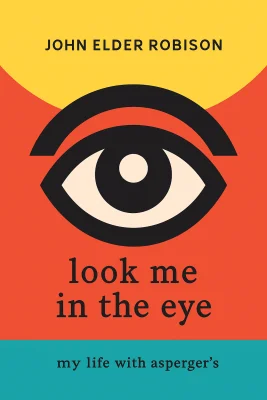
Look Me in the Eye
Categories
Nonfiction, Psychology, Biography, Memoir, Mental Health, Audiobook, Autistic Spectrum Disorder, Autobiography, Biography Memoir, Book Club
Content Type
Book
Binding
Hardcover
Year
2007
Publisher
Crown
Language
English
ASIN
0307395987
ISBN
0307395987
ISBN13
9780307395986
File Download
PDF | EPUB
Look Me in the Eye Plot Summary
Introduction
In the landscape of human neurodiversity, few stories illuminate the path from isolation to understanding with such raw honesty and unexpected humor as John Elder Robison's remarkable journey. Born into a world that would repeatedly tell him he was defective, wrong, and destined for failure, Robison navigated four decades of life before discovering the key that would unlock the mystery of his differences: Asperger's syndrome. His tale unfolds against the backdrop of America from the 1960s through the early 2000s, a time when autism spectrum disorders were largely misunderstood and often misdiagnosed entirely. What makes this narrative extraordinary is not just the revelation of a late-in-life diagnosis, but the incredible path Robison carved despite his challenges. From creating special effects guitars for the legendary rock band KISS to building a successful automotive repair business, his story demonstrates that neurological differences need not be limitations but can become the foundation for exceptional achievements. Readers will discover how one man's journey from childhood misfit to accomplished adult offers profound insights into resilience, creativity, and the transformative power of self-understanding. Through his experiences, we glimpse both the struggles and gifts that come with seeing the world through different eyes, ultimately revealing that what society labels as disability may actually be a different kind of ability altogether.
Chapter 1: Childhood Isolation: The Little Misfit
From his earliest memories, John Elder Robison knew he was different, though he lacked the vocabulary to explain why. At three years old, playing with his friend Doug in the dirt, young John exhibited the rigid thinking patterns that would characterize his childhood. When Doug mixed red blocks with blue ones, violating John's internal sense of order, the response was swift and physical—a whack to both ears, Three Stooges style. This incident, small as it seemed, revealed the fundamental challenge that would define his early years: an inability to understand why others didn't see the world through his precise, logical lens. The move to Philadelphia's Mulberry Tree Nursery School marked John's first formal encounter with the social world that would repeatedly reject him. His attempts to befriend a girl named Chuckie demonstrated the heartbreaking gap between his genuine desire for connection and his complete misunderstanding of social cues. Treating her like the family dog—attempting to pet her with a stick and correcting her "wrong" way of playing with toys—John couldn't comprehend why his well-intentioned efforts only drove others away. Each failed interaction deepened his confusion and pain, leading to lonely tears in the corner of the playground while other children played together. As the family moved from city to city, the pattern repeated itself with devastating consistency. In Seattle, five-year-old John faced the cruel taunts of Ronnie's cowboys, who branded him "Monkey Face" and excluded him from their games. The sting of rejection was particularly sharp because John possessed many qualities that should have made him popular—intelligence, gentleness, humor—but his behavioral oddities masked these traits from his peers. Unable to decode the mysterious social rules that came naturally to other children, he retreated further into solitude. The few bright spots in his childhood came from relationships with adults and his fascination with mechanical objects. Grown-ups could follow his disconnected conversational responses and showed patience with his quirks in ways that children never did. More importantly, John found refuge in the world of machines and toys, which operated according to logical principles he could understand and master. Unlike people, machines never tricked him, never hurt his feelings, and never changed the rules without warning. This early preference for the predictable world of objects over the chaos of human relationships would become a defining characteristic of his approach to life.
Chapter 2: Understanding Connections: The Challenge of Social Interaction
The mystery of human interaction plagued John throughout his formative years, creating a pattern of misunderstandings that would follow him well into adulthood. His difficulty wasn't simply shyness or introversion, but rather a fundamental inability to decode the complex web of nonverbal communication that most people navigate instinctively. Eye contact, facial expressions, body language, and the subtle rhythms of conversation remained as foreign to him as a complex mathematical equation would be to others. When adults commanded him to "look me in the eye," he genuinely didn't understand what this meant or why it mattered, leading to increasingly harsh judgments about his character. The breakthrough came at age nine with a sudden revelation about conversational logic that changed everything. John realized that when someone said "Look at my Tonka truck," they expected a relevant response rather than whatever random thought happened to be occupying his mind. This discovery—that conversations followed patterns and that his responses should connect to what others had said—marked a crucial turning point in his social development. While other children learned these rules naturally through observation and intuition, John had to consciously decode and memorize them like a foreign language. His struggles with social interaction were compounded by what others perceived as inappropriate emotional responses. When his mother's friend shared news of a child's tragic death, John's smile was interpreted as callousness rather than the nervous relief it actually represented. These misunderstandings led to labels of "sociopath" and predictions of a criminal future, creating additional layers of shame and self-doubt. The irony was that John often cared deeply but expressed his emotions in ways that others found disturbing or incomprehensible. The challenge of social reciprocity became particularly evident in his relationships with family members. With his younger brother, whom he nicknamed "Varmint," John displayed both genuine care and a tendency to treat him more like an interesting specimen than a person. His elaborate tricks and experiments, while never truly harmful, revealed his difficulty understanding others' perspectives and emotional needs. Yet beneath these apparent deficits lay a deep longing for connection and belonging that would drive many of his later achievements and personal growth.
Chapter 3: Finding Purpose: From Music to Engineering
John's salvation came through his discovery of electronics and music, fields where his analytical mind and obsessive attention to detail became assets rather than liabilities. At thirteen, receiving his first electronics kit transformed his world from one of social confusion to technical mastery. The forty-two-component computer kit, though primitive by today's standards, opened a universe where logical thinking was not only valued but essential. Unlike the unpredictable world of human relationships, electronic circuits followed immutable laws that John could understand, predict, and manipulate with growing expertise. His natural ability to visualize complex mathematical functions and hear how electrical modifications would affect sound quality set him apart from his peers. While other teenagers struggled with algebra, John was mentally modeling the behavior of electronic circuits and predicting their sonic characteristics with remarkable accuracy. This gift, combined with his relentless drive to understand every aspect of whatever captured his interest, led him to become a formidable audio engineer despite his lack of formal training. His basement workshop became his sanctuary, where hours of experimentation yielded increasingly sophisticated creations. The convergence of his technical skills with the world of music proved to be his ticket to acceptance and recognition. Local bands sought him out not for his social graces but for his ability to make their equipment sound better than anyone else could manage. In an industry populated by misfits and creative outcasts, John's eccentricities were not only tolerated but appreciated. Musicians understood that genius often came in unconventional packages, and John's modifications to amplifiers and sound systems spoke louder than any social awkwardness. His work in the school's audiovisual department provided both technical training and his first real job experience. Repairing broken record players and tape decks taught him troubleshooting skills that would serve him throughout his career, while the praise he received for his technical competence gave him confidence he had never experienced in academic subjects. For the first time, adults valued his contributions and saw him as capable rather than defective. This environment also introduced him to Mary, his future wife, creating his first genuine romantic connection with someone who shared his interests and understood his unique way of processing the world.
Chapter 4: Creating a Path: The Smoking Guitar and KISS
The trajectory of John's life changed dramatically when he encountered the legendary rock band KISS during their peak years of theatrical excess. Working for Britannia Row Audio, Pink Floyd's sound company, John found himself in the right place at the right time when guitarist Ace Frehley needed someone to turn his wild ideas into reality. The request seemed simple enough—create a guitar that would catch fire and smoke during a solo—but the technical challenges were immense, requiring innovations that no one had attempted before. John's approach to the smoking guitar project revealed his unique combination of analytical thinking and creative problem-solving. Rather than simply embedding a smoke bomb in the instrument, he designed an elaborate system involving a custom metal firebox, specialized lighting, rechargeable battery packs, and remote-controlled mechanisms. Working with his friend Jim Boughton, John created what was essentially a small theatrical device disguised as a musical instrument. The guitar could not only produce smoke and flames but also featured moving lights that could be seen throughout the largest arenas. The success of the smoking guitar led to increasingly complex requests from Ace and the band. John developed an entire arsenal of special effects guitars, including instruments that launched rockets, featured swinging mechanisms controlled from the ceiling, and produced pyrotechnic displays that became highlights of KISS concerts worldwide. His creations were featured on television and became legendary among rock fans, though John himself remained largely invisible to the public. His name might not have appeared on album credits, but his innovations were witnessed by millions of concertgoers and helped define an era of rock spectacle. Working with KISS provided John with his first taste of success on a grand scale, but it also highlighted the complexity of his relationship with fame and recognition. While he took immense pride in seeing audiences roar their approval for his creations, he remained puzzled by others' fascination with celebrity. To John, the band members were simply clients with interesting technical challenges, no different from any other musicians except for their larger budgets and more ambitious ideas. This perspective, while refreshingly honest, sometimes created friction with those who expected more enthusiasm for the glamorous aspects of the rock and roll lifestyle.
Chapter 5: Diagnosis at Forty: Making Sense of a Different Mind
The revelation that transformed John's understanding of himself came not from a medical professional but from a perceptive friend who recognized patterns that had been invisible to decades of therapists and counselors. At forty years old, John received a book about Asperger's syndrome from TR Rosenberg, who observed that the condition described John "to a T." The diagnostic criteria felt like a mirror reflecting back every struggle, every misunderstood behavior, and every social misstep that had defined his childhood and early adulthood. Reading about Asperger's syndrome provided John with a framework for understanding experiences that had previously seemed like personal failures or character defects. His inability to maintain eye contact, his difficulty with nonverbal communication, his intense focus on specific interests, and his challenges with social reciprocity were not signs of moral failing but neurological differences that affected how he processed and responded to the world. The relief was enormous—suddenly, decades of criticism and self-doubt could be recontextualized as natural expressions of a different kind of brain. The diagnosis also explained the apparent contradiction between his obvious intelligence and his academic failures. Teachers had labeled him lazy or defiant, unable to reconcile his deep knowledge of subjects that interested him with his inability to perform routine classroom tasks. Understanding Asperger's revealed that his brain was wired differently, with extraordinary capabilities in some areas and significant challenges in others. This knowledge allowed him to stop viewing himself as a fraud who might be discovered and exposed at any moment. Perhaps most importantly, learning about his condition helped John understand that his struggles were shared by many others. The isolation he had felt throughout his life—the sense of being the only person who couldn't decode the social world—was replaced by awareness of a community of individuals who experienced similar challenges. While Asperger's wasn't curable, it was manageable, and many people with the condition had found ways to build successful, fulfilling lives by leveraging their strengths and developing coping strategies for their difficulties.
Chapter 6: Family and Relationships: Learning to Connect
John's journey toward meaningful relationships was complicated by his difficulty understanding emotional reciprocity and the unspoken rules that govern human connections. His first marriage to Little Bear began during their teenage years when both were fellow outcasts in their school's audiovisual department. Their shared interests in science fiction and electronics provided common ground, but as they matured, the limitations of John's emotional expression and social awareness created growing distance between them. The relationship ultimately couldn't survive the stress of his career struggles and her brother's tragic death. His relationship with his parents remained strained throughout much of his adult life, colored by childhood memories of abuse and neglect during their descent into mental illness and alcoholism. Understanding his Asperger's helped John recognize that some of the conflicts weren't entirely due to their failures as parents but also stemmed from his own inability to express needs or respond to their attempts at connection. The revelation provided a foundation for eventual reconciliation, particularly with his father in the final years of the older man's life. The birth of his son Cubby brought new challenges and joys to John's life. Determined that his child would not experience the social isolation that had marked his own childhood, John made conscious efforts to expose Cubby to diverse experiences and help him develop social skills. Watching his son navigate friendships with ease while sharing some of his father's intellectual gifts and creative interests represented a form of redemption for John—proof that the family patterns of dysfunction could be broken. John's second marriage to Martha demonstrated his growing ability to form a stable, nurturing partnership based on mutual understanding and acceptance. Martha's intuitive ability to read his emotional states and respond appropriately created the first truly safe relationship of his adult life. Her patience with his repetitive questions, her willingness to explain social situations he missed, and her physical affection helped regulate his anxiety and provided the security he needed to continue growing emotionally. Their relationship illustrated that with the right partner and sufficient self-awareness, even those with significant social challenges could experience deep intimacy and connection.
Chapter 7: Building a Life: From Corporate Dropout to Success
John's exodus from the corporate world represented both a rejection of environments where his differences were seen as deficits and an embrace of work that valued his unique strengths. After climbing the management hierarchy at several engineering companies, he found himself increasingly frustrated by political games and interpersonal dynamics that seemed to penalize his directness and logical thinking. Despite achieving financial success and recognition, he felt like a fraud trying to conform to expectations that contradicted his natural way of being. The decision to leave his executive position and start an automotive repair business was driven partly by desperation and partly by a desire to create an environment where he could be himself. Working with high-end European cars like Rolls-Royce and Land Rovers allowed him to combine his mechanical aptitude with his compulsive attention to detail. His ability to diagnose complex problems that stumped other mechanics came from the same obsessive focus that had made him a successful electronics engineer. Customers valued results over social pleasantries, creating a professional context where his Asperger traits were assets rather than liabilities. Building JE Robison Service from a two-bay garage to a thriving business employing a dozen people demonstrated John's capacity for growth and adaptation. His interactions with customers gradually improved his social skills as he learned to translate technical concepts into language that non-experts could understand. The business attracted educated, affluent clients who appreciated his expertise and were willing to work with his communication style, creating a sustainable model that played to his strengths while accommodating his limitations. The success of his business also provided him with financial security and community recognition that had eluded him in the corporate world. Being asked to serve on the board of his local bank represented a form of legitimacy he had never expected to achieve. His journey from high school dropout to respected business owner illustrated that traditional paths to success weren't the only options, and that finding the right niche could transform perceived weaknesses into competitive advantages. Most importantly, his story demonstrated that understanding and accepting one's neurological differences, rather than fighting against them, could be the key to both personal fulfillment and professional achievement.
Summary
John Elder Robison's remarkable journey from misunderstood child to accomplished adult offers a powerful testament to the transformative potential of self-knowledge and acceptance. His story illuminates a fundamental truth: what society often labels as disability or dysfunction may actually represent a different way of experiencing and engaging with the world, one that can lead to extraordinary achievements when properly understood and nurtured. Through decades of struggle, failure, and eventual triumph, Robison discovered that his Asperger's syndrome was not a barrier to overcome but a neurological difference to embrace and leverage. The most profound lesson from Robison's experience lies in the importance of finding environments and relationships that value one's authentic self rather than demanding conformity to neurotypical expectations. Whether creating special effects for rock stars, diagnosing complex automotive problems, or building meaningful partnerships with understanding individuals, his greatest successes came when he stopped trying to be someone else and started being the best version of himself. His story offers hope to anyone who has ever felt like a misfit, demonstrating that the very qualities that make us different from others may ultimately become the foundation of our greatest contributions to the world.
Best Quote
“I don't really understsand why it's considered normal to stare at someone's eyeballs” ― John Elder Robison, Look Me in the Eye
Review Summary
Strengths: The review highlights the memoir's thoughtful and entertaining nature, emphasizing the author's storytelling ability. It provides insight into the challenges of living with undiagnosed Asperger's, particularly in social interactions. The connection to John Elder Robison's brother, Augusten Burroughs, known for his storytelling, adds credibility. Overall: The review conveys a positive sentiment towards the memoir, appreciating its engaging narrative and the author's journey of self-discovery. It suggests the memoir is both informative and relatable, particularly for those interested in understanding Asperger's syndrome. The recommendation level appears high, especially for readers interested in personal stories of overcoming adversity.
About Author

John Elder Robison
Robison reflects on the complexities of neurodiversity through his poignant autobiographical works, offering insights into life with undiagnosed Asperger syndrome. His books, such as "Look Me in the Eye", provide a window into the challenges and strengths of being neurodivergent, focusing on themes of self-discovery and acceptance. His writing style, characterized by humor and a lack of sentimentality, allows readers to grasp the multifaceted nature of autism, promoting a deeper understanding of human neurological diversity. Beyond writing, Robison's career has traversed electronics engineering and sound design, highlighting his versatile expertise.\n\nRobison's transition from engineering to authorship has allowed him to become a significant advocate in autism research. Serving on the Interagency Autism Coordinating Committee and holding academic appointments, he emphasizes the importance of recognizing both the disabilities and exceptionalities that neurodiversity brings. Readers of his works benefit from practical advice and personal anecdotes, making his books not just memoirs but guides for those navigating similar paths. His story exemplifies how personal challenges can lead to broader advocacy, encouraging others to embrace their unique identities.\n\nThis short bio of Robison highlights his profound impact on both the literary world and autism advocacy. His influence extends through his participation in major media outlets and his role in shaping contemporary discussions on Asperger syndrome. For individuals seeking to understand the lived experience of autism or gain practical insights into navigating neurodiversity, Robison’s work offers both inspiration and guidance, making his contributions vital to both personal readers and professionals in the field.
Read moreDownload PDF & EPUB
To save this Black List summary for later, download the free PDF and EPUB. You can print it out, or read offline at your convenience.
Look Me in the Eye
by John Elder Robison
