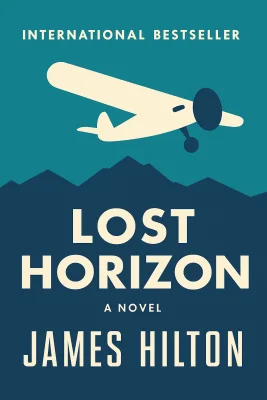
Lost Horizon
Categories
Fiction, Classics, Travel, Historical Fiction, Fantasy, Literature, Asia, Book Club, Novels, Adventure
Content Type
Book
Binding
Kindle Edition
Year
2012
Publisher
Open Road Media
Language
English
ASIN
B007JCZGOC
File Download
PDF | EPUB
Lost Horizon Plot Summary
Introduction
The hijacked plane lurched through thin mountain air, its four passengers trapped with a madman at the controls. Conway, the British consul, watched the Himalayas unfold beneath them like a deadly tapestry of ice and stone. What had begun as a routine evacuation from revolution-torn Baskul had become something far more sinister. Their pilot—who wasn't the man they thought he was—flew with desperate purpose toward peaks that shouldn't exist on any map. When the aircraft finally crashed in a hidden valley ringed by impossible mountains, Conway found himself face to face with a mystery that would challenge everything he believed about life, death, and the nature of time itself. The rescue party that met them spoke of a place called Shangri-La, a lamasery where the very air seemed to whisper of secrets older than civilization. But rescue, Conway would soon discover, was not quite the right word for what awaited them in this forbidden paradise where nothing was as it seemed, and where the price of enlightenment might be everything they had ever known about the world beyond.
Chapter 1: Hijacked into Mystery: Flight to the Unknown
The engine's drone masked the deception until it was far too late. Conway had noticed Mallinson's unease first—the young vice-consul's sharp eyes catching details that spoke of wrongness. The pilot's head, glimpsed through the glass partition, belonged to a stranger. Not Fenner, who was supposed to be at the controls, but someone else entirely. By then they were already deep into hostile territory, flying at an altitude that made breathing difficult and thinking slower. The other passengers—Barnard the American businessman and Miss Brinklow the missionary—seemed oblivious to the danger. Conway felt the familiar weight of responsibility settle on his shoulders. At thirty-seven, he had learned to recognize the moments when ordinary life tipped into crisis. The forced landing came without warning. The pilot, revealed now as an Asian man of indeterminate nationality, guided the aircraft down onto a rocky plateau with skill that spoke of careful planning. Armed tribesmen surrounded them immediately, their faces impassive as they refueled the plane from hidden caches. Conway's attempts at communication in local dialects met only silence and the meaningful display of rifle barrels. Hours passed in stifling heat before they were airborne again, climbing toward peaks that seemed to scrape the very sky. Mallinson grew increasingly agitated, his protests echoing uselessly in the thin air. The mystery deepened with each mile—this was no random act of madness, but something orchestrated with terrible precision. When the pilot finally collapsed over the controls, Conway felt death brush close. The man's final words, gasped out in broken Chinese, spoke of a place called Shangri-La and a duty fulfilled. As the aircraft plunged toward jagged slopes, Conway found himself thinking not of the life he might lose, but of the strange calm that had settled over him like a shroud.
Chapter 2: Valley of Serenity: First Encounters with Shangri-La
The rescue party materialized from the morning mist like figures from a dream. Conway blinked in the thin sunlight, certain that exhaustion and altitude had finally claimed his sanity. A dozen robed figures descended the valley slopes, carrying a silk-curtained chair that seemed absurdly civilized in this wilderness of stone and ice. From the chair stepped a man who defied every expectation Conway had formed about Tibet. Chang—for that was the name he offered with a courteous bow—spoke English with the precision of an Oxford don. His silk robes, embroidered with subtle patterns, seemed to float rather than hang on his slight frame. Here, impossibly, was refinement where there should have been only barbarism. The journey to the lamasery unfolded like a fever dream. Carried in chairs along precipitous paths, Conway watched the landscape transform from barren rock to terraced gardens green with impossible life. The valley below, when glimpsed through breaks in the mist, revealed a civilization that had no business existing in these remote heights. Shangri-La itself took his breath away. Delicate pavilions clung to the mountainside with the grace of flowers on a cliff face, their blue-tiled roofs catching the light like captured sky. Above them all loomed Karakal, a peak of such perfect symmetry that it seemed less mountain than monument, its snow-bright summit touched with an ethereal gleam. Inside the lamasery, wonder piled upon wonder. Central heating warmed corridors lined with priceless Chinese ceramics. A library held books in dozens of languages, including works Conway had thought lost forever. Most mysterious of all was the music room, where a young Chinese woman played Bach on a harpsichord with fingers that moved like butterflies over the keys. Her name, Chang mentioned casually, was Lo-Tsen, and she had not yet achieved full initiation into their order. The luxury was seductive, but Conway's trained mind catalogued inconsistencies. How did such treasures reach this isolated valley? Why had they been brought here with such elaborate deception? And why did Chang's answers, courteous though they were, always stop just short of real explanation?
Chapter 3: Timeless Wisdom: Secrets of the High Lama
The summons came after a week of gentle imprisonment disguised as hospitality. Chang led Conway through corridors he had not seen before, climbing toward chambers that grew warmer with each step until the air itself seemed thick as honey. In a room curtained with shadows and heated to tropical intensity, Conway met the true master of Shangri-La. The High Lama was so ancient that he seemed more spirit than flesh, his voice a whisper that carried absolute authority. His English was flawless, his manner courtly, but his eyes held depths that spoke of centuries rather than mere decades. When he began to tell the story of Shangri-La, Conway felt reality shift around him like sand. The tale he unfolded defied belief yet carried the weight of absolute truth. In 1719, four Capuchin friars had set out from Pekin in search of lost Christian communities. Only one survived the journey—Father Perrault, a Luxembourger who stumbled into this valley more dead than alive. What should have been a brief stop became a lifetime's mission as he restored the crumbling Buddhist monastery he found there. But the story grew stranger still. Perrault had not died at the expected time. At ninety-eight he began studying Buddhist texts. At over a century, he started experiments with breathing techniques learned from Indian mystics. Death came to claim him at one hundred and eight, only to retreat baffled. The Christian missionary had discovered something in this valley that made mockery of natural law. The High Lama's voice dropped to barely audible levels as he revealed the true purpose of Shangri-La. It was not merely a refuge but a repository—a place where the finest achievements of human civilization could be preserved against the darkness he saw coming. He spoke of wars that would engulf the world, of weapons that could destroy entire cities, of a coming age when all beauty and wisdom might be lost forever. Conway listened with growing unease as the ancient voice painted visions of aerial bombardment and global devastation. The prophecy seemed fantastic, yet something in the High Lama's certainty made it terrifyingly plausible. When the old man finally revealed that Conway and his companions had been deliberately brought here—chosen for their potential to help carry this burden into the future—the last pretense of accident fell away.
Chapter 4: Inner Conflict: Between Two Worlds
The revelation should have shattered Conway's composure, but instead it brought an odd sort of peace. Days flowed into weeks as he settled into the rhythm of Shangri-La, finding in its libraries and music rooms a contentment he had never known in the outside world. The valley's strange influence worked on him like a drug, slowing time until urgency itself seemed a half-remembered neurosis. His three companions reacted according to their natures. Barnard the financier—who Conway now suspected was the fugitive Chalmers Bryant—discovered gold deposits in the valley and threw himself into prospecting with enthusiasm that barely masked relief at being beyond the reach of prosecutors. Miss Brinklow found her missionary calling in the lamasery's tolerant paganism and began learning Tibetan with grim determination. Only Mallinson chafed against their captivity, growing more desperate with each passing day. The young man's energy, admirable in the crisis at Baskul, became a source of tension in the changeless calm of Shangri-La. He counted days obsessively, demanding news of the porters who were supposedly coming to escort them back to civilization. Conway found himself caught between worlds—the one where Mallinson's urgency made perfect sense, and another where time itself seemed negotiable. When he looked at Lo-Tsen, playing her delicate melodies in the music room, he felt the pull of something beyond ordinary desire. She was beautiful in a way that seemed to exist outside of time, her stillness containing depths he barely dared to fathom. Chang, observing his internal struggle, offered cryptic comfort. Lo-Tsen had been in the valley since 1884, he mentioned casually, arriving as a young woman bound for marriage in Kashgar. The porters who had escorted her bridal procession had lost their way in the mountains, and she had been rescued just as Conway's party had been. The implications of her apparent youth after so many decades hung unspoken in the air. The weight of secrets pressed down on Conway like the valley's thin atmosphere. He had given his word to keep the truth from his companions, but watching Mallinson's growing desperation felt like a betrayal of everything their friendship had meant. The young man deserved better than comfortable lies, yet the truth might destroy him entirely.
Chapter 5: The Precipice of Choice: Escape from Paradise
The crisis came with brutal suddenness. Mallinson burst into Conway's room near midnight, wild with excitement and desperate purpose. The porters had come at last, he announced—but they waited beyond the pass, unwilling to approach the lamasery directly. More shocking still, Lo-Tsen was with them, ready to flee the valley that had been her home for half a century. Conway's careful composure cracked like ice under sudden heat. The idea of the fragile Manchu facing the brutal cold and thin air of the high passes seemed insane beyond words. He tried to explain, revealing at last the truth about Shangri-La and its inhabitants, the secret of longevity that made the valley unique in all the world. Mallinson listened with growing skepticism that hardened into contempt. Magic and immortality were fairy tales, he declared. Conway had been drugged or hypnotized, fed elaborate lies by clever charlatans. The only reality was their imprisonment by madmen who spun fantasies to justify holding them against their will. The argument raged through the small hours, each man convinced of his own sanity and the other's delusion. For Mallinson, the choice was simple—escape to freedom or remain trapped forever by superstitious nonsense. For Conway, who had felt the valley's strange influence in his very bones, departure meant abandoning not just comfort but a kind of enlightenment he might never find again. But in the end, love proved stronger than wisdom. Mallinson's youth and passion, his desperate need to believe in Lo-Tsen's feelings for him, created a magnetic pull that Conway found impossible to resist. When the young man spoke of the Chinese girl's fear and longing, of her gratitude at being offered escape from her beautiful prison, Conway felt the foundations of his new world begin to shift. The decision, when it came, felt like tearing away part of his soul. He would go—not because he believed Mallinson's version of truth, but because he could not bear to let the boy face the dangers of the journey alone. As they prepared to leave, gathering what supplies they could carry, Conway felt he was committing a kind of suicide, abandoning paradise for the cold certainty of suffering.
Chapter 6: Fragments of Memory: The Search for Conway
Years later, Rutherford would piece together fragments of the mystery like a scholar reconstructing a broken manuscript. His search had taken him across half of Asia, following rumors and half-remembered conversations through the bazaars of Kashgar and the mission hospitals of China. The trail, such as it was, told a story of gradual dissolution. Conway had been found weeks after his departure from Shangri-La, collapsed and delirious at a Chinese mission station. His memory was gone, wiped clean as a slate, leaving only the echo of strange dreams and the ability to play Chopin compositions that had never been published. The missionaries who cared for him spoke of his arrival in whispers—brought by an ancient Chinese woman who died of fever almost immediately after delivering her burden. Mallinson's fate remained a mystery wrapped in silence. No trace of him had ever been found along the caravan routes that led back to civilization. The high passes had claimed him, as they claimed so many who underestimated their cruel indifference to human hope and love. Rutherford's investigations had yielded tantalizing hints—a German professor who had vanished in Tibet in the 1880s, unexplained shipments of books and art objects, legends of hidden valleys and immortal lamas. But hard evidence remained as elusive as morning mist on the mountains. The world, it seemed, was not yet ready to admit the existence of places like Shangri-La. The last sighting had come in Bangkok, where Conway had briefly recovered enough memory to book passage on a ship heading north. The consul there remembered his haunted expression, the way he spoke of having to find something he had lost. The trail ended at the edge of the maps, in the wild country where Tibet met China and the mountains held their secrets close. In the end, Rutherford could only speculate about what drove Conway back toward those forbidden peaks. Perhaps memory had returned like a fever, bringing with it visions of blue-tiled roofs and the sound of harpsichord music drifting across a lotus pool. Perhaps he had realized, too late, the true value of what he had abandoned for love and loyalty.
Summary
The mystery of Shangri-La remains unsolved, lost somewhere in the vast emptiness of the high plateaus where few men dare to travel and fewer still return to tell their tales. Conway's fate—whether he found his way back to the valley of Blue Moon or perished in the attempt—may never be known. What endures is the vision itself: a place where time moves differently, where wisdom accumulates like snow on mountain peaks, and where the best of human achievement waits patiently for a world worthy of its treasures. James Hilton's masterpiece reminds us that paradise, once lost, may be impossible to regain. The choice between love and wisdom, between the urgent demands of youth and the patient accumulation of understanding, defines us more completely than we dare admit. In Conway's struggle we see our own—the eternal tension between the life we think we should live and the life our deepest nature calls us toward. Perhaps the real Shangri-La exists not in any hidden valley but in those moments when we glimpse, however briefly, what we might become if only we had world enough and time.
Best Quote
“People make mistakes in life through believing too much, but they have a damned dull time if they believe too little.” ― James Hilton, Lost Horizon
Review Summary
Strengths: The review highlights the intriguing plot set against the backdrop of the Himalayas and Tibet, emphasizing the suspenseful and adventurous elements of the story. The depiction of the mysterious Shangri-La and its serene, enchanting environment is vividly described, capturing the reader's imagination. Weaknesses: The review lacks clarity in character development and motivations, with some characters described in a somewhat superficial manner. The narrative's pacing and the resolution of the plot are not addressed, leaving potential readers uncertain about the story's progression and conclusion. Overall: The review conveys a sense of mystery and adventure, appealing to readers interested in exotic settings and suspenseful narratives. However, the lack of detailed character analysis and plot resolution may leave some readers hesitant.
About Author

James Hilton
Hilton explores themes of nostalgia, idealism, and escapism, offering readers a journey through idealized worlds where human longing for peace and meaning takes center stage. His works, such as "Lost Horizon" and "Goodbye, Mr. Chips", convey these themes through engaging narratives that connect deeply with audiences, particularly through their sentimental yet dignified tone. Hilton's portrayal of educators is notably impactful, with Mr. Chipping, the protagonist of "Goodbye, Mr. Chips", reflecting the noble influence of his schoolmaster father. This blend of personal inspiration and broader cultural ideals situates Hilton's stories in a realm that resonates with readers seeking solace and hope.\n\nHilton's literary success, marked by works like "Random Harvest" and screenplays including "Mrs. Miniver", highlights his ability to transcend mediums while maintaining thematic consistency. His early book, "And Now Goodbye", paved the way for his breakthrough, demonstrating his commitment to exploring human emotions and societal ideals. Moreover, Hilton's involvement in Hollywood further extended his influence, as seen in his Academy Award-winning screenplay for "Mrs. Miniver". Readers and audiences benefit from Hilton's unique blend of storytelling and thematic exploration, offering a bio that captures the essence of his impact on both literature and film.
Read moreDownload PDF & EPUB
To save this Black List summary for later, download the free PDF and EPUB. You can print it out, or read offline at your convenience.
Lost Horizon
by James Hilton
