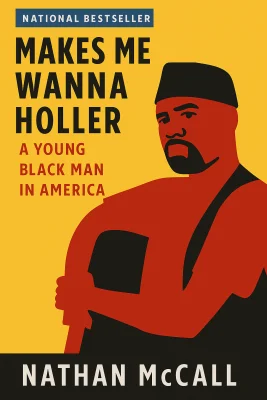
Makes Me Wanna Holler
A Young Black Man in America
Categories
Nonfiction, Biography, History, Memoir, Politics, Autobiography, Biography Memoir, Book Club, African American, Race
Content Type
Book
Binding
Paperback
Year
1994
Publisher
Vintage
Language
English
ASIN
0679740708
ISBN
0679740708
ISBN13
9780679740704
File Download
PDF | EPUB
Makes Me Wanna Holler Plot Summary
Introduction
# From Streets to Newsrooms: Nathan McCall's Journey of Redemption In the summer of 1989, Nathan McCall walked through the doors of The Washington Post as a staff writer, carrying with him a secret that would have shocked his new colleagues. Less than fifteen years earlier, this same man had been serving time in a Virginia prison for armed robbery, his future seemingly sealed by a life of violence and crime. His transformation from hardened criminal to respected journalist represents one of the most extraordinary redemption stories in American literature, a testament to the power of education, self-reflection, and unwavering determination to change one's destiny. McCall's journey unfolds against the backdrop of post-civil rights America, where young Black men in urban communities faced limited opportunities and systemic barriers that often led to destructive choices. His story illuminates the complex intersection of personal responsibility and social circumstances, revealing how individual transformation is possible even from the most desperate situations. Through his experiences, readers will discover the brutal realities of street life and the prison system, the transformative power of education and spiritual awakening, and the ongoing challenges of navigating professional success while carrying the weight of a criminal past. His narrative offers profound insights into the cycles of violence and redemption that shape countless American lives, providing both cautionary lessons and inspiring hope for those seeking to overcome their circumstances.
Chapter 1: The Making of a Criminal: Early Years in Portsmouth
Nathan McCall's descent into criminal life began in the working-class neighborhoods of Portsmouth, Virginia, where the promises of the civil rights movement seemed distant from the daily realities faced by young Black men in the 1970s. Born into a stable family with middle-class aspirations, McCall initially showed academic promise and seemed destined for conventional success. His mother worked as a domestic worker while his stepfather served in the Navy, providing the family with structure and values that emphasized education and respectability. However, the allure of street culture proved irresistible as McCall entered his teenage years. The neighborhood dynamics of Cavalier Manor created a complex environment where academic achievement competed with street credibility for social status. Young men like McCall found themselves caught between two worlds: the structured expectations of family and school, and the seductive freedom of the streets where respect was earned through toughness and rebellion. The civil rights gains of the previous decade had opened some doors, but they had not eliminated the deep-seated frustrations and limited opportunities that plagued urban Black communities. McCall's transformation from promising student to hardened criminal occurred gradually through a series of choices that seemed logical within his immediate environment but proved devastating in the long term. He began skipping school, experimenting with drugs, and engaging in increasingly serious criminal activities with his neighborhood friends. The group dynamics reinforced destructive patterns as young men competed to prove their masculinity through dangerous acts. What started as minor infractions escalated into assault, robbery, and eventually armed robbery. The culture of violence that surrounded McCall was both a product of systemic racism and a destructive force in its own right. Limited opportunities for legitimate success made the drug trade and street crime appear as viable alternatives for young men seeking respect and financial gain. McCall's participation in this world included brutal acts that he would later recognize as symptoms of deeper spiritual and moral emptiness. The streets taught him to view violence as a solution to problems and to measure manhood through the capacity to intimidate and harm others. By his late teens, McCall had fully embraced the criminal lifestyle, his worldview narrowed to immediate concerns of street credibility and material gain. The young man who had once shown academic promise was now prepared to use violence to achieve his goals, setting the stage for the armed robbery that would ultimately lead to his imprisonment. His parents watched helplessly as their son slipped away from their influence, despite their efforts to provide guidance and stability in an environment that offered few alternatives to the destructive path he had chosen.
Chapter 2: Behind Bars: Prison as Unlikely University
McCall's entry into the Virginia prison system in 1975 marked the beginning of an unexpected intellectual and spiritual awakening that would fundamentally reshape his identity and future prospects. Initially, prison represented simply another environment where survival depended on toughness and street credibility. The angry young man who entered Southampton Correctional Center was defiant and convinced that his incarceration was merely a temporary setback in his criminal career. However, the structured environment of prison paradoxically provided the stability and time for reflection that had been absent from his chaotic street life. The turning point came through his encounters with older inmates who had transformed their own lives through education and religious study. These men, many of whom had committed serious crimes in their youth, had used their prison years to develop intellectual discipline and spiritual awareness. They introduced McCall to authors and ideas that challenged his narrow worldview, including the works of Malcolm X, Eldridge Cleaver, and various philosophical texts. For the first time, he began to understand his personal struggles within the broader context of American racial history and systemic oppression. Reading became McCall's pathway to transformation and his obsession. He devoured books on African American history, discovering heroes and intellectual traditions that had been absent from his formal education. The prison library became his sanctuary, where he could explore ideas about identity, purpose, and social justice. This intellectual awakening was accompanied by a growing sense of discipline and self-respect that contrasted sharply with his previous chaotic lifestyle. He earned his GED while incarcerated and began taking college courses through correspondence programs, developing a love of learning that extended far beyond formal academic requirements. The prison environment, despite its obvious limitations, provided an unexpected community of like-minded individuals committed to personal transformation. McCall formed relationships with other inmates who shared his commitment to education and spiritual growth. These men became his mentors, study partners, and sources of encouragement during the difficult process of changing his fundamental beliefs and behaviors. The discipline required by his studies provided structure to his daily life and helped him develop the self-control that had been lacking during his criminal years. Perhaps most importantly, prison forced McCall to confront the consequences of his actions and the pain he had caused others. The isolation and reflection inherent in incarceration allowed him to develop empathy and moral awareness that had been suppressed during his years on the streets. Writing became another crucial element of his transformation as he began keeping journals, documenting his thoughts and experiences with the honesty and introspection that would later characterize his professional work. Through writing, he learned to articulate his experiences and emotions, developing the communication skills that would prove essential to his future career in journalism.
Chapter 3: Finding Faith and Purpose Through Islamic Awakening
The discovery of Islam during his incarceration provided McCall with both spiritual grounding and a framework for understanding his place in the world as a Black man in America. His conversion was not merely a superficial adoption of religious practices, but a profound transformation of his worldview and personal identity. The discipline required by Islamic observance, including regular prayer, fasting, and study, provided structure to his daily life and helped him develop the self-control that had been lacking during his criminal years. Islamic teachings offered McCall a way to channel his anger about racial injustice into constructive purposes while maintaining his sense of dignity and cultural pride. The religion's emphasis on personal responsibility, intellectual development, and social consciousness resonated with his growing awareness of the systemic factors that had influenced his life choices. Through Islamic study, he learned to understand his personal struggles as part of a larger historical pattern of oppression and resistance, giving meaning to his suffering while inspiring him to work for positive change. The Muslim community within the prison provided McCall with brotherhood and support that had been missing from his street life. Fellow Muslim inmates became his spiritual guides and study partners, helping him navigate the complex process of personal transformation while maintaining his authenticity. The communal aspects of Islamic practice, including group prayers and discussions, taught him about cooperation and mutual support in ways that contrasted sharply with the competitive and violent dynamics of street culture. Islamic philosophy also provided McCall with intellectual tools for analyzing social conditions and personal behavior. The religion's emphasis on education and critical thinking encouraged his voracious reading habits while providing moral frameworks for evaluating his past actions and future choices. He found in Islamic texts sophisticated discussions of justice, morality, and social responsibility that helped him develop a more nuanced understanding of his relationship to society and his obligations to others. The integration of Islamic faith with his broader educational pursuits created a powerful foundation for McCall's eventual reentry into society. His religious beliefs provided moral guidance and personal discipline, while his educational achievements gave him practical skills and intellectual confidence. Together, these elements enabled him to envision a future that extended far beyond the limited options he had previously considered possible, setting the stage for his remarkable transformation from convicted felon to professional journalist.
Chapter 4: Breaking Barriers: From Ex-Con to Professional Journalist
McCall's transition from prison to professional journalism represents one of the most unlikely career transformations in American media history, requiring him to overcome both the stigma of his criminal record and the barriers facing minorities in predominantly white newsrooms. Upon his release in 1978, he faced the daunting challenge of finding legitimate employment with a felony record and no professional experience. The conventional wisdom suggested that ex-convicts should be grateful for any menial job, but McCall's prison education had given him higher aspirations and the confidence to pursue them. His entry into journalism began with an unpaid internship at The Virginian-Pilot, an opportunity that arose through a combination of persistence, luck, and the willingness of a few individuals to look beyond his criminal past. The internship offered no guarantee of future employment but provided McCall with his first exposure to professional newsroom culture and the chance to demonstrate his abilities as a writer and reporter. He approached this opportunity with the same intensity and discipline that had characterized his prison studies, determined to prove that his transformation was genuine and lasting. The transition was far from smooth as McCall had to navigate the complex social dynamics of a predominantly white, middle-class professional environment while concealing his criminal background from most of his colleagues. He lived in constant fear that his past would be discovered and used to disqualify him from the career he was desperately trying to build. This anxiety was compounded by his unfamiliarity with the unwritten rules and cultural expectations of professional journalism, forcing him to learn through observation and occasional painful mistakes. Despite these challenges, McCall's natural curiosity, strong work ethic, and unique perspective as someone who had experienced both sides of the criminal justice system made him an effective reporter. His ability to connect with sources from diverse backgrounds, particularly those from urban communities often ignored by mainstream media, distinguished him from his more privileged colleagues. His writing combined the raw honesty developed during his prison years with the technical skills acquired through formal journalism training, creating a distinctive voice that would eventually gain national recognition. The decision to hire McCall permanently represented a significant risk for The Virginian-Pilot, as newspapers in the early 1980s rarely employed individuals with criminal records. However, his performance during the internship had demonstrated his potential, and progressive editors recognized that his unique background could enhance the paper's coverage of urban issues and criminal justice topics. This opportunity became the foundation for a journalism career that would eventually take him to The Washington Post and establish him as one of America's most compelling voices on race, crime, and social justice.
Chapter 5: Navigating Identity in Predominantly White Newsrooms
McCall's success in journalism brought him into predominantly white professional environments where he faced constant pressure to assimilate while maintaining his authentic identity and connection to his community. The newsrooms of major American newspapers in the 1980s and 1990s were overwhelmingly white institutions with established cultures that often excluded or marginalized minority perspectives. As one of the few Black reporters in these environments, McCall found himself serving as both participant and observer, constantly analyzing the racial dynamics that shaped his professional relationships. The challenge of code-switching between his authentic self and the professional persona expected in white-collar environments created ongoing psychological stress. McCall had to carefully modulate his speech, dress, and behavior to avoid triggering racial stereotypes while remaining true to his own cultural identity. This balancing act was exhausting and required constant vigilance, as any misstep could be interpreted through the lens of racial prejudice and used to question his competence or professionalism. The effort required to maintain this dual identity often left him feeling isolated and inauthentic. His criminal background added another layer of complexity to these racial dynamics, creating a double burden that his white colleagues could never fully understand. While white colleagues might view their own youthful indiscretions as harmless mistakes, McCall's past was seen as evidence of inherent criminality or moral deficiency. He lived in constant fear that his background would be discovered and used to discredit his professional achievements, forcing him to maintain a level of secrecy that further isolated him from his colleagues and prevented the formation of genuine workplace relationships. The pressure to represent his entire race while pursuing individual success created additional burdens that weighed heavily on McCall's daily experience. He was acutely aware that his failures would be attributed to racial inferiority, while his successes would be dismissed as affirmative action benefits rather than earned achievements. This dynamic forced him to work harder than his white colleagues while receiving less recognition for his contributions. The psychological toll of constantly proving his worth in environments that questioned his basic competence was enormous and required tremendous mental resilience. Despite these challenges, McCall's presence in white newsrooms served an important function in diversifying media coverage and challenging institutional biases that had long shaped American journalism. His unique perspective and ability to access communities typically ignored by mainstream media enhanced the quality of reporting while providing representation for underserved populations. His success also paved the way for other minority journalists, demonstrating that excellence could overcome prejudice, even if the process was painful and difficult. His experience revealed both the possibilities and limitations of integration in American professional life.
Chapter 6: The Challenge of Fatherhood and Personal Accountability
McCall's journey toward responsible fatherhood paralleled his professional development and represented another crucial test of his personal transformation, forcing him to confront patterns of behavior that extended beyond his criminal past. Having grown up without a strong relationship with his biological father, he initially struggled to understand the responsibilities and emotional connections inherent in parenting. His early experiences with fatherhood were marked by the same impulsiveness and lack of long-term commitment that had characterized his criminal years. The birth of his first son, Monroe, occurred during a period when McCall was still developing his sense of personal responsibility and learning to think beyond immediate gratification. His relationship with the child's mother was complicated and ultimately unsuccessful, leading to a custody arrangement that limited his involvement in his son's daily life. This separation created feelings of guilt and inadequacy that haunted McCall for years, as he recognized the painful parallels between his own absent father and his limited presence in Monroe's life. His subsequent relationships and the birth of additional children forced McCall to confront his patterns of behavior and their impact on others, particularly the women and children who depended on him. The demands of supporting multiple children while building his journalism career created financial and emotional pressures that tested his commitment to personal transformation. He struggled to balance his professional ambitions with his responsibilities as a father, often feeling that he was failing in both roles and perpetuating cycles of dysfunction that he had hoped to break. The development of a meaningful relationship with Monroe during the boy's teenage years became a crucial test of McCall's personal growth and his ability to break generational patterns of absent fatherhood. When Monroe came to live with him, McCall had the opportunity to provide the guidance and support that had been missing from his own adolescence. This experience taught him about the daily sacrifices and emotional investments required for effective parenting, while also providing him with the satisfaction of actively working to break the cycle of absent fathers that had affected his own family. McCall's evolution as a father reflected his broader transformation from a self-centered individual focused on immediate gratification to a mature adult capable of long-term commitment and sacrifice for others. His willingness to acknowledge his failures and work to improve his relationships with his children demonstrated the same honesty and determination that had enabled his professional success. Through the challenges of fatherhood, he learned that personal accountability extended beyond avoiding criminal behavior to actively contributing to the welfare and development of the next generation.
Chapter 7: Living with the Past While Building the Future
The ongoing challenge of McCall's transformation involved learning to live with his criminal past while building a respectable future, a delicate balance that required constant vigilance and strategic decision-making. Unlike other forms of personal change, overcoming a criminal background meant that his past could resurface at any moment to undermine his progress. Every job application, background check, and professional opportunity carried the potential for his criminal record to derail his carefully constructed new life. The decision of when and how to disclose his criminal history became a recurring dilemma throughout his career, with significant consequences regardless of the choice he made. Early experiences taught him that honesty about his past often resulted in immediate disqualification from opportunities, regardless of his qualifications or demonstrated rehabilitation. This led to a pattern of strategic concealment that created additional stress and the constant fear of discovery, forcing him to live a partially hidden life even as he achieved professional success. McCall's criminal background also created unique opportunities to contribute to public discourse about crime, punishment, and rehabilitation in ways that few journalists could match. His insider knowledge of both criminal culture and the prison system provided insights that enhanced his reporting and gave authenticity to his analysis of criminal justice issues. His ability to write about these topics with both authority and empathy helped humanize issues that were often discussed in abstract or purely punitive terms by mainstream media. The process of eventually writing publicly about his experiences represented both a professional opportunity and a personal reckoning that required considerable courage. By acknowledging his criminal past and the factors that contributed to it, McCall accepted full responsibility for his actions while providing a framework for understanding the broader social conditions that influence individual choices. This honesty exposed him to criticism and judgment from both his professional colleagues and the communities he had left behind, but it also freed him from the burden of secrecy. McCall's story ultimately demonstrates that redemption is possible but requires sustained effort, honest self-examination, and the willingness to accept responsibility for past actions while working tirelessly to create a better future. His transformation from street criminal to respected journalist illustrates the potential for human change while acknowledging the ongoing challenges faced by individuals seeking to overcome their past mistakes. His journey provides hope for others while honestly depicting the difficulties inherent in such dramatic personal transformation, showing that the path to redemption is neither simple nor guaranteed, but remains achievable for those willing to do the necessary work.
Summary
Nathan McCall's extraordinary journey from armed robber to Washington Post journalist stands as one of the most compelling redemption stories in American literature, demonstrating that profound personal transformation is possible even from the most desperate circumstances. His story reveals that genuine change requires more than simply avoiding past mistakes; it demands rigorous self-examination, sustained commitment to growth, and the courage to confront uncomfortable truths about both personal failures and systemic inequalities. Through his unflinching honesty about his criminal past and his ongoing struggles to navigate success as a Black man in predominantly white institutions, McCall shows that authentic transformation is a daily choice rather than a single moment of conversion. The lessons embedded in McCall's experience offer valuable insights for anyone seeking to overcome significant obstacles or understand the complex realities of race, crime, and opportunity in America. His journey suggests that meaningful change requires both individual accountability and supportive communities willing to invest in human potential, while also highlighting the ongoing barriers that prevent many from accessing the educational and professional opportunities that made his transformation possible. For readers grappling with their own challenges or seeking to understand the experiences of those who have walked difficult paths, McCall's story provides both inspiration and practical wisdom about the possibility of redemption and the sustained effort required to maintain it.
Best Quote
“Much later, when I thought about it, I realized that my folks were typical of their generation of parents: Their idea of raising children was making sure we were clothed, fed, and protected. They didn't focus much on us unless we were sick or had done something wrong. They didn't hold conversations with us. Love was understood rather than expressed, and values were transmitted by example, not word of mouth.” ― Nathan McCall, Makes Me Wanna Holler: A Young Black Man in America
Review Summary
Strengths: The review highlights the book's vivid and detailed descriptions, which effectively convey the challenges faced by African American youths in a racially biased society. The narrative's ability to evoke empathy and understanding in readers unfamiliar with such experiences is also praised. The reviewer appreciates the book's exploration of cultural respect and its impact on behavior. Overall: The reader expresses a strong positive sentiment towards "Makes Me Wanna Holler," finding it enlightening and impactful. The book is recommended for its insightful portrayal of racial issues and the personal growth of Nathan McCall from a troubled youth to a reflective adult.
About Author

Nathan McCall
McCall interrogates the complexities of race, identity, and societal transformation through his poignant narratives, driven by personal experience and academic insight. His book "Makes Me Wanna Holler: A Young Black Man in America" not only serves as a profound autobiography but also as a cultural lens, examining the systemic challenges faced by African Americans. Through his work, McCall explores themes of violence and redemption, offering readers an introspective journey into the struggles and resilience inherent in the Black experience. His writing method combines raw honesty with deep introspection, creating compelling narratives that engage readers and provoke thoughtful discourse.\n\nMeanwhile, McCall’s academic role as a senior lecturer in the African American Studies Department at Emory University enriches his literary contributions by intertwining theoretical frameworks with lived experiences. This dual focus provides a unique perspective, allowing readers to benefit from both practical insights and scholarly analysis. His fiction, such as "Them: A Novel", expands on issues like gentrification and racial dynamics in urban settings, further demonstrating his commitment to exploring societal issues through storytelling. As an author, McCall’s impact extends beyond literature, fostering discussions on race and social justice, and resonating with a diverse audience interested in these critical themes.\n\nMcCall’s literary achievements are recognized through various accolades, including his book "Them" being named one of Publishers Weekly’s best books of 2007. These honors underscore the significance of his work in the literary world and beyond. His bio showcases a trajectory of transformation and contribution, emphasizing the power of narrative to inspire change and understanding across cultural boundaries. Through his compelling storytelling, McCall provides invaluable insights into the African American experience, encouraging readers to engage with issues of race, identity, and personal growth.
Read moreDownload PDF & EPUB
To save this Black List summary for later, download the free PDF and EPUB. You can print it out, or read offline at your convenience.
Makes Me Wanna Holler
by Nathan McCall
