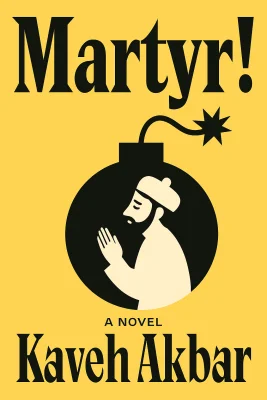
Martyr!
Categories
Fiction, Audiobook, Poetry, Book Club, Contemporary, Novels, LGBT, Literary Fiction, Queer, Iran
Content Type
Book
Binding
Hardcover
Year
2024
Publisher
Knopf
Language
English
ASIN
0593537610
ISBN
0593537610
ISBN13
9780593537619
File Download
PDF | EPUB
Martyr! Plot Summary
Introduction
In a dingy Indiana hospital room, Cyrus Shams practiced dying for twenty dollars an hour. As a medical actor, he embodied grief—the bereaved father, the mourning wife, the terrified patient receiving a terminal diagnosis. Each performance felt like rehearsal for something larger, something he couldn't yet name. The light bulb in his apartment had flickered once, maybe twice, and in that uncertain moment between divine revelation and faulty wiring, Cyrus had glimpsed the shape of his obsession. His mother died when he was an infant, shot from the sky aboard Iran Air Flight 655 by a U.S. Navy warship. His father, Ali, had raised him alone in America before dying himself when Cyrus reached college. Now twenty-eight and two years sober, Cyrus felt suspended between worlds—too Iranian for America, too American for Iran, too alive for death, too dead for living. When news reached him of a dying Iranian artist named Orkideh, performing her final installation at the Brooklyn Museum, he saw a sign. Here was someone choosing how to die, making her death mean something. Here was the martyr he'd been seeking—and perhaps, the ending he'd been rehearsing for all his life.
Chapter 1: The Performer of Death: Cyrus's Medical Acting and Obsession with Martyrdom
The medical student's hands trembled as she delivered the diagnosis. "Mrs. Kaufmann, I'm afraid the scans have revealed several large masses in your brain." Cyrus adjusted his posture, channeling the grief of Sandra Kaufmann, high school math teacher, widow, no children. A six on the pain scale—somewhere between "hurts even more" and "hurts a whole lot." But today something felt different. Instead of following the script, Cyrus found himself speaking from a deeper place. "Have you ever had a patient who wanted to die?" The question hung in the sterile air like smoke. The medical student stared at him, her carefully constructed bedside manner cracking. Cyrus told her about sitting in a bathtub with a bottle of Everclear, planning to light himself on fire. How even drunk, even desperate, he'd realized the flames would spread to his neighbors. "I wanted to stop hurting," he said. "Being burned alive felt suddenly like it'd hurt a lot." The student's eyes softened. For a moment, the performance became real—two humans acknowledging the weight of suffering. Twenty dollars an hour to practice dying. His roommate Zee thought it was unhealthy, this obsession with endings. But Cyrus found purpose in the pretending. Each fictional death taught him something about the real thing. Each grieving family member showed him how loss echoed through the living. He was building a vocabulary of sorrow, preparing for a conversation he couldn't yet imagine having. After the session, Cyrus drove to his AA meeting, the taste of artificial grief still bitter in his mouth. He shared about rushing the cockpit, about feeling most alive when controlling the narrative of pain. "There are no big decisions in my life," he told the room. "Mostly I just sit around listening to my brain saying the same shit over and over." The words felt inadequate, but they were all he had.
Chapter 2: Ghosts of Flight 655: A Son's Search for Meaning in Loss
Roya Shams had never flown before July 3, 1988. She wore her favorite outfit—a slim white trench coat and smart wool slacks—despite the heat, wanting to look good for her brother Arash in Dubai. The pregnancy had exhausted her, left her distant from Ali and baby Cyrus. This trip would restore her warmth, Ali hoped. Reset her connection to the world. At 10:17 AM, the USS Vincennes fired two surface-to-air missiles at Iran Air Flight 655. The warship's crew had mistaken the civilian Airbus for an attacking F-14 Tomcat. One missile hit the left wing. Two hundred and ninety passengers and crew, including sixty-six children, were "turned into dust" over the Strait of Hormuz. Roya's body never washed ashore. Years later in Indiana, Ali would tell his son fragments of the story. How the U.S. vice president said he didn't care what the facts were, that he wasn't "an apologize for America kind of guy." How Iran put the plane crash on a postage stamp to stoke anti-American sentiment. How Cyrus almost went on that flight—Roya had insisted he was too young to travel, that she'd earned a break from childcare. The settlement came in 1996: $150,000 for women and children, $300,000 for wage-earning men. Ali never touched the money, left it for Cyrus's college education. Cyrus would later call it his mother's "bounty"—blood money that bought textbooks and late-night pizza, that funded his drinking and eventually his medical acting gig. The weight of it followed him everywhere, this inheritance built on his mother's absence. But absence could be its own kind of presence. In Cyrus's sleepless nights, he would imagine conversations between heroes and beloveds—his father speaking to Michael Jordan, Rumi debating with Spider-Man. It was in these dream dialogues that he first heard his mother's voice, felt her love across the void of death. She became more real in his imagination than she'd ever been in his conscious memory.
Chapter 3: The Journey to Brooklyn: Confronting the Dying Artist
At Naples Café during open mic night, Sad James showed Cyrus and Zee a tweet about Orkideh's final installation. The dying Iranian artist was living her last days in the Brooklyn Museum, talking to visitors about death. "DEATH-SPEAK," read the flyer, featuring a woman whose bald head emphasized the sharp angles of her face. Her eyes looked like deep dry wells, but they blazed with an intelligence that made Cyrus's chest tighten. "It seems kind of exactly like what you're talking about, right, Cyrus?" Sad James said. Cyrus studied the image, seeing in Orkideh's face the same "Iranian ugliness" his father had taught him to recognize—not aesthetic ugliness, but the earned hardness of a people shaped by history's casual cruelties. Zee pushed him toward the journey. "You're treading water here. You work that bizarre job pretending to die, not even full-time. You're the definition of available." The words stung because they were true. Cyrus had graduated years ago but remained suspended in a holding pattern, writing little, achieving less. "I have my mom's bounty," Cyrus said finally. The blood money could buy a weekend in New York, a chance to speak with this artist who was choosing how to die. Maybe she could teach him something about martyrdom, about making death meaningful. The decision crystallized like ice forming on a window. They would go to Brooklyn. Zee would bring his beat-up Yamaha PA for the trip, hunt for records in vintage shops. Cyrus would confront the dying artist and perhaps find answers to questions he'd been carrying since childhood. On the plane, Cyrus thought about Orkideh's name—Persian for "orchid." How fitting that another Iranian woman would teach him about endings, about the art of a beautiful death. The earth martyrs, he would call them. Those who gave their lives not for God or country, but for something more human, more immediate.
Chapter 4: Revelations in the Museum: Conversations About Death and Identity
The Brooklyn Museum's fourth floor felt like a church. Dim lighting, hushed voices, the weight of something sacred hanging in the air. Orkideh sat in a simple black chair, oxygen tank beside her, looking like a sculpture of mortality itself. When Cyrus approached, her face lit with recognition—though he was certain they'd never met. "I would die for you," he'd practiced saying to his mirror, but facing the dying artist, different words emerged. "I've been thinking about dying. Dying soon." The confession tumbled out faster than he'd intended. His obsession with martyrdom, his study of earth martyrs who died for principle rather than paradise. Orkideh listened with the patience of someone who had moved beyond the urgency of living. "What are you waiting for?" she asked, her voice tissue-thin but cutting. When Cyrus fumbled toward an answer about wanting his death to mean something, she smiled. "Another death-obsessed Iranian man?" The conversations unfolded over three days. Orkideh spoke of Persian mirror art—how Safavid craftsmen had shattered European mirrors during transport, then created gorgeous mosaics from the fragments. "We got to cubism hundreds of years before Braque or Picasso," she said. "We've been training for a long time in sitting in the complicated multiplicities of ourselves." She deflected his attempts to romanticize her final installation. "What, because I have cancer and a couple metal chairs in some museum?" she laughed. "I'm too fucking high on these pain meds." But beneath her sardonic surface, Cyrus sensed a profound weariness—someone who had lived fully and was ready to let go. Their final conversation carried an unexpected intimacy. Cyrus shared his "grief day"—how at sixteen he'd skipped school to properly mourn his mother, wandering Fort Wayne weeping and drinking Gatorade to replace the tears. Orkideh's eyes watered as he spoke. "We won't grow old together, Cyrus," she said, placing her cold hand on his. "But can't you feel this mattering? Right now?"
Chapter 5: The Unraveling Truth: Discovering Orkideh is Roya
The phone call came from Sang Linh while Cyrus sat on a park bench, shivering in the morning cold. Orkideh had died in the night—not from cancer's slow consumption, but by her own hand, a final artistic choice. The news hollowed Cyrus out, left him fainting on the museum stairs. But Sang's voice carried something else, a weight beyond professional obligation. "How long have you known?" she asked when Cyrus, in desperation, blurted out the impossible question: "Was Orkideh my mother?" The truth unraveled like a Persian carpet pulled by its loose threads. Roya Shams had never been on Flight 655. She'd traded papers with her lover, Leila, so they could escape Iran separately and start over together. Leila died in the plane crash carrying Roya's passport. Roya lived, carrying Leila's identity and the crushing weight of survival. Sang explained how Roya had reinvented herself as Orkideh, the artist. How she'd worked in a Greek diner, chopping onions and sketching in stolen moments. How fame found her through a combination of talent and terrible luck—the same forces that had shaped every Iranian life Cyrus knew. "She recognized you immediately," Sang said. "Standing in line at the museum, all these years later. She hadn't even known you were in America." The artist had spent three days talking to her son without revealing herself, studying his face for traces of the infant she'd abandoned. Cyrus felt the ground shift beneath him. His mother hadn't been a martyr at all—she'd been a woman in love, desperate enough to fake her own death. The mythology he'd built around Flight 655 crumbled, revealing something more human and infinitely more complicated.
Chapter 6: Abandonment and Art: Reconciling a Mother's Choice
In Prospect Park, snow fell like ash from a burning sky. Cyrus read his mother's final words in the New York Times—her obituary, written in her own hand. "I demand to be forgiven," she wrote. "I demand the same leniencies, rationalizations, granted to mediocre men for centuries." The rage came in waves. His sweet, dead father had raised him alone, never knowing his wife had chosen to abandon them both. Cyrus had grown up motherless while she built a new life in New York's art world, transforming her grief into gallery exhibitions. But beneath the anger lay something else—a recognition of the impossible choices that had shaped her life. Iran in the 1980s offered no sanctuary for women like his mother, women who loved other women. The war with Iraq had turned the country into a graveyard. Escaping meant sacrifice, meant leaving behind everything familiar, including the son she'd carried for nine months. "You're not the patient today," Sang told him, sharing a story from her own recovery. Sometimes the grace was in being able to comfort rather than needing comfort, in holding space for someone else's pain. Cyrus thought about his medical acting, how each performance had taught him to inhabit loss. The snow continued falling, but Cyrus felt something warming in his chest. His mother had been neither saint nor villain, but a woman trapped by history and geography, trying to carve out space for love in a world determined to crush it. Her art had been her way of surviving the unsurvivable—a bridge between the woman she'd been and the woman she'd become. Zee found him there as the day darkened, and together they walked through the accumulating snow, talking about forgiveness and the weight of inheritance, about the stories we tell ourselves to make sense of the senseless.
Chapter 7: Earth Martyrs: Finding Grace in the Final Moments
The world began to unmake itself as Cyrus and Zee sat together in Prospect Park. Trees erupted into impossible bloom, buildings crumbled at their edges, the sky cycled through colors that had no names. Around them, the city transformed into something from a fever dream—horses galloping past with cloaked riders, birds falling like snow from the heavens. "Are you seeing this?" Zee asked, but his voice carried no surprise, only wonder at the universe's theatrical finale. The ground beneath them glowed with golden fissures, warm as a hearth fire. Cyrus understood with perfect clarity that this was ending—not just his story, but the story itself, the long narrative that had begun with his mother's choice in a Tehran alley and his father's quiet grief in an Indiana chicken farm. His foot, scarred from that long-ago accident at Jude's house, pulsed with familiar pain. But when he looked down, he saw not flesh but a cosmos—his family's faces swirling in a void of possibility and loss. Everything connected: the plane crash that wasn't, the mother who lived, the father who endured, the son who learned to love by watching others pretend. "You feel ready?" Zee asked, and Cyrus nodded. Ready for what, he wasn't certain, but the question felt like the right one. They knelt beside the pool of golden light that had opened in the earth, and Cyrus saw his reflection joined by others—his parents, his uncle, all the earth martyrs who had lived and died for love rather than doctrine. The art of martyrdom, he realized, wasn't in the dying but in the choosing—choosing love over safety, beauty over comfort, connection over isolation. His mother had been a martyr after all, not to nationalism or faith, but to the possibility that two women might build a life together despite a world determined to destroy them. As trumpets sounded from somewhere beyond the horizon and Rumi's voice echoed through the dissolving city, Cyrus reached into the warm light and felt another hand grasp his—Zee's, or his father's, or his mother's, or his own. In the end, it didn't matter whose. What mattered was the reaching, the choice to connect rather than withdraw, to love rather than merely endure.
Summary
In the golden pool of light that opened beneath them, Cyrus finally understood the difference between dying and living, between martyrdom and mere suffering. His mother had not died on Flight 655—she had died in a Tehran alley when she kissed another woman and chose love over safety. Everything after had been a form of resurrection, an artist's attempt to transform abandonment into creation, guilt into grace. The plane crash had been Leila's tragedy, but the living—the decades of painting through grief, of building beauty from broken mirrors—had been Roya's triumph. The world unraveled around them in spirals of snow and flame, but Cyrus felt no fear, only the deep satisfaction of a story finding its proper end. He had spent his life rehearsing for this moment—in hospital rooms and recovery meetings, in dream conversations with the dead and real conversations with the dying. His mother's final installation had been their three days together at the museum, the gift of recognition passed between them like a secret, like forgiveness made flesh. As the golden light rose to meet them and the city sang its swan song in trumpets and distant voices, Cyrus understood that every goodbye was also a greeting, every ending also a door. The earth martyrs lived not in their deaths but in their choices, in their stubborn insistence that love might survive even the unsurvivable. This too was a choice, this reaching toward light, this letting go.
Best Quote
“Eight of the ten commandments are about what thou shalt not. But you can live a whole life not doing any of that stuff and still avoid doing any good. That’s the whole crisis. The rot at the root of everything. The belief that goodness is built on a constructed absence, not-doing. That belief corrupts everything, has everyone with any power sitting on their hands.” ― Kaveh Akbar, Martyr!
Review Summary
Strengths: The novel attempts to explore existential themes, particularly the concept of giving life meaning through death and martyrdom. The reviewer appreciates the thematic ambition and the novel's effort to tackle complex ideas. Weaknesses: The narrative structure is criticized for being disjointed, with multiple points of view that feel like interruptions rather than cohesive elements. The writing lacks the strength and distinctiveness needed to support the cerebral and introspective story. The novel's attempts at thematic exploration ultimately miss the mark, and the writing does not meet the expectations set by the author's background as a poet. Overall: The reviewer expected to enjoy "Martyr" but found it unsuccessful due to its fragmented structure and insufficiently strong writing. While the thematic intentions are clear, the execution falls short, leading to a lack of recommendation.
About Author

Kaveh Akbar
Akbar interrogates the complexities of addiction, recovery, and spirituality through his poetry, merging emotional intensity with introspective narratives. His writing purpose revolves around capturing the dualities of human experience, often drawing from his personal journey between intoxication and sobriety. This thematic exploration is evident in his debut book, "Calling a Wolf a Wolf," which deeply investigates these struggles, embodying a philosophy that naming a challenge is the first step toward its resolution.\n\nThe methods Akbar employs include a unique emphasis on sound and rhythm, shaped by his early encounters with Arabic poetry, a language he never spoke. He begins writing poems without punctuation, later integrating it to match the natural flow of language. This approach allows readers to engage with his work on a visceral level, creating a space for quiet contemplation of intense subjects. His collection "Pilgrim Bell" showcases this style, earning recognition from prestigious outlets like "Time" and "The Guardian".\n\nReaders drawn to introspective and profound explorations of life's challenges will find Akbar's work compelling. His ability to translate deeply personal experiences into universal themes resonates widely, making his poetry and prose relevant to a broad audience. Akbar's contributions extend beyond writing, as evidenced by his role as the founder of Divedapper and his appointment as Poetry Editor of "The Nation". These roles underline his commitment to fostering dialogue within the poetry community, adding another layer to his dynamic author bio.
Read moreDownload PDF & EPUB
To save this Black List summary for later, download the free PDF and EPUB. You can print it out, or read offline at your convenience.
Martyr!
by Kaveh Akbar
