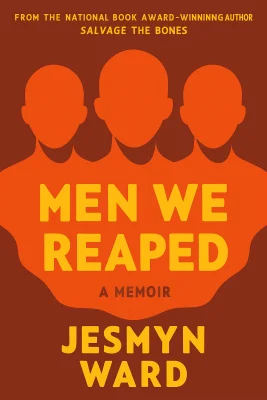
Men We Reaped
A Memoir
Categories
Nonfiction, Biography, Memoir, Audiobook, Adult, Social Justice, Biography Memoir, Book Club, African American, Race
Content Type
Book
Binding
Hardcover
Year
2013
Publisher
Bloomsbury USA
Language
English
ASIN
160819521X
ISBN
160819521X
ISBN13
9781608195213
File Download
PDF | EPUB
Men We Reaped Plot Summary
Introduction
In the humid heat of Mississippi, where Spanish moss drapes ancient oaks like memories, five young Black men died between 2000 and 2004. Their deaths—violent, sudden, seemingly unrelated—would shatter a small community and force one woman to confront the brutal realities of race, poverty, and survival in the American South. This is not just a story of loss, but a profound meditation on what it means to grow up Black and poor in a region where history's wounds never fully heal. The narrator, a Stanford-educated writer who escaped Mississippi only to be called back by tragedy, weaves together her own coming-of-age story with the lives of these five young men: her beloved brother Joshua, and friends Roger, Demond, Charles Joseph, and Ronald. Through their intertwined stories, we witness how systemic racism, economic desperation, and the legacy of generations of trauma create a devastating cycle that claims young lives with ruthless efficiency. Yet within this darkness burns an unquenchable light—the fierce love of family, the unbreakable bonds of community, and the determination to survive and remember. This powerful narrative illuminates the strength required to endure unthinkable loss while celebrating the beauty and resilience found in the most unlikely places.
Chapter 1: Early Years in Rural Mississippi
The story begins in Wolf Town, as DeLisle, Mississippi was once known—a name that hints at the wildness still lurking beneath its surface. Here, among the pine forests and bayous, generations of mixed-race families have carved out lives from ancestral land, their roots running as deep as the Spanish oaks that shade their modest homes. The narrator's family history reads like a map of American racial complexity: French-speaking Creole great-grandparents, Native American bloodlines, and the ever-present specter of slavery's legacy woven through every family tree. In this landscape of small shotgun houses and dirt roads, children grow up understanding that family extends far beyond blood relations. The community itself becomes a vast, interconnected network where everyone knows everyone else's business, where neighbors become surrogate parents, and where the burden of survival is shared across generations. Yet this closeness cannot shield the young from the harsh realities that await them beyond the familiar boundaries of home. The early years are marked by a particular kind of freedom—running barefoot through fields, swimming in muddy creeks, and creating elaborate games in the woods that border their world. These children possess an innate understanding of their environment, moving through it with the confidence of those who belong. They build forts from fallen trees, create kingdoms in abandoned lots, and live with the kind of unstructured liberty that comes from being raised by a community rather than confined by institutional oversight. But even in these golden moments of childhood, the adults carry themselves with a wariness born of experience. They speak in coded language about "heat" from the police, about jobs that disappear without warning, about the need to be twice as good to get half as much. The children absorb these lessons unconsciously, learning to read the subtle signs of danger, understanding that their very existence is viewed as suspect by the larger world beyond their community's protective embrace. The landscape itself becomes a character in these early stories—the oppressive heat that makes even the air feel thick with challenge, the storms that sweep in with biblical fury, and the ever-present awareness that nature, like society, can turn deadly without warning. Hurricane Camille becomes a dividing line in family histories, separating the before times from everything that came after, teaching everyone that even the most solid foundations can be swept away in a single night.
Chapter 2: Finding Voice Through Education and Struggle
Education emerges as both salvation and torment in this world where academic achievement is revered yet rarely rewarded with meaningful opportunities. The narrator's journey through predominantly white private school becomes a daily exercise in code-switching, learning to navigate between the language of home and the expectations of institutions that view her very presence as an experiment in diversity. At Coast Episcopal, she stands alone as often the only Black student, bearing the weight of representing her entire race while simultaneously being reminded of her otherness through casual racism and deliberate exclusion. The hallway conversations turn ugly with lynching jokes, classmates use racial slurs with impunity, and she learns to swallow her anger, to make herself smaller, to survive by becoming invisible. Yet this education, paid for by her mother's labor as a domestic worker, represents the family's best hope for breaking cycles of poverty and limitation. The irony cuts deep—wearing hand-me-down clothes from the very families her mother cleans for, sitting in classes with children who live in the mansions where her mother scrubs toilets and mops floors. The psychological toll of this double consciousness creates a internal war between gratitude for the opportunity and rage at the humiliation required to access it. She learns to excel academically while dying emotionally, understanding that her success comes at the cost of daily psychological violence. Her brother Joshua, meanwhile, navigates the public school system where different but equally damaging assumptions await young Black men. Here, the expectation isn't excellence but failure, not potential but pathology. Teachers and administrators practice a kind of benign neglect that allows promising students to slip through cracks, their struggles interpreted as confirmation of low expectations rather than calls for intervention and support. The contrast between educational experiences illuminates the impossible choices facing Black families in the South—accept the psychological damage of token integration in exchange for better resources, or remain in underfunded schools where love and community cannot compensate for systemic neglect. Either path demands sacrifices that white families never face, and both lead to their own forms of trauma and loss. The narrator's academic success becomes both a source of family pride and a marker of separation from her community. Each achievement pulls her further from the familiar world of home, creating a painful tension between personal advancement and communal belonging that will define her relationship with Mississippi for years to come.
Chapter 3: The Weight of Grief: Five Deaths in Four Years
Between October 2000 and June 2004, death stalked the young men of DeLisle with methodical precision. First Joshua, the narrator's beloved brother, killed by a drunk driver on a moonlit stretch of coastal highway. Then Ronald, who put a gun to his head after a final phone call filled with desperation. Charles Joseph burned alive in a car wreck at a railroad crossing where warning lights had long been broken. Demond was shot down in his own front yard, still wearing his work clothes. Finally Roger, whose heart gave out from the combined stress of drugs and despair. Each death arrives like a physical blow, leaving the survivors reeling and grasping for explanations that never come. The community responds with rituals born of necessity—memorial t-shirts bearing smiling photographs, repasts where food becomes both comfort and communion, and an informal phone tree that spreads the news of each new tragedy with devastating efficiency. The young people who remain begin to move through their days with the haunted awareness that they might be next, that survival itself has become a form of survivor's guilt. The deaths reveal the inadequacy of official systems to address the crisis consuming an entire generation. Police investigations stall or conclude with minimal consequences. The drunk driver who killed Joshua serves just three years of a five-year sentence. Demond's murder remains unsolved. The railroad crossing where Charles Joseph died continues to malfunction. Each inadequate response sends the same message: these lives don't matter enough to demand justice or prevention. Grief becomes a constant companion, manifesting in sleepless nights, angry outbursts, and self-destructive behavior that only increases the danger. The survivors drink to forget, use drugs to numb the pain, and engage in increasingly reckless activities as if daring death to come for them too. The community's support systems, stretched thin by poverty and overwhelmed by the scale of loss, begin to buckle under the weight of so much sorrow. Yet within this devastation emerges a fierce determination to remember, to resist the erasure that threatens to reduce these young men to statistics. Family members become guardians of memory, preserving stories and photographs, maintaining graves, and insisting that their loved ones' lives meant something beyond their tragic endings. The act of remembering becomes both a form of resistance and a way of keeping the dead close, refusing to let them disappear into the anonymity that society seems eager to impose. The narrator finds herself caught between the impulse to flee this cycle of death and the obligation to bear witness, to transform private grief into public testimony. Each funeral becomes a reminder that silence equals complicity, that these deaths demand explanation and accountability even when official channels provide neither.
Chapter 4: Navigating Race, Poverty, and Identity
Growing up Black in Mississippi means inheriting a complex legacy of resistance and resilience, but also trauma and limitation that shapes every aspect of daily existence. The narrator's family history reads like a microcosm of American racial complexity—ancestors who passed for white, relationships that crossed color lines, and the constant navigation required to survive in a society built on racial hierarchy and exclusion. Poverty adds another layer of complexity to identity formation, creating choices between pride and pragmatism that no child should face. The narrator watches her mother clean houses for white families, understanding even as a child that this work subsidizes her education but also reinforces racial hierarchies that make such arrangements necessary. The psychological cost of this economic relationship manifests in shame, anger, and a deep sense of displacement that follows her wherever she goes. The community's response to systemic oppression involves both adaptation and resistance, creating its own codes of behavior and support systems. Extended families absorb children whose parents cannot cope, neighbors share resources without being asked, and everyone understands that survival depends on mutual aid and collective vigilance. Yet these same survival strategies can also limit possibilities, creating pressure to remain close to home and familiar patterns even when opportunities emerge elsewhere. The narrator's academic success creates its own identity crisis, pulling her between the world of her birth and the possibilities education might provide. At Stanford, she encounters a level of privilege and assumption that makes her feel like an anthropological specimen, while her returns home are marked by subtle accusations of having become "too good" for her raising. The code-switching required becomes exhausting, creating a sense of never being fully accepted anywhere. Her brother and male friends face even more complex challenges, navigating expectations that they be simultaneously unthreatening to white society and strong enough to protect their families and communities. The narrow space between these contradictory demands leaves little room for normal adolescent development, forcing them to make adult decisions without adult resources or support. The legacy of historical trauma manifests in contemporary struggles with trust, self-worth, and hope for the future. When institutions consistently fail to provide protection or opportunity, when hard work rarely leads to meaningful advancement, and when violence can erupt without warning or consequence, maintaining faith in the possibility of change becomes an act of radical courage that not everyone can sustain.
Chapter 5: Literary Awakening and Return to Home
The narrator's escape to Stanford represents both triumph and exile, a bittersweet victory that comes at the cost of separation from everything familiar and beloved. In California, she encounters a world of privilege and possibility that seems almost alien after the intimate struggles of Mississippi, yet the education she receives provides tools for understanding and articulating experiences that had previously remained invisible to the larger world. Her academic success opens doors to opportunities her family could never have imagined, but it also creates a gulf of experience that becomes harder to bridge with each passing year. The sophisticated theoretical frameworks she learns in college help her analyze systems of oppression, but they cannot ease the homesickness that follows her like a physical ache or provide comfort when news of another death reaches her in her dormitory room. The decision to return home after graduate school reflects both love and responsibility—a recognition that her education means nothing if it cannot be brought to bear on the problems that continue to devastate her community. Yet the return proves more complicated than anticipated, as she discovers that home has changed in her absence, or perhaps that her own perspective has shifted enough to see familiar patterns with new and troubling clarity. Her attempts to find meaningful work in Mississippi reveal the limited opportunities available even for those with elite educations, forcing her to confront the reality that individual achievement cannot overcome systemic barriers. The choice between staying home and remaining economically viable becomes another impossible decision in a life full of them, highlighting how structural inequalities persist despite personal accomplishments. The tension between literary ambition and community loyalty creates its own set of challenges. Writing about home means exposing private grief to public scrutiny, risking accusations of exploitation or betrayal from those whose trust and love made the stories possible. Yet the alternative—silence—feels like a form of complicity with forces that prefer these stories remain untold and these deaths unexamined. Her growing awareness of her role as potential witness and chronicler adds weight to every interaction, every memory, every moment of joy or sorrow. The responsibility to accurately represent lives and experiences that have been consistently misrepresented or ignored becomes both a calling and a burden that will define her relationship to her craft and her community for years to come.
Chapter 6: Creating Meaning from Tragedy
The search for meaning in the face of senseless loss becomes a driving force that shapes both the narrator's personal healing and her artistic development. Each death demands explanation, not just for the specific circumstances that led to individual tragedies, but for the larger forces and systems that make such losses almost inevitable in communities like DeLisle. The process of investigation reveals layers of causation that extend far beyond individual choices or random misfortune. Structural racism creates conditions where young Black men face limited opportunities and constant surveillance, while poverty ensures that mistakes become catastrophic and help arrives too late if at all. Historical trauma manifests in contemporary struggles with depression, addiction, and violence that claim lives with ruthless efficiency. Yet the narrator refuses to reduce her loved ones to mere victims of social forces, insisting instead on their full humanity—their humor, intelligence, dreams, and capacity for love that existed alongside and despite the circumstances that ultimately destroyed them. The act of bearing witness becomes a form of resurrection, bringing the dead back to life on the page in all their complexity and contradiction. The writing process itself becomes a kind of archaeology, digging through layers of memory and grief to uncover truths that official records ignore or distort. Family members become collaborators in this effort, sharing stories and photographs that help reconstruct lives that ended too soon. The community's investment in accurate representation reflects their understanding that these stories matter, that getting them right is a form of justice when legal justice proves impossible. The narrator's growing understanding of her role as chronicler brings both purpose and pain, as she realizes that her education and survival carry obligations to those who were not as fortunate. The guilt of being spared becomes fuel for creative work, transforming private grief into public testimony that challenges readers to see beyond stereotypes and statistics to the human beings whose deaths demand explanation and accountability. The ultimate meaning found in tragedy is not closure or comfort, but commitment—a determination to resist the forces that make such losses seem normal or inevitable, and to insist through art and witness that these lives mattered, that these deaths were not random or natural, but the predictable result of systems and choices that could be changed if there existed sufficient will to change them.
Chapter 7: Building Community Through Stories
The act of storytelling emerges as both healing practice and political resistance, creating space for voices and experiences that have been systematically excluded from dominant narratives about race, poverty, and life in the American South. Through the careful reconstruction of individual lives, the narrator builds a collective portrait that challenges assumptions and demands recognition for a community's full humanity. The process of gathering stories requires rebuilding trust and relationships that have been strained by loss and separation. Family members and friends who might have been suspicious of the narrator's intentions gradually become collaborators in the project of memory-making, understanding that their cooperation is essential for ensuring their loved ones are remembered accurately and completely. The community's own storytelling traditions provide both model and foundation for this literary work. The informal networks through which news travels, the rituals surrounding death and remembrance, and the oral histories that preserve family legacies all contribute to a rich tradition of narrative that values truth-telling and collective memory over individual privacy or institutional protection. The narrator's role evolves from passive recorder to active participant in community healing, as the process of writing becomes a shared endeavor that involves multiple voices and perspectives. The book itself becomes a community project that reflects not just the author's vision, but the collective investment in accurate representation and meaningful remembrance. The decision to publish these stories represents both gift and risk for the community involved. While publication offers the possibility of wider recognition and understanding, it also exposes private grief and struggle to public scrutiny that might not always be sympathetic or informed. The narrator must navigate this tension carefully, balancing the desire for broader impact with the obligation to protect those who trusted her with their stories. The ultimate hope embedded in this literary project is that understanding might lead to change, that making visible the forces and systems that create these tragedies might inspire action to prevent future losses. The book becomes both memorial and manifesto, honoring the dead while insisting that their deaths need not have been inevitable, and that similar tragedies can be prevented if society chooses to address their root causes rather than simply mourning their consequences.
Summary
The memoir stands as a powerful testament to the idea that love truly is stronger than death, that the bonds of family and community can endure even the most devastating losses when sustained by the determination to remember and the courage to speak truth about forces that prefer to remain invisible. Through unflinching examination of personal and collective tragedy, the narrator transforms private grief into public witness, insisting that these lives mattered and their deaths demand explanation. The lessons embedded in this story extend far beyond the specific circumstances of rural Mississippi, speaking to universal questions about how communities survive trauma, how individuals navigate impossible choices, and how art can serve both healing and justice when other institutions fail. For readers seeking to understand the continuing impact of racism and poverty in America, this book provides essential insight into how historical injustices manifest in contemporary lives. For those who have experienced profound loss, it offers the hard-won wisdom that grief never fully disappears but can be transformed into purpose, and that the act of bearing witness can be both burden and gift for those who survive to tell the story.
Best Quote
“I think my love for books sprang from my need to escape the world I was born into, to slide into another where words were straightforward and honest, where there was clearly delineated good and evil, where I found girls who were strong and smart and creative and foolish enough to fight dragons, to run away from home to live in museums, to become child spies, to make new friends and build secret gardens.” ― Jesmyn Ward, Men We Reaped: A Memoir
Review Summary
Strengths: The reviewer acknowledges Ward's beautiful writing style and her ability to convey grief powerfully. The personalization of statistics regarding young black men in poverty is also praised, as is her depiction of Mississippi. Weaknesses: The memoir is criticized for being weak and inarticulate, with Ward's grief perceived as too raw and unprocessed. The attempt to merge personal grief with broader social issues is seen as overwhelming. The non-linear narrative structure is considered confusing and repetitive, detracting from the story's impact. Overall: The reader finds the memoir emotionally intense but ultimately not compelling due to its lack of narrative clarity and unresolved grief, suggesting it falls short of its ambitious goals.
About Author

Jesmyn Ward
Ward investigates the deep interconnections between race, poverty, and resilience in the American South, drawing heavily from her upbringing in DeLisle, Mississippi. Her writing purpose is rooted in capturing the essence of human struggle and triumph, and this dedication is evident in her notable works such as "Salvage the Bones" and "Men We Reaped." In "Salvage the Bones," for example, she offers a poignant narrative of a family preparing for Hurricane Katrina, a story that resonates with the raw realities of survival and kinship. Meanwhile, "Men We Reaped" delves into the personal and communal loss, portraying lives touched by hardship and systemic challenges. These books showcase her ability to blend personal stories with broader societal issues, presenting narratives that are both intimate and universally significant.\n\nWard's method involves a lyrical intensity and emotional depth that effectively bridges the personal with the universal. Her narratives are infused with the struggles and strengths of her characters, creating a tapestry of stories that reflect her own experiences and observations. As an associate professor of Creative Writing at Tulane University, Ward not only continues to write compelling narratives but also nurtures future generations of writers. Her influence extends beyond her books, contributing to publications like BOMB and The Oxford American, where her voice amplifies stories often overlooked in mainstream discourse.\n\nReaders benefit from Ward's work as it offers profound insights into the lived experiences of those at the margins of society. Her books invite readers to engage with difficult themes while providing an empathetic lens through which to view the world. Ward's impact on contemporary literature is significant, as she elevates underrepresented voices and enriches the literary landscape with her authentic storytelling. Through her bio, one sees the power of narratives to both challenge and inspire, making her a pivotal figure in the realm of narrative fiction.
Read moreDownload PDF & EPUB
To save this Black List summary for later, download the free PDF and EPUB. You can print it out, or read offline at your convenience.
Men We Reaped
by Jesmyn Ward
