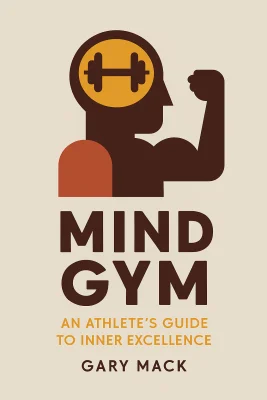
Mind Gym
An Athlete's Guide to Inner Excellence
Categories
Business, Nonfiction, Self Help, Sports, Psychology, Philosophy, Health, Science, Personal Development, Fitness
Content Type
Book
Binding
Paperback
Year
2002
Publisher
McGraw Hill
Language
English
ASIN
0071395970
ISBN
0071395970
ISBN13
9780071395977
File Download
PDF | EPUB
Mind Gym Plot Summary
Introduction
Picture a young baseball player standing in a dimly lit motel room, his eyes closed, envisioning himself at Wrigley Field. Dwight Smith wasn't just dreaming—he was programming his mind for success. When asked where he saw himself in three years, this minor league prospect didn't hesitate: "I see myself in Wrigley Field, hitting .300." That vivid dream became reality when Smith reached the major leagues and finished second in Rookie of the Year voting. This transformation reveals a profound truth that elite athletes have discovered: the mind is as powerful as any physical tool in sports. While coaches spend countless hours perfecting technique and building strength, the most successful competitors understand that the real game is won between the ears.本书 explores this inner dimension of athletic performance, revealing how champions think differently and how mental training can unlock potential that physical ability alone cannot reach. Through compelling stories and proven strategies, you'll discover how to develop the mental toughness that separates good athletes from great ones, transforming not just your performance, but your entire approach to competition and life.
Chapter 1: The Mind Game: How Champions Think Differently
Standing on the practice field with arms folded, Cardinals coach Gene Stallings watched his field goal kicker attempt what should have been a routine kick. The ball sailed wide, and Stallings walked away in disgust. Later, the team's sports psychologist pulled the kicker aside to understand what happened. "I'm a great field goal kicker," the player insisted, "but I just can't kick when Gene's watching me." The response was gentle but pointed: "Well, you know, I think he's going to be at all the games." This kicker had fallen into one of sports' most common mental traps—becoming self-conscious rather than task-conscious. His mind wasn't on his technique or target; it was on his coach's judgment. The brain, like a powerful computer, can only focus on one thing at a time, and this athlete had programmed himself to focus on the wrong thing. The solution wasn't more physical practice but mental training to redirect his attention. Professional athletes learn to use specific trigger words to block negative thoughts and maintain focus. Al Del Greco, a veteran NFL kicker, used the word "birdie" to remind himself of successful experiences on the golf course, creating feelings of confidence and relaxation. This technique demonstrates a fundamental principle: what we think about directly influences what we achieve. When we tell ourselves "don't hit it in the water," we've actually programmed our minds to remember water as the dominant image. The most successful competitors understand that actions follow thoughts and images. They've learned to give their minds positive, specific instructions rather than negative warnings. A struggling pitcher who focused on his fears—"Don't hang your curve, don't walk this guy"—transformed his performance simply by switching to process-focused thoughts: "Locate my fastball, throw first-pitch strikes, change speeds." The difference wasn't physical; it was mental, proving that by changing how we think, we can change how we perform. Champions recognize that the mind works most effectively when we tell it what to do rather than what not to do. They've discovered that the real opponent isn't across the field—it's the voice inside their heads. Learning to control that voice, to make it an ally rather than an enemy, is perhaps the most crucial skill any athlete can develop.
Chapter 2: Finding Your Performance Zone: Between Pressure and Flow
The arena fell silent as Scott Hamilton stood alone in the spotlight, knowing this moment would define his Olympic legacy. At five-foot-three and 115 pounds, he had overcome a childhood disease and years of being called "Peanut" to reach this pinnacle. Four minutes later, after a flawless performance that earned him Olympic gold, Hamilton offered a insight that would reshape sports psychology: "Under pressure, people can perform fifteen percent better or fifteen percent worse." This observation captures the paradox of competitive pressure. Some athletes, like Hamilton, find that pressure elevates their game, sharpening their focus and bringing out their best. Others crumble under the same circumstances, their skills abandoning them when they need them most. The difference isn't in their physical abilities—it's in how they interpret and respond to pressure mentally. Hamilton approached his gold medal performance with what he called "refined indifference." After years of preparation, when the spotlight came on, he let fate carry him through. The hard work was finished; now it was time to enjoy the moment. This mindset parallels that of Sarah Hughes at the 2002 Winter Olympics, who skated with "uninhibited joy" while her more experienced competitors faltered. Both athletes understood that pressure exists primarily in our interpretation of events. The body's response to pressure is automatic—increased heart rate, faster breathing, heightened awareness. But how we frame these sensations determines whether they help or hurt our performance. Goose Gossage, the Hall of Fame closer, thrived under pressure by maintaining perspective: "The worst thing that could happen is that I'd be home fishing tomorrow." This ability to keep the stakes in perspective, to see pressure as a challenge rather than a threat, separates those who perform their best in crucial moments from those who shrink. Understanding that pressure is largely self-created opens the door to mastering it. When we stop fighting these sensations and instead channel them as energy for peak performance, we discover what champions know: pressure isn't something to fear—it's something to embrace as the pathway to our greatest achievements.
Chapter 3: Self-Talk and Mental Imagery: Transforming Thoughts into Action
Mark McGwire sat in the shadows of the St. Louis dugout moments before his final at-bat, eyes closed in deep concentration. The man with Popeye forearms wasn't napping—he was mentally rehearsing. "Everybody looks at my body," McGwire once said, "but I use my mind more than my arms." When he stepped to the plate and launched his seventieth home run of the season, it was the culmination of not just physical preparation, but mental programming that had been occurring for years. McGwire's approach exemplified what research has consistently shown: mental rehearsal is as powerful as physical practice. Studies with basketball players revealed that those who spent time visualizing successful free throws improved their accuracy as much as those who spent the same time actually shooting. The mind treats vivid mental images as real experiences, programming the body for success through repeated mental practice. Carl Yastrzemski described his nightly routine: "I visualize the pitcher and the pitches I'm going to see the next day. I hit the ball right on the button. I know what it's going to feel like." This wasn't wishful thinking—it was systematic mental training. Pelé followed a similar ritual before every match, lying down with towels for privacy, first recalling the joy of playing soccer as a child on Brazilian beaches, then visualizing his greatest World Cup moments, and finally mentally rehearsing for the upcoming game. The power of this mental rehearsal lies in its specificity and emotional connection. Bob Tewksbury created an elaborate "mind gym" in his imagination—a bubble-like structure with positive affirmations and highlights of his best performances playing on an overhead screen. This wasn't fantasy; it was professional preparation that helped transform him from a struggling pitcher into an All-Star. What separates elite athletes is their systematic use of mental imagery to prepare for both success and challenges. They don't just visualize perfect performances—they mentally rehearse how they'll respond when things don't go as planned, creating multiple pathways to success in their minds before they ever step onto the field.
Chapter 4: Overcoming Adversity: Turning Setbacks into Comebacks
The rejection letter was devastating. At fifteen, Michael Jordan's eyes searched the posted list of players who had made his high school basketball team. His name wasn't there. The future icon of basketball went home, shut himself in his room, and cried. That moment of crushing disappointment could have ended the story of the greatest basketball player in history. Instead, it became the foundation of his legendary determination. Jordan's response to being cut reveals the mindset that separates champions from the discouraged. Rather than accepting the coach's judgment as final, he used the setback as fuel. The pain of rejection became the energy for transformation. "I used my anger to motivate me," Jordan later explained. This ability to convert negative experiences into positive motivation is perhaps the most crucial skill for long-term success in sports. The fear of failure, ironically, makes failure more likely. When athletes become consumed with avoiding mistakes, they create the very tension and overthinking that leads to poor performance. It's like being asked to stand on a chair versus standing on that same chair twenty stories in the air—the task is identical, but fear changes everything. Chuck Noll, the legendary Steelers coach, observed that athletes who constantly worry about failing become so tight they actually increase their chances of failure. Greg Maddux, one of baseball's greatest pitchers, learned to view failure differently: "Failure is the best teacher in the world. You get to learn from what happens to you in real-live game situations. The hitters have a funny way of telling you that a particular pitch isn't working." This reframing of failure as feedback rather than judgment transforms setbacks from sources of shame into opportunities for growth. The most successful athletes develop what might be called "intelligent stubbornness"—the ability to persist while simultaneously learning and adapting. They understand that the path to excellence isn't straight; it's filled with obstacles that become stepping stones when approached with the right mindset. True champions don't avoid failure—they learn to fail forward, using each setback as information for their eventual comeback.
Chapter 5: Building Mental Toughness: The 7 C's of Peak Performance
Mia Hamm stood barely over five feet tall, shy by nature and labeled a reluctant star, yet she embodied the warrior mentality that defined American women's soccer. "Nothing stands between us and success but our will to win," she told her teammates before their dramatic World Cup victory. When Hamm said their approach meant "coming after you with a 'take no prisoners' attitude," she was describing what psychologists have identified as mental toughness—a set of behaviors and beliefs that can be learned and developed. Mental toughness manifests through seven distinct characteristics, each building upon the others. Competitive athletes like Nancy Lopez understand that "a competitor will find a way to win. Competitors take bad breaks and use them to drive themselves harder." Confidence shows up in Tiger Woods's pre-tournament mindset: "Every time I play, in my mind I'm the favorite." This isn't arrogance—it's the quiet certainty that comes from thorough preparation and self-belief. Control becomes evident in an athlete's ability to maintain composure under pressure. The mentally tough know to focus on what they can influence while ignoring factors beyond their control. Commitment drives them to invest time and energy in their goals with laser-like focus. John McEnroe captured this perfectly: "Those who make it are there because they wanted it more." Courage manifests as willingness to take risks, understanding that playing it safe often leads to mediocre results. Composure reveals itself in those crucial moments when others lose their emotional balance. The mentally tough have learned that retaliation usually hurts them more than their opponents, so they channel anger constructively rather than destructively. Finally, consistency—the ability to perform at high levels regardless of circumstances—separates true champions from those who excel only when everything goes perfectly. These seven characteristics aren't innate gifts; they're developed through conscious practice and decision-making. Mental toughness is built through consistently choosing the harder path, responding to setbacks with renewed determination, and maintaining standards even when no one is watching. It's the foundation upon which all other athletic skills rest, determining not just how well athletes perform, but how long they can sustain excellence.
Chapter 6: Trusting Your Abilities: When Instinct Outperforms Analysis
Standing over a two-foot putt that would have won him the Masters, Scott Hoch looked like a man trying to solve a complex mathematical equation. He studied the line from multiple angles, paced around the hole, and took fifty-five more seconds of deliberation. The putt that should have been automatic became agonizing as doubt crept in. When he finally struck the ball, it slid three feet past the hole. Watching on television, Ben Crenshaw shook his head in disbelief: "Good God-o-mighty!" Hoch had fallen victim to paralysis by analysis. The contrast couldn't have been starker at the 2000 Masters, where Vijay Singh found a note from his nine-year-old son pinned to his golf bag: "Poppa, trust your swing." Singh did exactly that, playing steadily and confidently to win by three shots. The difference between these two champions wasn't physical skill—it was the ability to switch from thinking mode to trusting mode when the moment demanded action. Harvey Penick, the legendary golf instructor, asked the essential question: "If there is doubt in your mind, how can your muscles know what they are expected to do?" This principle applies far beyond golf. Sandy Koufax understood it for pitching: "It's better to throw a poor pitch wholeheartedly than to throw the so-called right pitch with a feeling of doubt." The commitment to action, even imperfect action, often produces better results than tentative execution of the "perfect" plan. The habits of trust are forged through repetitive practice that builds unconscious competence. Sam Snead said practice is when "you put your brain into your muscles." Every routine, every repetition, every drill serves to automate responses so that when pressure mounts, the body knows what to do without conscious interference. Nomar Garciaparra's elaborate pre-at-bat ritual isn't superstition—it's a triggering mechanism that transitions him from analytical thought to instinctive action. Champions understand that thinking and performing are different modes that cannot coexist. Once they've made their strategic decisions and stepped into action, they must trust the thousands of hours of preparation that have programmed their responses. The greatest athletes have learned to get their minds out of the way so their bodies can demonstrate what they've practiced. This trust in their preparation, rather than hope for perfection, allows them to perform with the freedom that produces excellence.
Chapter 7: The Hero Within: Discovering Your Inner Excellence
In the closing moments of the NFC Championship game, with his team trailing by one point, Ricky Proehl ran his route with the precision developed over ten years of professional football. The pass from Kurt Warner spiraled through the dome lights, and Proehl, fighting off a defender, made the catch that sent the Rams to the Super Bowl. As he clutched the championship trophy during his victory lap, Proehl reflected: "This is what I dreamed about playing in the NFL for ten years." His journey from an undersized college receiver to Super Bowl hero embodied the truth that greatness often emerges from those who refuse to accept limitations. Proehl had been labeled too small and too slow by NFL scouts. Other prospects who had competed against him knew better: "Ricky Proehl? He comes at you, play after play." His work ethic became legendary, but it took a decade of perseverance—moving from Arizona to Seattle to Chicago to St. Louis—before his moment arrived. His story illustrates that becoming an overnight success usually requires years of preparation that nobody sees. The concept of inner excellence transcends athletic achievement. It's characterized by ten qualities that define true champions: having a dream that drives daily actions, showing unwavering commitment to goals, taking responsibility for outcomes, maintaining openness to learning and growth, approaching challenges with optimism, possessing unshakeable self-confidence, controlling emotions rather than being controlled by them, viewing obstacles as opportunities, demonstrating character through integrity, and persisting through difficulties with patience. These qualities aren't reserved for professional athletes. Jean Driscoll, a six-time Boston Marathon wheelchair division winner, reminds us: "Some people think successful persons are born that way. I'm here to tell you that a champion is someone who has fallen off the horse a dozen times and gotten back on the horse a dozen times." Her words echo the experience of Kurt Warner, who went from bagging groceries for minimum wage to Super Bowl MVP, proving that ordinary people can achieve extraordinary things. Inner excellence represents a choice available to everyone—the decision to work on the inside, knowing it will show on the outside. It's about becoming the person who can handle whatever challenges arise, not because circumstances are favorable, but because inner strength has been developed through consistent character-building decisions. The hero within isn't waiting for perfect conditions; it's ready to emerge whenever we choose courage over comfort, persistence over surrender, and growth over stagnation.
Summary
Through the stories of champions like Dwight Smith visualizing his Wrigley Field debut and Scott Hamilton transforming pressure into Olympic gold, we discover that the greatest victories begin in the mind. These athletes understood what science now confirms: mental skills are as trainable and as crucial as physical abilities. Their journeys reveal that the space between our ears contains the most important playing field in sports—and in life. The seven pillars of mental toughness, the ability to trust our preparation under pressure, and the recognition that setbacks are setups for comebacks all point to a profound truth: we become what we repeatedly think and practice. Whether facing a crucial putt, a championship game, or life's daily challenges, the principles remain constant. Excellence isn't about perfection; it's about developing the inner strength to perform our best when it matters most. The hero within each of us awakens not when conditions are ideal, but when we choose to embrace the mental disciplines that transform ordinary moments into extraordinary achievements.
Best Quote
“Discipline. It means doing what you have to do when you need to do it, whether you want to or not.” ― Gary Mack, Mind Gym: An Athlete's Guide to Inner Excellence
Review Summary
Strengths: The book is considered an easy read that may provide quick inspiration, particularly useful for those preparing for athletic events. It is recommended for individuals with experience in competitive athletics or general sports knowledge, as it offers mental strategies for athletic performance. Weaknesses: The book lacks actionable content and depth, with chapters being too brief to cover meaningful topics. The writing is criticized for relying heavily on personal anecdotes and inspirational quotes rather than well-researched ideas. It confuses correlation with causation and lacks scientific rigor compared to established behavioral psychology works. Overall: The reviewer expresses disappointment with the book's content and structure, suggesting it is not suitable for readers seeking scientifically-backed behavioral insights. However, it may still appeal to those looking for light, motivational reading related to sports.
About Author

Gary Mack
Gary Mack, a notable figure in two distinct fields, explores diverse areas through his work. The first Gary Mack investigates the intricate details of the JFK assassination, combining his background in journalism with a rigorous investigative approach. His career in radio and television, notably at KXAS-TV, allowed him to delve deep into archival preservation, establishing him as a trusted consultant and curator for the JFK assassination museum. Mack initially entertained conspiracy theories but eventually became known for his balanced perspective, often debunking myths surrounding the event. His contributions have significantly impacted the historical narrative of JFK's assassination, offering a comprehensive analysis that benefits historians and enthusiasts alike.\n\nMeanwhile, another Gary Mack extends his expertise into the realm of sports psychology. As an author and consultant, he focuses on enhancing athletic performance through mental training and visualization techniques. His influential book, "Mind Gym: An Athlete's Guide to Inner Excellence," serves as a cornerstone in sports psychology literature, offering practical advice complemented by personal anecdotes. Mack's approach makes complex psychological concepts accessible, benefiting a wide audience ranging from professional athletes to coaches across major sports leagues. His work has solidified his reputation as a leading figure in sports psychology, providing valuable insights that foster mental toughness and positive thinking among athletes. This brief bio encapsulates the multifaceted contributions of Gary Mack in both historical research and sports psychology, highlighting their respective impacts on their fields.
Read moreDownload PDF & EPUB
To save this Black List summary for later, download the free PDF and EPUB. You can print it out, or read offline at your convenience.
Mind Gym
by Gary Mack
