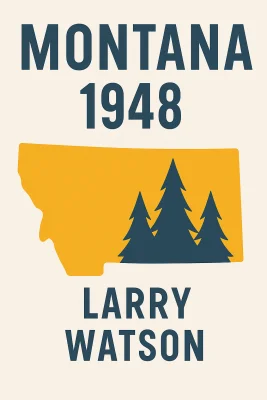
Montana 1948
Categories
Fiction, Classics, Historical Fiction, Young Adult, Westerns, School, Book Club, Historical, Coming Of Age, Literary Fiction
Content Type
Book
Binding
Paperback
Year
1995
Publisher
Washington Square Press
Language
English
ASIN
0671507036
ISBN
0671507036
ISBN13
9780671507039
File Download
PDF | EPUB
Montana 1948 Plot Summary
Introduction
In the summer of 1948, twelve-year-old David Hayden's world collapsed in ways he could never have imagined. His father Wesley served as sheriff of Mercer County, Montana—a position inherited from his own father in a family dynasty built on law and order. Frank Hayden, Wesley's charismatic brother, was the town's beloved doctor, a war hero who treated patients across the windswept plains and the nearby Fort Warren Indian reservation. But beneath Bentrock's veneer of small-town respectability, something sinister festered. When Marie Little Soldier, the Hayden family's young Sioux housekeeper, fell ill with what appeared to be pneumonia, her desperate refusal to see Dr. Frank would crack open a terrible secret. What began as a simple medical visit would expose decades of sexual abuse, culminating in murder and forcing a twelve-year-old boy to witness his family's violent disintegration. In this harsh Montana landscape, where loyalty to blood runs deeper than loyalty to law, David would learn that sometimes justice demands the destruction of everything you hold dear.
Chapter 1: The Summer of Revelations
The heat hung over Bentrock like a fever that August morning when David first noticed something wrong with Marie. She'd stayed in her small room off the kitchen all day, her violent coughing echoing through the house like gunshots. When his mother Gail returned from her job at the courthouse, she immediately recognized the signs—burning fever, rattling chest, the glazed look of serious illness. Marie Little Soldier wasn't just their housekeeper. At twenty, she was more like family to twelve-year-old David, filling their modest white house across from the courthouse with laughter and stories. She was tall and strong, with long black hair that always seemed to catch the light, and she treated David like the younger brother she'd never had. Her boyfriend Ronnie Bear Running had been the local high school's greatest athlete, a fullback whose records still stood years after graduation. But when Gail suggested calling Dr. Frank Hayden, Wesley's brother, Marie's reaction was immediate and terrifying. She bolted upright in bed despite her fever, her dark eyes wide with something beyond illness. "No doctor," she gasped between coughing fits. "I don't need any doctor." The fear in her voice was so raw that David felt something cold settle in his stomach. Frank Hayden was everything Wesley wasn't—tall, handsome, effortlessly charming. A decorated war hero who'd saved wounded soldiers under enemy fire in the Pacific, he'd returned home to universal adoration. The town had thrown him a celebration that drew more people than any event in living memory. While Wesley limped through his sheriff duties with a quiet dignity born of his childhood injury, Frank commanded every room he entered. Even David had worshipped his uncle, envying his easy confidence and magnetic presence. When Frank finally arrived that evening, his medical bag in hand and his sleeves rolled up like a man ready for important work, Marie's resistance crumbled into hysteria. Through the closed door, David could hear her screaming "No! No!" while his mother tried to calm her. Frank emerged twenty minutes later looking frustrated and slightly disheveled, complaining about Indian superstitions and their distrust of modern medicine.
Chapter 2: Marie's Illness and Disturbing Truths
The next morning brought a conversation that would haunt David forever. His mother stood on their screened porch, her arms wrapped around herself as if holding something precious and fragile. The wind whipped her hair across her face as she told Wesley what Marie had revealed after Frank left. "Your brother has been molesting Indian women," she said, her voice steady despite the words that seemed to burn her throat. "For years, Wesley. When he examines his Indian patients, he takes liberties. Inappropriate liberties." The clinical terms couldn't mask the horror of what she was describing—how Frank used his position of trust to assault vulnerable women who had no voice, no recourse, no one who would believe them. Wesley stood silent for a long moment, his hands gripping the porch railing so tightly his knuckles went white. David crouched beneath the open window, every word falling into his twelve-year-old mind like poison. When his father finally spoke, his voice carried the weight of terrible knowledge: "I wish you hadn't told the sheriff." But he didn't deny it. Somehow, Wesley had always known. The investigation began quietly. Wesley drove to the reservation under the pretense of buying honey, but David saw him later at the Coffee Cup Cafe, hunched over a corner table with Ollie Young Bear, the most respected Indian leader in the county. Conversations stopped when David approached. Doors closed when he entered rooms. The adult world had suddenly become a place of whispered conferences and meaningful looks, a conspiracy of knowledge from which he was carefully excluded. But children see everything, even when adults believe they're invisible. David noticed how his mother's hands shook when she poured coffee, how his father's face had taken on the gray pallor of a man carrying an unbearable burden. At night, he could hear them talking in urgent, hushed voices that stopped the moment he appeared. The house itself seemed to hold its breath, waiting for something terrible to happen. Marie grew weaker by the day, her fever spiking and falling in dangerous waves. She'd look at David with eyes that seemed to contain years of secrets, as if she wanted to tell him things no child should ever hear. "Some people," she whispered one afternoon, "do bad things and think nobody will ever know. But somebody always knows, Davy. Somebody always knows."
Chapter 3: A Sheriff's Impossible Choice
Three days later, Wesley made his choice. He arrived home just after five, his badge catching the last light of the setting sun. Frank's pickup truck sat in their driveway like an accusation. Inside, David watched his father transform from brother to lawman, his voice taking on the official tone he used when reading someone their rights. "Frank Hayden, you're under arrest for sexual assault." The words fell into their kitchen like stones into still water, creating ripples that would spread through generations. Frank stood beside the table where they'd shared hundreds of family meals, his handsome face registering not shame or surprise, but irritation, as if Wesley was making an unnecessarily dramatic scene over a minor misunderstanding. But Frank wasn't going to the county jail. That would require paperwork, formal charges, a public spectacle that would destroy two families and split the community apart. Instead, Wesley led his brother down to the basement laundry room, locking him behind a heavy wooden door that had once belonged to a rural schoolhouse. The irony wasn't lost on anyone—the man who'd taught so many children about right and wrong was now imprisoned in a makeshift cell beneath the very house where he'd committed his crimes. The basement became a tomb of secrets. Wesley brought Frank his meals and emerged looking older each time, as if his brother's guilt was aging him with every conversation. Upstairs, David tried to concentrate on building a model B-29 bomber while the weight of adult knowledge pressed down on him like a physical force. Every creak of the house might be Frank trying to escape. Every shadow might hide another terrible truth. Gail moved through the house like a woman walking underwater, her normal routines disrupted by the presence of evil in their foundation. She'd stand at the basement door sometimes, listening, as if she could hear Frank breathing through the wood and stone. The house that had once been their sanctuary now felt like a prison for all of them. That evening, Wesley's parents arrived like a thunderstorm made flesh. Julian Hayden filled the doorway with his massive frame, his silver hair wild from the wind, his eyes blazing with the fury of a patriarch whose bloodline had been questioned. Behind him, Enid Hayden trembled like a bird, her thin hands clutching a handkerchief as if it could protect her from what was coming.
Chapter 4: Imprisonment in the Family Basement
Julian's voice boomed through their modest living room with the authority of a man accustomed to having his commands obeyed without question. "Where is he? Where's my boy?" But when Wesley explained the charges against Frank, the old man's rage shifted into something more dangerous—protective fury mixed with absolute denial. "Horseshit," Julian spat, his weathered hands clenched into fists. "You'd lock up your own brother on the word of some Indian squaw?" The racism wasn't casual or unconscious; it was weaponized, deployed with surgical precision to dismiss and dehumanize. In Julian's worldview, Indians were inherently unreliable, their testimony worthless against the word of a white doctor and war hero. But Wesley had learned something in those basement conversations that changed everything. Frank hadn't just assaulted women—he'd murdered Marie Little Soldier. The girl who'd filled their house with laughter and music, who'd taught David to see beyond the narrow boundaries of his small-town existence, had died because she'd threatened to expose the truth. When Wesley finally shouted the word "Murder!" through their house, it exploded like a grenade, shattering the last pretense of family unity. Julian and Enid left that night without another word, but their absence felt more threatening than their presence. In their world, family loyalty trumped justice every time, and they would never accept a future where one Hayden destroyed another. David lay awake listening to the sounds of the house settling, but underneath the familiar creaks and sighs, he could swear he heard something else—the steady breathing of a caged animal waiting for its chance to break free. The next morning brought new horrors. A pickup truck circled their house like a predator, carrying four men including Dale Paris, Julian's ranch foreman. They moved with the casual confidence of men who'd never been told "no" by anyone who mattered, their intention clear even from a distance. They'd come to take Frank home, one way or another. David watched from the kitchen window as the men approached the house, Dale Paris swinging an axe at his side like he was heading out to chop firewood. The casual violence of the gesture was more terrifying than any overt threat—these weren't men planning a rescue, they were planning a demolition.
Chapter 5: Power, Threats, and Family Fractures
Gail Hayden had never fired a gun in anger, but she'd grown up on a North Dakota farm where firearms were tools as common as hammers or pliers. When she saw four armed men crossing her yard, maternal instinct overcame genteel upbringing. She loaded Wesley's twelve-gauge shotgun with hands that shook only slightly, her movements becoming more confident as muscle memory took over. The blast shattered their kitchen window and sent the four men diving for cover behind Wesley's patrol car. The sound echoed across Bentrock like thunder, announcing to every neighbor within hearing distance that the Hayden family crisis had escalated beyond closed doors and whispered conversations into open warfare. But it was Len McAuley who saved them. Wesley's deputy appeared from behind their neighbor's hedge like an avenging angel, barefoot and bare-chested but carrying a long-barreled .44 revolver that he handled with the easy competence of a man who'd used guns professionally for thirty years. The four men retreated to their pickup truck without another word, understanding that whatever Julian Hayden was paying them wasn't worth dying for. Len had been Julian's deputy before becoming Wesley's, and his loyalty was being tested in ways that would have broken lesser men. He'd known Frank since childhood, had watched him grow from a charming boy into a decorated war hero and respected physician. But he'd also seen the pattern of complaints that never quite became formal charges, the whispered rumors that never quite became public scandals, the way certain women avoided the doctor's office or insisted on bringing friends when they had appointments. "Your father's beside himself," Len told Wesley later, sitting in their kitchen with his gun still within easy reach. "He can't understand how you can choose law over blood." But Len understood, because he'd made the same choice years earlier when he first pinned on a deputy's badge. The law wasn't perfect, but it was all they had standing between civilization and chaos. That night, the sounds began. Deep in the basement, Frank began systematically destroying Gail's canning supplies—dozens of glass jars filled with tomatoes, pickles, jellies, and preserves that represented months of work and preparation for the coming winter. Each crash echoed through the house like a small explosion, a reminder that evil doesn't go quietly into confinement. David lay in bed listening to the destruction, knowing that Frank was sending a message: I can destroy anything you value, anytime I want.
Chapter 6: Blood on the Cellar Floor
Wesley descended into the basement at dawn carrying two cups of coffee on saucers, a gesture of such formal politeness that it seemed surreal under the circumstances. He was going to tell Frank that the charade was ending—today, his brother would be transferred to the county jail and formally charged. No more family protection, no more special treatment. Justice would finally have its day. But David knew something was wrong the moment he heard his father scream. The sound that rose from the basement wasn't the cry of discovery or surprise—it was the howl of a man whose world had just collapsed completely. David ran downstairs to find Wesley kneeling in the wreckage of the basement, Frank's body cradled in his arms. Blood mixed with pickle juice and tomato sauce on the concrete floor, creating a grotesque abstract painting in red and brown. Frank had used a piece of broken glass to open both wrists, choosing death over disgrace with the same calculation he'd once applied to battlefield medicine. The cuts were precise, professional—a doctor's knowledge turned against himself. Wesley's face was streaked with tears, but his eyes held something beyond grief. Relief. Guilt about feeling relieved. And underneath it all, a terrible understanding that this was probably the best possible outcome for everyone involved. No trial, no testimony from traumatized women, no community torn apart by competing loyalties. Frank had solved all their problems with two cuts of broken glass. But as David knelt beside his father in the ruins of their basement, he realized that some problems can't be solved, only transformed. Frank's death would end the immediate crisis, but it would also create new questions, new lies, new secrets that would haunt them for the rest of their lives. The truth about Frank's crimes would die with him, leaving only whispered rumors and unanswered questions. The official story was crafted carefully: Frank had been helping Wesley install basement shelving when he'd fallen from a ladder, striking his head on the concrete floor and dying instantly. Clarence Undset, the funeral director, was paid handsomely for his silence about the wrist wounds. The community mourned a war hero and dedicated physician taken too young, never knowing how lucky they were to be rid of him.
Chapter 7: Exodus from Bentrock
Within days of Frank's funeral, Gail made the announcement that would define the rest of their lives: "I can't live here anymore." Not just in the house where two people had died violent deaths, but in the entire community built on lies and willful blindness. She couldn't smile at neighbors who praised Frank's memory, couldn't shop in stores where people whispered about the "accident" that had claimed such a fine man. Wesley understood without explanation. He withdrew from the upcoming sheriff's election, citing "new opportunities in private practice." Their house went on the market. David's school records were transferred. They began the systematic dismantling of their life in Bentrock with the same methodical approach Wesley had once applied to criminal investigations. The extended Hayden family splintered along lines that would never heal. At Frank's funeral, Julian and Enid sat on the opposite side of the grave from Wesley's family, the open earth between them marking a divide that death had made permanent. Aunt Gloria left Montana without saying goodbye, moving to Spokane to start fresh where nobody knew the name Hayden or the weight it carried. David said goodbye to very few people, partly to avoid the pain of separation and partly because he was no longer sure who could be trusted with the truth. His friends at school knew only that the sheriff's family was moving away for better opportunities. The deeper truth—that they were refugees from their own history—remained locked away with all the other secrets that had accumulated like snow in the corners of their lives. On their last morning in Bentrock, David climbed through the snow to look through their living room window one final time. The empty rooms stared back at him like dead eyes, already forgetting the family that had filled them with laughter and arguments and ordinary love. He was looking for ghosts, he told himself, but found only emptiness. The drive away was silent except for the sound of snow hitting the windshield and the low rumble of the car's engine straining against the winter wind. Behind them, Bentrock disappeared into the white landscape like a town that had never existed at all.
Summary
They rebuilt their lives in Fargo, where Wesley joined a law firm and finally became the attorney his wife had always wanted him to be. The nameplate on his desk read "Line, Gustafson & Hayden," and for the first time in his adult life, the Hayden name carried no weight, commanded no special deference, implied no dark secrets. He was just another lawyer in a medium-sized city, handling divorces and contracts and the mundane legal business that keeps civilization functioning. David grew up to become a high school history teacher, drawn to a profession that dealt in documented facts but knowing better than most how much of human experience never makes it into the official record. He married a woman who moved frequently as a child and understood something about the necessity of starting over, of leaving the past buried where it belongs. They never had children—some bloodlines, David believed, were better left to end. The Montana they fled continued without them, as places always do when their refugees move on to safer ground. Len McAuley suffered a stroke that ended his brief tenure as sheriff, taking the last of the old guard with him into disability and silence. Julian Hayden died of his own stroke a year later, some said of a broken heart, others of simple old age accelerated by grief and rage. The truth, like so many truths from that terrible summer, remained buried with the dead. Forty years later, when David's wife suggested they visit his childhood home during one of their nostalgic road trips, he refused so firmly that she never brought it up again. Some places can't be revisited because they exist now only in memory, transformed by time and distance into cautionary tales rather than destinations. The Bentrock of 1948 lived on only in David's dreams, where twelve-year-old boys still grapple with the terrible knowledge that evil can wear a familiar face, that justice sometimes demands the destruction of everything you hold dear, and that the price of doing right can be higher than anyone should have to pay.
Best Quote
“Out of town I could simply be, I could feel my self, firm and calm and unmalleable as I could not when I was in school or in any of the usual human communities that seemed to weaken or scatter me. I could sit for an hour in the rocks above the Knife River, asking for no more discourse than that water’s monotonous gabble. I was an inward child, it was true, but beyond that, I felt a contentment outside human society that I couldn’t feel within it.” ― Larry Watson, Montana 1948
Review Summary
Strengths: The reviewer praises the book for its impeccable craftsmanship, noting that every word is perfectly placed, with no unnecessary elements. The narrative is described as wise, particularly in its portrayal of the child narrator's journey to adulthood and its exploration of love and morality. The characters are depicted as real, nuanced, and deeply engaging, contributing to the book's emotional impact. Overall: The reviewer holds the book in high regard, expressing a personal connection and admiration for its storytelling. They highlight its ability to provide comfort and guidance, suggesting it is a profound and impactful read. While the book is highly recommended, the reviewer cautions that it may be intense for some readers.
About Author

Larry Watson
Watson reframes the intimate realities of the American West through his acclaimed fiction, emphasizing the nuanced human experiences within confined domestic spaces rather than idealized landscapes. His works often center on the transformation of small-town life, capturing the shift from vibrant communities to economically struggling areas. This thematic focus is evident in his breakthrough book, "Montana 1948", which delves into family secrets and moral dilemmas set against the backdrop of the Great Plains. By employing hybrid omniscience and objective storytelling, Watson conveys the complexities of his characters’ inner worlds, drawing inspiration from narrative techniques used by authors like Hemingway.\n\nBeyond thematic exploration, Watson's literary career is marked by a commitment to education and mentorship. His extensive teaching experience, spanning from the University of Wisconsin/Stevens Point to Marquette University, complements his contributions to writers' conferences across North America and Europe. Meanwhile, his diverse body of work, including novels like "Let Him Go" and poetry collections such as "Late Assignments", showcases his versatility and depth as an author. Therefore, readers interested in profound explorations of character and place will find Watson’s narratives both engaging and insightful.\n\nRecognition for Watson’s literary achievements includes awards such as the Milkweed National Fiction Prize for "Montana 1948", and fellowships from the National Endowment for the Arts. His bio highlights these accomplishments, underscoring his impact on contemporary American fiction. Consequently, Watson's exploration of the American West provides valuable insights for those seeking a deeper understanding of the region’s evolving identity.
Read moreDownload PDF & EPUB
To save this Black List summary for later, download the free PDF and EPUB. You can print it out, or read offline at your convenience.
Montana 1948
by Larry Watson
