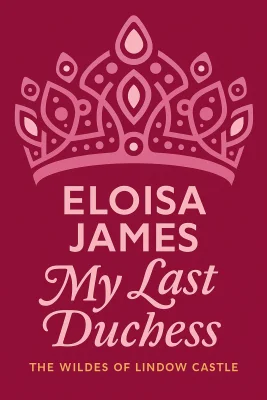
My Last Duchess
Categories
Fiction, Audiobook, Historical Fiction, Romance, Historical Romance, Adult, Historical, Novella, Regency Romance, Regency
Content Type
Book
Binding
ebook
Year
2020
Publisher
Avon
Language
English
ASIN
0063036355
ISBN
0063036355
ISBN13
9780063036352
File Download
PDF | EPUB
My Last Duchess Plot Summary
Introduction
Snow swirled through the London darkness as a carriage overturned in Hyde Park, its elegant passenger trapped within. But this was no ordinary accident—it was the moment that would change everything for Hugo Wilde, the Duke of Lindow, a man whose heart had been shattered twice by marriage and loss. As he pulled the mysterious red-haired woman from the wreckage, neither could have imagined that this snowy night would ignite a love story that defied every rule of society. The Duke had eight children and a reputation in ruins after his second wife fled to Prussia with her lover, leaving behind a castle full of motherless souls. He'd come to London seeking a practical third duchess—a woman who could manage his household and ask nothing of his guarded heart. Instead, he found Ophelia Astley, a widow with emerald eyes and a spine of steel, who would demand everything he thought he could never give again.
Chapter 1: A Duke in Search of a Mother, Not a Wife
The divorce papers crumpled in Hugo's fist as he stared at the formal decree that dissolved his marriage to Yvette, the woman who had abandoned their four children without a backward glance. At thirty-eight, the Duke of Lindow was free to marry again, but his heart felt like stone. His twin sister Louisa burst into his study, her sky-blue riding habit a splash of color against the dark wood paneling. "No rest for the weary, Hugo," she declared, plucking off her hat and wig with practiced efficiency. "You need a new duchess, and those children need a mother." Her words hit him like physical blows. Eight children in total—four from his beloved first wife Marie, who had died ten years ago, and four from Yvette, including baby Joan who barely knew her own mother's face. Hugo's jaw tightened as he remembered Joan's confusion, the way she would cry whenever Yvette bothered to visit the nursery. "She spelled Joan's name wrong in her farewell letter," he said quietly, the pain still sharp as broken glass. His sister's expression softened, understanding the deeper wound. A mother who couldn't even remember how to spell her own daughter's name. "The children are better off without her," Louisa said firmly, "but they need someone who will actually love them. You can't do this alone anymore, Hugo. Even you have limits." The truth of it settled heavy in his chest. He was drowning in responsibilities, in the endless needs of his motherless brood, in the whispers that followed his family wherever they went. But the thought of another marriage, another woman who might grow to despise him and flee, made his blood run cold. "I won't survive another Yvette," he admitted, his voice raw with exhaustion. Louisa moved to his side, her hand warm on his shoulder. "Then find someone different. Find someone who sees what matters." Outside, snow began to fall, as if the world itself was preparing for the storm that would soon reshape everything.
Chapter 2: Snowbound Encounters and Reluctant Proposals
Lady Gryffyn's ballroom glittered with a thousand candles, but Hugo saw only one face among the crowd. The woman had flame-bright hair barely contained by powder, and when their eyes met across the dance floor, the world seemed to tilt on its axis. She was no trembling debutante but a woman of substance, with curves that spoke of motherhood and eyes that held secrets. Her cousin whispered her name—Ophelia, Lady Astley, a widow with a two-year-old daughter. As Hugo watched her speak with other guests, something stirred in his chest that he'd thought dead forever. When she slipped away early, claiming concern for her child, he found himself following like a man possessed. The snow had turned vicious by the time he cornered her in the elegant carriage yard. Without invitation, he climbed into her small, feminine carriage, ignoring her shocked protests. "I apologize," he said simply, settling into the seat across from her as if he belonged there. Her green eyes flashed with indignation and something else—interest. "I did not invite you to join me, Your Grace," she said, her voice cutting through the intimate space between them. But she didn't call for her coachman, didn't order him out. Instead, she studied him with the same intensity he'd felt watching her. When their carriage lurched and began to slide on the icy cobblestones, Hugo pulled her into his arms without thought, his body curving protectively around hers as they crashed. In the aftermath, with snow swirling through the broken door and Ophelia's hair tumbling free of its pins, he did something that surprised them both. He proposed. "You're the one for me," he said, his voice rough with certainty. Her laugh was breathless, disbelieving. "You don't even know me," she protested. But as he helped her from the wreckage, as her coachman arranged for rescue, Hugo knew with bone-deep conviction that his searching was over.
Chapter 3: The Wrong Match: Pursuing Lady Woolhastings
But knowing and having were different beasts entirely. When Ophelia refused his proposal with gentle finality, Hugo threw himself into the practical business of finding a suitable duchess. Lady Edith Woolhastings emerged as the perfect candidate—a woman of impeccable breeding, royal connections, and most importantly, no interest in passionate entanglements. She was everything his sister had advised him to seek: experienced in managing noble households, skilled in launching young ladies into society, and blessed with the cold dignity that would never embarrass the ducal name. When she began referring to herself as his fiancée before he'd even proposed, Hugo felt only weary acceptance. Perhaps this was what his life deserved—bloodless propriety. The Frost Fair on the frozen Thames provided the test he hadn't known he was seeking. Bringing all eight children to meet their potential stepmother, watching as Lady Woolhastings surveyed them like a general reviewing troops. Her distaste was subtle but unmistakable, particularly when she observed Joan's golden hair and pronounced features that whispered of the Prussian count. But it was Ophelia's unexpected presence at the fair that shattered his careful plans. Seeing her with her daughter Viola, watching her natural warmth with the child while Lady Woolhastings maintained arctic reserve, Hugo understood his mistake. He could marry for duty, but he would destroy something precious in himself if he did. When Lady Woolhastings's criticisms grew sharper, when she suggested banishing the children to distant schools and questioned their legitimacy, Hugo felt the last of his obligation crumble. Louisa's raised eyebrows and meaningful glances only confirmed what his heart already knew. He had been prepared to sacrifice his happiness, but he would not sacrifice his children's welfare on the altar of social expectation.
Chapter 4: Children's Questions and Castle Intrigues
The younger children had prepared for this moment with military precision. Betsy, Leonidas, and Alexander huddled together in the castle's portrait gallery, ready to interview their potential new mother. Their questions revealed hearts that had been broken too often: "Do you have fake teeth or a glass eye?" "Do you want more children?" "How do you feel about rats?" Ophelia answered each query with patient humor while Lady Woolhastings grew increasingly horrified. When Betsy mentioned the pet rat that Leonidas desperately wanted, the future duchess's face went pale with disgust. But Ophelia simply nodded thoughtfully, as if seriously considering the merits of rodent companionship. Louisa, with her gift for theatrical destruction, began weaving tales of the Wilde children's legendary misbehavior. Dead chickens in distinguished guests' beds, burned vicarages, barmaids and Swedish royalty fleeing in terror. Each story landed like a carefully aimed arrow, and Lady Woolhastings's composure cracked a little more. "Children should not appear in public until they can compose themselves," she declared when baby Viola began crying. The words fell like a gauntlet between the two women, revealing philosophies of motherhood as different as fire and ice. Ophelia gathered her daughter with fierce protectiveness, while the would-be duchess shuddered at the sound of infant distress. That evening at supper, Louisa delivered the killing blow with casual precision. Speaking of aging, of the toll that children take on their mothers, of the impossibility of maintaining one's looks while actually caring for young ones. Lady Woolhastings, with her careful cosmetics and rigid coiffure, heard the message clearly. By night's end, she had withdrawn her acceptance of a proposal that had never actually been made.
Chapter 5: Midnight Confessions in Moonlit Galleries
The opera house buzzed with whispered speculation about the Duke of Lindow and his mysterious change of heart regarding Lady Woolhastings. But Hugo had eyes only for the box across from his, where Ophelia sat with her pregnant cousin Maddie, studiously avoiding his gaze. The air between them crackled with unfinished business. Lady Fernby's supper party provided the perfect battlefield. When Maddie sent Ophelia on a transparent errand to fetch her handkerchief, Hugo followed without hesitation. In the dim corridor outside the drawing room, they faced each other like duelists at dawn. "I can't marry Lady Woolhastings," he said simply. "And I never proposed to her, despite her assumptions." Ophelia's eyes widened, hope and suspicion warring in their depths. "I realized at the theater that if I can't have you, I'd rather be alone." The words hung between them like a bridge neither dared cross first. Then Ophelia's composure cracked. "I don't like seeing you with another woman," she whispered. "I didn't like it at the Frost Fair either." Her admission was a crack in the dam that had held back the flood of longing between them. When he kissed her in that shadowy hallway, it was with the desperation of a drowning man finding air. Her response was equally fierce, equally hopeless. "I would not kiss a man who is nominally another woman's," she had said, but Lady Woolhastings was gone now, dismissed with the evening's other mistakes. "Everything that I am," Hugo breathed against her lips. "My life, my title, my family—all of it is yours if you'll have it." But even as he spoke the words, the weight of his complicated life pressed down on them both. Eight children, a scandal-touched name, the relentless scrutiny of society. Was love enough to overcome such obstacles?
Chapter 6: A Duchess Not by Design but by Desire
The morning brought clarity and champagne-fueled confessions at Lady Fernby's continued celebration. Maddie's fake pregnancy provided cover for deeper truths, while Louisa orchestrated the final demolition of Hugo's resistance with the skill of a master tactician. Three bottles of champagne loosened tongues and inhibitions, leading to admissions that sobriety might never have allowed. "I'm inclined to marry you," Ophelia announced with wine-bright eyes, and Hugo's heart soared even as his conscience warred with desire. She hadn't had too much to drink—that was Louisa's clever deception—but she had consumed enough liquid courage to say what her heart demanded. In the carriage afterward, their kisses tasted of possibility and champagne bubbles. "I will marry you," she declared between breathless caresses, and this time Hugo didn't argue about propriety or social consequences. When they reached her townhouse, she issued an invitation that no gentleman should accept and no man in love could refuse. Her bedroom became a sanctuary where dukes and widows could shed their titles along with their clothes. What passed between them in those moonlit hours was more than passion—it was recognition, two souls finding their perfect match after years of settling for less. When Hugo whispered "I love you" against her skin, it was both confession and vow. Dawn found them intertwined and irreversibly changed. The practical considerations remained—his children, his reputation, her independence—but the fundamental question had been answered. They belonged to each other now, come hell or high water. The morning light streaming through her windows seemed to bless their union, even as it illuminated the challenges ahead.
Chapter 7: Eight Children and a Future: The Family United
Six months later, Lindow Castle buzzed with barely controlled chaos as all eight Wilde children converged for Christmas. The nursery overflowed with laughter, arguments, and the particular brand of mayhem that comes from too many intelligent children in one place. Ophelia moved through it all with serene confidence, Viola toddling at her side while baby Joan clung to her skirts. The children's initial skepticism had melted under Ophelia's steady affection and practical wisdom. She didn't try to replace their memories of Marie or erase the damage Yvette had done. Instead, she created new traditions, new bonds, new reasons to believe in love's power to heal. Even Horatius, stiff with ducal dignity at eighteen, softened under her gentle guidance. Louisa had stayed, of course, her fears of displacement proving groundless in the face of Ophelia's generous heart. The two women worked in partnership, sharing the massive task of civilizing eight young Wildes while maintaining their individual relationships with each child. The castle had become a home again, filled with warmth and purpose. Hugo watched his wife navigate the breakfast chaos with wonder still fresh in his heart. Pregnant again—their first child together would arrive in spring—she glowed with contentment that transformed her from merely beautiful to luminous. When their eyes met across the table, past and future crystallized into this perfect present moment. The children had accepted her completely, even presenting her with the promised pet rat as a wedding gift. She'd received it with such gracious composure that Leonidas had been moved to tears of joy. Now the rat—christened Reginald—had his own miniature castle in the nursery, a symbol of how love could transform even the most unlikely offerings into treasures.
Summary
In the end, Hugo Wilde discovered that the heart has its own stubborn wisdom, refusing to settle for safe choices when true love beckons from the storm. His search for a practical duchess led him instead to a woman who challenged every assumption about duty, desire, and the nature of family itself. Ophelia brought more than her own radiant presence to Lindow Castle—she brought the gift of seeing each child as worthy of love, each moment as precious, each day as a new chance for joy. Their love story became legend in its own small way, whispered about in drawing rooms and servant halls alike. The Duke who had lost two wives found in his third not just a partner but a miracle—a woman who could love his complicated brood as fiercely as she loved him. And Ophelia, who had once dreamed only of escape, discovered that sometimes the greatest adventure lies not in running away but in staying to build something beautiful from the wreckage of other people's mistakes. In the nursery where eight children and counting learned to trust in love again, every ending became a new beginning, every heartbreak a prelude to deeper joy.
Best Quote
“He smelled like the soap she bought for guests. It made her happy, as if she owned a small part of him. As if she had changed him.” ― Eloisa James, My Last Duchess
Review Summary
Strengths: The review highlights the book as a sweet, feel-good romance with a pursuing hero and lovable children. It provides insight into the backstory of beloved characters from the series, making it a delightful read for fans. The book is described as low drama with a straightforward romance, making it an enjoyable and easy read. Weaknesses: The review criticizes the romance as underdeveloped and mentions the addition of a rival character as annoying and unnecessary. The initial charm of the book seems to diminish over time for the reviewer. Overall: The reader expresses mixed feelings about "My Last Duchess." While it offers a charming prequel for fans of the series, the romance and certain plot elements may not satisfy all readers. The book is recommended for series enthusiasts but may not appeal to those seeking a more complex romance.
About Author

Eloisa James
James connects her scholarly expertise in Shakespearean literature with her passion for writing historical romances, thus creating novels that are both intellectually rich and emotionally engaging. Her work often delves into themes of love and societal expectations while incorporating elements from early modern poetry and Shakespearean plays. This unique blend of literary influences allows James to craft stories with lush settings and intricate characters, such as those found in "The Taming of the Duke" and "The Ugly Duchess." Her approach to storytelling, therefore, appeals to readers who appreciate both historical authenticity and romantic escapism.\n\nFor readers, Eloisa James's books offer a captivating exploration of personal independence against the backdrop of Regency-era society. Her heroines are characterized by their strength and wit, while her heroes are complex and charismatic, creating dynamics that resonate well with her audience. Beyond the stories themselves, James's ability to weave her life experiences, like motherhood, into her narratives, adds a layer of authenticity that many find relatable. This aspect of her writing has garnered her numerous accolades, including repeated appearances on the New York Times bestseller list and the RITA Award for Best Novella.\n\nAs both an acclaimed author and a full professor at Fordham University, James embodies a rare duality that enhances her literary endeavors. Her academic role as a Shakespeare scholar informs her novels, infusing them with a depth that distinguishes her in the romance genre. Therefore, her work not only entertains but also educates, offering readers insight into historical and literary contexts. This multifaceted approach is a hallmark of her success, establishing her as a significant figure in both the academic and literary communities.
Read moreDownload PDF & EPUB
To save this Black List summary for later, download the free PDF and EPUB. You can print it out, or read offline at your convenience.
My Last Duchess
by Eloisa James
