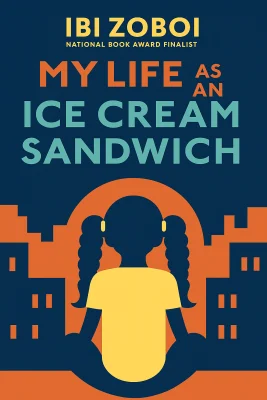
My Life as an Ice Cream Sandwich
Categories
Fiction, Audiobook, Historical Fiction, Young Adult, Family, Historical, African American, Realistic Fiction, Childrens, Middle Grade
Content Type
Book
Binding
Hardcover
Year
2019
Publisher
Dutton Books for Young Readers
Language
English
ASIN
0399187359
ISBN
0399187359
ISBN13
9780399187353
File Download
PDF | EPUB
My Life as an Ice Cream Sandwich Plot Summary
Introduction
Twelve-year-old Ebony-Grace Norfleet Freeman grips the airplane armrest as the Boeing 727 cuts through Alabama clouds toward New York City. Her grandfather's space stories swirl in her mind—tales of Captain Fleet and the Mothership Uhura battling the evil Sonic King across distant galaxies. But as the plane descends into what she dubs "Planet No Joke City," those familiar adventures feel suddenly fragile. Her father Julius waits below in Harlem, a man she barely knows who works in an auto repair shop surrounded by what her mother calls "little street urchins." What begins as a week-long summer visit stretches into something far more complex when family troubles trap Ebony-Grace in a world that operates by different rules. Here, kids break-dance on cardboard, rap battles determine respect, and her father moonlights as DJ Jule Thief, spinning records that create what she recognizes as the Sonic Boom from her grandfather's stories. As reality and imagination blur, Ebony-Grace must navigate between the cosmic adventures that shaped her identity and the raw, creative energy of 1980s Harlem—discovering that some planets are worth fighting for, even when they're not in outer space.
Chapter 1: The Reluctant Visitor: Landing on Planet No Joke City
The stewardess's fake smile doesn't fool Ebony-Grace as she stumbles off the baggage carousel at JFK Airport. Security guards shake their heads while her thick glasses fog up from embarrassment. She'd been trying to crawl through what she imagined was a portal to rescue Captain Fleet, but instead found herself face-down on cold airport tiles with her skirt bunched up around her waist. Her father Julius emerges from the crowd like a stranger wearing a familiar mustache. His blue coveralls smell of motor oil and cigarettes, nothing like the NASA flight suits her grandfather Jeremiah wears back in Huntsville. The stewardess eyes him suspiciously—this grease-stained man claiming to be married to Ebony-Grace's polished mother seems impossible. But his arms wrap around her twice, and his voice carries warmth even if his face remains serious behind that thick facial hair. The drive through Manhattan in his dented Buick feels like traveling through a mechanical planet. Tall buildings rise like robot cities, and when they cross the bridge into Harlem, everything shifts. Kids run through water shooting from fire hydrants, creating rainbows on concrete. Broken brownstones line the streets like wounded soldiers, some boarded up with chains hanging where doors should be. A man pushing a shopping cart full of plastic bags tips his dusty hat at her. This isn't the Alabama quiet she knows—this place pulses with desperate energy. Julius parks on 126th Street, where a scraggly man named Lester immediately tries to help with her bags. Her father shoos him away with practiced patience, explaining that Lester means well but can't be trusted with money or entry to the house. As neighborhood kids gather to stare at the girl from Alabama, Ebony-Grace feels the weight of being watched. Their questions come rapid-fire: Why does she dress like a boy? Can she see through walls with those thick glasses? Do people walk barefoot on dirt roads down South? The brownstone her father calls home sits in a row of similar buildings, each one connected but distinct. Her room on the third floor has windows that open to the street noise below—car horns, breaking glass, cursing that would make her mother reach for soap. Julius warns her not to lean out too far, then pulls the windows shut when he sees her pressed against the wall like she's afraid of heights. The heat immediately becomes oppressive, but she'd rather sweat than listen to this alien symphony. As her father tucks her in, she touches the airline pin on her shirt and whispers her promise to return home to Captain Fleet, wherever he might be imprisoned.
Chapter 2: Alien Among Them: Navigating Harlem's Cultural Universe
Sunday morning brings false peace to the concrete jungle. Ebony-Grace wakes to find the streets temporarily quiet, almost resembling the Alabama stillness she craves. But her escape attempt leads her straight into Bianca Perez, her old friend who lives downstairs with her grandmother Señora Luz. Three years have passed since they last built rocket ships together in Julius's junkyard, and now Bianca wears a fluffy blue dress that makes her look like a birthday cake. Their journey to church becomes a odyssey through Harlem's spiritual landscape. They pass building after building crowned with crosses—Mount Zion Baptist, House of the Lord, churches stacked like spiritual apartment blocks serving different congregations. Señora Luz leads them fourteen blocks to the Holy Redeemer Church, where disapproving eyes immediately fix on Ebony-Grace's Superman t-shirt and shorts. The church ladies whisper about Julius dumping his responsibilities on poor Señora Luz, about inappropriate clothes, about the need for a woman in that house. Inside the narrow church that feels more like a hallway, the real shock comes in the basement Sunday school. Stone-Cold Calvin and his crew of boys occupy the small room, their voices rising in typical playground challenges about why she can't wear Superman to church and whether she worships false idols. When the pressure builds beyond tolerance, Ebony-Grace deploys her secret weapon: "Jesus is an astronaut!" The declaration shatters the room's reverent atmosphere as she spins like Wonder Woman and flees up the stairs, past the startled preacher, and out into Harlem's streets. Her sprint home covers fourteen blocks of witnesses. Adults call out encouragement as she flies past in her Superman shirt: "Is it a bird, is it a plane?" Some compare her to Olympic runners Jesse Owens and Wilma Rudolph. Their cheers follow her through the concrete landscape until she reaches Julius's stoop, gasping and sweating but victorious. She's made her first successful escape from Planet No Joke City's attempts to contain her spirit. But victory tastes short-lived when Julius arrives home with pizza instead of the Southern feast she expected. His stern lecture about running through Harlem alone mixes concern with frustration. He doesn't understand that she wasn't lost—she was flying. As he speaks about staying grounded and leaving imaginary friends behind, Ebony-Grace realizes the isolation isn't just geographic. She's light-years away from anyone who speaks her language of possibility and wonder.
Chapter 3: Battle for Belonging: The 9 Flavas and the Genesis Device
The Nine Flavas Crew materializes like a rainbow coalition of attitude and ambition. Led by Mint Chocolate Chip Monique, each girl carries a dessert-inspired alter ego: Rum Raisin Rhonda with her cornrows and wooden beads, Vanilla Fudge Vanessa who still sucks her thumb, Cookies and Cream Christine hiding behind thick glasses. But it's Bianca's transformation into Butter Pecan that stings most. Her old rocket-building partner now flows with the crew's synchronized movements, their shared phone-cord jump ropes creating rhythms that sound like launching countdowns. Their first encounter erupts at Marcus Garvey Park, where competing crews practice for an upcoming battle. The Nine Flavas need a tenth member to match their rivals, but Ebony-Grace's rope-turning attempt becomes catastrophic. Her space-mission countdown mentality clashes with double-Dutch physics, sending Bianca crashing to concrete with speed-tangled cords wrapped around her legs. The accident echoes with accusations: she did it on purpose, she's jealous, she can't even turn a rope correctly. Monique's cruel nickname sticks like gum on summer sidewalks: Ice Cream Sandwich, chocolate outside and vanilla within. The insult cuts deeper when paired with "Outer Space Ebony-Grace," because her darkness resembles the void between stars. But Ebony-Grace fires back with references to Klingon physiology that sail over their heads, proving she speaks a different language entirely. Her comic book knowledge means nothing in their world of break-beats and battle rhymes. The crew's dismissal sends her seeking allies elsewhere. Pablo Jones, a curly-haired boy in a green shirt who raps under the name Pablo Jupiter, offers unexpected common ground. He understands Genesis Device mythology from Star Trek III, and his crew calls themselves Genesis Ten after the planet-creating technology. Their shared vocabulary of planets and space battles creates instant connection, even as romantic complications swirl around him and Bianca. When the Nine Flavas discover her fraternizing with the enemy, battle lines crystallize. They demand loyalty while offering conditional acceptance based on financial contribution and total personality transformation. Ebony-Grace finds herself caught between crews like a satellite in contested orbital space, belonging fully to neither but valuable to both for her grandfather's hidden money and her father's influence in the neighborhood power structure.
Chapter 4: Sonic Booms and Broken Trust: The Block Party Betrayal
Independence Day erupts across 126th Street as Julius transforms from auto mechanic into DJ Jule Thief, Sonic King of the neighborhood. Cars disappear from the block as residents claim the street for celebration. Ebony-Grace watches from her window as her father and his crew break into the streetlight's electrical system, connecting turntables and massive speakers that will pump rhythm into every corner of their concrete universe. The revelation hits like a meteor: her father is the Sonic King from her grandfather's stories, master of the boom-bip-bap-ratatat sounds that control minds and bodies. His scratching turntables and bass-heavy beats create the exact Sonic Boom she's been taught to fear, but now she sees its power to unite rather than destroy. The entire block moves to his musical commands, heads nodding and bodies swaying in synchronized submission to pure sound. But the block party becomes a battlefield when crew politics corrupt the planned competition. Calvin splits Genesis Ten into two groups, ensuring boys monopolize the contest while girls get relegated to double-Dutch demonstrations. The manipulation infuriates the Nine Flavas, who've practiced breaking and rapping only to face systematic exclusion. Ebony-Grace watches her father—the Sonic King—enforce these gender divisions with casual authority. Her attempt to help backfires spectacularly. She leaps onto the cardboard dance floor during Pablo's crew performance, imagining herself surfing across the galaxy on Planet Boom Box. Her uncontrolled flailing disrupts the competition while crowds boo and friends abandon her. The disaster compounds when she discovers her father plans to award prize money she recognizes—the three hundred dollars her grandfather wired for her airplane ticket home. The confrontation with Uncle Richard explodes over those missing bills. Accusations fly about theft, drugs, and responsibility while neighbors gather to watch brothers destroy each other over money. When police arrive and her father faces arrest, Ebony-Grace makes a desperate confession: she took the cash to help the Nine Flavas buy outfits and enter competitions. Her honesty saves Julius from jail but costs them both the money and their remaining trust. The block party ends in sirens and broken family bonds.
Chapter 5: The Prime Directive: Understanding Without Changing
Grandfather Jeremiah's final phone call carries weight beyond his usual space adventures. From some unnamed location that sounds institutional, he explains the Prime Directive: starship captains must observe alien cultures without interference, respecting existing systems rather than imposing outside values. His lesson comes disguised as cosmic wisdom, but Ebony-Grace hears the deeper message about accepting Harlem on its own terms. The conversation reveals troubling gaps in her cosmic mythology. Granddaddy sounds tired, older, diminished from the Captain Fleet she remembers. He speaks of imagination locations as private spaces rather than shared realities, suggesting their Mothership Uhura adventures belong in mental storage rather than daily application. His encouragement to learn break-dancing feels like betrayal of their special bond forged through science fiction and space dreams. Meanwhile, the aftermath of the block party fight creates neighborhood gossip that follows her everywhere. Adults whisper about Julius needing a woman's influence, about skinny girls from Alabama causing trouble beyond their size. The Nine Flavas avoid her completely, their friendship severed by financial disappointment and contest destruction. Even Pablo Jupiter distances himself, rejoining Calvin's crew to salvage his competition chances. Isolation forces deeper reflection about her role as unwilling ambassador between worlds. Her efforts to apply Genesis Device thinking—bringing dead things back to life—miss the essential truth that Harlem isn't broken, just different. The supposedly "ruined" buildings house vibrant communities, and the "broken" music creates art that moves bodies and souls in ways her grandfather's classical space adventures never could. Sitting alone in Julius's dusty living room, she begins to understand that successful captains don't conquer alien planets—they learn to navigate them with respect and curiosity. The Prime Directive isn't about maintaining distance but about engaging without destruction. Her mission isn't to fix Harlem or escape it, but to find her place within its complex ecosystem of sound, movement, and survival.
Chapter 6: Captain's Evolution: From Rescue Mission to Self-Discovery
The devastating news arrives through her mother's broken voice on the telephone: Grandfather Jeremiah has died. The words shatter Ebony-Grace's remaining connections to her Alabama identity and the cosmic mythology they built together. No more Captain Fleet stories, no more Mothership Uhura adventures, no more shared imagination location where space cadets battle sonic kings across distant galaxies. Julius's swollen face—still healing from his fight with Uncle Richard—reflects the damage spreading through their small family. His jaw, broken in the altercation and worsened by jail violence, makes speech difficult and eating painful. He subsists on oatmeal while she processes the reality that her grandfather's final battle wasn't against fictional villains but against illness and mortality that no Genesis Device could reverse. The delayed funeral trip stretches her time in Harlem indefinitely. Her mother's frantic voice through the phone receiver describes reporters calling, neighbors bringing casseroles, and affairs requiring organization. The space program engineer who helped build rockets for moon missions leaves behind paperwork and memories that need careful sorting. Ebony-Grace must wait in her alien world while her home planet handles its crisis without her. Forgiveness arrives unexpectedly through the Nine Flavas, who appear in Julius's junkyard to offer condolences. Bianca leads the reconciliation, explaining that crew loyalty sometimes requires choosing between competing demands. Her friends echo sympathy while examining the scrapyard's potential for break-dancing practice. Even in grief, they see opportunity for transformation rather than evidence of decay. The gesture opens space for honest conversation about belonging and acceptance. These girls who seemed so foreign now reveal similar losses—grandmothers who died, families that struggle, dreams that require financial resources beyond their reach. Their colorful clothes and sharp attitudes mask the same uncertainty she feels about fitting into predetermined roles. Perhaps being an ice cream sandwich isn't such a terrible identity after all.
Chapter 7: Homeward Trajectory: Carrying Multiple Worlds Within
The airplane carries both father and daughter back toward Alabama, but Ebony-Grace's internal navigation system has been permanently altered. As the plane climbs through concrete clouds toward star-filled darkness, she activates the Mothership Uhura one final time—not to escape reality but to process the completed mission. Her captain's log entry acknowledges that some rescues happen differently than planned. Through the window, endless black space stretches beyond comprehension. This cosmic void no longer seems empty but full of possibility, like the supposed wasteland of Harlem that actually teems with creative energy. Her grandfather's stories haven't disappeared; they've evolved into something more complex and personal. Captain Fleet lives on in her imagination location, but now he shares space with DJ Jule Thief and Pablo Jupiter and the rhythm of jump ropes keeping time. The breakthrough comes through Presidential television, where Ronald Reagan announces plans to send a teacher into space as the first civilian astronaut. The news sparks recognition: if teachers can become space travelers, then twelve-year-old captains from Alabama might someday carry their cultural bridge-building skills beyond Earth's atmosphere. The Prime Directive and Genesis Device remain valuable tools for navigating any new frontier, terrestrial or otherwise. Her father listens without interruption as she speaks her final captain's log aloud, ignoring stares from fellow passengers. She explains how the mission succeeded despite appearances—how learning to see broken places as thriving communities changes everything about exploration and discovery. Some planets reveal their beauty only to visitors willing to abandon preconceptions and engage with local wisdom. The realization settles like a comfortable orbit: she doesn't have to choose between cosmic dreams and earthbound reality. Harlem's sonic boom and outer space both represent frontiers requiring courage, creativity, and respect for the unknown. Her grandfather's greatest gift wasn't the specific stories he told but the imagination location he helped her develop—a mental space elastic enough to encompass Alabama traditions, New York innovations, and galaxies yet to be explored.
Summary
Ebony-Grace's summer in Harlem transforms from rescue mission to reconnaissance expedition, revealing that the most profound discoveries happen when explorers abandon their maps and learn to read alien landscapes with fresh eyes. Her grandfather's death ends their shared mythology but not her capacity for wonder, which expands to encompass break-dancing planets and sonic kingdoms hidden within urban communities. The Nine Flavas Crew and Pablo Jupiter become unlikely allies in this expanded universe, proving that crews can form across cultural boundaries when curiosity outweighs fear. The true Genesis Device was never a cosmic tool for planetary resurrection but rather the ability to see life flourishing in unexpected places. Harlem's supposed decay masks extraordinary creativity, just as her grandfather's space stories contained deeper wisdom about respecting difference and embracing possibility. As the airplane carries her toward Alabama's familiar horizons, Ebony-Grace understands that the best captains don't conquer new worlds—they learn to call multiple planets home. Her imagination location now contains room for Southern traditions and Northern innovations, for cosmic adventures and street-corner battles, for the infinity of space and the intimacy of neighborhood blocks where music makes bodies move and dreams take flight.
Best Quote
Review Summary
Strengths: The book is praised for its charming narrative set in 1980s Harlem, featuring a Black girl with a vivid imagination and unique perspective. The story explores themes of self-discovery and fitting in, which some readers found relatable and beautifully depicted. Weaknesses: Criticisms include a slow-moving plot and a protagonist whose behavior and imaginative tendencies may seem unrealistic or difficult for middle grade readers to relate to. The heavy reliance on Star Trek references is noted as potentially alienating for the target audience, and some characters, including adults, are perceived as frustrating. Overall: The book receives mixed reviews, with some appreciating its charm and character depth, while others find it inaccessible for middle grade readers due to its pacing and cultural references.
About Author

Ibi Zoboi
Zoboi delves into the intricate layers of identity and cultural displacement through her vibrant narratives. As a Haitian immigrant raised in New York City, her storytelling is imbued with themes of race, immigration, and social justice. Zoboi often centers her narratives on the challenges faced by Black and immigrant youth, utilizing magical realism to weave the cultural traditions of Vodou into contemporary issues. Her novel "American Street" exemplifies this approach by exploring the immigrant experience through the eyes of a Haitian teen, earning a finalist spot for the National Book Award. Meanwhile, her "Pride" reimagines Jane Austen’s classic in a modern Brooklyn setting, highlighting issues of gentrification and classism.\n\nThrough her commitment to amplifying marginalized voices, Zoboi’s work resonates deeply with readers interested in social change and personal growth. Her collaboration with Yusef Salaam on "Punching the Air" addresses systemic injustice and the transformative power of art. By creating stories that engage with complex social realities, Zoboi not only entertains but also educates her audience on critical contemporary issues. Additionally, her role as the editor of "Black Enough: Stories of Being Young & Black in America" showcases her dedication to highlighting diverse perspectives within the literary world.\n\nZoboi's influence extends beyond writing as she fosters creativity and empowerment among young writers. Her founding of the Daughters of Anacaona Writing Project reflects her dedication to nurturing the voices of Haitian and Caribbean girls. Recognized for her contributions, she has received numerous awards, including the Coretta Scott King Book Award for "Nigeria Jones" and the Coretta Scott King Book Honor for "The People Remember". Through her literary endeavors and community engagement, Zoboi remains a pivotal figure in children's and young adult literature, offering a nuanced exploration of identity that is both personal and universal.
Read moreDownload PDF & EPUB
To save this Black List summary for later, download the free PDF and EPUB. You can print it out, or read offline at your convenience.
My Life as an Ice Cream Sandwich
by Ibi Zoboi
