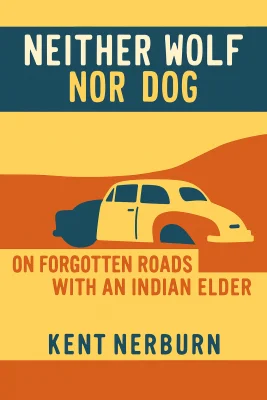
Neither Wolf nor Dog
On Forgotten Roads with an Indian Elder
Categories
Nonfiction, Biography, History, Memoir, Travel, Book Club, Race, Indigenous, Native American, Native Americans
Content Type
Book
Binding
Paperback
Year
2002
Publisher
New World Library
Language
English
ISBN13
9781577312338
File Download
PDF | EPUB
Neither Wolf nor Dog Plot Summary
Introduction
# Neither Wolf Nor Dog: Bridging Worlds Through Indigenous Wisdom On a dusty reservation road in South Dakota, an elderly Lakota man sits quietly in his weathered pickup truck, watching the endless prairie stretch toward the horizon. His granddaughter has made an unusual phone call to a white writer, asking him to come listen to stories that have been carried in silence for too long. When Dan finally speaks, his voice carries the weight of generations who witnessed their world transform beyond recognition, yet somehow found the strength to preserve what matters most. His weathered hands gesture toward the sacred landscape as he begins to share wisdom that challenges everything most Americans believe about their shared history. This profound journey unfolds through conversations that span roadside diners and ancient burial grounds, revealing the complex reality of contemporary Native American life. Through Dan's patient teaching, we discover that healing the deepest wounds in American society requires more than good intentions or policy changes. It demands the courage to see beyond comfortable myths and stereotypes, to listen with genuine openness, and to recognize the full humanity of those whose voices have been systematically silenced. His teachings offer essential guidance for anyone seeking to build authentic relationships across cultural divides and find wisdom that transcends the limitations of any single worldview.
Chapter 1: The Call: When Two Worlds First Meet
The phone call arrives without warning on an ordinary Tuesday evening. A woman's voice, carrying the distinctive rhythm of Native speech, cuts straight to the heart of her request. Her grandfather has read some books about collecting tribal stories, she explains, and he wants to meet. Not to share nostalgic tales of the old days, but to speak truths that most people have never heard. The invitation feels both urgent and mysterious, carrying an undertone that suggests this meeting could change everything for both men involved. The drive across hundreds of miles of windswept prairie provides time for reflection and growing nervousness. Small towns appear and disappear like islands in an ocean of grass, each one a reminder of how thoroughly this landscape has been transformed since Dan's ancestors first called it home. When the writer finally arrives at the modest house on the reservation, he encounters an elderly man whose presence immediately commands respect. Dan's weathered face tells stories of hardship and survival, but his eyes hold a clarity that seems to penetrate surface appearances and reach toward deeper truths. Their first conversation unfolds with characteristic Native restraint, each word carefully chosen, each silence pregnant with meaning. Dan explains that he possesses what he calls "two-eyed vision" - the ability to see through both Indian and white perspectives simultaneously. This gift, earned through decades of navigating between worlds, comes with profound responsibility. He has watched his people struggle to maintain their identity while adapting to imposed systems, and he has observed white society's persistent inability to understand what it has destroyed. Now, in his final years, he feels compelled to build a bridge of understanding that might help heal wounds that have festered for generations. The writer realizes that he has stepped into something far more significant than a simple book project. Dan's request for help in recording his thoughts becomes an invitation into a world where past and present interweave, where ancient wisdom confronts modern realities, and where the comfortable distance between observer and observed begins to collapse. This unlikely friendship will demand not just professional skills but the courage to confront uncomfortable truths about American history and the possibility of genuine reconciliation across seemingly insurmountable cultural divides.
Chapter 2: Sacred Ground: Understanding Indigenous Connection to Land
Standing on a windswept hill that overlooks endless stretches of prairie grass, Dan begins to share his deepest teachings about the relationship between people and earth. For him, the landscape is not property to be owned but a living entity deserving of reverence, a mother who provides for her children and expects respect in return. He points to subtle variations in the grass that indicate underground water sources, explains the significance of prairie dog colonies for the broader ecosystem, and describes how his ancestors read weather patterns in the flight of birds. This intimate knowledge comes not from books but from generations of careful observation by people whose survival depended on understanding the land's subtle messages. The fundamental difference between Native and European worldviews becomes starkly apparent as Dan explains how his people never understood the concept of selling land. To them, it was like trying to sell the wind or the rain - an impossibility that revealed the profound spiritual poverty of those who made such requests. Where European settlers saw empty wilderness waiting to be claimed and developed, Native peoples saw a fully inhabited world teeming with relatives who deserved the same consideration given to human family members. Every decision was made with awareness of its impact on the seventh generation yet to come, a long-term perspective that stood in sharp contrast to the short-sighted exploitation that characterized much of American expansion. As they sit together in the vast silence of the prairie, Dan shares his ability to sense the presence of ancestral burial sites, describing it as a gift passed down through his family line. The writer struggles with skepticism until he remembers his own inexplicable moments of sensing something beyond ordinary perception. This exchange opens a discussion about different ways of knowing, different forms of intelligence that Western education often dismisses as superstition or wishful thinking. Dan's patient teaching reveals that the loss of intimate connection to land represents not just environmental destruction but a spiritual catastrophe that affects both Native and non-Native peoples. The elder's words carry an urgent warning about the consequences of treating the earth as mere commodity rather than sacred trust. His teachings suggest that healing the relationship between humanity and the natural world requires more than policy changes or technological solutions. It demands a fundamental shift in consciousness, a return to ways of thinking that honor the interconnectedness of all life and recognize our responsibility to future generations who will inherit the consequences of our choices.
Chapter 3: Historical Wounds: Facing America's Hidden Truths
The conversation inevitably turns to the systematic campaign to destroy Native American culture, a process Dan describes as cultural genocide carried out with methodical precision over many generations. The boarding schools, with their motto "Kill the Indian, Save the Man," had been particularly devastating instruments of this policy. Children as young as five were forcibly removed from their families and transported to institutions hundreds of miles from home, where they were forbidden to speak their native languages, practice their religions, or maintain any connection to their cultural heritage. Dan's own experiences at these institutions left scars that never fully healed. He describes the profound loneliness of being separated from everything familiar, the confusion of being told that his people's ways were primitive and evil, and the daily struggle to maintain some sense of identity in the face of relentless pressure to assimilate. The physical violence was accompanied by psychological warfare designed to instill deep shame about Native identity. Children were taught to view their own people as inferior, their traditions as dangerous superstitions, and their languages as barriers to progress and civilization. Many children never recovered from this systematic trauma, becoming what Dan calls "neither wolf nor dog" - caught between two worlds, fully accepted by neither. They returned to their communities unable to function in traditional ways but never truly welcomed into white society either. This created a generation of deeply wounded individuals whose pain rippled through families and communities for decades. The internalized oppression affected not just those who attended the schools but their children and grandchildren, creating cycles of dysfunction that persist to this day. The physical violence of military campaigns and forced relocations was devastating, but Dan argues that the assault on Native identity and culture caused even deeper and more lasting damage. When people lose connection to their languages, stories, and spiritual practices, they lose the very foundation of their humanity. The healing process requires not just acknowledgment of what happened but a fundamental shift in how American society views its indigenous peoples - moving beyond guilt and pity to genuine respect for the wisdom and resilience that enabled survival through centuries of systematic oppression.
Chapter 4: Two-Eyed Vision: Navigating Between Cultural Realities
Dan's concept of "two-eyed vision" represents his hard-won ability to understand both Native and Western worldviews without losing his essential identity as a Lakota man. This perspective developed through years of navigating between cultures, learning to speak the language of the dominant society while maintaining his connection to ancestral wisdom. He describes it as both a gift and a burden, offering insights that could benefit both communities while creating a profound sense of isolation from those who see the world through only one lens. The differences between the two worldviews run deeper than most people realize, affecting everything from concepts of time and success to fundamental assumptions about human nature and the purpose of existence. Western thought emphasizes individual achievement, material progress, and linear time, while Native philosophy prioritizes community welfare, spiritual balance, and cyclical understanding of existence. Where Western education focuses on accumulating facts and information, traditional Native learning emphasizes wisdom gained through direct experience and relationship with the natural world. Dan's two-eyed vision allows him to appreciate certain aspects of Western technology and organization while recognizing the spiritual poverty that often accompanies material prosperity. He sees how Native communities have been damaged by losing connection to traditional ways, but he also understands that simple rejection of all modern influences is neither possible nor desirable. The challenge lies in finding ways for different worldviews to coexist and learn from each other without one dominating or destroying the other. This requires tremendous courage from individuals willing to serve as bridges between communities, translating not just words but entire ways of being. Dan's role as a cultural interpreter has demanded constant vigilance against the tendency to become so focused on building bridges that one loses connection to solid ground on either side. His teaching reveals that authentic cross-cultural understanding requires each person to remain true to their own identity while developing genuine respect for others, creating space for multiple ways of knowing to flourish simultaneously.
Chapter 5: Wounded Knee: Confronting Collective Memory and Trauma
The journey to Wounded Knee marks the emotional climax of their travels together, as Dan leads the writer to the site where nearly three hundred Lakota men, women, and children were massacred in 1890. Standing on this sacred ground, surrounded by the simple markers that commemorate one of the darkest chapters in American history, Dan's usual composure finally cracks. The weight of historical trauma, carried not just by him personally but by his entire people, becomes almost unbearable in this place where so much innocence was destroyed. Dan describes the events leading up to the massacre with heartbreaking detail, explaining how the Ghost Dance movement had offered hope to desperate people facing starvation and cultural annihilation. The promise that their ancestors would return and the buffalo would once again fill the plains had given them reason to continue living when everything familiar was being systematically destroyed. But this hope had been perceived as a threat by government officials and military commanders who saw any expression of Native spirituality as dangerous resistance to their authority. The tragedy unfolded with horrific swiftness as nervous soldiers opened fire on families who had come to surrender their weapons and submit to government demands. Women and children were cut down as they tried to flee, their bodies left frozen in the snow for days before being dumped into a mass grave. The site itself bears witness to the ongoing struggle for recognition and healing, with a simple monument marking the burial place while newer graves surround it, creating a sacred space where families continue to honor their ancestors and maintain connection to those who were lost. Dan's prayers at this place carry the pain of his entire people, but also their determination to survive and remember. The tears he sheds are not just for the dead but for all that was lost and might never be recovered - languages silenced forever, ceremonies that died with their keepers, children who never learned their true names. Yet even in this place of profound sorrow, his words carry hope that understanding and healing might still be possible if people have the courage to face difficult truths and work together toward a more just future.
Chapter 6: The Strength of Women: Cultural Preservation Across Generations
Throughout their journey, the strength of Native women emerges as a constant theme that runs like a golden thread through Dan's stories and observations. He speaks with deep reverence about the women in his family and community who held their people together through the darkest times, often at great personal cost. While men were frequently the visible leaders and warriors whose stories filled history books, women served as the backbone of cultural preservation, maintaining traditions in secret when open practice was forbidden and teaching children their true heritage when schools tried to erase it. The traditional role of women in many Native societies had been one of considerable power and influence, with matrilineal systems tracing descent through the mother's line and women often holding important positions in governance and spiritual life. The imposition of European patriarchal structures disrupted these ancient patterns, but Native women found ways to adapt while preserving their essential roles as culture bearers and community builders. They became masters of quiet resistance, passing down languages through lullabies, preserving ceremonies in modified forms, and maintaining connections between generations even when families were scattered across vast distances. Dan's granddaughter represents this continuing tradition of female strength and adaptability. Despite facing all the challenges confronting her generation - poverty, discrimination, the ongoing effects of historical trauma - she remains connected to her cultural roots while successfully navigating the modern world. Her ability to move fluidly between traditional and contemporary roles embodies the resilience that has allowed Native peoples to survive centuries of systematic oppression and cultural assault. The women in Dan's stories demonstrate that survival requires more than just enduring hardship; it demands the creative intelligence to find new ways of preserving what matters most while adapting to changed circumstances. Through women like his granddaughter, the wisdom of the ancestors continues to flow into the future, ensuring that the sacred circle of life remains unbroken despite all attempts to sever those connections. Their strength reminds us that the most important victories are often won not on battlefields but in the quiet spaces where love and wisdom are passed from one generation to the next.
Summary
This profound journey across the American landscape reveals truths that challenge our most basic assumptions about history, identity, and what it means to truly listen to one another. Through Dan's patient teaching and unflinching honesty, we discover that the story of Native America is not a relic of the past but a living reality that continues to shape our present moment. His wisdom offers not just historical insight but practical guidance for healing the wounds that divide communities and finding ways to live in greater harmony with each other and the earth that sustains us all. The lessons embedded in these encounters extend far beyond the specific experiences of Native peoples to address universal questions about how we treat those who are different from us, how we remember difficult histories, and how we can build authentic relationships across seemingly insurmountable divides. Dan's two-eyed vision reminds us that true understanding requires the courage to see from multiple perspectives, even when doing so challenges our most cherished beliefs. His legacy calls us to listen more deeply, judge less harshly, and work together to create a future worthy of the sacrifices made by those who came before us, honoring both our differences and our shared humanity.
Best Quote
“Our old people noticed this from the beginning. They said that the white man lived in a world of cages, and that if we didn't look out, they would make us live in cages too. So we started noticing. Everything looked like cages. Your clothes fit like cages. Your houses looked like cages. You put your fences around your yards so they looked like cages. Everything was a cage. You turned the land into cages. Little squares.Then after you had all these cages you made a government to protect these cages. And that government was all cages. All laws about what you couldn't do. The only freedom you had was inside your own cage. Then you wondered why you weren't happy and didn't feel free. You made all the cages, the you wondered why you didn't feel free.” ― Kent Nerburn, Neither Wolf nor Dog: On Forgotten Roads with an Indian Elder
Review Summary
Strengths: The review highlights the book's compelling narrative, which provides a truthful account of Native American history through the perspective of an elder. It effectively discusses the manipulation of Native American images by dominant culture and media, offering insightful historical context and personal reflections. Overall: The reviewer expresses a positive sentiment towards the book, appreciating its honest exploration of Native American experiences and the cultural misrepresentations that have persisted. The book is recommended for its enlightening perspective and historical depth, resonating with themes of identity and cultural understanding.
About Author

Kent Nerburn
Nerburn delves into the profound intersection of Native American and non-Native cultures, drawing on his extensive educational background and personal experiences. With a Ph.D. in Religious Studies and Art, he spent years as a sculptor in Europe, which shaped his approach to art and spirituality. His career took a significant turn when he worked on the Red Lake Ojibwe reservation, where he collected tribal elders' memories and connected deeply with Native American spiritual traditions. This experience fundamentally transformed his writing, leading him to explore themes of spirituality, empathy, and cultural respect, particularly in works like "Neither Wolf nor Dog."\n\nWhile his books are rooted in authentic representations of Native American wisdom, Nerburn’s approach is deeply personal. By positioning himself as a narrator in his stories, he invites readers into the Native world through his own lens, maintaining honesty and avoiding fabrication. His method underscores the importance of storytelling in conveying complex cultural beliefs and values. Readers of his books gain a nuanced understanding of Native American spirituality and the broader human experience, which is particularly evident in titles like "The Wolf at Twilight" and "The Girl Who Sang to the Buffalo."\n\nNerburn’s contributions to literature and education have been recognized through accolades such as the Minnesota Book Award for "Neither Wolf nor Dog." His works have impacted educators, cultural observers, and anyone interested in bridging cultural divides. This bio provides insight into how his life's journey—from the streets of Minneapolis to the pine-rimmed lakes of Minnesota—shapes a body of work that fosters dialogue and understanding between diverse communities. His focus on kindness and humility ensures that his writings resonate deeply, reminding readers of the value of shared stories and lived experiences.
Read moreDownload PDF & EPUB
To save this Black List summary for later, download the free PDF and EPUB. You can print it out, or read offline at your convenience.
Neither Wolf nor Dog
by Kent Nerburn
