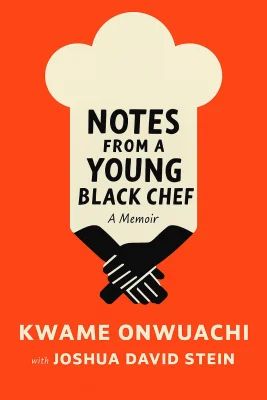
Notes from a Young Black Chef
Categories
Nonfiction, Biography, Memoir, Food, Audiobook, Cookbooks, Cooking, Biography Memoir, Book Club, Race
Content Type
Book
Binding
Hardcover
Year
2019
Publisher
Knopf
Language
English
ISBN13
9781524732622
File Download
PDF | EPUB
Notes from a Young Black Chef Plot Summary
Introduction
In the gleaming kitchen of Per Se, one of New York's most prestigious restaurants, a young chef stood over a bowl of eggshells, his fingertips raw and bleeding from hours of meticulous preparation. At twenty-four, Kwame Onwuachi had already traveled a path that seemed to span multiple lifetimes—from the projects of the Bronx to the compounds of Nigeria, from drug dealing to fine dining, from rock bottom to culinary stardom. His story defies every conventional narrative about success, failure, and what it means to find your place in the world. Onwuachi's journey reveals three profound truths about the human experience: the transformative power of embracing one's authentic cultural identity rather than conforming to others' expectations, the resilience required to turn every setback into a stepping stone toward greatness, and the courage needed to redefine excellence on your own terms. Through kitchens both humble and elite, through moments of triumph and devastating failure, his story illuminates how our deepest struggles often become our greatest strengths, and how staying true to yourself becomes the ultimate act of rebellion and success.
Chapter 1: Roots and Early Influences: Family, Food and Identity
Kwame's earliest memories were forged in the warmth of his mother's Bronx kitchen, where the aromas of Creole cooking mingled with the complex dynamics of a fractured family. Born to Jewel Robinson, a Louisiana-born caterer with roots stretching back to the rice fields of Crowley, and Patrick Onwuachi, a Nigerian architect carrying the weight of Pan-African idealism, Kwame existed at the intersection of multiple worlds from the moment he drew breath. His mother's kitchen became a sanctuary where gumbo simmered alongside stories of his grandfather Bertran's legendary barbecue joints in Texas, while his father's presence brought the sharp, bitter scents of egusi stew and the weight of African expectations. The dissolution of his parents' marriage when Kwame was three years old created the first major fracture in his young life. His father's violent temper and psychological abuse—beatings with an African whip, degrading charts tracking every minor infraction—stood in stark contrast to his mother's nurturing embrace. These early experiences of love and terror, safety and danger, would shape Kwame's understanding of power, resilience, and the complex nature of family bonds. His mother, Jewel, emerged as both protector and inspiration, a woman who turned financial desperation into entrepreneurial opportunity by launching Catering by Jewel from their cramped apartment. Food became the language through which Kwame learned about his heritage and identity. In his mother's kitchen, he discovered the holy trinity of Creole cooking—celery, onions, and bell peppers—while learning to peel shrimp and stir roux with the focused attention that would later serve him in professional kitchens. These weren't just cooking lessons; they were cultural transmissions, connecting him to generations of ancestors who had found ways to create beauty and sustenance from whatever ingredients life provided. The diversity of his Bronx neighborhood added layers to this culinary education, from the Indian neighbor who taught his mother about spices to the corner bodega that introduced him to flavors from around the world. The economic instability that marked his childhood—moving eight times in five years, playing "Lights Out" when the electricity was shut off, surviving on tuna sandwiches during lean periods—taught Kwame that creativity and adaptability were not luxuries but necessities. His mother's ability to transform these hardships into adventures, to find ways to feed her family with both nourishment and love regardless of circumstances, provided him with a template for resilience that would prove invaluable in the years to come. These early experiences instilled in him a deep understanding that food is never just about sustenance—it's about culture, love, survival, and the stories we tell about who we are.
Chapter 2: Finding Resilience: Nigeria and the Projects
When ten-year-old Kwame found himself shipped off to Nigeria after breaking his mother's cutting board—the last straw in a series of behavioral problems—he discovered a version of himself that existed beyond the limiting expectations of American society. In the dusty compounds of Ibusa, living with his grandfather, a distinguished academic who had become an obi, or village elder, Kwame encountered a world where his blackness was not a burden to overcome but a source of pride and power. His grandfather, Patrick Chike Onwuachi, represented everything his father could have been—dignified, respected, connected to ancestral wisdom and tradition. The two years spent in Nigeria fundamentally altered Kwame's understanding of himself and his place in the world. Far from the violence and chaos that had marked his relationship with his father, he found peace in the rhythms of compound life. He learned to pump water from wells, feed chickens and goats, and participate in the ancient rituals that connected the living to their ancestors. The moment when his grandfather killed Red the rooster and poured its blood as an offering to their ancestors became a profound spiritual awakening, connecting Kwame to a lineage that stretched back centuries and gave weight and meaning to his existence. In the classrooms of Santa Maria College II, Kwame discovered what it felt like to be seen simply as a student rather than as a problem to be solved. The Nigerian educational system, with its emphasis on discipline and respect, suited him far better than the American schools where he had been labeled a troublemaker. Here, his intelligence was recognized and nurtured without the racial undertones that had poisoned his earlier academic experiences. He excelled not because he was exceptional, but because he was finally in an environment that saw his potential rather than his problems. The agricultural rhythms of Nigerian life taught him patience and the connection between effort and reward. Working alongside his aunt Mimi to harvest palm kernels, grinding them in the stone mortar and pestle, watching the red oil emerge that would flavor their evening meal, Kwame learned that the best things in life require time, attention, and respect for process. These lessons would later prove invaluable in professional kitchens, where patience and precision separate great cooks from merely adequate ones. When the call came that he would not be returning to America for sixth grade, Kwame experienced a profound moment of abandonment that forced him to develop emotional self-reliance. The tears he shed in that dusty internet café represented not just homesickness but the recognition that he would have to create his own sense of belonging wherever life took him. This painful lesson in self-sufficiency would become one of his greatest assets, enabling him to adapt to new environments and cultures with remarkable speed and grace throughout his life.
Chapter 3: From Hustle to Craft: The Path to Professional Cooking
Kwame's return to the Bronx at age twelve marked the beginning of his transformation from lost child to determined entrepreneur. The street wisdom he absorbed as a member of the B.A.B.Y. crew in the Webster Houses taught him lessons about power, respect, and survival that no classroom could provide. His dual existence—honors student by day, gang member by afternoon—reflected his remarkable ability to code-switch between different worlds, a skill that would serve him throughout his career. The violence and chaos of project life might have destroyed a lesser spirit, but for Kwame, it became another layer of education in reading people, managing pressure, and understanding the complex dynamics of loyalty and leadership. His venture into drug dealing during college represented both his lowest point and a crucial learning experience in business fundamentals. Moving from selling Nutcrackers made from Hawaiian Punch and Bacardi to running a sophisticated cannabis operation, Kwame displayed the entrepreneurial instincts that would later make him a successful restaurateur. The $3,000 weekly income he generated demonstrated his natural talent for identifying market opportunities, managing supply chains, and building customer relationships—skills directly transferable to the restaurant industry. The moment of clarity that came while cooking chicken curry in his trashed apartment marked the beginning of his culinary awakening. Standing in that debris-filled kitchen, surrounded by the detritus of his drug-dealing lifestyle, Kwame rediscovered the peace and purpose he had felt as a child helping his mother prep for catering jobs. The familiar rhythms of cooking—the sizzle of oil, the softening of onions, the building of flavors—reconnected him to his authentic self and provided a pathway away from the destructive choices that had nearly consumed him. His time on the Maine Responder oil spill cleanup ship proved to be his first real professional kitchen experience and a masterclass in cooking under pressure. Serving thirty exhausted workers in the middle of the Gulf of Mexico, with no safety net and no excuses, Kwame learned to translate his natural cooking instincts into professional skills. His ability to elevate simple ingredients into memorable meals—turning basic shrimp étouffée into something that made hardened oil workers weep with nostalgia—revealed his innate understanding that great cooking is about emotion as much as technique. The transition from ship's cook to aspiring fine-dining chef required Kwame to develop a completely new vocabulary of ambition. His subway candy-selling venture to fund Coterie Catering demonstrated his willingness to do whatever it took to achieve his goals, while his early catering successes proved he could execute at a professional level. The moment when he convinced complete strangers to invest in his vision, cooking a tasting menu in a borrowed kitchen while pretending it was his own brownstone, showed his natural gift for storytelling and his understanding that in the restaurant business, you're selling experiences as much as food.
Chapter 4: Trials by Fire: Navigating Elite Kitchens and Racism
The hallowed halls of the Culinary Institute of America provided Kwame with technical foundations, but it was his brutal apprenticeship at Per Se that truly tested his resolve and shaped his professional identity. Walking into Thomas Keller's temple of fine dining, Kwame entered a world where perfection was not an aspiration but a minimum requirement, and where the price of excellence was measured in blood, sweat, and psychological endurance. His first encounter with Chef de Cuisine Eli Kamieh—screaming at him for the minor infraction of looking around while picking herbs—introduced him to the toxic culture that permeates much of fine dining. The eggshell ritual that consumed his days at Per Se became a metaphor for the entire experience. Hours spent hollowing out hundreds of eggs, fingers bleeding from the acidic vinegar, losing his very fingerprints to the repetitive scraping, represented both the price of admission to elite kitchens and the psychological warfare that passes for education in fine dining. The racism he encountered was often subtle—being relegated to stations with other cooks of color, being subjected to different standards of behavior, hearing "jokes" that weren't jokes—but its cumulative effect was devastating to his sense of self-worth. At Eleven Madison Park, Kwame initially found a more welcoming environment under James Kent's leadership, but the arrival of Chris Flint as chef de cuisine brought a new wave of harassment and discrimination. Flint's casual racism—the "homeboy" comments, the assumption that "no black people eat here anyway"—revealed the ugly underbelly of an industry that prides itself on sophistication while practicing the most primitive forms of prejudice. Being trapped on the smoke station month after month, despite his proven abilities, demonstrated how even meritocratic systems can be rigged against those who don't fit the expected profile. These experiences taught Kwame invaluable lessons about resilience and the importance of maintaining one's dignity in the face of systematic dehumanization. The "game face" he developed—shutting down emotionally, becoming unreachable behind a mask of professional competence—protected his psyche but also disconnected him from his authentic self. Learning to survive in these environments required him to become someone else entirely, a skill that would both serve and haunt him in the years to come. The technical skills he acquired during these brutal apprenticeships—the perfect knife cuts, the understanding of sauce work, the ability to maintain composure under extreme pressure—provided him with the foundation for future success. More importantly, these experiences gave him firsthand knowledge of what he did not want to create when he had the opportunity to build his own kitchen culture. The abuse he endured became a template for what to avoid rather than emulate, shaping his vision of what leadership in professional kitchens could look like.
Chapter 5: The Shaw Bijou: Ambition, Failure and Growth
The Shaw Bijou represented the culmination of everything Kwame had learned about cooking, business, and himself, while simultaneously exposing the gaps in his experience and the dangers of unchecked ambition. His partnership with Kelly Gorsuch and Glenn Paik seemed like a dream come true—unlimited funding, complete creative control, and the opportunity to tell his life story through food in one of America's most sophisticated dining markets. The restaurant's concept was audacious: fifteen courses at $185 per person, each dish representing a chapter from Kwame's autobiography, served in an intimate eight-table setting that would redefine luxury dining in Washington, D.C. The two-year development process revealed both Kwame's creative genius and his naivety about the business side of restaurants. His insistence on the finest ingredients—Norwegian king crab, American Wagyu beef, custom-made ceramics, hand-forged flatware—reflected his commitment to excellence but also contributed to the unsustainable cost structure that would ultimately doom the venture. The decision to price the tasting menu at $185 was driven by financial necessity rather than market research, creating an immediate target for critics who viewed the young chef as arrogant and overreaching. The restaurant's brief three-month lifespan became a masterclass in how external pressures and internal dysfunction can destroy even the most promising ventures. Tom Sietsema's devastating review in The Washington Post, published just three days after opening, set the tone for a cascade of criticism that focused more on Kwame's youth and audacity than on the quality of his cooking. The political climate following Donald Trump's election created additional headwinds, as the celebratory mood that had welcomed the restaurant's announcement evaporated in the harsh reality of cultural division. Behind the scenes, the relationship between Kwame and his partners deteriorated as financial pressures mounted and philosophical differences emerged. Kelly's disappearing acts and Glenn's eventual financial collapse revealed the danger of entering partnerships without fully understanding all parties' motivations and capabilities. The racist undertones in their interactions—Kelly's comments about Trayvon Martin, Glenn's objections to Kwame wearing a Harriet Tubman t-shirt on television—demonstrated that even supportive partners can harbor attitudes that undermine the very concept they're supposed to be supporting. The final weeks of the Shaw Bijou's operation paradoxically produced some of Kwame's best work as a leader and a chef. Forced to halve his staff's already meager salaries, he discovered a different model of leadership based on shared struggle and mutual respect. The team that stayed with him through those dark December and January nights created the inclusive, supportive kitchen culture he had always envisioned, proving that his vision was sound even if the business model was flawed. The restaurant's closure, announced by Kelly in Kwame's absence, felt like both an ending and a beginning—the death of one dream and the birth of a deeper understanding of what success truly means.
Chapter 6: Creating His Own Table: Embracing Culinary Heritage
In the aftermath of the Shaw Bijou's closure, Kwame faced the most difficult period of his professional life, but also the most transformative. The depression and self-doubt that followed could have ended his career, but instead became the crucible in which his true identity as a chef was forged. The temptation to retreat into safer, more stereotypical expressions of his cultural heritage—the fried chicken and mac and cheese that critics expected from a black chef—represented the easy path to redemption, but one that would have betrayed everything he stood for. His decision to stay in Washington D.C. rather than fleeing to more forgiving markets demonstrated his refusal to let failure define him. The city that had initially welcomed him with excitement and then turned against him with equal fervor became the stage for his redemption story. This choice required tremendous courage, as every subsequent move would be scrutinized through the lens of his previous failure, but it also represented his commitment to finishing what he had started. The process of rebuilding his reputation forced Kwame to clarify his culinary philosophy in ways that the initial success of his Dinner Lab tour had not required. No longer able to rely purely on the novelty of his story, he had to prove that his approach to cooking—the fusion of African, Caribbean, and American Southern influences elevated through fine-dining techniques—represented a legitimate and valuable contribution to American cuisine. This period of reflection and refinement would ultimately make him a stronger chef and a more thoughtful leader. His eventual success at Kith and Kin and other ventures proved that his original vision was sound, even if the execution had been flawed. The lessons learned from the Shaw Bijou's failure—the importance of sustainable business models, the value of experienced partners, the need for patience in building an audience—informed every subsequent decision. More importantly, the experience taught him that authentic success comes not from conforming to others' expectations but from having the courage to be exactly who you are, regardless of how the world responds. The kitchen culture he has worked to create in his subsequent ventures reflects his hard-won understanding that diversity and excellence are not competing values but complementary ones. His commitment to hiring and mentoring chefs from underrepresented communities, while maintaining the highest standards of culinary execution, demonstrates that the lessons of his journey extend far beyond his personal success. By creating opportunities for others to tell their own stories through food, Kwame has transformed his individual struggle into a broader movement toward a more inclusive and representative culinary landscape.
Summary
Kwame Onwuachi's extraordinary journey from the projects of the Bronx to the pinnacle of American fine dining reveals the most fundamental truth about success: that our greatest strength lies not in overcoming our origins but in embracing them completely. His story demonstrates that authenticity, even when it challenges conventional expectations and invites criticism, ultimately proves more powerful than any attempt to conform to others' limitations. Through every triumph and failure, from the oil-stained decks of cleanup ships to the marble corridors of Michelin-starred restaurants, Kwame's commitment to honoring his complex heritage while pushing the boundaries of culinary excellence has redefined what it means to be a chef in America. The practical wisdom embedded in his experience offers invaluable guidance for anyone seeking to create meaningful change in their field. His journey teaches us that setbacks are not verdicts but data points, that the skills developed in surviving difficult circumstances often translate directly into professional advantages, and that the courage to be authentically yourself in environments that pressure you to be someone else is perhaps the most valuable asset any leader can possess. For aspiring chefs, entrepreneurs, and anyone seeking to honor their heritage while pursuing excellence, Kwame's story provides both inspiration and a practical roadmap for turning identity into competitive advantage and transforming personal struggle into universal triumph.
Best Quote
“Nothing is a turnoff like a New York City housing authority kitchen. People want to hear about that once you're successful, not when you're living in it.” ― Kwame Onwuachi, Notes from a Young Black Chef
Review Summary
Strengths: The review highlights Kwame Onwuachi's compelling life story and significant accomplishments in the culinary world, emphasizing his unique perspective as a young Black chef. The memoir's engaging narrative, combined with recipes, offers an immersive experience. The reviewer appreciates the candid exploration of Onwuachi's challenging upbringing and career journey, noting the memoir's ability to evoke hunger through vivid food descriptions. Overall: The reader expresses a positive sentiment, finding the memoir engaging and satisfying, particularly for those interested in chef narratives and the culinary industry. The book is recommended for its insightful and inspiring content, though the review notes a lack of humility in Onwuachi's tone.
About Author

Kwame Onwuachi
Onwuachi charts a unique culinary journey, weaving themes of identity, race, and resilience into his work as a chef and writer. Raised across various cultures from New York City to Nigeria and Louisiana, his early exposure to cooking by his mother in a modest Bronx apartment laid the foundation for his career. He leverages these rich experiences to inform his culinary style, notably in his acclaimed book "Notes from a Young Black Chef", which delves into his tumultuous path from adversity to success in the fine dining world. The memoir, later adapted into a film, provides a vivid exploration of how personal and cultural narratives shape culinary practices.\n\nIn his cooking, Onwuachi embraces the diversity of the African Diaspora, as reflected in his book "My America: Recipes from a Young Black Chef". This work offers over 125 recipes that are a testament to his family's heritage spanning Nigeria, the Caribbean, and beyond. The recipes serve as a conduit for stories of previous generations, blending personal significance with historical context, illustrating how ingredients and culinary techniques traveled across continents. His commitment to celebrating diverse culinary traditions is mirrored in his restaurant career, most notably through his ventures like Kith and Kin and Dōgon, which have been critically acclaimed for their innovative approach to Afro-Caribbean cuisine.\n\nReaders and food enthusiasts benefit from Onwuachi's deep exploration of cultural intersections in cuisine, making his literary and culinary contributions particularly valuable for those interested in the broader narratives behind food. Recognized by various prestigious awards, including a James Beard Award and a spot on TIME's 100 Most Influential People list, Onwuachi's impact extends beyond the kitchen to influence cultural conversations around race, identity, and the power of food to connect communities.
Read moreDownload PDF & EPUB
To save this Black List summary for later, download the free PDF and EPUB. You can print it out, or read offline at your convenience.
Notes from a Young Black Chef
by Kwame Onwuachi
