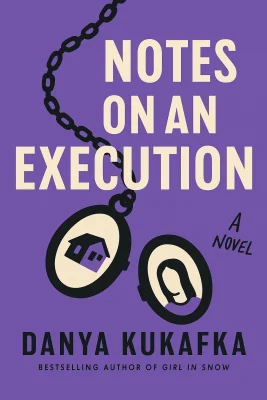
Notes on an Execution
Categories
Fiction, Audiobook, Mystery, Thriller, Adult, Book Club, Contemporary, Crime, Literary Fiction, Mystery Thriller
Content Type
Book
Binding
Hardcover
Year
2022
Publisher
William Morrow
Language
English
ASIN
0063052733
ISBN
0063052733
ISBN13
9780063052734
File Download
PDF | EPUB
Notes on an Execution Plot Summary
Introduction
The clock ticks toward zero. In a Texas death row cell, Ansel Packer stares at the elephant-shaped water stain on his concrete ceiling, knowing these are his final hours. But this isn't just his story—it's the story of all the women whose lives intersected with his darkness, whose choices shaped the monster he became. Twelve hours remain before the execution. As the countdown begins, we journey backward through decades of interconnected lives: Lavender, the teenage mother who abandoned her children to save herself; Saffy, the detective who spent years hunting the truth; Hazel, the twin sister who lost everything; and Blue, the niece who discovered family can be both salvation and curse. Each woman carries a piece of the puzzle, each decision rippling forward through time to this moment of reckoning.
Chapter 1: The Final Countdown: Ansel Packer's Last Hours
Ansel wakes to the sight of his own thumb in the jaundiced prison light. The lines on his fingerprint look like dried riverbeds—remnants of water that once flowed, now gone forever. Today is execution day, and the elephant on his ceiling seems to smile knowingly back at him. The countdown has begun. Twelve hours to live. He paints while classical music fills his cell—a lake scene, somewhere he claims to remember loving. Officer Shawna Billings shuffles past his door, the woman who has become his unlikely confidante. For months, they've exchanged forbidden notes, stolen moments of connection through the steel bars. Shawna believes in his innocence, believes the gentle man who quotes philosophy could never be capable of murder. But Shawna has made him a promise. A gun hidden in the transport van. An escape plan that will free him from this concrete tomb. As Ansel arranges his few possessions—notebooks filled with his philosophical "Theory" about good and evil—hope flickers like a dangerous flame. The warden appears for the final preparations. Ansel clutches a letter from Blue Harrison, the niece who will witness his death, and a photograph of the Blue House restaurant where he once tasted something resembling peace. These fragments of connection are all he has left of a life that spiraled from abandoned child to condemned killer. The transfer van waits outside. Freedom beckons. But when Ansel reaches beneath the driver's seat for salvation, his fingers find only the cold metal of broken jumper cables. Shawna's promise was a lie. There will be no escape, no redemption, only the slow march toward a needle and the darkness beyond.
Chapter 2: Abandoned Innocence: Lavender's Fateful Decision
Seventeen-year-old Lavender screams into the freezing barn air, her body splitting open as Johnny Packer delivers their son. The baby emerges purple and furious—Ansel, named for Johnny's deceased grandfather. In that moment of exhaustion and terror, Lavender feels a love so consuming it threatens to devour her whole. But love on the isolated farmhouse comes with a price. Johnny's tenderness curdles into control, his hands growing rougher each day. He locks away the food, leaves bruises that bloom like dark flowers on Lavender's skin. When their second son arrives—Baby Packer, as they call him—Lavender can barely find the strength to hold him. The breaking point comes with sudden violence. Johnny's fist connects with four-year-old Ansel's head, the crack echoing through the farmhouse like breaking bones. In that instant, Lavender sees her future stretching endlessly forward—a life of fear, of children raised by monsters, of love twisted into something unrecognizable. She makes the impossible choice. While Johnny sleeps off his rage, Lavender carries her boys to the car, tells them she'll return soon, and drives away forever. At a gas station fifty miles south, she calls 911, reporting the abandoned children. Then she boards a Greyhound bus to California, carrying nothing but the weight of her decision. Years later, safe in a women's commune among the redwood trees, Lavender will still feel the phantom weight of her children in her arms. She tells herself she saved them by leaving, that love sometimes requires the cruelest sacrifice. But in the darkness between sleeping and waking, she hears their voices calling for a mother who chose herself over staying to fight for them.
Chapter 3: The Hunter's Obsession: Saffy's Decades-Long Pursuit
Detective Saffron Singh remembers the fox. At twelve years old in Miss Gemma's foster home, she found the decomposed animal on her bedsheets—a gift from eleven-year-old Ansel Packer, the strange boy who collected dead creatures by the creek. Even then, something about him felt wrong, dangerous, like standing too close to the edge of a cliff. Decades later, as bodies emerge from the Adirondack forest, Saffy sees the pattern. Three girls from 1990, murdered in their prime—Izzy, Angela, and Lila. All sixteen years old. All found with missing jewelry, trinkets taken as souvenirs. And at the center of it all, a name that makes her childhood nightmares stir: Ansel Packer. The case consumes her. While other investigators move on, Saffy spends weekends driving to Vermont, watching Ansel through binoculars as he lives his mundane life with wife Jenny. She documents his routines, his marriage's slow decay, the way he retreats to his garage to write in endless notebooks. The obsession costs her relationships, sleep, sanity—but she can't let go. When Ansel appears at the Blue House restaurant, befriending sixteen-year-old Blue Harrison, Saffy's protective instincts scream. She breaks protocol, visits the restaurant, warns them about the dangerous man in their midst. Blue and her mother Rachel send Ansel away, believing they've dodged a bullet. But Saffy's interference sets something else in motion. Rejected by the family he thought might save him, Ansel drives south toward Texas, toward the ex-wife who left him behind. The hunter becomes the hunted, and Saffy realizes too late that sometimes saving one life means sacrificing another. Her victory tastes like ash when Jenny's blood spills across a Houston kitchen floor.
Chapter 4: Mirrors of Loss: Hazel, Jenny, and the Face of Grief
Hazel feels the Summoning at midnight—a crushing pain in her chest that steals her breath and leaves her gasping in the darkness. She doesn't know it yet, but a thousand miles away, her twin sister Jenny is dying on a kitchen floor, Ansel's rage finally finding its target. They were born three minutes apart, Jenny first, Hazel following reluctantly into the light. The Twins, everyone called them, as if they were a single entity split between two bodies. But where Jenny was golden and confident, Hazel lived in perpetual shadow, the lesser half of their shared whole. Jenny's marriage to Ansel had seemed like another victory, another way her sister claimed the spotlight. At the wedding, Hazel watched Ansel slip that purple amethyst ring onto Jenny's finger—a ring that would later reveal its terrible history. She saw the dead look in his eyes when he thought no one was watching, but kept her suspicions locked away with all her other resentments. The call comes on a Saturday morning. Jenny is dead. Ansel is in custody. In the space between heartbeats, Hazel's world reorganizes itself around an absence that feels like losing a limb. She drives through the night to help Jenny escape her marriage, only to arrive too late—her sister already cold, the apartment windows still open, hope bleeding out across the tile. At Jenny's funeral, Hazel discovers Ansel's buried secrets in her parents' backyard. A jewelry box hidden beneath the maple tree contains the missing pieces—a beaded barrette, a pearl bracelet, trinkets stolen from girls whose names she doesn't yet know. The evidence that could have saved Jenny sits in the dirt like accusations, proof that some evils hide in plain sight for decades, waiting for the right moment to reveal themselves.
Chapter 5: The Blue House: A Glimpse of Redemption
Blue Harrison stands behind the hostess stand, all strawberry hair and curious eyes, not knowing she's about to invite a killer into her family. At twenty-three, she's inherited the Blue House restaurant from her adoptive parents, along with the stories of her father Ellis—the brother Ansel never knew survived. The letter arrives on cream-colored paper. Ansel writes about the farmhouse, about a baby brother he failed to save, about the screaming that has followed him through forty-six years of life. Blue sees only longing, a man reaching across decades to find the family he lost. She invites him north to Tupper Lake, offering the gift of belonging. For three perfect weeks, Ansel helps rebuild the restaurant's deck. He shares meals with Blue and her mother Rachel, tells stories about his foster care years, laughs at Blue's terrible jokes. In those moments, watching him hammer nails and paint railings, Blue sees glimpses of the uncle her father never got to know. She sees redemption itself, walking around in work boots and flannel. The spell breaks with a knock at the door. Detective Singh arrives with her badge and her terrible knowledge, spilling the truth like poison into their peaceful afternoon. Three girls dead. A wife murdered. The man Blue has come to love as family revealed as something monstrous and unforgivable. They send him away that same day. Blue watches his truck disappear down the mountain road, feeling like she's lost her father all over again. She doesn't know that her rejection will send Ansel careening toward his final, fatal decision. She doesn't know that loving someone sometimes means destroying them, or that family can be both salvation and curse, wound and healing, all at once.
Chapter 6: Convergence at Zero: Witness to the End
The witness room smells like fear and disinfectant. Hazel stands beside her mother, both dressed in their funeral clothes, waiting for the curtains to part. Behind them, reporters shuffle papers and check recording equipment, ready to document justice's final act. When the green curtains slide open, Ansel lies strapped to the gurney like a broken marionette. The IV tubes snake into his arms, carrying the poison that will stop his heart. He looks smaller than Hazel remembers—not the commanding presence who once dominated Jenny's kitchen table, but a frightened man counting his final breaths. Across the glass barrier, Blue Harrison clutches a rusted locket around her neck. She's traveled from New York to witness this end, carrying letters from the grandmother who raised Ansel's brother. The family Ansel never knew existed came to claim him in his final moments, offering the belonging he spent a lifetime seeking. The warden removes his glasses—the signal. Ansel's last words crackle through the speakers: "I promise I'll be better. Give me one more chance." The chemicals flow, and his body betrays him with violent tremors, the mask of control finally slipping away. But in those final seconds, something shifts. Hazel sees not the monster who killed her sister, but a terrified child who never learned to love properly, who turned his pain into weapons instead of art. She doesn't forgive him—forgiveness would be too easy, too clean. Instead, she witnesses. She bears the weight of this ending so Jenny's story doesn't disappear into the void. The heart monitor flatlines. The curtains close. Justice, such as it is, has been served.
Chapter 7: The Paths Unlived: Echoes of Those Lost
In another world, Izzy Sanchez lies on her grandfather's sailboat, peeling tangerines in the Tampa sun. Her fingers smell like citrus and possibility. She has never heard of Ansel Packer, has never felt the bite of a belt around her throat. She feeds orange peels to the fish and dreams of becoming a marine biologist. Angela Meyer would have traveled to Italy, walked the cobblestones of Florence, shared wine and laughter with her aging mother. She would have tipped the housekeepers generously, not knowing those bills would buy tequila shots for teenage girls who danced like flames in the night. Lila's third child would have been named Grace. Grace would have become a zoo director, would have curled up in a snow leopard's cage one summer night, feeling the gentle weight of a wild heart beating against her ribs. Three generations of women who never drew breath, all because a seventeen-year-old boy couldn't control his rage. Jenny would have delivered 6,471 babies over her nursing career. Each one would have heard her whisper the same words: "Welcome, little one. You'll see. It's good here." She would have been wrong about the goodness, but right about the welcome—every life deserves its moment in the light.
Summary
The needle finds its mark and Ansel Packer dies as he lived—consumed by his own darkness, finally understanding too late what he'd spent forty-six years seeking. Love comes to him in the final second, flooding his system like the poison in his veins, brilliant and useless and tragically brief. The women who shaped his story—Lavender, Saffy, Hazel, Blue—continue breathing, carrying his absence like a wound that will never fully heal. But this isn't a story about monsters or redemption, about good triumphing over evil or justice finally served. It's about the terrible weight of choices, how they ripple across decades and devastate lives in ways we never see coming. Every decision—to stay or leave, to pursue or let go, to love or protect ourselves—creates infinite worlds of possibility and loss. We are all walking away from the people we might have been, toward futures we can't imagine, trailing consequences like shadows that only reveal themselves when the light finally dies.
Best Quote
“You don't need to have it all. You only need to figure out how much is enough.” ― Danya Kukafka, Notes on an Execution
Review Summary
Strengths: The review highlights the novel's masterful writing, engaging plot, and societal commentary. It praises the book for its unique perspective on the glorification of serial killers and its focus on the women affected by the protagonist's actions. The narrative structure, which includes a countdown to the execution and insights into the lives of key female characters, is also commended. Overall: The reviewer expresses high admiration for "Notes on an Execution," considering it the best book read in 2021. The novel is recommended for its thought-provoking content and ability to challenge the reader's perception of true crime narratives. The review suggests a strong recommendation for those interested in societal critiques and well-crafted storytelling.
About Author

Danya Kukafka
Kukafka delves into the intricate layers of human frailty and emotion, weaving together themes of crime, grief, and trauma in her novels. Her works, including the acclaimed "Notes on an Execution" and "Girl in Snow", delve into the psychological depths of her characters. The former explores the last hours of a death row inmate through the perspectives of several women in his life, while the latter investigates the aftermath of a teenage girl's murder in a small Colorado town. These narratives highlight Kukafka's commitment to revealing character complexities, mixing vulnerability with harsh truths.\n\nHer literary methods are distinguished by a patient revelation of narrative depth, akin to the styles of Bill Clegg and Dennis Lehane, therefore offering readers both emotional intensity and suspenseful storytelling. Kukafka's unique educational background at New York University's Gallatin School of Individualized Study, where she created a major titled "The Art of the Novel," informs her distinctive approach to storytelling. Her work as a literary agent further enriches her understanding of the book industry, allowing her to craft novels that resonate with both critics and audiences, as evidenced by the Edgar Award for Best Novel for "Notes on an Execution".\n\nReaders drawn to character-driven stories that explore the complexities of human emotion and societal issues will find Kukafka's novels deeply engaging. Her books not only entertain but also provoke thoughtful reflection on the darker facets of human experience, making her a significant voice in contemporary fiction. With film and television adaptations in the works, Kukafka's impact on the literary world continues to expand, capturing the interest of those who appreciate crime fiction with a profound psychological edge.
Read moreDownload PDF & EPUB
To save this Black List summary for later, download the free PDF and EPUB. You can print it out, or read offline at your convenience.
Notes on an Execution
by Danya Kukafka
