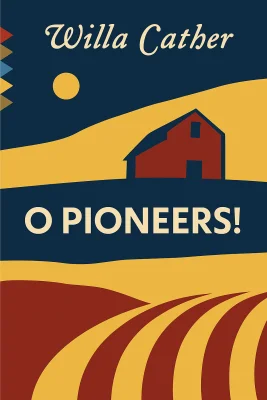
O Pioneers!
Categories
Fiction, Classics, Audiobook, Historical Fiction, Literature, Westerns, American, Book Club, Historical, Novels
Content Type
Book
Binding
Paperback
Year
1991
Publisher
Vintage
Language
English
ASIN
0679743626
ISBN
0679743626
ISBN13
9780679743620
File Download
PDF | EPUB
O Pioneers! Plot Summary
Introduction
The January wind screamed across the Nebraska tableland in 1883, trying to tear away the handful of wooden buildings that dared call themselves the town of Hanover. In the bitter cold, a young Swedish girl named Alexandra Bergson stood watching her little brother Emil cry over his kitten, trapped atop a telegraph pole by a vicious dog. At twenty, Alexandra already carried herself with the steady resolve of someone who understood that survival on this brutal frontier demanded more than hope—it required an iron will and the courage to see what others could not. When their father John Bergson lay dying in their log house, he made a decision that would scandalize their neighbors for years to come. Instead of leaving the struggling homestead to his sons Lou and Oscar, he placed everything in Alexandra's hands. The land was a savage thing then, fighting every attempt at cultivation, swallowing dreams and breaking hearts with equal cruelty. But John Bergson had seen something in his daughter that his sons lacked—the vision to look beyond the present suffering and imagine a future where this harsh prairie might bloom into abundance.
Chapter 1: The Harsh Divide: A Land That Resists Taming
The Divide stretched endlessly in all directions, a vast expanse of grass and wind that seemed determined to crush the human settlements scattered across its surface. Homesteads dotted the landscape like tiny ships lost on a gray ocean, their sod houses and rough cabins appearing ready to surrender to the relentless elements at any moment. The Bergson family had wrestled with this unforgiving land for eleven years, watching crops fail and livestock die, always one disaster away from abandoning everything. John Bergson had come from Sweden with Old World beliefs about the dignity of land ownership, but America had taught him harsh lessons. Blizzards killed his cattle, disease took his hogs, accidents destroyed his horses. Two of his young sons had died, adding the weight of grief to his burden of debt. As he lay in his bed, counting on his fingers the assets he would leave behind, the arithmetic of survival looked grim. His sons were strong workers but lacked the imagination to see beyond their immediate struggles. Only Alexandra possessed what her grandfather had once shown in building his shipping business—the ability to think past present hardships toward future possibilities. The decision to place Alexandra in charge divided the family immediately. Lou and Oscar, though they accepted their father's wishes, struggled with being led by their sister. Their neighbors whispered that it was unnatural, wrong for a woman to control so much property. But Alexandra had already proven herself indispensable, reading market reports, learning from others' mistakes, developing an intuitive understanding of what the land might become. She saw past the brown grass and failed crops to envision wheat fields and prosperity. When the brutal drought years arrived, testing every settler's resolve, Alexandra's vision would be put to its ultimate test. Three summers of crop failure drove families away by the dozens, their abandoned homesteads standing as monuments to broken dreams. The very air seemed poisoned with despair as foreclosures swept across the county like a plague. Yet Alexandra looked at the exodus of her neighbors not with defeat, but with opportunity.
Chapter 2: Alexandra's Vision: Claiming a Future Others Cannot See
While her neighbors packed their wagons and fled back to Iowa or Illinois, Alexandra saw something they missed entirely. She studied the patterns of soil and weather, talked to the few successful farmers, and slowly formed a plan that would either save her family or destroy them completely. The key was not to retreat, but to advance—to buy the land others were abandoning before anyone else recognized its true value. Her brothers thought she had lost her mind. Lou paced their kitchen floor, wiping his forehead with agitation as Alexandra outlined her scheme to mortgage everything they owned and purchase the surrounding farms. Oscar sat stunned, his thick hands hanging between his knees, unable to comprehend how they could work even more land when they barely managed what they had. The very idea of taking on more debt when so many were drowning seemed like madness. But Alexandra had done her calculations with the precision of a military strategist. She had driven south to study the river farms, comparing their modest success with the vast potential of the high prairie. The rich men in the valley were buying every acre they could find, and they knew something the struggling homesteaders did not. This land would be worth fifty dollars an acre within a decade, enough to pay off any debt and secure their future permanently. The confrontation with her brothers revealed the fundamental divide in their thinking. Lou and Oscar saw only the immediate burden of more work, more risk, more chances for failure. They wanted safety, routine, the comfort of following well-worn paths. Alexandra saw the bigger picture—the coming railroad connections, the growing markets for grain, the inevitable development that would transform their wilderness into the breadbasket of a growing nation. When she finally convinced them to trust her judgment, Alexandra felt the weight of their future settling on her shoulders. She would buy the Linstrum place when Carl's family gave up and returned to St. Louis. She would acquire Peter Crow's section and whatever other parcels became available. If she was wrong, they would lose everything. If she was right, they would never have to struggle again.
Chapter 3: The Transformation: Wild Prairie into Golden Fields
Sixteen years later, the Divide had become unrecognizable. Where once endless grass had rolled like a gray-green sea, now geometric patterns of wheat and corn stretched to every horizon. Telephone wires hummed along straight roads that connected prosperous farmhouses, their red barns gleaming with fresh paint and their windmills spinning in the constant prairie wind. The transformation was so complete that John Bergson himself would have been lost in this new world built on the bones of the old wilderness. Alexandra had emerged as one of the most successful farmers in the county, her judgment vindicated by the golden abundance that surrounded her. Her farmhouse, though oddly furnished in a mixture of practical and ornate styles, sat at the center of an agricultural empire that ran with clockwork precision. Swedish servant girls chattered in her kitchen, preparing meals for the crews of hired men who worked her vast fields. Everything bore the mark of careful planning and relentless attention to detail. Emil, now twenty-one and home from the University of Nebraska, represented the fulfillment of Alexandra's deepest hopes. Tall and handsome, with his cornet skills and track records, he embodied the transformation she had worked so hard to achieve—a Bergson who would never know the desperate poverty of their early years. He moved with the confidence of someone born to opportunity, yet sometimes his eyes held a restlessness that reminded Alexandra of their father's moods. The success had come at a cost that was only beginning to reveal itself. Alexandra's brothers Lou and Oscar, now prosperous farmers in their own right, had grown increasingly resentful of their sister's independence. They lived in town, their wives focused on social standing and respectability, always conscious of how their neighbors viewed their family's unusual power structure. The wealth that was supposed to bring harmony had instead created new tensions, new jealousies, new reasons for conflict. As Emil walked through the Norwegian graveyard that summer morning, mowing grass around the headstones of those early settlers, he had no memory of the harsh years that had forged his sister's character. The struggle that had made Alexandra who she was remained as foreign to him as the Swedish songs their father once sang. Yet beneath the surface of their prosperity, older hungers and deeper conflicts were beginning to stir, threatening to shatter the peace that success was supposed to guarantee.
Chapter 4: Forbidden Hearts: Emil and Marie's Tragic Passion
Marie Shabata had brought sunshine to the prairie the day she arrived as Frank's bride, her laughter echoing across fields that had known too little joy. The girl who had once charmed everyone in Hanover's general store with her doll-like beauty had grown into a woman whose mere presence seemed to make life brighter for everyone around her. She worked from dawn to dusk, danced all night at Bohemian weddings, and faced each day with an infectious enthusiasm that made her neighbors forget their troubles. But Marie's marriage to Frank had curdled into something bitter and suspicious. Frank Shabata, once the handsome buck of the Omaha beer gardens, had become a brooding man who saw rivals in every friendly gesture toward his wife. His jealousy poisoned every interaction, turning Marie's natural warmth into a source of constant conflict. She tried to manage his moods, to navigate around his anger, but Frank's resentment fed on itself until he could find threats in the most innocent encounters. Emil had loved Marie since childhood, though neither of them had named the feeling that drew them together whenever their paths crossed. Their friendship seemed harmless enough—the university student and the young married woman who shared memories of growing up on the prairie. They talked about books and music, about Emil's travels in Mexico and Marie's dreams of distant places. Yet beneath their conversations ran an electric current that both recognized and desperately tried to ignore. The tension finally broke at the French church fair, during a moment when the lights went out for a harmless kissing game among the young people. In the darkness, Emil and Marie found each other, and the kiss they shared revealed the depth of what had been growing between them. It was tender and desperate, full of longing and the terrible knowledge that it could lead nowhere but disaster. When the lights came back on, both knew their innocent friendship was over forever. Emil made plans to leave immediately for law school, understanding that staying would destroy them all. But Marie's tears and pleas created a torment worse than absence. They began meeting secretly, knowing they were courting catastrophe but unable to resist the magnetic pull that drew them together. In those stolen moments they spoke of love and impossibility, of the life they could never have and the pain of the lives they were trapped in.
Chapter 5: Blood on the Orchard: The Price of Forbidden Love
The summer heat had turned oppressive by late June, with thunderstorms building on the horizon like dark omens. Emil had returned from a confirmation service at the French church, his mind elevated by music and religious ceremony, convinced he had found a way to love Marie spiritually without sin. The sacred beauty of the service had filled him with a transcendent peace that seemed to offer escape from earthly desires. But when he rode to the Shabata farm to say goodbye before leaving for law school, he found Marie sleeping beneath the white mulberry tree in the orchard, her face peaceful in the dappled light. She looked like a vision from a dream, and all his spiritual resolve crumbled in an instant. As he knelt beside her and took her in his arms, she whispered that she had been dreaming of exactly this moment. Their love, so long denied, finally claimed them completely. Frank Shabata had spent the day drinking in Sainte-Agnes, nursing his grievances and his suspicions until they consumed his better judgment. When he returned home to find Emil's horse in his barn and his house empty, a cold rage settled over him like a familiar coat. He took his Winchester rifle from the closet, telling himself he had no specific intention, but his feet carried him toward the orchard where some instinct told him the truth was waiting. Hidden behind the mulberry hedge, Frank peered through the leaves and saw his worst fears confirmed. In the moonlit grass, Marie and Emil lay entwined in each other's arms, lost in the passionate love that had finally conquered their restraint. Frank raised his rifle and fired three times in rapid succession, the shots echoing across the prairie like thunder. Then he fled in panic, riding hard for Omaha and the train that would carry him away from what he had done. Marie had been struck twice, the bullets tearing through her lung and severing an artery in her neck. She had tried to crawl toward Emil, leaving a trail of blood on the grass, before finally collapsing beside her lover with her head on his shoulder. Emil died instantly from a shot to the heart, his face turned toward the sky with a slight frown, as if puzzled by this sudden interruption of happiness. They were found the next morning, Marie's hand still holding Emil's, surrounded by the scattered white mulberries that had fallen in the night.
Chapter 6: Weathering the Storm: Alexandra's Grief and Resilience
The news of Emil's death struck Alexandra like a physical blow, crumpling her tall frame as if the prairie wind had finally found the strength to break her. For sixteen years she had worked to build a future worthy of her youngest brother, pouring her love and ambition into creating opportunities he would never live to enjoy. The golden wheat fields that had once seemed like a monument to her vision now felt like a mockery of all she had sacrificed to achieve success. In the aftermath of the tragedy, Alexandra's brothers Lou and Oscar came to demand explanations, their faces hard with accusation and barely contained rage. They blamed her for Emil's death, claiming her permissive attitude had encouraged his reckless behavior. If she had kept him working on the farm instead of sending him to the university, if she had supervised him more closely, if she had been less tolerant of his friendship with Marie—their litany of accusations revealed years of accumulated resentment finally finding an outlet. The community's reaction was swift and brutal in its judgment. Emil and Marie were condemned as adulterous lovers who had brought shame and violence to their peaceful district. Few mourned their deaths as anything more than the inevitable consequence of sin, and many whispered that Frank Shabata had only done what any wronged husband would do. Alexandra found herself increasingly isolated, her grief compounded by the knowledge that she alone seemed to understand the tragedy of two young people whose only crime had been loving each other. Through the long winter that followed, Alexandra wrestled with questions that had no comfortable answers. She had always prided herself on her practical wisdom, her ability to see clearly and make sound decisions. Yet she had been blind to the passion growing between Emil and Marie, missing the signs that might have prevented the catastrophe. The success that had once seemed so important now felt hollow and meaningless, purchased at a price she had never intended to pay. Slowly, painfully, Alexandra began to reconstruct her understanding of what had happened. She recognized her own role in throwing Emil and Marie together, always sending him to help with tasks around the Shabata farm, encouraging their friendship because she enjoyed seeing Emil's manners improve through contact with an educated woman. Her blindness had not been accidental—she had simply been unable to imagine that a married woman could inspire such desperate love.
Chapter 7: Reconciliation: Finding Peace in the Land's Embrace
Three months after the tragedy, Alexandra made a journey that surprised everyone who knew her practical nature. She traveled to Lincoln to visit Frank Shabata in the state penitentiary, where he was serving a ten-year sentence for the murders. The man she found there bore little resemblance to the proud, handsome Bohemian who had once strutted through Omaha's beer gardens. Prison had bleached him gray and hollow, his spirit as broken as his victims' bodies. Frank wept when he saw her, his hands shaking as he tried to explain what he could not understand himself. He had never meant to hurt Emil, he insisted, had actually liked the boy and felt no anger toward him. It was something that had possessed him in that moment, a rage that belonged to someone else entirely. Alexandra found herself comforting the man who had destroyed her family, recognizing in his anguish a grief that matched her own. She promised Frank that she would work for his pardon, understanding that he had been as much a victim of circumstances as anyone. His jealousy and Marie's passionate nature had combined with Emil's restless energy to create a tragedy that no one had intended but everyone had helped to author. The cycle of suffering would continue unless someone chose forgiveness over vengeance, understanding over condemnation. Carl Linstrum's return from Alaska brought Alexandra the companionship she had been missing through the dark months of grief. He had learned of the tragedy from a newspaper in San Francisco and immediately abandoned his gold prospecting to return to her side. Their long friendship, tested by separation and loss, had deepened into something stronger than romantic passion—a mature love based on mutual understanding and shared history. When Alexandra and Carl walked together through the familiar fields where they had spent their youth, she spoke of her strange vision during her recent illness. She had dreamed of being carried by a mighty figure whose face was covered but whose strength seemed infinite. Now she understood who that figure had been—Death himself, no longer terrifying but comforting in his promise of eventual rest. The land that had demanded so much sacrifice would someday reclaim them all, and in that thought she found an unexpected peace.
Summary
Alexandra Bergson's triumph over the Nebraska prairie came at a cost she could never have calculated in those desperate early years when survival itself seemed impossible. She had transformed a wilderness into a garden, built prosperity from poverty, and created opportunities that her father's generation could never have imagined. Yet the very success she had worked so hard to achieve had created the conditions for tragedy, bringing together the passionate hearts whose love would end in bloodshed under the white mulberry tree. The seeds of resilience that Alexandra planted in the harsh soil of the Divide had grown into something larger than personal success or family prosperity. They had become part of the eternal story of human ambition and sacrifice, of dreams pursued at prices too high to calculate until the bill comes due. In choosing forgiveness over bitterness and love over isolation, Alexandra discovered that true victory lay not in conquering the land but in accepting its rhythms, not in defeating death but in embracing the larger cycles that connect all living things to the earth that sustains and finally claims them.
Best Quote
“Isn’t it queer: there are only two or three human stories, and they go on repeating themselves as fiercely as if they had never happened before; like the larks in this country, that have been singing the same five notes over for thousands of years.” ― Willa Cather, O Pioneers!
Review Summary
Strengths: The review highlights the vivid depiction of the Nebraska prairie and the strong characterization of Alexandra, the protagonist. The simple yet effective language used to describe the landscape is praised, drawing comparisons to other authors like Kent Haruf and Jón Kalman Stefánsson. The transformation of the landscape over time is also noted as a significant element. Weaknesses: The review mentions a disconnect in the final thirteen pages, suggesting a shift in tone or character that felt inconsistent with the rest of the book. Overall: The reviewer expresses a deep appreciation for the novel's setting and character development, though they note a jarring change towards the end. The book is recommended for its evocative portrayal of the prairie and its compelling lead character.
About Author

Willa Cather
Cather investigates the intricacies of human resilience and identity through her exploration of pioneer life on the American Great Plains. Her writing often emphasizes the spirit and strength of individuals navigating the challenges of frontier existence. This thematic focus on the human condition is deeply rooted in her own upbringing in Nebraska, providing a rich backdrop for her narratives. Her method of blending lyrical prose with a vivid sense of place allows readers to immerse themselves in the emotional landscapes of her characters. Cather's acclaimed book "One of Ours" earned her the Pulitzer Prize, highlighting her ability to capture the complexities of World War I through a uniquely personal lens.\n\nBeyond the confines of traditional storytelling, Cather's works extend into diverse historical and regional settings, such as the Southwest and Quebec, where she continues to explore themes of memory and the passage of time. Her capacity to weave these elements into a cohesive narrative makes her work timeless, offering a window into the past while remaining relevant to contemporary readers. Those interested in the exploration of identity and the psychological depth of characters will find her writing particularly resonant.\n\nWhile Cather achieved considerable recognition during her lifetime, including her induction as a Fellow of the American Academy of Arts and Sciences, her impact extends beyond awards. Her novels not only provide insight into early American life but also challenge readers to reflect on their understanding of place and identity. Cather's bio reflects an author dedicated to chronicling the human spirit, and her body of work remains a testament to the enduring power of storytelling.
Read moreDownload PDF & EPUB
To save this Black List summary for later, download the free PDF and EPUB. You can print it out, or read offline at your convenience.
O Pioneers!
by Willa Cather
