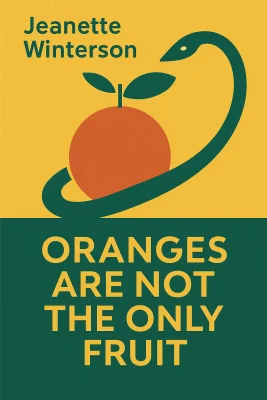
Oranges Are Not the Only Fruit
Categories
Fiction, Religion, Classics, Feminism, Contemporary, Novels, LGBT, Literary Fiction, Queer, Lesbian
Content Type
Book
Binding
Paperback
Year
1997
Publisher
Grove Press
Language
English
File Download
PDF | EPUB
Oranges Are Not the Only Fruit Plot Summary
Introduction
The child arrived like a foundling in a biblical tale, chosen by a mother who believed God had led her to this particular crib in this particular orphanage. Jeanette's adoptive mother painted the world in stark blacks and whites—friends of God and enemies of the Devil, with no gray spaces in between. Their house became a fortress of faith, where the radio crackled with missionary reports from distant lands and the walls echoed with hymns meant to drive away demons. But even the most carefully constructed walls cannot contain the human heart forever. As Jeanette grew from a precocious child evangelist into a questioning teenager, she would discover that love comes in forms the church had never taught her to recognize. Her journey would lead her through exorcism and exile, through the discovery that oranges are indeed not the only fruit—and that some hungers cannot be satisfied by the prescribed diet of salvation.
Chapter 1: The Chosen Child: Growing Up in God's Plan
Mother moved through the house like a general surveying her territory, hanging the largest sheets on the windiest days and positioning Conservative Party posters in their Labour mill town windows. She had never heard of mixed feelings. The world divided cleanly: God, the dog, and Charlotte Brontë novels on one side; the Devil, Next Door, and slugs on the other. Jeanette learned early that she was special, plucked from an orphanage not by chance but by divine appointment. Mother had followed a star, she claimed, until it settled above that particular building, above that particular crib containing a child with too much hair. For seven days and nights the child had cried, but Mother sang and stabbed at demons until the crying stopped. Their Sunday ritual never varied. Mother rose before dawn for private prayer, emerging only when the kettle boiled to announce either "The Lord is good" or launch into Bible quiz questions. They huddled beside the radiogram, Mother with tea, Jeanette with pad and pencil, recording missionary reports from behind the Iron Curtain. If conversions were high, they feasted on joint beef. If missionaries had been martyred, they made do with boiled eggs. The education began immediately. Deuteronomy served as Jeanette's first reader, its catalog of unclean animals illustrated by Mother's careful drawings. While other children learned about fluffy bunnies, Jeanette mastered pelicans, rock badgers, and the fearsome mamba that could outrun horses over short distances. Evil might triumph briefly, Mother explained, sketching the race between serpent and stallion, but never for long. School remained forbidden—a breeding ground, Mother declared—until a fat brown envelope arrived with official demands. The authorities threatened prison if Jeanette didn't attend classes immediately. That night, Mother played Jim Reeves and muttered about the world's corruption while Jeanette contemplated her impending exile from their carefully ordered paradise.
Chapter 2: Breeding Grounds: First Encounters with the Outside World
The classroom felt like enemy territory. Jeanette's essay about their church camp—complete with healing crusades and tambourine missions—sent ripples of bewilderment through her classmates. Her sampler depicting "The Summer Is Ended and We Are Not Yet Saved" in black thread horrified the needlework teacher. When other children brought home reports of hell and damnation from their seven-year-old classmate, parents descended on the school like angry hornets. Mrs Vole, the headmistress, tried to explain the problem delicately. Jeanette seemed rather preoccupied with God, she ventured. The child's biblical animal knowledge ran toward the exotic—pelicans and rock badgers instead of proper puppies and kittens. Most disturbing of all, she had been terrorizing other students with detailed descriptions of eternal torment. Mother hooted with laughter at the official letter and took Jeanette to see "The Ten Commandments" as a reward. But the damage was done. Classmates avoided the strange girl who spoke of demons as casually as others discussed the weather. Teachers watched her with nervous anticipation. Even her prize-winning hyacinth entry, cleverly titled "The Annunciation," lost to a pair of straggly white blooms called "Snow Sisters." The isolation might have broken another child, but Jeanette had always known she was different. She was chosen, after all, destined for missionary work in hot foreign places where her peculiar knowledge would finally prove useful. She endured the snickering and ostracism by focusing on her true calling, counting the years until she could escape to serve God properly. Salvation came unexpectedly during a hospital stay for deafness. Elsie Norris, ancient and half-blind but sharp as winter wind, visited daily with stories and numerology lessons. She spoke of William Blake and the importance of imagination, teaching Jeanette that the world contained mysteries the church had never mentioned. In that sterile room, surrounded by orange peels and half-built igloos, Jeanette glimpsed something beyond Mother's rigid categories—a wider world where questions mattered more than answers.
Chapter 3: Awakening: The Discovery of Forbidden Love
The fish market stall shimmered in the Saturday morning light, and behind the marble counter, Melanie worked with practiced efficiency. Her thin knife separated flesh from bone while Jeanette watched from the edge of the aquarium, struck by something she couldn't name. The girl's grey eyes reminded her of Next Door's cat, and when she smiled, Jeanette felt a peculiar warmth spread through her chest. Their first conversation was awkward—Melanie wasn't supposed to have friends at work—but when Jeanette invited her to church, something shifted. Pastor Finch was visiting that Sunday with his demon-fighting bus painted with the terrified damned on one side and heavenly hosts on the other. During his thunderous sermon about unnatural passions and demonic possession, Melanie's hand found Jeanette's, and she raised her arm for salvation. The Monday Bible study sessions at Melanie's house began innocently enough. Mother approved of Jeanette's evangelical work with the new convert. They read scripture together, prayed for the lost, and discussed their future missionary service. But gradually, something deeper bloomed between them. The conversations grew longer, the silences more charged, until one evening when Melanie stroked Jeanette's hair, and they both discovered they were drowning. The nights they spent together felt like stolen time from eternity itself. They whispered about their shared calling to serve God in distant lands, about the perfect love that surpassed understanding. In Melanie's narrow bed, surrounded by flowered wallpaper and the smell of her mother's cooking downstairs, they created their own sacred space where touch became prayer and breath became hymn. But even in their most intimate moments, questions lingered. Was this the unnatural passion Pastor Finch had warned against? It felt too pure, too right to be evil. They were both dedicated Christians, both called to service. Surely God wouldn't condemn love that brought such joy, such completion. They pushed the doubts aside, lost in the discovery of each other, unaware that in houses like these, walls had ears and secrets had consequences.
Chapter 4: Exorcism: Betrayal and Banishment from Eden
The trap closed with mechanical precision. Mother's tearful confession to the pastor about suspicious behavior, the careful surveillance, the strategic placement of witnesses—all orchestrated with the ruthless efficiency of someone who believed she was saving souls. When the church elders dragged Jeanette and Melanie before the congregation that Sunday morning, the trial felt predetermined. Pastor's voice boomed through the packed hall: "These children of God have fallen under Satan's spell." The words hit like physical blows while the congregation stared with the morbid fascination of those watching an execution. Melanie crumbled immediately, promising repentance through her tears, agreeing to whatever they demanded if only they would stop the public humiliation. But Jeanette held her ground, even as the pastor's grip tightened on her neck. "I love her," she declared, her voice carrying to the back rows where old women clutched their handbags like shields. The gasps of horror only strengthened her resolve. "I love both of them—her and the Lord." The impossibility of this dual allegiance sealed her fate. The exorcism stretched across days of starvation and prayer, the parlour transformed into a battleground where grown men knelt weeping and Mother smashed every plate in the house. They brought relays of elders, waves of spiritual warfare, testimonies from those who'd been delivered from similar demons. Through it all, Jeanette sat silent, watching oranges materialize on the windowsill while a small orange demon offered commentary from the mantelpiece. When she finally agreed to repent, it was calculated surrender rather than genuine conversion. The ceremony proceeded with theatrical solemnity—laying on of hands, speaking in tongues, tearful embraces from those who believed they'd witnessed resurrection. But in the empty church afterward, she made her real pilgrimage: twenty-five miles to Halifax where Melanie waited, broken and hollow-eyed, for one last night of truth before the lies resumed.
Chapter 5: Exodus: Forging a Path in the Wilderness
The suitcase felt heavier than it should have, packed with books, instruments, and a Bible that no longer offered comfort. Mother had burned everything else—letters, photographs, the small treasures that proved their love had existed. Now she stood in the doorway watching her daughter leave, dry-eyed and righteous, confident that demons would look after their own. The teacher who took Jeanette in was kind but bewildered by the theological refugees who occasionally washed up on decent people's doorsteps. She offered a spare room and asked few questions, understanding that some wounds required careful tending. The ice-cream van job came next—cheerful work that paid enough for rent and dignity, though the children's greedy faces sometimes reminded Jeanette of the congregation's hungry stare during her public shaming. Work at the funeral parlour provided unexpected sanctuary. Joe and his partner understood discretion, accepting Jeanette's competence with corpses and floral arrangements without probing her past. Among the brass fittings and satin linings, she found peace in the absolute honesty of death. The bereaved wanted truth, not performance. They paid for genuine service, not emotional manipulation. Katy arrived like a gift wrapped in simplicity. Another young convert, earnest and uncomplicated, she attached herself to Jeanette's Bible study classes with touching devotion. Their first night together in the caravan happened naturally, without the tormented questioning that had marked her relationship with Melanie. Katy brought no baggage, demanded no explanations, offered herself with generous enthusiasm that felt like healing. But even this refuge couldn't last. The church's intelligence network operated efficiently in small towns where everyone knew everyone's business. When the letter arrived from Morecambe detailing Jeanette's latest transgression, the pattern repeated itself: confrontation, denunciation, exile. Only this time, she was ready. The orange pebble in her pocket reminded her that some bridges, once burned, cleared the path for better roads.
Chapter 6: Return: Confronting the Threads of the Past
Snow fell like judgment on the town when Jeanette returned for Christmas, transforming familiar streets into something from a fever dream. The railway station looked smaller, shabbier, haunted by the ghost of her younger self waiting for trains to take her anywhere but here. Even the ice-cream man's horse seemed tired, dropping memories onto cobblestones for children who no longer scrambled with shovels to collect treasure for their mothers' gardens. Home felt like a museum of someone else's childhood. Mother had gone electronic—CB radio replacing the old radiogram, synthesized organ drowning out the piano's honest voice. She broadcast now to fellow believers across the airwaves, part of a network of faithful spirits who could commune without risking physical contamination. The past had been sanitized, rewritten, turned into cautionary tales for her ministry to other parents of demon-possessed children. The funeral parlour still needed help, and Jeanette found herself back among the brass fittings and silk-lined coffins that had once offered refuge. When Elsie Norris died—the old woman who'd understood about demons and the necessity of keeping them—Jeanette learned that even death could be weaponized. The church claimed its own, denying her the right to mourn publicly while profiting from her professional skills behind the scenes. Mrs. Arkwright planned her escape to Spain with the methodical precision of someone who understood that some bridges must be burned literally. The vermin shop would provide insurance money and freedom, a funeral pyre for old limitations. Her Spanish phrase book and soft toy inventory represented possibility in ways that prayer and penance never had. Standing on the hill above town, watching snow erase the familiar landmarks, Jeanette realized she was seeing it all for the last time. The threads that had pulled her home were finally snapping, one by one. Mother's electronic prayers couldn't reach across the distance that had grown between them. The child who'd believed in easy answers was dead, and the woman who remained had learned that some hungers couldn't be satisfied by the prescribed diet of salvation.
Chapter 7: Reconciliation: Finding Truth Beyond Oranges
The CB radio crackled with Mother's voice calling across the static: "This is Kindly Light calling Manchester, come in Manchester, this is Kindly Light." Even her call sign revealed the transformation—no longer the fierce warrior of old testament battles, but something softer, more desperate, broadcasting hope into an indifferent electronic void. They sat in the kitchen one last morning, sharing tea and the careful politeness of people who'd learned to love each other across an unbridgeable chasm. Mother spoke of her electronic ministry, her self-help kits for parents of spiritually disturbed children, her campaigns for better bathrooms and central heating. Progress had made her obsolete—modern demons apparently preferred cleaner quarters than the old infestations she'd spent decades fighting. The orange on the table sat untouched between them, perfect and whole and utterly familiar. All those years of Mother's insistence that oranges were the only fruit, the single reliable source of spiritual and physical nutrition. Now Jeanette understood the limitation embedded in that certainty. The world offered mangoes and passion fruit, persimmons and pomegranates, whole orchards of possibility that couldn't be contained within any single doctrine. But understanding didn't eliminate hunger. Watching Mother adjust her headphones and scan the frequencies for other lonely believers, Jeanette recognized the need that had driven all of Mother's certainties. The requirement for someone utterly loyal, absolutely committed, permanently present. Love as strong as death, fierce enough to survive betrayal and abandonment and the simple erosion of time. The snow continued falling outside, erasing footprints and covering scars, while inside two women who'd loved each other imperfectly prepared for another goodbye. This time, though, the parting carried no bitterness—only the sad recognition that some loves survive precisely because they learn to let go. Mother's voice faded into static as the frequency shifted, but the echo lingered: "Kindly Light," calling across the darkness, hoping someone, somewhere, might answer.
Summary
Jeanette's journey from chosen child to willing exile traces the painful geography of growing up between worlds that demand impossible choices. Her mother's love, fierce and absolute, could only express itself through the rigid vocabulary of salvation and damnation. The church that shaped her earliest understanding offered community and purpose, but demanded a price too steep to pay: the surrender of her authentic self to their narrower vision of righteousness. The fruit that falls from forbidden trees carries its own nourishment. In choosing love over doctrine, desire over duty, Jeanette discovered that exile can be its own form of salvation. The threads that once pulled her back to old certainties finally snapped, not from anger but from the simple recognition that some hungers require different sustenance than the traditional diet provides. Her story ends not with resolution but with possibility—the knowledge that beyond the walls of any single orchard, whole worlds of sweetness wait to be tasted by those brave enough to reach.
Best Quote
“I seem to have run in a great circle, and met myself again on the starting line.” ― Jeanette Winterson, Oranges Are Not the Only Fruit
Review Summary
Strengths: The review highlights the book's imaginative and mischievous storytelling, emphasizing its ability to weave complex narratives that incorporate and subvert traditional fairy tales and myths. The protagonist's journey is portrayed as unique and compelling, with a strong emotional impact on the reader. The book is praised for its layered narratives and the author's skill in challenging readers' worldviews. Overall: The reviewer expresses a deep appreciation for "Oranges Are Not the Only Fruit," noting that it left a lasting impression both upon first reading and years later. The book is highly recommended, particularly for its innovative narrative style and emotional depth.
About Author

Jeanette Winterson
Winterson interrogates the intersections of gender, sexuality, and identity through her literature, driven by personal experiences and a unique narrative voice. Raised in a strict Pentecostal community in Accrington, her semi-autobiographical debut, "Oranges Are Not the Only Fruit", delves into themes of rebellion against rigid societal norms. Meanwhile, her inventive use of symbolism and unconventional storytelling methods challenges readers to explore complex human relationships and the fluidity of identity. Notable works like "Sexing the Cherry" and "Frankissstein: A Love Story" further showcase her ability to blend historical and futuristic narratives, pushing the boundaries of genre and form.\n\nReaders gain a deeper understanding of the multifaceted nature of human experience and the courage required to defy societal constraints. Winterson’s writing benefits those interested in exploring queer themes and narrative innovation, encouraging introspection and a broader perspective on identity. Her achievements, including a Whitbread Award and a BAFTA for the adaptation of "Oranges Are Not the Only Fruit", underscore her impact on contemporary British literature. Winterson's continued contributions as an author, columnist, and creative writing teacher ensure her influence resonates with both aspiring writers and diverse audiences globally.
Read moreDownload PDF & EPUB
To save this Black List summary for later, download the free PDF and EPUB. You can print it out, or read offline at your convenience.

Oranges Are Not the Only Fruit
by Jeanette Winterson
