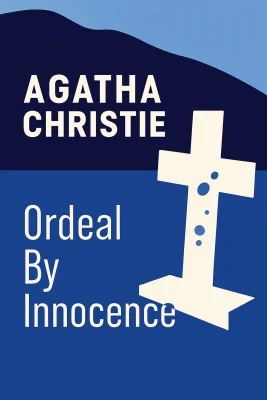
Ordeal by Innocence
Categories
Fiction, Classics, Audiobook, Mystery, Thriller, Crime, Mystery Thriller, Agatha Christie, Murder Mystery, Detective
Content Type
Book
Binding
Mass Market Paperback
Year
2002
Publisher
Minotaur Books
Language
English
ASIN
0312981627
ISBN
0312981627
ISBN13
9780312981624
File Download
PDF | EPUB
Ordeal by Innocence Plot Summary
Introduction
The Antarctic wind howled through Dr. Arthur Calgary's memory as he stood on the doorstep of Sunny Point, clutching a letter that would shatter a family's carefully constructed peace. Two years had passed since young Jacko Argyle died in prison for murdering his adoptive mother Rachel. Two years since the case closed with brutal finality. But Calgary carried with him the one thing that could resurrect the dead and damn the living: an alibi. On that November night when Rachel Argyle was bludgeoned to death with a poker, Calgary had given Jacko a lift to Drymouth. A concussion from a traffic accident had stolen this memory until now, emerging like a ghost to pronounce the dead boy innocent. Calgary believed he brought justice, a vindication that would free the Argyle family from their burden of shame. Instead, he delivered a different kind of curse. If Jacko hadn't killed his mother, then someone else had. Someone still walking among them, breathing their air, sharing their meals, sleeping under their roof. The real murderer had watched an innocent man die for their crime, and now they would do anything to keep their secret buried.
Chapter 1: The Bearer of Unwelcome Truth
Dr. Calgary's hands trembled as he pressed the bell at Sunny Point, expecting gratitude but finding only horror etched in young Hester Argyle's face. The Irish-dark girl stood in the doorway like tragedy incarnate, her blue eyes wide with a fear he couldn't understand. "Why did you come?" she whispered, and her words carried the weight of accusation rather than relief. Inside the comfortable house that Rachel Argyle had renamed from its original moniker of Viper's Point, Calgary found himself facing a family that recoiled from his news like vampires from holy water. Leo Argyle, Rachel's widower, received the information with the detached politeness of a man already retreating into shadows. The Swedish housekeeper, Kirsten Lindstrom, watched Calgary with the suspicious eyes of a guardian protecting her charges from a dangerous intruder. Only when Calgary explained the full implications did their resistance make sense. For two years, they had lived with a comfortable certainty. Jacko was the murderer, a troubled boy whose violence finally found its ultimate expression. They could mourn him, pity him, even forgive him while maintaining their own innocence. But Calgary's revelation stripped away that sanctuary, leaving them naked before a terrible truth: one of them was a killer. As Calgary spoke, he watched the family dynamic shift like ice cracking under spring sun. Gwenda Vaughan, Leo's secretary and intended bride, moved protectively closer to her employer. Mary Durrant, the eldest adopted daughter, sat frozen beside her wheelchair-bound husband Philip. Even absent family members seemed to cast shadows in the room, their alibis suddenly transformed from irrelevant details into matters of life and death. The gift Calgary thought he brought crumbled in his hands. He had expected tears of relief, gratitude for clearing Jacko's name. Instead, he found himself the bearer of a curse that would poison everything it touched. As he left Sunny Point that first evening, Hester's final words followed him into the darkness: "It's not the guilty who matter. It's the innocent."
Chapter 2: A Family Unraveling Under Suspicion
The poison worked quickly through the Argyle household. Within days of Calgary's visit, the carefully maintained facade of family unity began to crack. Leo Argyle, who had seemed ready to find happiness again with his secretary Gwenda Vaughan, retreated into the intellectual fortress he had occupied during his marriage. Their planned engagement evaporated like morning mist, replaced by the corrosive doubt that either could be a murderer. Hester, the most volatile of Rachel's adopted children, found her budding romance with Dr. Donald Craig withering under suspicion. The young physician had been prepared to love a troubled girl seeking stability, but the possibility that she might have killed her adoptive mother transformed every conversation into an interrogation. His medical training taught him to look for pathological signs, and in Hester's passionate declarations of innocence, he heard only the protests of someone trying too hard to convince. The other family members scattered like startled birds. Micky, the bitter young man who had never hidden his resentment of Rachel's controlling nature, spoke of taking a job in the Persian Gulf, as far from England as his skills could carry him. Tina, the quiet half-caste girl who worked at the county library, retreated even further into her characteristic silence, her dark eyes holding secrets she refused to share. Mary Durrant clung to her invalid husband Philip with increased desperation, as if her devotion could shield them both from suspicion. But Philip, intelligent and restless in his wheelchair, began to see the case as an intellectual puzzle that might restore some purpose to his constrained existence. His interest terrified Mary, who recognized that curiosity could be as dangerous as any weapon in a house where murder had already struck once. The family that had once gathered for comfortable dinners now eyed each other across the table with barely concealed wariness. Every glance carried weight, every absence demanded explanation. They were no longer the Argyles, bound together by Rachel's determined maternal love. They had become a collection of suspects, each measuring the others for guilt, each wondering who among them had the capacity for murder.
Chapter 3: The Archaeology of Secrets
Superintendent Huish returned to Sunny Point with the weary patience of a man accustomed to unpleasant duties. The reopening of the Argyle case brought no satisfaction to the veteran policeman, who had been content to let sleeping murders lie. But Calgary's evidence demanded action, and Huish found himself excavating a crime that had seemed perfectly solved. The facts remained stubbornly unchanged. Rachel Argyle had died between seven and seven-thirty on that November evening, struck down in her sitting room by someone who had access to the house. The poker, Jacko's fingerprints still clear upon its surface, had been wielded by another hand entirely. The staged burglary, with its carelessly rifled drawers, had been designed to point suspicion toward an outsider who had never existed. Huish methodically reinterviewed the family members, noting how their stories shifted in subtle ways. Leo claimed to remember hearing the doorbell ring, but his timing grew vaguer under scrutiny. Gwenda's departure from the house at seven-five could have been a calculated alibi rather than the innocent conclusion to a working day. Even Kirsten Lindstrom's discovery of the body took on sinister implications when viewed through the lens of suspicion. The money that had condemned Jacko now served as another puzzle piece. Fifty pounds had been found in his possession, money he claimed his mother had given him despite her stated refusal to help. If Jacko hadn't taken the money himself, someone else had supplied it, someone who needed him to appear guilty of theft as well as murder. Most disturbing was the testimony of young Cyril Green, a village boy who had been larking about near Sunny Point on the murder night. He had seen what he initially described as a "Russian sputnik" but now recognized as a red bubble car. The vehicle belonged to Tina Argyle, who had claimed to be home in her Redmyn flat throughout the evening. The lie, small as it seemed, opened another wound in the family's credibility. As Huish left Sunny Point for the second time, he carried with him the uncomfortable certainty that the truth lay buried somewhere in the house's comfortable rooms. But truth and proof were different animals, and he doubted whether enough evidence remained after two years to satisfy a court of law.
Chapter 4: Dangerous Games of Amateur Detection
Philip Durrant wheeled his chair to the library window, watching the November light fade over the grounds where his mother-in-law had once walked. The enforced inactivity of his crippled existence had sharpened his mind to a razor's edge, and the Argyle case presented exactly the kind of intellectual challenge that might restore meaning to his constrained world. His wife Mary watched his growing obsession with mounting alarm. She had married a dashing young pilot, only to see him transformed first by polio into a physical invalid, and now by curiosity into something potentially more dangerous. Philip's questions probed like surgical instruments, cutting through the family's defensive silences to expose the infected truth beneath. Philip had advantages that even the police lacked. He understood the family dynamics, recognized the patterns of behavior that might reveal the killer's identity. His analysis was methodical and cold, weighing each family member's capacity for violence against their opportunity and motive. He saw how Rachel's domineering love had created resentments that festered in darkness, breeding the kind of fury that could explode into murder. The invalid began laying careful traps, making casual observations designed to provoke revealing reactions. He studied faces for the telltale signs of guilt, listened for the false notes in familiar voices. His game was subtle but increasingly reckless, as if his wheelchair had made him forget that he remained vulnerable to more direct forms of attack. Mary's pleas for him to abandon his investigation fell on deaf ears. Philip had found a purpose that transcended his physical limitations, a quest for truth that made him feel alive again. He ignored the mounting tension in the house, the way conversations stopped when he appeared, the nervous glances that followed his chair through familiar rooms. In his methodical way, Philip was closing in on the truth. But he failed to recognize that his very success might sign his own death warrant. In a house where murder had been committed once, the killer would not hesitate to strike again if cornered. Philip's brilliant mind, trapped in its useless body, was about to learn that some games have rules written in blood.
Chapter 5: Blood on the Hearth
The attack came with surgical precision on a grey afternoon when the house drowsed in its usual quiet routine. Philip Durrant sat at his desk, confident in his intellectual superiority, when death approached on silent feet. The blade that ended his life was thrust upward through the base of his skull, a killing stroke that spoke of anatomical knowledge and desperate resolve. Tina Argyle found him first, arriving for their scheduled meeting only to discover that Philip's questions would never be answered. The blood on his collar formed a bright red badge of finality, his head twisted at an impossible angle. Whatever he had discovered, whatever trap he had been preparing to spring, died with him in that quiet room overlooking the garden where he would never walk again. The killer had been careful, removing whatever Philip had been writing when death claimed him. But they could not erase the fact that the invalid had been struck down at the moment when his investigation threatened to bear fruit. His murder was both a confession and a defiance, acknowledging guilt while attempting to bury it beneath another layer of violence. Kirsten Lindstrom's scream shattered the afternoon stillness as she discovered the body. The Swedish woman's anguish seemed genuine, but then grief could be feigned as easily as innocence. The broken coffee tray at her feet told its own story, the empty cup revealing that the killer had used Kirsten's routine as cover for their approach. As the household erupted into fresh chaos, Tina stumbled from the death room with shock etched across her delicate features. She moved like a sleepwalker toward the garden where Micky waited, her usual composure shattered by proximity to violent death. The young man caught her as she collapsed, but even his protective embrace could not shield her from the blade that found her back. The second attack came with desperate haste, a clumsy thrust that missed the heart but carried its own message of panic. The killer had seen something in Tina's eyes, some knowledge that made her as dangerous as Philip had been. In the space of minutes, Sunny Point had claimed two more victims, its name becoming an increasingly bitter joke in the gathering twilight.
Chapter 6: The Manipulation Behind the Murder
Dr. Calgary's return to Sunny Point found a house transformed into a charnel house, where death had struck twice more since his last visit. Tina Argyle lay fighting for life in a hospital bed while Micky sat in a police cell, the bloody knife found in his pocket serving as damning evidence of his guilt. Yet Calgary sensed deeper currents beneath the surface chaos, patterns that pointed toward a more complex truth. Superintendent Huish shared his doubts reluctantly, admitting that the case felt incomplete despite its apparent solution. Micky had opportunity and a lifetime of resentment to fuel his violence, but the timing suggested panic rather than calculation. The killer who had waited two years to be discovered seemed unlikely to make such elementary mistakes when finally cornered. Tina's brief moment of consciousness provided the key that unlocked the mystery. Her fevered words seemed like delirium to the nurses, but Calgary recognized their significance. "The cup was empty," she had whispered, and "The dove on the mast," fragments of meaning that pointed toward an impossible truth. The empty coffee cup revealed that Kirsten Lindstrom had been leaving Philip's room rather than entering it when Tina arrived. The loyal housekeeper, pillar of the family's stability, had just committed murder when she turned to greet the younger woman with apparent concern. Her performance was flawless until Tina's unconscious mind registered the detail that exposed her deception. But Kirsten's guilt raised even more disturbing questions. She had served the Argyle family with apparent devotion for nearly two decades, arriving during the war to help with Rachel's evacuated children and staying to become an indispensable part of their lives. What could have driven such a woman to murder her employer, and how had she manipulated events to cast suspicion on the dead Jacko? The answer lay in the complex web of relationships that Rachel Argyle had woven around herself. Her adopted family was bound to her not just by gratitude but by financial dependence, their comfortable lives underwritten by her careful management of trust funds and allowances. In that hothouse atmosphere of enforced intimacy and obligation, even the most unlikely passions could take root and flourish in secret darkness.
Chapter 7: Liberation Through Truth
The final confrontation came in the library where Rachel Argyle had once planned her charitable works, unaware that charity could breed its own kind of hatred. Calgary assembled the surviving family members, watching their faces as he methodically destroyed the last pretenses that kept their world intact. The truth, when it finally emerged, was more sordid and heartbreaking than anyone had imagined. Kirsten Lindstrom had been Jacko's lover, seduced by his practiced charm into believing herself special among his many conquests. The middle-aged spinster, starved of affection throughout her dutiful life, had fallen completely under the spell of the young man who saw her only as a source of money and assistance. When he needed an alibi for theft and murder, she had provided both the stolen cash and the killing blow that silenced Rachel Argyle forever. The plan had been elegantly simple. Jacko would establish his innocence through Calgary's unwitting testimony while Kirsten played the role of shocked discoverer. The money would seem like theft, the violence like the desperate act of a cornered boy. Even if Jacko were convicted, his sentence would be manageable, and they could wait for his release to begin their promised new life together. But Jacko's secret marriage destroyed those dreams, revealing him as the calculating predator he had always been. Kirsten had killed for nothing more substantial than a young man's lies, and the knowledge poisoned whatever remained of her sanity. When Calgary's investigation threatened to expose the truth, she had struck again with the desperate fury of a cornered animal. The Swedish woman's confession came in broken sentences, her voice hollow with the weight of three deaths. She had loved Jacko with the terrible intensity of someone who had never been loved in return, and that love had transformed her into something monstrous. Her devotion to the Argyle family, genuine in its own way, had been corrupted by a passion that demanded everything and gave back only betrayal. As Kirsten walked away into the gathering darkness, the surviving Argyles faced a future finally free from suspicion. The innocent had been liberated from the shadow of guilt, but the price of that freedom lay heavy on their souls. They had lived for two years with a murderess who had cooked their meals, tended their hurts, and listened to their secrets with the patience of a loving servant.
Summary
The Argyle family's ordeal ended not with justice but with a kind of exhausted recognition that innocence itself could be a form of guilt. Those who survived Kirsten Lindstrom's devotion found themselves scattered by forces too powerful to resist, their artificial bonds dissolved by the acid of truth. Mary retreated into bitter solitude, mourning a husband whose curiosity had been his undoing. Leo and Gwenda discovered that love could not easily bridge the chasm that suspicion had opened between them. Yet for some, liberation brought unexpected possibilities. Hester, freed from the weight of undeserved guilt, found the courage to choose her own path rather than accepting what others demanded of her. Calgary himself discovered that bringing truth could be its own reward, even when that truth destroyed more than it preserved. In the end, the house called Sunny Point stood empty of its ghosts, its shadows finally dispelled by the harsh light of understanding. The tragedy of the Argyles was not simply that murder had been committed, but that love itself had been weaponized, turned into an instrument of manipulation and destruction. Rachel's maternal tyranny, Jacko's calculated seduction, Kirsten's obsessive devotion, all had contributed to a pattern of emotional violence that made physical murder almost inevitable. When the last secrets were finally exposed, what remained was not redemption but the simple recognition that truth, however painful, was preferable to the beautiful lies that had held their world together. In choosing honesty over comfort, the survivors of Sunny Point had finally earned the right to build something real from the ruins of their artificial family.
Best Quote
“How can I go on living here and suspecting everybody ?” ― Agatha Christie, Ordeal by Innocence
Review Summary
Strengths: The review highlights Agatha Christie's impressive writing style, noting her streamlined and exacting prose. Her ability to convey dialogue creatively and her skillful characterization are praised, with vivid descriptions that bring characters to life. Weaknesses: The review points out an awkward premise involving a character with a concussion who fails to provide an alibi and then departs for Antarctica, which may detract from the story's believability. Overall: The reader finds "Ordeal" to be an engaging psychological mystery, despite its somewhat awkward premise. The book is recommended for its strong writing and character development, with the reader appreciating Christie's narrative techniques and storytelling prowess.
About Author

Agatha Christie
Christie investigates the complexities of human motives through her intricate detective novels, creating iconic characters like Hercule Poirot and Miss Marple. Her work is renowned for its cleverly woven plots and psychological depth, which often explore themes of greed, jealousy, and revenge. With her distinctive ability to craft suspenseful narratives within confined settings, she has left an indelible mark on the crime fiction genre. Her success in this realm is further evidenced by her enduring play, "The Mousetrap", the longest-running in modern theater history.\n\nThe author’s early career faced challenges with publisher rejections, yet her persistence led to the creation of a literary empire, amassing over two billion book sales worldwide. Writing under the pseudonym Mary Westmacott, she extended her literary reach beyond crime fiction to romance, demonstrating her versatility. Christie's influence extends to a wide audience, captivating readers with her logical deduction and engaging storytelling. Her work appeals to those who appreciate the intricate puzzles and rich character portrayals that define her stories.\n\nChristie's literary achievements include a variety of notable works such as "The Mysterious Affair at Styles", "Murder on the Orient Express", and "And Then There Were None". Recognized as the best-selling novelist of all time, her novels have been translated into over 100 languages, illustrating her global impact. Furthermore, her contributions to literature were honored with the title of Dame Commander of the Order of the British Empire. This short bio captures how Agatha Christie's innovative approach and enduring creations continue to influence and inspire both readers and writers in the field of detective fiction.
Read moreDownload PDF & EPUB
To save this Black List summary for later, download the free PDF and EPUB. You can print it out, or read offline at your convenience.
Ordeal by Innocence
by Agatha Christie
