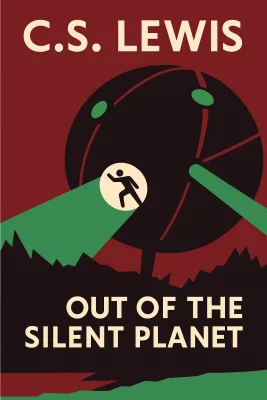
Out of the Silent Planet
Categories
Fiction, Christian, Religion, Classics, Science Fiction, Audiobook, Fantasy, Science Fiction Fantasy, Adventure, Christian Fiction
Content Type
Book
Binding
Paperback
Year
2004
Publisher
HarperCollins
Language
English
ASIN
0007157150
ISBN
0007157150
ISBN13
9780007157150
File Download
PDF | EPUB
Out of the Silent Planet Plot Summary
Introduction
Dr. Ransom's evening walk through the English countryside should have been peaceful. Instead, it led him into the clutches of two men he barely knew from his university days—Devine, a greedy opportunist, and Weston, a brilliant physicist consumed by a terrifying vision. They drugged him, dragged him aboard an impossible spacecraft, and hurled him toward Mars on a journey that would shatter everything he thought he knew about life in the universe. What awaited him on that alien world was not the barren wasteland astronomers had described, but a place of impossible beauty inhabited by three intelligent species living in harmony under the watchful eye of an entity called Oyarsa. Yet Ransom's captors had their own plans—plans that would bring violence and death to this peaceful realm, forcing him to choose between his own survival and the fate of an entire world.
Chapter 1: Abduction into the Heavens
The cottage door flew open as Ransom approached, and a woman crashed into him in the gathering dusk. Her son Harry was late returning from work at The Rise, she explained, wringing her hands. The boy was simple-minded, easily frightened, and the men there—a professor and a gentleman from London—had kept him past his usual hour. Against his better judgment, Ransom offered to retrieve the boy. He climbed through a hedge into the abandoned grounds of The Rise, where a massive stone house loomed against the darkening sky. Behind it, industrial smoke belched from what looked like a factory chimney. The sound of a struggle led him around back, where three figures grappled in the shadows. The boy was sobbing, pleading not to be taken "in there" again. Two men held him fast—one thick and loud-voiced, the other tall and familiar. Devine, his old schoolmate, greeted Ransom with hollow charm while his companion, the physicist Weston, glowered with unconcealed hostility. They claimed the boy had suffered a fit, needed calming. But their eyes held secrets darker than the night around them. Ransom found himself accepting their offer of hospitality, following them into a house that reeked of champagne and decay. The whiskey Devine poured tasted wrong. The room began to spin, and Ransom's limbs grew heavy as lead. Through the haze of drugs, he heard fragments of conversation—something about a spaceship, about sorns who demanded a human sacrifice. His last coherent thought before the darkness took him was the metallic taste of betrayal on his tongue. When consciousness returned, he was already beyond the pull of Earth's gravity, imprisoned in a steel sphere hurtling through the star-drunk void toward an alien world whose name he did not yet know.
Chapter 2: First Contact with an Alien World
The crash of landing jarred Ransom awake in what felt like an arctic tomb. Through the ship's porthole, an enormous pale disc hung in alien skies—not the moon he knew, but Earth itself, impossibly distant. The walls around him vibrated with strange music, like metal rain on a drum. Weston's voice cut through his terror with clinical precision: they were eighty-five thousand miles from home, bound for Malacandra. Mars, Weston called it in terrestrial terms, though he preferred the planet's true name learned from its inhabitants. The physicist spoke of previous contact, of beings called sorns who had requested a human specimen. Ransom's role in this cosmic transaction remained ominously unclear, but Weston's references to "sacrifice" and "the greater good of science" painted a picture of ritualized death under alien stars. The journey stretched across weeks of impossible beauty and mounting dread. In the ship's day-chambers, Ransom basked in ethereal light purer than any earthly sunshine. The night-sections revealed a universe blazing with stars so numerous they seemed like scattered diamonds on black velvet. Yet beneath this celestial splendor lurked the constant awareness of his approaching fate. Devine, when not managing the ship's controls, spoke cryptically of Malacandra's riches—gold washing down in rivers, waiting to make men wealthy beyond dreams. But his eyes held the same predatory gleam Ransom remembered from their school days. Whatever awaited them on the red planet, it would serve Devine's hunger for profit and Weston's grand delusions of scientific destiny. As Malacandra swelled in the viewports from distant star to looming world, Ransom felt the weight of two certainties: he would soon set foot on an alien shore, and his captors had no intention of bringing him home alive.
Chapter 3: Among the Hrossa: Language and Friendship
The landing nearly killed them all. Weston's violent piloting threw the ship into a lake of blue water that sparkled like liquid sapphire. Strange purple forests towered on impossible spires of vegetation, while jagged mountains pierced the pale sky like broken cathedral spires. This was Malacandra—beautiful beyond imagination and utterly alien. Ransom's first glimpse of the sorns sent him fleeing in mindless terror. Three giants approached across the water, skeletal and pale, their elongated limbs moving with eerie grace. Weston and Devine tried to force him toward the creatures, but chaos erupted when something large and predatory surged from the lake's depths. In the confusion of gunshots and inhuman cries, Ransom broke free and ran blindly into the purple wilderness. For days he wandered through forests of feathery trees, drinking from warm blue streams and gnawing on tasteless but nourishing vegetation. The gravity was lighter here, allowing impossible leaps across ravines that would have meant death on Earth. Yet loneliness gnawed at him worse than hunger. He was a castaway on an alien shore, millions of miles from any human voice. Then he encountered the hross. The creature emerged from a lake like a giant seal, sleek and black, with intelligent amber eyes that studied him with curious compassion. When it spoke—and speak it did—Ransom's terror transformed into wonder. Here was not a beast, but a person of another species, offering him drink from a ceremonial shell and struggling to bridge the gulf between their languages. Hyoi, as the hross was called, led Ransom to a village of beehive huts where more of his people dwelt. They welcomed the strange visitor with songs that seemed to capture the very essence of wind and water. In their liquid voices and gentle manner, Ransom found something he had lost in the sterile corridors of human civilization: a glimpse of what intelligent beings might be like if they had never learned to hate.
Chapter 4: The Journey to Meldilorn
The village buzzed with excitement when Ransom spoke of the great water-beast he had fled from in those first terrifying hours. The hnakra, they called it—a creature of legend that had not been seen in their valley for many seasons. To hunt such a monster was the highest honor a hross could achieve, and Hyoi burned with the ancient fire of the chase. Ransom found himself swept up in the expedition, crammed into Hyoi's narrow boat as they joined a flotilla of hunters converging on the creature's territory. The alien landscape unrolled around them like a fever dream—valleys carved impossibly deep into the planet's surface, filled with blue waterways that steamed in the thin air. Above them loomed the harandra, the true surface of Mars, cold and lifeless as the face of the moon. The hrossa sang as they paddled, their voices weaving together in harmonies no human throat could produce. They spoke of death not as an enemy to be feared but as a completion to be embraced when the time came. Their entire philosophy revolved around the perfect moment—the single act that would define a life and echo through the songs of future generations. When they encountered the hnakra, it rose from the lake like living shadow and fury. The beast's jaws could have swallowed a man whole, but Ransom stood his ground beside his alien friend, hurling spears with strength he didn't know he possessed. For one shining moment, he was no longer a frightened academic but a warrior fighting alongside beings who had accepted him as hnau—a rational creature worthy of respect. The victory was bitter as poison. Even as Hyoi celebrated their triumph, calling Ransom hnakrapunt—killer of the water-beast—the crack of an English rifle split the morning air. Weston and Devine had found them. Hyoi collapsed with blood spreading across his sleek fur, his last words a whispered recognition of Ransom as friend and equal. The paradise Ransom had discovered was already bleeding, contaminated by the violence his own species had brought across the void.
Chapter 5: Trial Before Oyarsa
The journey to Meldilorn took Ransom across landscapes that defied earthly imagination. Augray, the sorn who served as his guide, carried him on towering shoulders across the frozen wasteland of the harandra. The creature he had once feared proved gentle as a scholar, its vast intelligence tempered by an almost childlike curiosity about the distant world called Thulcandra—the silent planet. Below them, the handramits carved their geometric patterns across the planet's surface like a vast mathematical theorem written in stone and vegetation. Ancient forests, turned to mineral by eons of time, rose in crystalline splendor toward the star-drunk sky. This was a world old beyond human comprehension, where three species of rational beings had learned to live in harmony under the guidance of something greater than themselves. Meldilorn rose from its lake like a vision from paradise. The island's crown bore trees that towered hundreds of feet into the thin air, their tops crowned with golden flowers large as clouds. Among their roots stood monoliths covered with carvings that told the history of worlds—images of planets dancing around their star, of creatures long extinct, and of the entity called Oyarsa who ruled this realm with wisdom beyond mortal understanding. The trial that awaited Ransom was unlike anything in human jurisprudence. Oyarsa himself was invisible save for the faintest suggestion of light and movement, a presence that made the air itself seem alive. The assembled creatures of Malacandra—hrossa, sorns, and the frog-like pfifltriggi—watched in respectful silence as their ruler questioned this visitor from the silent world. Ransom found himself defending not just his own actions but the entire human race. He spoke of Earth's wars and cruelties, of the bent nature that seemed to poison everything his species touched. Yet Oyarsa listened without condemnation, recognizing in Ransom's honesty the seeds of something better than the corruption that had followed him across the void of space.
Chapter 6: The Perilous Return to Earth
Weston and Devine arrived as prisoners, dragged before Oyarsa by the same hrossa whose kin they had murdered. The physicist's attempts to intimidate his captors with cheap trade beads and bombastic threats reduced the assembled creatures to helpless laughter. Even Devine, for all his cunning, could not comprehend the vast intelligence that judged them with perfect clarity. Under Oyarsa's patient questioning, Weston revealed the true horror of his philosophy. He cared nothing for individual life, human or alien, but worshipped an abstract concept he called the survival of the species. This twisted gospel justified any atrocity in service of spreading humanity across the stars, consuming world after world in an endless feast of conquest and colonization. The entity that ruled Malacandra listened to this manifesto of cosmic genocide with something approaching pity. Here was a mind brilliant enough to cross the void between worlds yet so corrupted by the Bent One—Earth's fallen ruler—that it had become a weapon pointed at the heart of the universe. Weston was not evil in the simple sense, but something far more dangerous: a man who had made evil into a sacrament. Oyarsa's judgment was both merciful and terrible. The humans would be allowed to return to their own world, but their ship had been sabotaged. If they failed to reach Earth within ninety days, it would disintegrate in the void, taking them into the cold embrace of space. It was a desperate gamble with death as the stakes, yet preferable to leaving such creatures loose among the peaceful worlds of the solar system. The journey home became a descent into hell. Their trajectory took them perilously close to the sun, where temperatures rose beyond the limits of human endurance. The three men lay gasping in their metal tomb, their bodies wracked with thirst and fever while the stars blazed with merciless intensity beyond their shuttered ports. Death seemed certain, yet something greater than chance guided their passage through the burning void.
Chapter 7: A Changed Perspective
The splash of rain on Ransom's face was like a benediction from heaven itself. He had awakened alone in the crashed ship, abandoned by his companions but breathing the sweet air of Earth once more. The journey had left him forever changed, carrying within his mind the memory of golden flowers beneath alien stars and voices that sang in harmonies no human throat could produce. In the months that followed, Ransom struggled with the weight of his impossible story. Who would believe tales of rational beasts and invisible rulers dwelling in the spaces between the worlds? Yet the experience had transformed him from a timid academic into something harder and more purposeful. He had seen the face of evil in Weston's cosmic ambitions and knew that greater conflicts were coming. The universe was not the cold, empty void that human science described, but a living ocean teeming with intelligence and purpose. Earth itself was not a random ball of rock spinning through meaningless darkness, but Thulcandra—the silent world, cut off from the cosmic community by the rebellion of its own corrupted ruler. Yet that isolation was ending, and the barriers that had protected humanity from itself were beginning to crack. Ransom understood now that his journey to Malacandra had been no accident but the opening move in a vast game whose stakes encompassed not just worlds but the very nature of existence itself. Somewhere in the darkness beyond Earth's atmosphere, forces were stirring that would reshape the destiny of the human race. The question was whether they would prove to be salvation or damnation. The stars that had once seemed distant and indifferent now watched him with the eyes of living beings, and in their light he glimpsed the outline of struggles yet to come. His wandering among the hrossa was over, but his real journey had only just begun.
Summary
Dr. Ransom's forced voyage to Mars became a pilgrimage that stripped away humanity's illusions about its place in the cosmos. On Malacandra, he discovered that intelligence and compassion were not unique to Earth, but part of a greater harmony that encompassed the spaces between the worlds. His friendship with Hyoi and the other hrossa revealed the possibility of rational beings living without the violence and corruption that plagued his own species. Yet this glimpse of paradise was shattered by the arrival of his captors, whose hunger for conquest and gold brought death to a peaceful realm. The return journey through the burning void was more than a desperate race against time—it was a passage through the very heart of creation, where the boundaries between matter and spirit dissolved in the furnace of stellar fire. Ransom emerged from that crucible transformed, carrying within himself the seeds of a cosmic consciousness that would forever set him apart from his fellow humans. He had touched the mind of Oyarsa and felt the pulse of intelligence that flows through the universe like blood through living veins. The silent world was silent no more, and the age of Earth's isolation was drawing to its close.
Best Quote
“The love of knowledge is a kind of madness.” ― C.S. Lewis, Out of the Silent Planet
Review Summary
Strengths: The review highlights C.S. Lewis's imaginative world-building and straightforward writing style, likening it to Jules Verne. The integration of Christian theology into the sci-fi genre is praised for its plausibility and effectiveness. The narrative's ability to engage readers through its allegorical elements is also noted positively. Weaknesses: The review points out the outdated scientific theories and the slow pacing in reaching key plot points. The desire for more immersive world exploration is expressed, suggesting a lack of detailed engagement with the created universe. Overall: The reader expresses a strong liking for the book, appreciating its imaginative scope and theological depth, despite some scientific inaccuracies and pacing issues. It is recommended for fans of C.S. Lewis's narrative style, particularly those who enjoyed the Chronicles of Narnia.
About Author
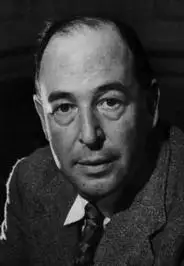
C.S. Lewis
Lewis probes the intricacies of faith and human emotion through his multifaceted writing, merging philosophical inquiry with theological insights. By employing allegory and narrative, he crafts a platform where complex ideas on spirituality and morality become accessible, as seen in his renowned work "Mere Christianity." This book, while a staple in Christian apologetics, shares its influence with other significant works like "The Screwtape Letters" and "The Four Loves," where Lewis delves into moral dilemmas and the complexities of human affection. His distinctive blend of storytelling and argumentation illuminates the challenges of faith, offering readers a pathway to explore deeper philosophical questions.\n\nIn his literary endeavors, Lewis utilizes a method that intertwines clear prose with imaginative allegory, therefore enabling readers to navigate and understand profound spiritual truths. For instance, his use of fictional devices in "The Screwtape Letters" presents a creative yet incisive look at moral temptation, whereas "The Four Loves" categorizes human affection into relatable concepts. This approach not only appeals to a broad audience interested in exploring theological themes but also bridges the gap between intellectual discourse and personal reflection. Through this synthesis, readers gain the benefit of engaging with complex ideas in a manner that is both enlightening and accessible, enriching their understanding of the human and divine.\n\nLewis’s legacy in literature is not merely confined to his role as a Christian author; his works resonate across cultural and intellectual landscapes, fostering discussions that transcend religious boundaries. His ability to infuse philosophical discourse with engaging narratives ensures that his books continue to inspire and educate, offering timeless insights into the perennial questions of faith and existence. This enduring impact is further cemented by accolades such as his honorary Doctorate of Divinity, reflecting the significance of his contributions to both literary and theological fields.
Read moreDownload PDF & EPUB
To save this Black List summary for later, download the free PDF and EPUB. You can print it out, or read offline at your convenience.
Out of the Silent Planet
by C.S. Lewis
