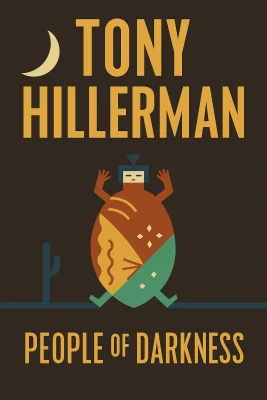
People of Darkness
Categories
Fiction, Audiobook, Mystery, Thriller, Westerns, Crime, Native American, Mystery Thriller, Detective, Native Americans
Content Type
Book
Binding
Mass Market Paperback
Year
1991
Publisher
HarperTorch
Language
English
ASIN
0061099155
ISBN
0061099155
ISBN13
9780061099151
File Download
PDF | EPUB
People of Darkness Plot Summary
Introduction
In the sprawling desert landscape of New Mexico, where ancient Navajo traditions clash with modern mining interests, a small explosion would shatter far more than glass and metal. Dr. Sarah Chen pressed her binoculars against the laboratory window, watching a pickup truck in the cancer center parking lot below. The vehicle bore a reserved parking sign, but its Navajo driver seemed beyond caring about such mundane rules. As she observed, a blond man in a straw hat approached the truck, placing a paper bag in its bed with methodical precision. Minutes later, the explosion turned her world white-hot. The pickup truck disintegrated in a ball of flame and twisted metal, killing two innocent tow truck operators who had been attempting to remove the illegally parked vehicle. What Dr. Chen had witnessed was no random act of violence, but the calculated opening move in a deadly game that stretched back thirty years. At its heart lay a conspiracy born from uranium fever, religious persecution, and the darkest secrets of men who believed themselves untouchable. The People of Darkness, a small Native American Church sect, held the key to a mystery that would claim lives across generations—and the truth buried beneath the New Mexican desert would prove more radioactive than any ore.
Chapter 1: The Mysterious Box: A Theft That Awakens the Past
Sergeant Jim Chee of the Navajo Tribal Police stood in the drizzling November rain, studying the most expensive house in New Mexico. The Frank Lloyd Wright-designed mansion clung to Mount Taylor's slope like a modernist fortress, its granite walls reflecting the storm clouds above. Behind him, two small gravestones marked an unusual family cemetery: one for Dillon Charley, "A Good Indian," and another for Alice Vines, "A Faithful Woman." Rosemary Vines emerged from the house, her fur coat inadequate armor against both the weather and her obvious agitation. She was the second Mrs. B.J. Vines, married to the uranium millionaire whose Weatherby Trophy hunting achievements decorated every wall. But today she needed Chee for a different kind of hunt. "Someone broke into my husband's wall safe," she explained, her voice tight with controlled panic. "They took his keepsake box. Nothing else—not the silver, not the paintings, nothing valuable. Just that damned box with his old mementos." Her eyes held a desperate calculation as she offered Chee three thousand dollars to recover it. The theft, she insisted, had to involve the Native American Church—the peyote users who called themselves the People of Darkness. Inside the house, Chee examined the violated safe hidden behind a mounted tiger head. The heavy metal door hung open, its lock torn apart by crude leverage. Mrs. Vines claimed ignorance about the box's contents, but her nervous energy suggested otherwise. She spoke of her husband's past connection to Dillon Charley, the peyote chief buried in their yard, and her certainty that the theft involved old religious grievances. The next day brought a different story entirely. B.J. Vines himself appeared at Chee's office—very much not hospitalized in Houston as his wife had claimed. Stroke-weakened but sharp-eyed, he offered Chee two hundred dollars to forget the whole matter. The box contained only worthless personal mementos, he insisted. His wife had opened the safe herself, he claimed, finding it with his pry bar after rifling through his belongings like a suspicious prosecutor. Yet something in Vines' carefully controlled narrative rang false. The man who displayed his hunting trophies with obsessive pride would hardly hide his military decorations in a locked safe. And when Chee pressed about the box's contents, Vines' description matched what the missing Tomas Charley had already revealed: military medals, photographs, and chunks of black rock that seemed to hold significance far beyond their apparent value.
Chapter 2: Hunters and Prey: The Assassin's Shadow Falls
Colton Wolf lived by precision. In his sterile trailer, he crafted silencers with jeweler's tools and prepared gourmet meals with scientific accuracy. The assassin's world existed in measured doses—of gunpowder, of mercury for his tilt-activated bombs, of the loneliness that had consumed him since his mother's disappearance when he was twelve. Each kill brought him closer to affording another month of searching, another payment to the private investigator who promised to find Linda Betty Shaw, or Fry, or whatever name she used now. The call came through his El Paso contact, confirming his next target. Emerson Charley lay dying of leukemia in an Albuquerque hospital, but dying wasn't fast enough for someone. The initial assignment had been simple—eliminate Charley with a car bomb. But the old Navajo's early hospital admission had complicated matters, forcing Colton to wait like a ghoulish vulture for natural death to arrive. When Emerson finally succumbed, Colton executed the strangest contract of his career. Dressed in hospital scrubs, he wheeled the corpse from the morgue through service corridors, loading it into a stolen station wagon with practiced efficiency. The body disappeared into a shallow grave in the Rio Grande bosque, where the desert would claim all evidence of whatever had really killed the peyote chief's son. But the operation wasn't finished. Tomas Charley, Emerson's surviving son, possessed dangerous knowledge and dangerous artifacts. The young man had burgled Vines' mansion, stealing the keepsake box that contained secrets worth killing to protect. More problematically, Tomas understood the connection between his grandfather's old mining crew and the cancer that had claimed them one by one. In the desolate malpais near an ancient spring, Colton found his target kneeling by the dark water. The silenced .22 made no more sound than a branch snapping as Tomas Charley crumpled forward, his hands still bound behind him. But the execution attracted unwanted witnesses—Sergeant Chee and a schoolteacher named Mary Landon, whose appearance turned a clean kill into a desperate hunt across the volcanic badlands.
Chapter 3: Echoes from the Explosion: A Thirty-Year Conspiracy
The newspaper microfilms told a story of sudden, catastrophic violence that had shattered the high desert in 1948. Six men died when a nitroglycerin charge exploded prematurely at an oil well drilling site northeast of Mount Taylor. The blast scattered human remains across half a mile of creosote brush, leaving investigators with little more than boot leather and belt buckles to identify the victims. Jim Chee scrolled through the yellowed headlines while Mary Landon read over his shoulder in the university library basement. The Grants Daily Beacon had covered the story with frontier newspaper enthusiasm for disaster, but the details grew more intriguing with each article. A crew of six Navajo roustabouts had been scheduled to work that Friday—but none appeared at the drill site. Their foreman, Dillon Charley, claimed a peyote vision had warned him of danger. Sheriff's Deputy Lawrence Sena—the current Sheriff Sena's older brother—had been among the dead. The tragedy launched Gordo Sena's obsession with Dillon Charley and the Native American Church members who had cheated death through religious prophecy. For thirty years, that obsession had simmered like a slow poison, corrupting everything it touched. The explosion had destroyed more than lives. It obliterated a promising oil prospect just as uranium fever began transforming the New Mexican landscape. Within months of the disaster, mining claims blanketed the area. B.J. Vines emerged from nowhere to stake the richest uranium deposits in the state, building his fortune on Section 17 where the oil well once stood. The timing was too convenient for coincidence. Someone had known exactly where to look for the radioactive ore that would make them wealthy beyond imagination. The oil well's geological logs should have recorded any uranium encountered during drilling, but those records had vanished along with the men who created them. Only Carl Lebeck, the well's geologist, might have possessed such knowledge—and Carl Lebeck had died in the explosion alongside the others. Yet as Chee studied the victim list, uncomfortable questions multiplied. Why would a peyote vision specifically target that day? How had Dillon Charley known to fear an accident that appeared completely random? And why had the survivors, saved by spiritual warning, begun dying of cancer within a few short years of their miraculous escape?
Chapter 4: The People of Darkness: Tracing a Path of Death
The first member of Dillon Charley's crew died in 1952. Roscoe Sam succumbed to liver cancer at the Indian Health Service hospital in Tuba City, his body riddled with malignant tumors that baffled the white doctors. Within two years, Woody Begay followed him to the grave, leukemia consuming his blood as thoroughly as radiation poisoning. Chee tracked their deaths through reservation gossip and tribal records, finding a pattern too consistent for natural causes. Joseph Sam, Windy Tsossie, Rudolph Becenti—the miraculous survivors of the oil well explosion were dying at rates that defied statistical probability. The People of Darkness, as they had called themselves after Dillon Charley's vision, were being systematically exterminated by an invisible killer. At the University of New Mexico Cancer Research Center, Dr. Sherman Huff confirmed Chee's suspicions with grim scientific precision. Four deaths from various blood cancers among six men was astronomically unlikely—unless they had shared a common carcinogenic exposure. Radiation could cause such damage, particularly to blood cell production, but the atomic testing in Nevada couldn't explain cases dating back to the early 1950s. The answer lay in the black rock fragments Tomas Charley had found in Vines' keepsake box. They were pitchblende—uranium ore so radioactive that miners called it "hot rock." Someone had fashioned pieces of this deadly mineral into small amulets shaped like moles, the sacred animal of the People of Darkness. Dillon Charley and his followers had worn these "protective" talismans against their skin for years, never knowing they carried their own death sentences. The cruelty was methodical, almost scientific in its precision. Each man received his mole amulet as a gift from B.J. Vines, honoring their shared survival of the oil well explosion. They carried the radioactive stones in medicine pouches, wore them on thongs around their necks, held them during peyote ceremonies as symbols of their underground spiritual journey. The cancer came slowly but inevitably, delivered by the very religious devotion their killer counted on to ensure exposure. Even death couldn't protect them from Vines' paranoia. When Dillon Charley finally succumbed in 1953, his body was claimed not by family but by his wealthy white benefactor. The private burial in Vines' family cemetery ensured no autopsy would reveal the true cause of death—or the radioactive amulet still hanging around the corpse's neck.
Chapter 5: The Mole's Secret: Radiation, Cancer, and Sacred Amulets
In the sterile storage room of the medical center, Chee opened the red plastic bag containing Emerson Charley's personal effects. Among the work boots and denim clothing, he found the leather medicine pouch that had hung from the dead man's waist. Inside, beneath a coating of sacred pollen, lay the carved stone mole that had killed its carrier as surely as any bullet. The amulet was beautiful in its deadly simplicity—black stone polished smooth, shaped into the eyeless form of the creature that hunted in darkness beneath the earth. Whoever had carved it possessed both artistic skill and intimate knowledge of Navajo religious symbolism. The mole was the predator of the nadir, the hunting spirit of the underworld, perfectly chosen to represent a mining crew's spiritual connection to the depths. Dr. Huff's analysis confirmed what Chee had begun to suspect. The carved stone was pitchblende—uranium ore so concentrated that handling it for months or years would guarantee cancer. The amulets were sophisticated murder weapons disguised as religious artifacts, exploiting their victims' spiritual devotion to ensure constant exposure to lethal radiation. The killer's knowledge ran deeper than mineralogy. He understood Navajo customs well enough to know that sacred objects stayed close to the body, that medicine pouches were worn against the skin, that religious leaders like Dillon Charley would treasure and display such gifts during ceremonial gatherings. The mole amulets spread radiation not only to their primary targets but to anyone who participated in peyote rituals where the sacred objects were handled and blessed. Windy Tsossie's skeleton, hidden in a cave near the abandoned Bisti trading post, told the same story. Bone cancer had eaten through his femur like acid, leaving characteristic scarring that proved radioactive exposure. Even thirty years after death, his medicine pouch still contained traces of uranium ore—evidence of the systematic poisoning that had claimed the People of Darkness one by one. The geometric precision of the murders revealed a mind that operated more like a mining engineer than a common killer. Each victim received exactly the radiation dose needed to ensure cancer within a predictable timeframe. The deaths appeared natural, separated by months or years, arousing no suspicion from authorities who barely noticed when reservation Indians died of "mysterious" illnesses. Only someone with detailed knowledge of both uranium ore and Navajo religious practices could have executed such a perfect genocide.
Chapter 6: Identity Unmasked: The Man Who Killed Himself
The truth emerged from military records like a fossil exposed by erosion. The Veterans Administration confirmed that the medals in B.J. Vines' keepsake box—Silver Star, Bronze Star, Purple Heart—had never been awarded to Benjamin Vines. They belonged instead to Lieutenant Carl Lebeck, 101st Airborne Division, who had earned them in combat before mustering out and returning to civilian life as a petroleum geologist. Carl Lebeck had supposedly died in the oil well explosion of 1948, his body scattered across the New Mexican desert along with eleven other victims. But Chee now understood that Lebeck had orchestrated his own death, murdering his coworkers to cover his theft of the uranium deposit they had unknowingly drilled through. The geologist's falsified well logs concealed the radioactive ore beneath the drilling site, allowing him to let his oil company's lease expire before filing his own mineral claims under a new identity. The transformation from Lebeck to Vines required eliminating every witness who might recognize the "dead" geologist when he returned to claim his prize. Dillon Charley's six-man crew represented the only threat to Lebeck's elaborate resurrection, so they had to die—slowly, naturally, in ways that would never point back to the explosion or its sole survivor. The radioactive amulets were diabolically elegant, exploiting both Navajo spirituality and the era's ignorance about radiation exposure. Lebeck understood that his victims would treasure the carved moles as sacred gifts, wearing them constantly and handling them during religious ceremonies. The uranium would do its work invisibly, causing cancers that would be attributed to bad luck or witchcraft rather than deliberate murder. For thirty years, B.J. Vines had lived with his terrible secret, growing wealthy from uranium sales while his victims died one by one from the same radioactive ore. The keepsake box contained not just mementos of his early life but evidence of his greatest crime—the pitchblende samples he had saved as trophies of his perfect murders. But perfection proved fragile when Emerson Charley inherited his father's peyote leadership and began wearing Dillon's radioactive amulet. The cancer that followed threatened to expose Vines' secret if modern medical examination revealed the unusual nature of Emerson's radiation poisoning. The hired assassin was meant to ensure that no autopsy would ever be performed, that the body would disappear into the desert along with its contaminated medicine pouch.
Chapter 7: Final Confrontation: Justice on the Mountain
The blizzard that trapped Colton Wolf on Mount Taylor's slopes was the storm that broke his perfect record. For the first time in his professional career, the assassin found himself stranded with a job unfinished, his targets still alive and dangerous. The stolen police radio had led him to Chee and Mary Landon at the ancient trading post, but the high country weather turned his advantage into a liability. Chee moved through the pre-dawn darkness like his Apache ancestors, using the snow-muffled landscape to stalk a man whose expertise lay in urban killing. The explosive device attached to their pickup truck confirmed the assassin's methodology—the same mercury-tilt bomb that had killed the innocent tow truck operators in Albuquerque. But Chee's knowledge of the high desert gave him advantages that no city killer could match. From the helicopter that carried them toward Vines' mansion, Chee could see Wolf's abandoned truck buried in drifted snow far below the house. The assassin had made the final approach on foot, struggling uphill through waist-deep powder toward his ultimate target. The radio intercepts had told Wolf that Vines was the key to everything—the man whose exposure would end the contract permanently. Inside the mansion's shadowed halls, Chee found a tableau of completed vengeance. B.J. Vines slumped behind his massive desk, a small bullet hole in his forehead ending thirty years of successful deception. The uranium millionaire's eyes still held the shock of recognition—the moment when Carl Lebeck's past had finally caught up with Benjamin Vines' present. But Rosemary Vines had proven more formidable than either her husband or his killer expected. The woman who had lived with unanswered questions about her husband's mysterious past had taken her own revenge when Wolf appeared in her home. Her hunting rifle had caught the assassin at the front door, the heavy slug breaking his body like kindling and leaving him to bleed out on the ceramic tiles. In the fire-lit great room, Wolf lay dying on a polar bear pelt while his blood soaked into the white fur. His final words were about the private investigator who was supposed to find his mother—the woman whose abandonment had shaped him into an instrument of death. Even in his last moments, the killer who had eliminated so many others remained lost and searching for the family connection that might have saved him from becoming a monster.
Summary
The radioactive dust settled over more than the high desert when the truth about the People of Darkness finally emerged. B.J. Vines' uranium empire crumbled under federal investigation, his mining claims seized as proceeds of mass murder. The families of Dillon Charley's crew received acknowledgment at last of the genocide that had claimed their loved ones—though no compensation could restore the generations lost to one man's greed and paranoia. Jim Chee returned to the reservation carrying knowledge that would require traditional healing to process. The case had exposed him to the white world's capacity for evil on a scale that Navajo witchcraft beliefs could barely encompass. He would need an Enemy Way ceremony to restore his spiritual balance, to turn the contamination of that deadly knowledge back toward beauty and harmony. Mary Landon, too, had seen enough darkness to require cleansing, though her healing would come through understanding rather than ritual. In the end, the moles had been perfect symbols for the People of Darkness—creatures that hunted in the depths, whose prey never saw death approaching until it was too late. But even the most carefully planned evil contains the seeds of its own destruction, and Carl Lebeck's meticulous murders had ultimately delivered him to the justice that Gordo Sena had sought for thirty years. The sacred mountain had witnessed both the crime and its resolution, and the desert wind would eventually scatter even the memory of the man who had tried to cheat death itself.
Best Quote
“You’re not playing the game,’ Mary Landon said. ‘I told you about me. You’re just telling me about your family.’The statement surprised Chee. One defined himself by his family. How else? And then it occurred to him that white people didn’t. They identified themselves by what they had done as individuals.” ― Tony Hillerman, People of Darkness
Review Summary
Strengths: The review highlights the novel's intriguing mystery involving themes of oil, uranium, and greed, set against the unique backdrop of a Navajo reservation in New Mexico. The author, Tony Hillerman, is praised for his authentic and respectful portrayal of Native American spiritualism, including elements like shamans and rituals. His deep understanding of the American West and Indian reservations adds depth to the narrative. Overall: The review conveys a positive sentiment, appreciating the novel's blend of mystery and cultural exploration. The reader seems to recommend the book for its engaging plot and authentic depiction of Navajo culture and spiritualism.
About Author

Tony Hillerman
Hillerman investigates the intricate relationship between mystery storytelling and cultural representation, using his fiction to weave suspenseful narratives that reflect the depth of Navajo culture and customs. By integrating anthropology and Native American spirituality into the crime and detective genre, Hillerman's work transcends traditional boundaries, offering readers a rich tapestry of cultural insights. His character-driven stories, such as those featuring Joe Leaphorn and Jim Chee, engage with themes of identity and tradition, set against the backdrop of the American Southwest's stunning landscape.\n\nHillerman’s method involves creating a vivid atmospheric setting that not only enhances the mystery but also deepens the reader's understanding of Navajo beliefs and practices. This approach is evident in notable works like "The Blessing Way" and "Skinwalkers", where the narrative intertwines cultural authenticity with intricate plotlines. The author’s ability to convey empathy for American Indian peoples and their environment adds layers to the storytelling, making his books compelling to both mystery enthusiasts and those interested in cultural exploration.\n\nReaders benefit from Hillerman's books not just as entertaining mysteries but as windows into a world often underrepresented in literature. His contributions have been recognized with awards such as the Edgar Allan Poe Award for "Dance Hall of the Dead". His bio highlights a life dedicated to expanding the scope of Western American literature, bridging gaps between diverse cultures through engaging and thought-provoking narratives. Hillerman's legacy continues to resonate, offering valuable perspectives on cultural narratives within the genre of mystery fiction.
Read moreDownload PDF & EPUB
To save this Black List summary for later, download the free PDF and EPUB. You can print it out, or read offline at your convenience.
People of Darkness
by Tony Hillerman
