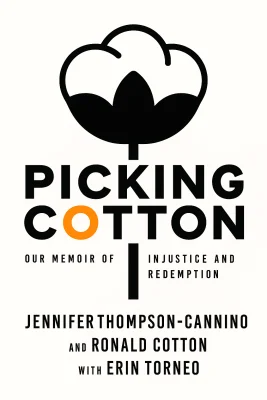
Picking Cotton
Our Memoir of Injustice and Redemption
Categories
Nonfiction, Biography, Memoir, Audiobook, True Crime, Social Justice, Biography Memoir, Book Club, Race, Crime
Content Type
Book
Binding
Hardcover
Year
2009
Publisher
St. Martin's Press
Language
English
ASIN
0312376537
ISBN
0312376537
ISBN13
9780312376536
File Download
PDF | EPUB
Picking Cotton Plot Summary
Introduction
On a summer night in 1984, two lives collided in the most devastating way imaginable, setting in motion a chain of events that would forever alter both their destinies. Jennifer Thompson, a 22-year-old college student with perfect grades and bright dreams, became the victim of a brutal assault that shattered her sense of safety. Ronald Cotton, also 22, found himself accused of a crime he did not commit, facing a justice system that seemed determined to see him punished regardless of the truth. What began as a nightmare of violence and false accusation eventually transformed into an extraordinary testament to the power of human resilience, forgiveness, and redemption. Their story illuminates the profound flaws in our justice system while simultaneously revealing the capacity for growth that lies within us all. Through Jennifer's courageous journey from victim to advocate, and Ronald's remarkable ability to emerge from eleven years of wrongful imprisonment without bitterness, we witness the transformative power of truth and the healing that becomes possible when two people choose grace over vengeance. Their eventual friendship stands as one of the most powerful examples of reconciliation in modern American history.
Chapter 1: The Wrongful Identification and Trial
The events of July 29, 1984, began with Jennifer Thompson's determination to survive. When an intruder broke into her Burlington, North Carolina apartment and threatened her at knifepoint, Jennifer made a conscious decision to study every detail of her attacker's face. She believed this vigilance would help police catch the man who raped her, and she was determined to see justice done. Her careful attention to detail, however, would become the very thing that sent an innocent man to prison. When police showed Jennifer a photo lineup days later, she confidently selected Ronald Cotton, a young black man from the area with a previous juvenile record. The composite sketch, her unwavering identification, and Cotton's inability to provide a solid alibi created what seemed like an airtight case. Detective Mike Gauldin and the prosecution team believed they had their man, and Jennifer's testimony was compelling and consistent. During the 1985 trial, Jennifer took the stand with absolute certainty. She pointed directly at Ronald Cotton and declared him her attacker without hesitation. Her confidence was unwavering, her memory seemingly crystal clear. The jury believed her completely, and Cotton was sentenced to life plus fifty years in prison. When the conviction was later overturned on appeal, a second trial in 1987 resulted in an even harsher sentence: two life terms plus fifty-four years. The justice system had worked exactly as it was supposed to, at least from the outside. A victim had courageously testified, police had conducted a thorough investigation, and a dangerous criminal had been removed from society. Yet beneath this veneer of justice lay a devastating truth that would not emerge for eleven long years.
Chapter 2: Eleven Years Behind Bars
Ronald Cotton entered Central Prison in Raleigh as an innocent 22-year-old, thrust into a world of violence and desperation where survival required constant vigilance. The maximum-security facility housed some of North Carolina's most dangerous criminals, and Cotton quickly learned that showing weakness could be fatal. Despite maintaining his innocence, he found himself surrounded by men who dismissed his claims with cynical laughter. The early years were marked by a struggle to maintain his humanity while adapting to prison's brutal realities. Cotton worked in the kitchen, lifted weights to stay strong, and joined the prison choir where his voice could soar beyond the concrete walls. Music became his sanctuary, a place where his spirit remained free even as his body was confined. He also started small businesses within the prison, selling items from the canteen and even brewing homemade wine, learning to navigate the complex social hierarchies that governed daily life. Perhaps most remarkably, Cotton encountered Bobby Poole, another inmate who bore a striking resemblance to him. When Poole was transferred to Central Prison, Cotton immediately recognized him as matching the composite sketch from his case. Other inmates confirmed that Poole had bragged about crimes he had committed while Cotton served his time. This knowledge both tormented and sustained Cotton, providing hope that the truth might eventually emerge while highlighting the cruel irony of his situation. Throughout his incarceration, Cotton's family remained steadfast in their support. His sisters visited when possible, his father assured him that God would reveal the truth, and his mother's unwavering belief in his innocence provided strength during the darkest moments. Cotton chose to channel his anger into determination, refusing to let bitterness consume him. He read the Bible extensively, particularly the Book of Psalms, finding comfort in passages about false witnesses and divine justice.
Chapter 3: DNA Evidence and Freedom
By the mid-1990s, DNA testing had emerged as a revolutionary tool in criminal justice, capable of proving guilt or innocence with unprecedented accuracy. When attorney Richard Rosen and his former student Tom Lambeth agreed to take on Cotton's case pro bono, they decided to pursue this new technology despite the risks involved. If the DNA evidence confirmed Cotton's guilt, his legal options would be exhausted forever. The decision to request DNA testing required tremendous courage from Cotton. After eleven years of maintaining his innocence, he faced the possibility that the evidence might work against him. However, his certainty in his own innocence never wavered. When his attorneys asked if he truly wanted to proceed, Cotton looked them directly in the eye and promised that his DNA would not be found at the crime scene. The results were everything Cotton had hoped for and more. Not only did the DNA evidence exclude him as Jennifer's attacker, it positively identified Bobby Poole, the man Cotton had suspected all along. When confronted with this irrefutable evidence, Poole finally confessed to both rapes, admitting details that only the true perpetrator could have known. On June 30, 1995, Ronald Cotton walked out of the Alamance County courthouse a free man after 4,000 days of wrongful imprisonment. The moment was both triumphant and surreal, as Cotton struggled to comprehend that his long nightmare had finally ended. District Attorney Rob Johnson formally apologized on behalf of the state, and Cotton's family surrounded him with tears of joy and relief. Yet freedom brought its own challenges, as Cotton faced the daunting task of rebuilding a life that had been stolen from him at age 22.
Chapter 4: Finding Forgiveness in the Most Unlikely Place
When Jennifer Thompson learned that DNA evidence had proven Ronald Cotton's innocence, her world collapsed. The face she had seen in nightmares for eleven years belonged to an innocent man, while her actual rapist had remained free to harm others. The guilt was overwhelming, compounded by the realization that her confident testimony had been completely wrong. She had spent years wishing for Cotton's death, never imagining that he was as much a victim as she was. For two years after Cotton's release, Jennifer lived in fear and shame. She worried that he or his family might seek revenge, and she struggled with the knowledge that her mistake had cost an innocent man eleven years of his life. The advice she received was to stay away, to avoid any contact that might complicate matters further. Yet the burden of her unintentional crime weighed heavily on her conscience. In 1997, after watching a PBS documentary about their case, Jennifer made the courageous decision to reach out. She asked Detective Mike Gauldin to arrange a meeting, knowing that she needed to face the man she had wronged. The meeting took place at a Baptist church in Elon, North Carolina, with both their spouses present and law enforcement officials nearby for security. What happened next defied all expectations. When Jennifer broke down and begged for forgiveness, Cotton immediately took her hands and granted it without hesitation. He looked into her eyes and saw not the woman who had destroyed his life, but another victim of the same terrible crime. His response was so gracious, so immediate, that it left everyone in the room in tears. In that moment, both began their journey toward healing and an unlikely friendship that would transform them both.
Chapter 5: Rebuilding Life After Exoneration
Ronald Cotton's transition from prison to freedom was far more complex than the joyful courthouse scene suggested. After eleven years in a controlled environment, simple tasks like driving a car or navigating a grocery store became overwhelming challenges. At 33, he found himself dependent on family members, sleeping on his sister's couch and struggling to explain the gap in his employment history to potential employers. The state of North Carolina's initial compensation offer was shockingly inadequate: $5,000 total for eleven years of wrongful imprisonment. Through the advocacy of his attorneys and supporters including Jennifer Thompson, the amount was eventually increased to just over $109,000. While any compensation seemed inadequate for such a profound injustice, Cotton used the money wisely, purchasing land and building a home with his wife Robbin, whom he met while working at LabCorp. Cotton's adjustment to freedom was marked by both triumph and struggle. He experienced panic attacks, nightmares, and hypervigilance that made him afraid to be alone without an alibi. Simple pleasures like choosing what to eat or when to sleep felt foreign after years of institutional control. Yet he also discovered profound joys: falling in love, getting married, and eventually becoming a father to his daughter Raven, whose very existence reminded him daily of life's possibilities. The birth of his daughter represented perhaps the most powerful vindication of his freedom. This beautiful child, who might never have existed if he had remained imprisoned, became his anchor to the future. Cotton threw himself into fatherhood with the same determination that had sustained him through prison, cherishing every moment he had lost with his own parents during those crucial years.
Chapter 6: Creating Meaning from Injustice
As Jennifer and Ronald began speaking publicly about their experience, their story became a powerful catalyst for criminal justice reform. Their case highlighted the dangers of eyewitness misidentification, leading to significant changes in how lineups are conducted. Jennifer became a tireless advocate for reform, serving on North Carolina's Innocence Commission and pushing for legislation to prevent similar mistakes. Jennifer's transformation from victim to advocate required confronting painful truths about memory and perception. She learned that her confident identification had been contaminated by flawed police procedures, and that eyewitness testimony, while compelling, was far less reliable than most people believed. This knowledge was both liberating and devastating, as it explained her mistake while highlighting how easily such errors could occur. Together, Jennifer and Ronald traveled across the country, speaking to law enforcement officers, lawyers, and students about the flaws in the justice system. Their joint appearances were powerful demonstrations of reconciliation and shared purpose. Where once they had been adversaries in a courtroom, they now stood together as allies in the fight for justice. Their advocacy extended beyond criminal justice reform to broader questions about forgiveness and human dignity. They challenged audiences to consider how they would respond to such profound injustice, and whether they could find the strength to forgive as Cotton had done. Their message was not that the system was irredeemably broken, but that it could be improved through understanding, humility, and reform.
Chapter 7: The Power of Truth and Reconciliation
The friendship that developed between Jennifer and Ronald became one of the most remarkable aspects of their story. What began as a meeting motivated by guilt and the need for forgiveness evolved into a genuine bond based on mutual respect and shared experience. They became confidants who could understand each other's pain in ways no one else could. Their relationship challenged conventional wisdom about victims and perpetrators, innocence and guilt. Jennifer had been both an authentic victim and an unwitting agent of injustice, while Ronald had been simultaneously wrongly accused and genuinely victimized by the system meant to protect society. Their ability to transcend these categories and see each other's full humanity offered a powerful model for healing. Ronald's capacity for forgiveness was particularly extraordinary. Rather than emerging from prison consumed by bitterness, he chose to focus on the future and the possibilities it held. His forgiveness was not passive acceptance but an active choice to break the cycle of harm and create something positive from tragedy. This grace allowed Jennifer to begin forgiving herself and channel her guilt into productive advocacy. The truth that eventually set Ronald free also liberated Jennifer from years of misdirected anger and fear. When Bobby Poole was finally identified as their mutual victimizer, both could begin to see their ordeal in its proper context. They had been pawns in a larger tragedy, but they chose to become agents of positive change rather than remaining trapped in roles defined by that distant night in 1984.
Summary
The story of Jennifer Thompson and Ronald Cotton stands as one of the most powerful testimonies to human resilience and the possibility of redemption that can emerge from even the most devastating injustices. Their journey from the courthouse confrontation of 1985 to their unlikely friendship demonstrates that grace and forgiveness can triumph over hatred and despair when people have the courage to choose healing over vengeance. Their shared advocacy has contributed to meaningful reforms in criminal justice procedures and has educated countless individuals about the fallibility of eyewitness testimony. More importantly, their example offers hope that the deepest wounds can heal when truth is finally revealed and embraced. For anyone struggling with forgiveness, seeking to understand how justice and mercy can coexist, or working to create positive change from personal tragedy, their story provides both inspiration and practical wisdom about the transformative power of choosing grace over bitterness.
Best Quote
“Other than when I’m driving, I don’t try to look too far ahead, and once I got out, I never wanted to look back.” ― Jennifer Thompson-Cannino, Picking Cotton: Our Memoir of Injustice and Redemption
Review Summary
Strengths: The book is praised for its compelling true story, highlighting the failures of the justice system and the theme of forgiveness. The "two voice" narrative approach is noted for adding a personal touch, and Ronald's storytelling is described as compelling. The audiobook version is enjoyed, and the physical copy's pictures are appreciated for enhancing the story. Weaknesses: Criticisms include a lack of depth in exploring Jennifer's decision-making and emotions, and insufficient coverage of reforms in eyewitness identification. Jennifer's portrayal is seen as self-centered, and her family dynamics are questioned. Overall: The book is considered a solid and inspirational read, recommended for its insight into the justice system, despite some narrative and content shortcomings.
About Author

Jennifer Thompson-Cannino
Thompson-Cannino interrogates the deep flaws in the criminal justice system through her poignant memoir, aiming to foster awareness and reform. Her book, co-authored with Ronald Cotton, offers a dual narrative that sheds light on the personal impact of judicial errors. The memoir delves into the unreliability of eyewitness testimony and highlights the power of DNA evidence to rectify wrongful convictions, emphasizing human grace and forgiveness as pivotal themes. This approach not only critiques existing judicial practices but also advocates for significant reform, demonstrating the necessity of scientific advancements in ensuring justice.\n\nReaders, particularly those interested in legal reform and human rights, benefit from Thompson-Cannino's incisive exploration of these themes. By providing a narrative that combines personal experience with a broader call for change, she connects with audiences in both academic and public domains. Her bio as a public speaker underscores her commitment to judicial reform, as she shares her insights on the dangers of flawed investigations and the critical need for systemic change. Her work has garnered recognition, including the Justin Miller Award, and has been adapted into a major motion picture, further amplifying its impact and reach.\n\nThompson-Cannino’s contributions extend beyond the pages of her book, as she actively participates in discussions around forensic science and legal procedures. By engaging with diverse audiences, from university programs to advocacy groups, she situates her personal story within the broader context of criminal justice reform. This multifaceted approach ensures that her experiences serve as a catalyst for dialogue and change, inspiring others to recognize and address the systemic issues within the American legal system.
Read moreDownload PDF & EPUB
To save this Black List summary for later, download the free PDF and EPUB. You can print it out, or read offline at your convenience.
Picking Cotton
by Jennifer Thompson-Cannino
