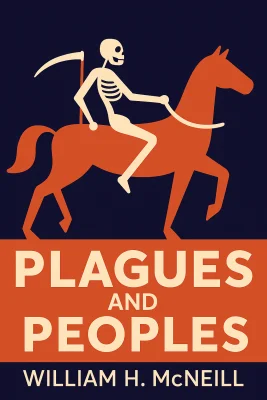
Plagues and Peoples
Categories
Nonfiction, Health, Science, History, Medicine, Medical, Biology, Historical, World History, Disease
Content Type
Book
Binding
Paperback
Year
1975
Publisher
Anchor
Language
English
ASIN
0385121229
ISBN
0385121229
ISBN13
9780385121224
File Download
PDF | EPUB
Plagues and Peoples Plot Summary
Introduction
# Disease and Civilization: How Epidemics Shaped Human History In the scorching summer of 1665, London's narrow streets echoed with the haunting cry of "Bring out your dead!" as the Great Plague swept through the city like an invisible army. Within months, this microscopic enemy had killed over 100,000 people—nearly a quarter of London's population—and brought one of Europe's most vibrant cities to its knees. Yet this catastrophe was merely one chapter in a far larger story that has unfolded across millennia, a story in which invisible microbes have repeatedly altered the course of human civilization with devastating precision. The rise and fall of empires, the outcomes of wars, and the very trajectory of human progress have been shaped as much by microscopic organisms as by the visible forces of politics, economics, and military conquest. From the plague that may have ended the golden age of Athens to the smallpox that enabled Spanish conquest of vast American empires, from the Black Death that transformed medieval Europe to the cholera pandemics that sparked modern public health systems, infectious diseases have served as history's most underappreciated yet powerful actors. By examining these biological encounters across continents and centuries, we discover how the invisible world of pathogens has influenced everything from the spread of religions and the collapse of civilizations to the development of global trade networks and the emergence of modern medicine, revealing patterns that continue to shape our interconnected world today.
Chapter 1: Hunter-Gatherers and Disease: The Ancient Balance
For over 99 percent of human existence, our ancestors lived in small, nomadic bands scattered across the African landscape, maintaining a delicate equilibrium with the microbial world that surrounded them. These early hunter-gatherer communities, rarely exceeding a few dozen individuals, existed within natural barriers that prevented the devastating epidemic diseases that would later plague civilized societies. When infections did strike these small groups, they either burned themselves out quickly after killing their victims or survivors developed immunity, leaving pathogens with nowhere to spread. This ancient disease environment was fundamentally different from what would emerge in later agricultural societies. The sparse population density and constant mobility of hunter-gatherers meant that most infectious diseases could not establish permanent residence among human hosts. The pathogens that could persist were primarily those passed through intimate contact or maintained in animal reservoirs that humans encountered sporadically. Parasitic worms, skin infections, and respiratory ailments contracted from animal hosts represented the primary health challenges facing our ancestors. The relationship between early humans and disease began to shift as our species migrated out of Africa and encountered new environments. Each habitat brought fresh challenges—different climates, unfamiliar parasites, and novel disease organisms that had evolved alongside other animal species. The invention of clothing and shelter allowed humans to survive in colder climates, but these innovations also created new ecological niches where disease-carrying insects and parasites could thrive. Perhaps most significantly, the gradual warming that ended the last Ice Age around 10,000 years ago created conditions that would fundamentally alter the human relationship with disease. As glaciers retreated and forests expanded, the diversity of plant and animal life increased dramatically. This biological richness brought new opportunities for human survival and growth, but it also meant exposure to a vastly expanded universe of potential pathogens. The relatively disease-free existence of our hunter-gatherer ancestors represents a unique chapter in human history that would never be repeated. Archaeological evidence suggests that these early populations were remarkably healthy despite their apparently harsh living conditions, with skeletal remains showing little evidence of the infectious diseases that would later devastate agricultural communities. Once humans began to live in larger, more permanent settlements, this ancient balance between host and parasite would be forever altered, ushering in an age where infectious disease would become one of the primary shapers of human destiny.
Chapter 2: Agricultural Revolution: Birth of Epidemic Diseases
The agricultural revolution that began around 8000 BCE fundamentally transformed humanity's relationship with infectious disease, creating the conditions necessary for epidemic diseases to establish themselves as permanent features of human life. As hunter-gatherer bands settled into permanent villages and began cultivating crops, they provided the critical mass of susceptible hosts that many infectious organisms required to maintain themselves indefinitely within human populations. The concentration of people in fixed settlements, combined with the accumulation of waste and the contamination of water sources, created ideal breeding grounds for pathogens. The domestication of animals proved equally revolutionary in disease terms, bringing humans into intimate daily contact with creatures that harbored their own complement of infectious organisms. Cattle contributed smallpox and tuberculosis, pigs and ducks provided influenza, horses brought the common cold, and chickens offered various pox diseases. The barnyard became a biological laboratory where new forms of human disease were constantly being created through the mutation and adaptation of animal infections. Over time, many of these animal pathogens adapted to human hosts, giving rise to the "crowd diseases" that would dominate civilized life. Irrigation agriculture, while enabling the support of much larger populations, created additional disease hazards that would persist for millennia. Standing water in canals and rice paddies provided perfect habitat for mosquitoes carrying malaria and other infections. The intensive labor required to maintain irrigation systems brought large numbers of people into contact with contaminated water, facilitating the spread of waterborne diseases like schistosomiasis. In ancient Egypt and Mesopotamia, the very engineering marvels that supported civilization also became highways for disease transmission. The archaeological record reveals the heavy price paid for these agricultural innovations. Skeletal remains from early farming communities show increased evidence of malnutrition, infectious disease, and reduced life expectancy compared to hunter-gatherer populations. The reliance on limited crop varieties made communities vulnerable to famine when harvests failed, while the concentration of human and animal waste in permanent settlements created breeding grounds for intestinal parasites and waterborne diseases. Yet those populations that survived this epidemiological gauntlet emerged with crucial advantages that would shape the future of human civilization. Natural selection favored individuals with enhanced immune responses to common infectious diseases, while cultural evolution promoted practices that reduced disease transmission. The survivors of early agricultural communities possessed both biological and cultural adaptations that would prove decisive when they encountered less disease-experienced populations, setting the stage for the demographic and cultural expansions that would characterize the rise of civilization.
Chapter 3: Classical Empires: Continental Disease Exchange Networks
The rise of great empires across Eurasia between 500 BCE and 1200 CE created unprecedented opportunities for disease transmission on a continental scale, as extensive road networks and bustling urban centers became vast biological mixing bowls where infections from across the known world could encounter new populations. The Roman Empire, with its remarkable infrastructure connecting Britain to Mesopotamia, demonstrated both the benefits and dangers of such connectivity when the Antonine Plague struck in 165 CE, possibly smallpox or measles making its first appearance in Mediterranean populations. This pandemic, brought back by troops returning from campaigns in the East, revealed how quickly a new disease could spread through an interconnected empire. Contemporary accounts describe mortality rates of 25-30 percent in affected areas, with the disease recurring in waves for fifteen years. The demographic shock contributed to the empire's subsequent military and economic difficulties, as tax revenues declined and recruitment became increasingly challenging. The plague effectively marked the beginning of the end for the classical Roman world, demonstrating how biological catastrophes could undermine even the mightiest political structures. China's Han Dynasty faced parallel challenges as it expanded its borders and established trade connections across Asia. The dense populations of Chinese cities, supported by intensive rice agriculture, provided ideal conditions for epidemic diseases to flourish. Ancient Chinese records document numerous outbreaks that appear to be smallpox, measles, and other infections that periodically devastated entire regions. The collapse of the Han Dynasty in 220 CE coincided with severe epidemic outbreaks that may have reduced the population by half, contributing to centuries of political fragmentation. The Indian subcontinent, with its monsoon climate and dense river valley populations, became another major center of disease evolution and transmission. The warm, humid conditions favored a wide variety of pathogens, while complex social and religious practices created unique patterns of disease spread. Hindu pilgrimage routes and Buddhist monasteries served as networks for distributing infections across the subcontinent and beyond, connecting the disease pools of South Asia to those of China and the Mediterranean world. Perhaps most significantly, the establishment of regular sea routes across the Indian Ocean created a maritime disease exchange that complemented the overland Silk Road. Ships carried not only goods and passengers but also rats, fleas, and the pathogens they harbored. The monsoon winds that enabled predictable sailing seasons also created regular schedules for disease transmission, allowing infections to spread from Southeast Asia to East Africa and from India to the Arabian Peninsula. By the end of the classical period, Eurasia had become a single, interconnected disease pool where new infections could spread rapidly across vast distances, fundamentally altering the demographic foundations of civilization and setting the stage for even more devastating pandemics to come.
Chapter 4: Black Death Era: Medieval Pandemic Transformation
The fourteenth century witnessed one of the most catastrophic disease events in human history when the Black Death swept across Eurasia between 1346 and 1353, demonstrating how an interconnected medieval world had become vulnerable to biological catastrophes of unprecedented scale. This pandemic, caused by the bacterium Yersinia pestis, originated in the grasslands of Central Asia where it had long circulated among wild rodent populations. Climate change and the expansion of Mongol trade networks disrupted these natural disease reservoirs, allowing the plague to spill over into human populations and spread along the very routes that had created medieval prosperity. The speed and scope of the plague's spread revealed the extent of medieval globalization. Mongol trade networks, which had connected East and West in an unprecedented web of commerce and cultural exchange, now served as highways for death. The plague traveled from Central Asia to the Crimea, where Genoese merchants unknowingly carried it to Constantinople and then to Western Europe. Within seven years, it had killed an estimated one-third of Europe's population, with some regions experiencing mortality rates approaching 60 percent. The demographic catastrophe reshaped European society in profound and lasting ways. The massive loss of life led to acute labor shortages that fundamentally altered the balance of power between social classes. Surviving peasants found themselves in unprecedented demand, able to demand better wages, improved working conditions, and greater personal freedom. Traditional feudal relationships crumbled as lords competed for scarce workers, accelerating the transition toward more modern forms of economic organization. The plague's seemingly random selection of victims challenged medieval Christianity's explanations of divine justice, contributing to religious upheaval and the rise of new forms of popular piety. Beyond Europe, the plague devastated populations across North Africa, the Middle East, and Central Asia with equally transformative effects. The Mameluke Empire in Egypt lost perhaps half its population, while the Golden Horde and other steppe empires never fully recovered their former power. The pandemic effectively ended the Mongol period of global integration, ushering in an era of fragmentation that would persist until European maritime expansion began to reconnect the world's disease pools. The Black Death also marked the beginning of a new relationship between Europeans and epidemic disease. Unlike earlier pandemics that eventually burned themselves out, plague established permanent reservoirs in European rodent populations, ensuring its periodic return for centuries to come. This created a culture of endemic anxiety about disease that would influence European art, literature, philosophy, and religious practice for generations. The experience of living with recurring plague outbreaks may have contributed to the European drive for expansion and exploration, as populations sought new territories free from the biological constraints that limited growth in the Old World.
Chapter 5: Columbian Exchange: Biological Conquest of Americas
When Christopher Columbus landed in the Americas in 1492, he initiated what would become the most consequential biological exchange in human history, connecting two worlds that had been epidemiologically isolated for over 15,000 years of independent evolution. The meeting of Old and New World populations created a demographic catastrophe of unprecedented scale, as Native American populations possessed no immunity to smallpox, measles, typhus, and other infections that Europeans carried as routine childhood diseases. This biological vulnerability would prove more decisive than any military technology in determining the fate of American civilizations. The demographic collapse that followed European contact was staggering in its magnitude and speed. Conservative estimates suggest that 90 percent of the indigenous population of the Americas died within a century of first contact, reducing numbers from perhaps 50 million to fewer than 5 million people. Entire civilizations vanished as disease outran direct European contact, spreading through trade networks and social connections to devastate populations hundreds of miles from the nearest European settlement. The sophisticated urban centers of the Aztec and Inca empires, among the world's most advanced political systems, crumbled not primarily due to Spanish military superiority but because epidemic diseases had destroyed their demographic foundations. The Spanish conquests of Mexico and Peru provide dramatic illustrations of disease as a decisive factor in historical change. When Cortés landed in Mexico in 1519 with fewer than 600 men, he faced the powerful Aztec Empire with millions of subjects. The arrival of smallpox in 1520 proved more decisive than Spanish horses or steel weapons, killing the Aztec leadership and demoralizing resistance at the crucial moment when indigenous forces might have expelled the invaders. Similarly, smallpox preceded Pizarro to Peru, killing the Inca emperor and triggering a civil war that left the empire defenseless against a handful of Spanish adventurers. This biological conquest enabled European colonization on a scale that would have been impossible through military means alone. Vast territories that had supported millions of indigenous inhabitants were suddenly available for European settlement, fundamentally altering the global balance of power. The demographic vacuum created by disease allowed relatively small numbers of colonists to establish permanent footholds in the New World, while the survivors of the epidemics were often so demoralized by the selective mortality that they offered little resistance to cultural and religious conversion. The exchange was not entirely one-sided, however, as the Americas contributed new food crops that would transform global agriculture and support massive population growth in the Old World. Maize, potatoes, and other American crops enabled European and Asian populations to expand dramatically, providing the demographic foundation for the modern world system. Yet this biological exchange came at an enormous human cost, representing perhaps the greatest demographic catastrophe in recorded history and establishing patterns of European dominance that would shape the modern world for centuries to come.
Chapter 6: Modern Medicine: Scientific War Against Epidemics
The eighteenth century marked the beginning of humanity's systematic fight back against infectious disease, as scientific understanding began to provide tools for preventing and treating infections that had plagued human societies for millennia. The introduction of smallpox inoculation, first practiced in the Ottoman Empire and then adopted across Europe, demonstrated that human ingenuity could begin to tip the balance in favor of the host. Edward Jenner's development of vaccination in 1798 provided the first truly effective weapon against a major killer disease, offering hope that other infections might similarly be conquered through scientific understanding and medical intervention. The nineteenth century witnessed an acceleration of this process as the industrial revolution created both new disease challenges and new tools for combating them. Cholera pandemics, spreading along steamship routes and railway lines, terrorized populations across the globe but also spurred the development of modern public health systems. The great sanitary reforms of the mid-1800s, driven by fear of cholera and other urban diseases, created the water supply and sewage systems that made modern city life possible. The discovery of disease-causing bacteria in the 1880s by researchers like Louis Pasteur and Robert Koch provided the scientific foundation for targeted interventions against specific infections. The twentieth century brought unprecedented victories against infectious disease through the application of scientific principles on a global scale. The development of antibiotics, beginning with penicillin in the 1940s, provided powerful weapons against bacterial infections that had killed millions throughout history. Massive vaccination campaigns eliminated smallpox entirely by 1980 and reduced other diseases to marginal significance in much of the world. International health organizations coordinated global efforts to combat malaria, tuberculosis, and other persistent infections, achieving remarkable success in reducing disease mortality worldwide. These medical triumphs fundamentally altered the human condition, enabling population growth and urbanization on scales previously impossible. Life expectancy more than doubled in many parts of the world during the twentieth century, while infant and child mortality rates plummeted. The demographic transition that followed created the foundation for modern economic development, as societies could invest in education and infrastructure rather than simply replacing populations lost to disease. Yet these triumphs have created new challenges and vulnerabilities that echo ancient patterns of ecological disruption. The dramatic reduction in childhood mortality has contributed to explosive population growth that strains resources and creates new forms of social instability. The overuse of antibiotics has led to the emergence of drug-resistant pathogens that threaten to return humanity to a pre-antibiotic era. New diseases continue to emerge from the interaction between humans and changing environments, while global travel networks can spread infections faster than ever before. The COVID-19 pandemic has demonstrated that even in our scientifically advanced world, infectious diseases retain the power to disrupt societies and reshape historical trajectories in ways that would have been familiar to our ancestors.
Summary
Throughout human history, the struggle between microbes and mankind has been a driving force of social, political, and economic change that rivals any visible force in shaping the trajectory of human civilization. From the disease-free existence of our hunter-gatherer ancestors to the epidemic catastrophes that toppled classical empires, from the Black Death that transformed medieval Europe to the biological conquest of the Americas, infectious diseases have repeatedly altered the course of human development in ways that traditional histories have often overlooked. The rise and fall of empires, the outcomes of wars, the spread of religions, and the development of global trade networks have all been profoundly influenced by humanity's ongoing battle with invisible microbial enemies that have served as history's most underappreciated yet powerful actors. The modern era has witnessed humanity's most successful efforts to control epidemic disease through scientific understanding and public health measures, representing one of the most significant transformations in the human condition. Yet this victory remains incomplete and precarious, as new diseases continue to emerge, old ones persist in many parts of the world, and the interconnected nature of modern life creates new vulnerabilities to pandemic spread. The lessons of history remind us that the relationship between humans and microbes is dynamic and ever-changing, requiring constant adaptation and vigilance. As we face contemporary challenges like antibiotic resistance, emerging infectious diseases, and the potential for bioterrorism, understanding the historical patterns of disease and civilization provides essential insights for navigating an uncertain microbial future where the ancient struggle between host and parasite continues to unfold in new and unexpected ways.
Best Quote
“...whenever a new, especially successful form of an infection emerges, it will spread rapidly around the globe.” ― William H. McNeill, Plagues and Peoples
Review Summary
Strengths: The review highlights the book's ambitious scope, covering the impact of infectious diseases on world history from the emergence of humans to the twentieth century. It praises the author's extensive research and willingness to speculate, which can guide future inquiries. Weaknesses: The review notes the riskiness of the book due to the lack of precedent for successful works on the history of diseases and the reliance on speculative content due to limited historical records. Overall: The reader appreciates the book's innovative approach and acknowledges its potential to inspire further research, despite the inherent challenges and speculative nature of its content. The book is recommended for its ambitious and pioneering perspective.
About Author

William H. McNeill
McNeill reframes the understanding of human history by emphasizing cultural contact and exchange as pivotal forces in shaping civilizations. His groundbreaking book, "The Rise of the West", argues against the traditional Eurocentric historical narrative by integrating the stories of Eastern, African, and pre-Columbian civilizations. This interconnected perspective, which extends beyond mere regional focus, positions cultural diffusion as a driving factor in historical development, providing a broader canvas for historical analysis.\n\nIn addition to challenging prevailing historical paradigms, McNeill’s work explores diverse themes such as the impact of disease, military technology, and community dynamics on societal evolution. His book "Plagues and Peoples" offers a significant examination of how disease influenced human societies, while "The Pursuit of Power" delves into the role of military forces and technology. These themes are not just academic exercises; they provide readers with a comprehensive framework for understanding the complexities of human history. Therefore, students, scholars, and general readers alike can benefit from McNeill's contributions, gaining a nuanced view that extends beyond simplistic historical narratives.\n\nMcNeill's influential career earned him numerous accolades, including the National Book Award and the Erasmus Prize, and his role as a Distinguished Service Professor Emeritus at the University of Chicago highlights his dedication to advancing historical studies. His legacy lies in shaping world history as an academic field, making it more inclusive and reflective of global human experiences. This brief bio encapsulates an author whose extensive body of work continues to inspire a more interconnected and holistic view of our past.
Read moreDownload PDF & EPUB
To save this Black List summary for later, download the free PDF and EPUB. You can print it out, or read offline at your convenience.
Plagues and Peoples
by William H. McNeill
