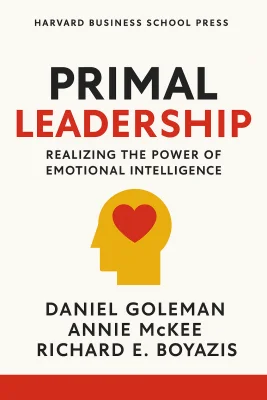
Primal Leadership
Realizing the Power of Emotional Intelligence
Categories
Business, Nonfiction, Self Help, Psychology, Communication, Leadership, Audiobook, Management, Personal Development, Buisness
Content Type
Book
Binding
Hardcover
Year
2002
Publisher
Harvard Business Review Press
Language
English
ASIN
157851486X
ISBN
157851486X
ISBN13
9781578514861
File Download
PDF | EPUB
Primal Leadership Plot Summary
Introduction
The first time I witnessed a true emotionally intelligent leader in action, I was mesmerized. Sarah had just been appointed as the new director of a struggling tech department where morale was at rock bottom. In her first team meeting, rather than diving into metrics and deadlines, she began by acknowledging the challenges everyone had been facing. "I know the past few months have been difficult," she said, looking each person in the eye. "Before we talk about where we're going, I want to understand where you've been." The tension in the room visibly dissolved as people began to open up. By the end of that meeting, the team wasn't just sharing problems—they were volunteering solutions. Sarah hadn't offered a single directive, yet somehow, everyone left energized and aligned. What Sarah demonstrated that day was primal leadership—the fundamental ability to recognize, understand, and influence emotions, both in ourselves and others. This fundamental dimension of leadership has been largely overlooked in traditional business education, yet it may be the single most important factor in creating resonant organizations where people thrive. Throughout this book, we'll explore how emotionally intelligent leaders create environments where innovation flourishes, employees feel valued, and performance soars. We'll discover how leaders can develop their emotional intelligence capabilities, from self-awareness to relationship management, and how these skills translate into specific leadership styles that inspire others to achieve extraordinary results. The journey toward emotional intelligence begins with understanding that leadership is, at its core, an emotional task—one that starts not with strategy or structure, but with people.
Chapter 1: The Power of Emotions in Leadership
When the executive stepped into the room to deliver the bad news, the atmosphere immediately shifted. The BBC news division had been set up as an experiment, but management had decided to shut it down despite the staff's best efforts. The executive began with a long explanation of how well rival operations were doing, mentioning his wonderful recent trip to Cannes. As he finally delivered the closure news, the room temperature seemed to rise. Frustration turned to hostility, and the situation became so threatening that security nearly had to escort him out. The next day, another executive visited the same disappointed staff. His approach was dramatically different. Speaking from his heart, he talked about journalism's crucial importance to society and the calling that had drawn them all to the field. He acknowledged that financial realities had always made journalism precarious, with job security ebbing and flowing with economic tides. Most importantly, he connected with their passion and dedication to their profession before wishing them well in their careers. When this second leader finished speaking, the staff cheered him—despite receiving exactly the same disappointing news. This stark contrast illustrates the emotional dimension of leadership that we often overlook. Both executives delivered identical information, but the first created dissonance while the second generated resonance. The difference lay not in what they said but in how they said it—their ability to recognize and address the emotional reality of the situation. Research confirms this emotional dimension is not just a "soft" factor but a fundamental aspect of effective leadership. Leaders function as emotional guides for groups, and their moods are contagious. In studies of work teams, researchers found that members who sat in meetings together ended up sharing moods—either good or bad—within just two hours. Even more telling, studies of sports teams revealed that their performance correlates with how well team members synchronize emotionally. The scientific basis for this phenomenon lies in what neuroscientists call the brain's "open-loop" emotional system. Unlike closed-loop systems such as circulation that regulate themselves, our emotional centers depend partly on external sources. We rely on connections with other people for our emotional stability. In the workplace, this means a leader's emotions and actions have a disproportionate impact on everyone else's emotional state—and by extension, their performance. This emotional contagion explains why a leader's impact extends far beyond strategic decisions. When leaders drive emotions positively, performance can soar; when they drive emotions negatively, people are thrown off stride. Understanding this primal dimension of leadership reveals why emotional intelligence—the ability to manage our own emotions and relationships effectively—forms the foundation of exceptional leadership.
Chapter 2: Resonant vs. Dissonant Leadership Styles
Michael was appointed to lead a healthcare division that was hemorrhaging money, providing inferior service, and significantly overstaffed. As division head, he insisted that every decision required full consensus from his management team. This approach sounded enlightened in theory, but in practice, the team held endless meetings without making critical decisions about staff cuts and operational changes. Unable to move forward, the ailing division eventually pulled the entire company into financial disarray. Contrast this with Rozano Saad's approach at Huntsman Tioxide, a chemicals manufacturer in Malaysia. When Saad became general manager, the plant had been operating at a loss for four years despite being the company's most modern facility. Productivity and quality were abysmal. Rather than dictating changes, Saad first invited honest feedback from his subordinates, which revealed he tended to be a commanding, pacesetting leader—common in the engineering culture where he'd spent sixteen years. Recognizing this didn't serve his new role, Saad set learning goals to develop more visionary and coaching leadership styles. He made his personal development goals known to his staff and brought his management team through the same leadership development program he was undergoing. Within two years, the transformation was so dramatic that Saad opened the plants to tours by other executives. Workers who previously gave vague answers about their objectives could now articulate specific quality standards and troubleshooting procedures. Most importantly, the company showed strong upward trends in profitability and productivity benchmarks, breaking records with unprecedented profits in the third year. These contrasting scenarios illustrate the difference between dissonant and resonant leadership. Dissonant leaders, like Michael, create environments where people feel disconnected and unmotivated, even when their intentions are good. They miss the emotional undercurrents that influence group effectiveness. Resonant leaders like Saad, however, are attuned to people's feelings and create positive emotional climates that bring out everyone's best performance. Research reveals that leaders typically rely on six distinct leadership styles, with four creating resonance (visionary, coaching, affiliative, and democratic) and two potentially creating dissonance if overused (pacesetting and commanding). The most effective leaders develop proficiency in multiple styles and switch fluidly between them depending on the situation, much like a golfer selecting the right club for each shot. What makes the difference is emotional intelligence—the ability to recognize emotions in ourselves and others and to use this awareness to manage relationships effectively. When leaders develop these capabilities, they can create organizational harmony that amplifies everyone's abilities and drives superior business results.
Chapter 3: The Neurological Foundations of Leadership
Jack, the head of marketing for a division of a global food company, was the classic definition of a "control freak." High-energy and driven to improve results, Jack exemplified the pacesetting leadership style. He was always striving to find better ways to do things—but too eager to step in and take over when someone seemed about to miss a deadline. When people didn't meet his standards, he would fly into a rage. His direct reports complained behind his back that Jack micromanaged everything, giving no flexibility in how they accomplished their tasks. Under his leadership, the division's business results had stalled over the past two years. After a 360-degree evaluation revealed large gaps between his self-perception and how his direct reports rated him on self-control and empathy, Jack sought coaching help. His coach helped him see how his weaknesses were keeping him from his ideal vision of being an effective leader. Jack's learning plan focused on handling emotions effectively, particularly tuning into bodily sensations that warned he was about to lose control. He developed a four-step process: step back and listen instead of jumping in; let others speak; get objective about his reactions; and ask clarifying questions rather than making judgments. Over six months, Jack made remarkable progress. His own records showed he'd reduced flare-ups from daily occurrences to just one or two a month. The emotional climate in the division improved dramatically—and business results began to improve as well. This transformation illustrates how leadership behaviors are fundamentally shaped by brain function. Recent discoveries in neuroscience reveal that emotional responses originate in the limbic system—particularly the amygdala, which acts as an emotional radar scanning for threats. When triggered, the amygdala can hijack our rational thinking, which is why Jack would react so strongly when things weren't done his way. The prefrontal cortex, meanwhile, serves as the brain's executive center, receiving input from all brain regions to make decisions. The dialogue between neurons in the emotional centers and the prefrontal areas operates through what amounts to a neurological superhighway that orchestrates thought and feeling. When this connection functions well, we can manage emotional impulses effectively—but when it doesn't, emotional hijacking occurs. Leadership skills reside largely in this prefrontal-limbic circuitry. What makes emotional intelligence unique is that these skills are governed by different brain mechanisms than purely cognitive abilities. While technical skills are learned quickly through the neocortex, emotional skills are mastered through the limbic brain, which learns more slowly and through different methods. This explains why traditional training approaches often fail to develop leadership abilities. The limbic brain—unlike the thinking brain—doesn't learn through reading or lectures. It learns through practice, repetition, and feedback. When Jack practiced his new behaviors repeatedly, he was literally rewiring his brain, creating new neural pathways that eventually became his default responses. The scientific understanding of these brain mechanisms offers a roadmap for developing emotional intelligence in leaders. Rather than treating leadership development as an intellectual exercise, effective approaches must engage the emotional centers through experiential learning, reflection, and sustained practice. When leaders understand this neurological foundation, they can deliberately cultivate the brain circuitry that supports resonant leadership.
Chapter 4: Self-Discovery and Personal Transformation
Abdinasir Ali, a hydrogeologist working for an integrated-energy multinational in the United States, had harbored a dream for decades. Raised in northern Kenya's Mandera region, Ali had witnessed devastating droughts as a child, seeing hundreds of animals die and his family struggling to survive on grain instead of their usual diet of meat and milk. He dreamed of returning to Kenya after retirement to educate people about water management and help drill wells in his village. During a conversation with his executive coach, Ali mentioned this deferred dream. "Why wait, Ali?" the coach asked. When Ali explained he wasn't prepared to give up his corporate benefits, the coach pushed further: "Do any multinationals have water-management operations in Kenya? Have you considered asking your company to organize a subsidiary for water-resource management in Eastern Africa?" In that moment, a wave of recognition spread across Ali's face. He suddenly articulated, with remarkable fluidity and detail, the strategic advantages such a project would present to his company through their existing Global Social Initiative. His vision expanded dramatically—instead of helping just his village after retirement, he could impact Kenya and the entire East African region now, through his current position. This pivotal moment illustrates the first critical discovery in leadership transformation: connecting with one's ideal self—the person you aspire to be. By tapping into his passion, Ali unlocked energy and motivation he hadn't previously accessed. He also realized he could build on his emotional intelligence strengths in social awareness and relationship management to bring his vision to life, while working on areas where he needed development, like self-confidence. This self-directed learning process involves five interconnected discoveries. First, leaders must envision their ideal self by connecting with their dreams and core values. Second, they must honestly assess their real self—their current strengths and weaknesses. The gap between these two creates the tension that motivates change. Third, they develop a learning agenda with concrete, manageable steps to build on strengths while addressing weaknesses. Fourth, they practice new behaviors until they become automatic. Finally, they develop trusting relationships that support their growth throughout this process. The research shows this approach creates lasting change. In studies at the Weatherhead School of Management, participants who went through this process showed 47 percent improvement in self-awareness and self-management competencies up to two years later, and 75 percent improvement in social awareness and relationship skills. Even more remarkably, five to seven years after the original training, people continued developing new strengths on their own, demonstrating that emotional intelligence can be cultivated throughout life. What makes this approach effective is that it aligns personal passion with development goals. When leaders like Ali connect their leadership growth to their deepest values and aspirations, they tap into the brain's motivational centers. The left prefrontal cortex, activated by positive visions of the future, provides the emotional fuel to overcome obstacles and persist through the challenging work of changing ingrained habits. By contrast, development programs that impose external standards without connecting to personal dreams typically generate resistance or temporary compliance at best. The journey toward emotional intelligence begins with this fundamental self-discovery—uncovering the leader you truly want to become.
Chapter 5: Building Emotionally Intelligent Teams
The top management team of a manufacturing firm was struggling with a persistent problem: they simply could not make important decisions. The more urgent the decision, the more they would procrastinate. They avoided topics where they knew they disagreed, sometimes pretending to agree in meetings only to quietly undermine decisions afterward. Meanwhile, their company fell further behind in implementing crucial strategies. A leadership audit revealed the root cause: virtually every team member scored low on conflict management competency. They were all uncomfortable with interpersonal disagreements, failing to recognize that open discussion of ideas—as opposed to personal attacks—actually sharpens decision-making. This shared emotional gap had created a team norm of avoiding all disputes, effectively paralyzing them. This realization was like a light switching on. The team could now see what they needed to change: not just individual behaviors, but their collective mindset about conflict. They had discovered their emotional reality—the invisible force that was truly driving their team dynamics. For leaders to extend emotional intelligence throughout their teams and organizations, they need to start by examining this reality rather than immediately jumping to an ideal vision. While individuals feel motivated to change when they connect with their dreams, groups are more motivated by first understanding what's not working in their current situation. Only by confronting their collective emotional reality can a team feel compelled to change. This emotional reality manifests through norms—the implicit rules that govern how team members interact. Often these norms are invisible to the team itself, operating beneath conscious awareness. At the engineering firm mentioned earlier, the unspoken norm of avoiding conflict had become so ingrained that team members didn't realize how it was sabotaging their effectiveness. Building emotionally intelligent teams requires developing collective capabilities in four areas. First, teams need self-awareness—the ability to monitor their shared moods and emotional undercurrents. When a manufacturing team recognized its success depended on getting priority service from the maintenance team, for instance, they nominated that team for a "Team of the Quarter" award, demonstrating awareness of their interdependence. Second, teams need self-management—the ability to regulate collective emotions and behavior through norms that support positive interactions. One research group begins each meeting by distributing not just an agenda but also "process norms" that outline how the group will work together, such as taking responsibility for keeping discussions on track and using good listening skills. Third, teams need social awareness, particularly empathy for other teams and stakeholders. This isn't just about being nice but understanding what the whole system needs. When the manufacturing team helped the maintenance team win recognition, they created goodwill that ultimately benefited both groups. Finally, teams need relationship management—the ability to build productive connections with other groups. This extends the team's influence beyond its boundaries, creating networks that enhance organizational effectiveness. The leader's role in this process is crucial. By modeling emotional intelligence, setting ground rules, and helping the team confront its emotional reality, leaders can transform group dynamics. When a vice president at a financial services company focused first on understanding her team members' perspectives rather than imposing her own, she created a climate of openness that eventually made her division a center of excellence. The emotionally intelligent team creates a positive cycle: awareness of shared emotions leads to better self-management, which enables stronger relationships inside and outside the team—ultimately driving superior performance.
Chapter 6: Creating Sustainable Cultural Change
The CEO of a Pacific Rim bank had worked with an executive coach on emotional intelligence competencies and dramatically transformed his leadership style. Where once he had been a compulsively focused, pacesetting leader, he had expanded his repertoire to become more affiliative, visionary, and coaching-oriented. One example of his transformation came when he stopped a project meeting to send home a staff member whose husband had suddenly fallen ill—a simple gesture of human kindness that would not have occurred to him before. Impressed with his own transformation, the CEO instructed his HR department to design a similar program for his top 600 executives. But when the program was offered, few people signed up. Despite the CEO's personal success with leadership development, the organizational initiative failed miserably. Why? The CEO had focused solely on individual change without addressing the company's culture. By funneling the program through HR training rather than making it a strategic priority driven from the top, he sent the unintended message that it was low priority. This scenario illustrates a critical insight: individual leaders alone cannot change a culture. For resonant leadership to take hold, it must spread throughout every level of the organization. This requires engaging people not just intellectually but emotionally in the change process. The University of Pennsylvania demonstrated this principle when undertaking major restructuring in the 1990s. As staff members' roles completely changed, many felt demoralized about losing their secure positions at the prestigious Ivy League school. President Judith Rodin and Executive Vice President John Fry recognized they needed to mobilize people's energy around a broader vision beyond internal restructuring. They announced that Penn would take responsibility for contributing to its surrounding West Philadelphia community, a position neither the university nor the town had heard for years. This wasn't just rhetoric—it led to concrete actions. They worked with city officials, schools, and police to create better-lit streets and parks, enhance local education, and help residents restore homes. They created mortgage programs encouraging professors and staff to move into the surrounding area and focused on developing local businesses. As the benefits of this approach became apparent, university staff united around the change process with energy and passion. The values driving the strategy—urban renewal and commitment to a vibrant, diverse community—were intrinsically appealing and made people feel good again about being part of Penn. By engaging people in this external initiative, Rodin and Fry were able to engage them in more difficult internal changes as well. The lessons from these contrasting examples point to fundamental principles for creating sustainable change. First, emotional intelligence must be cultivated at all levels, not just among top leaders. Second, the emotional reality of the organization must be acknowledged before attempting to implement an ideal vision. Third, leaders must personally demonstrate the new behaviors they seek in others. Finally, organizational systems—from hiring practices to reward structures—must be aligned to support emotionally intelligent leadership. Gordon Radley, president of Lucasfilm Ltd., captures this tribal feeling that characterizes emotionally intelligent organizations: "How do you create that tribal feeling? It's a hard thing to do, because it's so evanescent it disappears as soon as you draw attention to it. But we want to make sure how we feel about what we do is just as important as what we do." When leaders succeed in creating this emotional attunement throughout an organization, they tap into the ancient human organizing principle of the primal band—groups who survive through close understanding and cooperation. This resonance unleashes the collective talents of everyone in the organization, creating sustainable performance that transcends what any individual could accomplish alone.
Summary
The essence of primal leadership lies in understanding that leadership operates first and foremost on an emotional level. The most effective leaders are distinguished not by their technical expertise or strategic brilliance, but by their ability to resonate emotionally with those they lead. As we've seen through numerous examples—from the executive who turned around a failing BBC news division through emotional connection to the manufacturing leader who transformed a Malaysian plant by developing more visionary leadership styles—resonant leadership creates environments where people naturally give their best. The science of emotional intelligence offers a practical pathway for developing these abilities. By strengthening self-awareness, leaders gain clarity about their values and vision. By mastering self-management, they model emotional regulation that creates psychological safety for their teams. Through social awareness, particularly empathy, they attune to the needs and feelings of others. And through relationship management, they channel these insights into inspiring leadership that mobilizes collective effort toward shared goals. These abilities aren't fixed traits but learnable skills that can be developed through intentional practice, feedback, and relationships that support growth. The true power of emotional intelligence emerges when it permeates an entire organization—when teams develop collective awareness of their emotional reality and when organizational cultures explicitly value and reward resonant leadership. In today's complex business environment, where change is constant and innovation essential, this emotional dimension of leadership becomes not just a "nice to have" but a fundamental driver of sustainable success. By attending to the primal task of leadership—creating emotional environments where people thrive—leaders can build organizations that not only achieve remarkable results but also bring meaning and fulfillment to everyone involved.
Best Quote
“As Erasmus, the great Renaissance thinker, reminds us, “The best hope of a nation lies in the proper education of its youth.” ― Daniel Goleman, Primal Leadership, With a New Preface by the Authors: Unleashing the Power of Emotional Intelligence
Review Summary
Strengths: The book provides practical advice on leadership, emphasizing the importance of regulating emotional atmospheres and developing emotional intelligence. It outlines a structured approach to self-directed learning, which includes developing a vision of the ideal self, reflecting on the real self, and building a learning agenda. The reviewer found this approach aligned with their intuitive coaching methods and appreciated the clarity it brought to their leadership journey. Weaknesses: The reviewer noted that the book tends to be repetitive, particularly when compared to other works by the same author, such as "Resonant Leader," which they found more concise. Overall: The reader found the book helpful in addressing their leadership anxieties and appreciated its structured guidance. However, they suggest that those familiar with Goleman's previous works might find the content redundant.
About Author
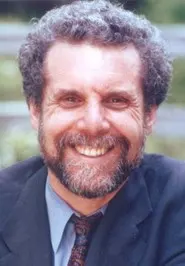
Daniel Goleman
Goleman probes the transformative power of emotional intelligence in shaping human behavior and organizational success, extending his insights to both personal growth and leadership. His work, notably in "Emotional Intelligence: Why It Can Matter More Than IQ," demonstrates that understanding and managing emotions is crucial for achieving one's full potential. Beyond emotional intelligence, Goleman explores the impact of focused attention on excellence in "Focus: The Hidden Driver of Excellence." His approach often synthesizes empirical research with practical applications, encouraging readers to develop self-awareness and empathy, which can significantly enhance their personal and professional lives. This commitment to actionable insights marks Goleman as an influential author in psychology and leadership.\n\nFor readers, Goleman's bio offers a rich tapestry of ideas that can be directly applied to improve interpersonal skills and leadership abilities. By integrating concepts such as emotional and social intelligence into everyday practice, individuals can navigate complex social environments more effectively. His books have practical implications, providing tools for readers to cultivate better emotional and social dynamics, both at home and in the workplace. As a result, Goleman's contributions are invaluable for anyone seeking to deepen their understanding of human interactions and lead with empathy. His recognition as a top business thinker underscores the profound impact his ideas have had across various sectors, reshaping how people perceive the role of emotions in achieving success.
Read moreDownload PDF & EPUB
To save this Black List summary for later, download the free PDF and EPUB. You can print it out, or read offline at your convenience.
Primal Leadership
by Daniel Goleman
