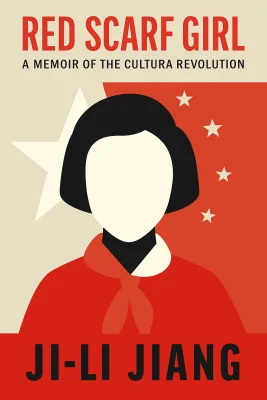
Red Scarf Girl
Categories
Nonfiction, Biography, History, Memoir, China, Asia, Biography Memoir, School, Historical, Middle Grade
Content Type
Book
Binding
Paperback
Year
1998
Publisher
HarperTrophy
Language
English
ASIN
0439063000
ISBN
0439063000
ISBN13
9780439063005
File Download
PDF | EPUB
Red Scarf Girl Plot Summary
Introduction
In the chaos of China's Cultural Revolution, when children denounced their teachers and families were torn apart by political fervor, one twelve-year-old girl found herself caught between loyalty to Chairman Mao and love for her family. Ji-li Jiang's journey from a star student wearing her red scarf with pride to a young woman grappling with impossible choices reveals the human cost of political upheaval and the resilience of the human spirit. Born on Chinese New Year with a name meaning "lucky and beautiful," Ji-li seemed destined for success in Mao's China. She excelled in school, served as student leader, and believed wholeheartedly in the revolutionary cause. Yet as the Cultural Revolution swept through her world, she discovered that her grandfather's status as a landlord made her entire family enemies of the people. Through Ji-li's eyes, readers will witness the profound impact of political ideology on daily life, explore the complex dynamics between personal conscience and social pressure, and understand how ordinary people survived extraordinary times while maintaining their humanity and family bonds.
Chapter 1: Childhood Pride and Revolutionary Fervor
Ji-li Jiang's early years were marked by an unwavering faith in Chairman Mao and the Communist revolution that had transformed China. Growing up in Shanghai during the 1960s, she embodied the ideal of a "red scarf girl" – a devoted Young Pioneer who believed that "Heaven and earth are great, but greater still is the kindness of the Communist Party." Her red scarf, the emblem of her youth organization, represented not just membership but a sacred connection to the revolutionary martyrs whose blood had dyed it red. As a top student and da-dui-zhang (student chairman) of her entire school, Ji-li seemed destined for greatness in Mao's new China. She excelled academically, won speech contests, and participated in the municipal children's martial arts team. Her talent caught the attention of a Liberation Army recruiter, who selected her for an audition at the prestigious Central Liberation Army Arts Academy. This opportunity represented everything Ji-li had dreamed of – a chance to serve her country as both a soldier and performer, touring the world to showcase the strength of New China. However, this golden opportunity was abruptly denied when her father revealed the family's dark secret. Their "political background" would prevent her from passing the strict investigations required for military service. Though devastated by this revelation, Ji-li's faith in the revolution remained unshaken. She channeled her disappointment into other activities, believing that her personal sacrifices were necessary for the greater good of building a socialist society. The family lived comfortably in a spacious Shanghai apartment, surrounded by mahogany furniture and enjoying luxuries like a private bathroom and a housekeeper named Song Po-po. Ji-li's parents were both actors, her grandmother was a retired school vice-principal, and the household often hosted intellectuals and artists in what they called "Jiang's salon." These gatherings, filled with literary discussion and artistic appreciation, represented the cultural richness that would soon become a liability. When the Cultural Revolution officially began in 1966, Ji-li embraced the call to "Destroy the Four Olds" – old ideas, old culture, old customs, and old habits. She joined her classmates in witnessing the dramatic transformation of their city, watching as shop signs were smashed and replaced with revolutionary slogans, feeling proud to participate in creating a new China free from the corrupting influences of the past.
Chapter 2: Class Status Revelation and Family Persecution
The revelation of Ji-li's family's "black" class status shattered her world and transformed her from a promising revolutionary into a suspected enemy of the people. During an election for Red Successors – the elementary school version of Red Guards – a classmate publicly exposed the devastating truth: Ji-li's grandfather had been a landlord, making her family part of the despised "Five Black Categories." The classroom erupted in shock and condemnation, with students who had once admired her now viewing her as tainted by her family's reactionary past. This moment marked the beginning of Ji-li's painful education about the arbitrary nature of political classification in Mao's China. Despite having no memory of her grandfather, who had died when her father was only seven years old, she was now held responsible for his alleged crimes against the peasantry. Her father's explanation that the grandfather had been a businessman who lived in Shanghai and had little involvement in rural exploitation meant nothing to her persecutors. The label of "landlord's granddaughter" became an inescapable burden that would follow her everywhere. The family's situation worsened dramatically when a newspaper article revealed that the Jiangs were the notorious "Half-City Jiangs" of Nanjing, a wealthy landlord family that had once owned over thirty-three hundred acres of land. This sensational exposure brought unwanted attention from neighbors, classmates, and authorities. Ji-li found herself subjected to constant scrutiny and suspicion, with every aspect of her family's lifestyle reinterpreted as evidence of their exploitative nature. Red Guards began appearing throughout their neighborhood, conducting searches of "black" families to confiscate their "fourolds" possessions. The family watched nervously as their neighbors were humiliated and their belongings seized. In preparation for their own inevitable search, Ji-li's parents took preventive measures: they dyed her grandmother's beautiful red leather trunks black to make them less conspicuous, burned family photographs that showed them in traditional clothing, and dismissed their housekeeper Song Po-po to avoid charges of exploitation. The psychological pressure intensified when Ji-li's classmates, led by newly empowered students from working-class families, subjected her to criticism sessions. Former friends like Du Hai and Yin Lan-lan, who had previously been poor performers academically, suddenly wielded power over her as representatives of the "revolutionary masses." They accused her of bourgeois thinking, condemned her family's lifestyle, and demanded that she undergo ideological remolding to overcome her landlord mentality. These experiences forced Ji-li to confront the harsh reality that her identity was no longer defined by her achievements or character, but solely by her family's class background. The revolutionary society she had believed in so fervently now rejected her as inherently unreliable, regardless of her personal dedication to Chairman Mao's cause.
Chapter 3: Identity Crisis and Educational Struggles
The collapse of Ji-li's status as a model student triggered a profound identity crisis that would reshape her understanding of herself and her place in Chinese society. The girl who had once confidently led school assemblies and earned perfect grades now found herself questioning everything she had believed about merit, justice, and her own worth. The red scarf that had once been a source of pride became a symbol of the revolutionary ideals that now excluded her. At school, Ji-li faced constant reminders of her transformed status. Teachers who had once praised her achievements now viewed her with suspicion. Classmates whispered about her family's wealth and pointed to evidence of her "bourgeois" upbringing – her neat appearance, academic success, and confidence were reinterpreted as signs of her class enemy mentality. The very qualities that had made her an exemplary student were now seen as proof of her fundamental untrustworthiness. The educational system itself was being revolutionized in ways that made traditional academic excellence increasingly irrelevant. Classes were suspended indefinitely as students were directed to write da-zi-bao (big character posters) criticizing teachers and the "revisionist" educational system. Ji-li struggled to find anything genuinely critical to say about her teachers, who had always been dedicated and caring. This inability to enthusiastically denounce educators she respected revealed another layer of her alienation from the revolutionary fervor surrounding her. When she finally returned to junior high school after more than a year of disruption, Ji-li adopted a strategy of deliberate mediocrity. Despite her teacher's invitation to join the propaganda group and participate in the prestigious Class Education Exhibition, she declined, fearing that visibility would only bring more scrutiny to her background. This represented a fundamental shift in her approach to life – from striving for excellence to seeking invisibility. The quality of education had deteriorated dramatically during the Cultural Revolution. Traditional subjects like physics, chemistry, and biology were replaced with "Fundamentals of Industry and Agriculture." English classes consisted mainly of learning revolutionary slogans rather than grammar or vocabulary. Teachers, many of whom were themselves under investigation, struggled to maintain any semblance of normal instruction while navigating the political requirements imposed on education. Ji-li's academic talents, once her greatest source of self-worth, became another burden to bear. Her perfect scores in mathematics earned her unwanted attention, and her beautiful handwriting made teachers want to showcase her work – exactly the kind of prominence she now desperately sought to avoid. She learned to hide her abilities and blend into the background, a painful adaptation for someone who had thrived on recognition and achievement.
Chapter 4: Family Bonds Amid Political Turmoil
As external pressures mounted, the Jiang family's bonds deepened and became their primary source of strength and identity. While the revolutionary society demanded that children break with their "black" families and demonstrate loyalty to Chairman Mao above all else, Ji-li found herself drawn closer to her parents and grandmother despite the potential consequences of this choice. The family's shared vulnerability created an intimacy and mutual dependence that transcended political ideology. Ji-li's grandmother emerged as a particularly sympathetic figure whose dignity and kindness contrasted sharply with the caricature of landlords promoted by revolutionary propaganda. Rather than the cruel exploiter depicted in political education materials, Grandma was a gentle, educated woman who had graduated from high school in 1914 when few girls received formal education. She had helped found Ji-li's elementary school and spent her retirement caring for her grandchildren with patience and love. The family's efforts to protect each other often required difficult sacrifices and careful deception. When Grandma became too anxious to remain at home during the day, fearing searches by Red Guards, the family developed an elaborate system of spending days in the park and using secret signals to determine when it was safe to return home. These precautions highlighted both their vulnerability and their commitment to staying together despite the dangers. Ji-li's parents demonstrated remarkable restraint and wisdom in managing their children's exposure to the political situation. While they couldn't hide the basic facts of their circumstances, they tried to shield Ji-li and her siblings from the full implications of their father's detention and their mother's workplace persecution. Their late-night conversations in the bathroom – the only private space in their small apartment – became the family's method of processing traumatic events while maintaining some semblance of normalcy for the children. The relationship between Ji-li and her younger siblings, Ji-yong and Ji-yun, evolved as they all faced discrimination and harassment at school. Ji-yong, despite being only eleven, showed remarkable courage in defending the family's honor, even getting into fights with classmates who called him a "black whelp." Ji-yun, the youngest at ten, struggled with the psychological pressure but remained devoted to her family. Ji-li gradually assumed greater responsibility for protecting and guiding her siblings as their parents became increasingly preoccupied with their own persecution. Song Po-po, their former housekeeper, exemplified the loyalty that transcended political classifications. Despite the family's attempts to distance themselves from her to avoid charges of exploitation, she continued secretly helping them, bringing vegetables and cleaning their stairs. Her unwavering devotion provided a counterexample to the prevailing ideology that demanded people choose political correctness over personal relationships.
Chapter 5: Survival, Resistance and Moral Choices
The most challenging test of Ji-li's character came when authorities demanded that she publicly denounce her father at a struggle meeting. Officials from his theater work unit, led by the intimidating Thin-Face, pressured her to testify against her father's alleged crimes and demonstrate her loyalty to Chairman Mao by breaking with her family. This demand placed her at the center of an impossible choice between political survival and family loyalty, forcing her to confront the true cost of maintaining her moral integrity. The pressure tactics employed by Thin-Face revealed the psychological brutality underlying the Cultural Revolution's methods. He alternated between promises of rehabilitation if she cooperated and threats of punishment for her entire family if she refused. The officials cynically exploited her youth and vulnerability, suggesting that her reluctance to denounce her father proved her own contamination by landlord ideology. They painted her choice in stark terms: become Chairman Mao's child or remain forever tainted by her family's class background. Ji-li's refusal to betray her father, despite intense pressure, represented a moment of moral clarity that defined her character. She intuitively understood that her father, whatever his alleged political mistakes, was fundamentally a good man who had never spoken against Chairman Mao or the Communist Party. Her loyalty was based not on blind filial piety but on her personal knowledge of his integrity and kindness. This decision cost her the opportunity to participate in the Class Education Exhibition and likely foreclosed many future opportunities, but it preserved her sense of self-respect. The family's survival required constant adaptation and sacrifice. Ji-li took over household responsibilities, including marketing and cooking, when her mother's health deteriorated under stress. She learned to navigate the complex social dynamics of her neighborhood, where former friends and neighbors now viewed her family with suspicion or hostility. The loss of their comfortable lifestyle – including the confiscation of furniture, clothes, and treasured possessions – forced them to rebuild their lives with minimal resources. The search of their home by Red Guards represented the ultimate violation of privacy and dignity. Ji-li was forced to watch strangers ransack her personal belongings, including intimate items like her sanitary belt, while looking for evidence of her family's crimes. The discovery of a letter her mother had written criticizing conditions at her father's workplace led to even greater persecution, including forcing her grandmother to kneel for hours as punishment for the family's "counterrevolutionary" activities. Throughout these ordeals, Ji-li demonstrated remarkable resilience and moral courage. She found ways to maintain her dignity while avoiding direct confrontation with authorities. Her decision to hide the incriminating letter, despite knowing the consequences if it were discovered, showed her willingness to take personal risks to protect her family. When the letter was inevitably found, she accepted responsibility without betraying her mother's trust or revealing additional information that could harm others.
Chapter 6: Escape to America and Cultural Reflection
Ji-li's eventual path to America in 1984 represented both an escape from political persecution and a painful separation from her homeland. At thirty years old, she left behind everything familiar to start over in a country where she had no money, few friends, and limited English skills. This immigration was not driven by economic opportunity but by a deep desire for the freedom to think, speak, and write without fear of political retribution. Her early years in America were marked by constant amazement at the freedoms that Americans took for granted. A Halloween parade in Honolulu became a revelation when she witnessed people freely expressing themselves, even mocking political leaders, without fear of government persecution. This experience highlighted the profound psychological impact of living under a system where political orthodoxy was enforced through surveillance and punishment. The process of writing about her experiences during the Cultural Revolution forced Ji-li to confront complex questions about responsibility, victimization, and historical truth. She grappled with her own complicity in a system that she had once enthusiastically supported, recognizing that her childhood faith in Chairman Mao had blinded her to the injustices being committed in his name. This reflection led to a nuanced understanding of how ordinary people can be manipulated by charismatic leaders and totalitarian ideologies. Her perspective on China evolved from simple rejection to a more complex form of love that acknowledged both her homeland's problems and its enduring significance in her life. Despite all her suffering, Ji-li realized that she could never completely abandon her Chinese identity or her concern for China's future. This recognition led her to establish East West Exchange, a company dedicated to promoting cultural understanding between the United States and China. Ji-li's writing became an act of historical witness and moral responsibility. By sharing her story, she sought to educate American readers about the human cost of political extremism while helping Chinese people understand the value of legal protections and democratic institutions. Her book serves as both a personal memoir and a warning about how quickly civilized societies can descend into chaos when legal systems fail and mob rule prevails. The reunion of her family in America provided a form of redemption for the years of separation and persecution they had endured in China. Her father was eventually able to return to acting, Ji-yong found work in tourism, and Ji-yun became a teacher. Yet the scars of their experiences remained, serving as permanent reminders of the fragility of human rights and the importance of protecting individual dignity against collective hysteria.
Chapter 7: Building Bridges Between East and West
In her later years, Ji-li transformed her traumatic experiences into a mission of cultural bridge-building and education. Her establishment of East West Exchange reflected her belief that understanding between nations requires genuine communication about both achievements and failures. Rather than simply condemning China or uncritically embracing America, she sought to promote nuanced dialogue that could help both societies learn from each other's experiences. Her work in cultural exchange was motivated by the recognition that her own survival and eventual flourishing had depended on the kindness and courage of individuals who transcended political boundaries. Song Po-po's continued loyalty, her teachers' quiet support, and the friendship of classmates like Lin-lin and Bai Shan had demonstrated that human decency could persist even in the most challenging circumstances. These experiences taught her that meaningful change occurs through personal connections rather than abstract ideological commitments. Ji-li's perspective on education and youth development was profoundly shaped by her own experiences as a child caught in political turmoil. She understood that young people's natural idealism and desire to contribute to society could be manipulated by unscrupulous leaders for destructive purposes. Her advocacy for critical thinking and individual rights stemmed from her recognition that protecting children requires more than good intentions – it demands robust institutions and legal safeguards. The writing of her memoir served multiple purposes: preserving historical memory, providing therapeutic processing of trauma, and educating future generations about the dangers of political extremism. By sharing her story with young readers, Ji-li hoped to prevent the repetition of the mistakes that had devastated her generation. Her accessible writing style and focus on universal themes of family, friendship, and moral choice made her experiences relevant to readers far removed from the specific context of the Cultural Revolution. Her ongoing relationship with China remained complex and evolving. While she had found freedom and opportunity in America, Ji-li never abandoned her hope that China might develop into a more open and just society. Her cultural exchange work represented an alternative to both naive engagement and hostile confrontation, offering a model for how diaspora communities might contribute to positive change in their homelands while building meaningful lives in their adopted countries. Through her professional success and personal growth, Ji-li demonstrated that survival is not enough – victims of political persecution can transform their suffering into sources of strength and wisdom that benefit others. Her life journey from red scarf girl to cultural ambassador illustrated the possibility of maintaining one's core values while adapting to radically different circumstances, and the importance of using privilege and opportunity to serve causes greater than individual advancement.
Summary
Ji-li Jiang's remarkable journey from devoted revolutionary to cultural bridge-builder reveals how individual courage and family love can triumph over even the most oppressive political systems. Her story demonstrates that while we cannot choose the circumstances of our birth or the societies into which we are born, we can choose how we respond to injustice and whether we allow traumatic experiences to embitter us or inspire us to work for positive change. Her experiences offer profound lessons about the importance of maintaining critical thinking in the face of mass hysteria, the value of personal relationships over abstract ideological commitments, and the possibility of transforming suffering into sources of wisdom and compassion. For readers interested in understanding both the human cost of political extremism and the resilience of the human spirit, Ji-li's story provides both cautionary warnings and hope for the possibility of building more just and humane societies.
Best Quote
“Her actions remind me that, even under unbearable circumstances, one can still believe in justice. And above all, love.” ― Ji-li Jiang, Red Scarf Girl
Review Summary
Strengths: The review highlights the book's powerful portrayal of the Cultural Revolution through the eyes of a young girl, emphasizing its emotional impact and educational value. The narrative is praised for its authenticity and ability to raise awareness about historical events. The author, Ji-li Jiang, is commended for her down-to-earth nature and success in fulfilling her goal of educating readers. Overall: The review conveys a strong positive sentiment, recommending the book as a valuable read for understanding the Cultural Revolution and its effects on individuals and families. It is suggested as an essential read for those unfamiliar with this period in Chinese history, with the reviewer expressing a personal connection and repeated engagement with the text.
About Author

Ji-li Jiang
Jiang traces her life's mission to bridge cultural divides through her multifaceted work as an author and cultural facilitator. Her writing, deeply rooted in her own experiences during the 1960s Cultural Revolution in China, serves as a testament to the personal and societal impacts of political turmoil. With her debut book, "Red Scarf Girl: A Memoir of the Cultural Revolution", Jiang shares a poignant account of her adolescence, offering readers a nuanced perspective on how ideological shifts can fracture families and communities. This narrative not only highlights the human cost of political upheaval but also underscores the need for understanding across cultures, a theme that permeates her work and initiatives.\n\nBeyond her literary contributions, Jiang has actively promoted cultural exchange between China and the Western world, reflecting her commitment to global peace. She co-founded East West Exchange, Inc. in 1992, and later established Cultural Exchange International to broaden these efforts. Her endeavors facilitate dialogue and understanding by organizing student programs and artistic collaborations. Through these initiatives, Jiang creates platforms where cultural appreciation and learning flourish, benefiting those seeking to engage deeply with Chinese culture.\n\nJiang’s work resonates with audiences interested in the intersections of history, culture, and personal narrative. Her adaptation of Chinese folklore in "The Magical Monkey King: Mischief in Heaven" further showcases her dedication to sharing Chinese stories with Western readers, providing both entertainment and education. Her books and programs offer a gateway to greater cultural literacy, fostering empathy and respect across diverse populations. This approach has garnered her significant recognition, including numerous awards for "Red Scarf Girl", affirming the impact of her contributions to cross-cultural understanding.
Read moreDownload PDF & EPUB
To save this Black List summary for later, download the free PDF and EPUB. You can print it out, or read offline at your convenience.
Red Scarf Girl
by Ji-li Jiang
