
Remarkable Creatures
Categories
Fiction, Audiobook, Historical Fiction, Adult, Womens, Book Club, 19th Century, Historical, British Literature, Adult Fiction
Content Type
Book
Binding
Hardcover
Year
2009
Publisher
HarperCollins Publishers Ltd
Language
English
ASIN
0007178379
ISBN
0007178379
ISBN13
9780007178377
File Download
PDF | EPUB
Remarkable Creatures Plot Summary
Introduction
The lightning struck when Mary Anning was barely more than a baby, killing the woman who held her but leaving the child alive. Years later, as she chipped away at the Blue Lias cliffs of Lyme Regis with her father's hammer, Mary would feel that same electric jolt whenever she discovered something extraordinary hidden in the stone. The fossil hunters of Dorset's coast lived by these moments—when ancient bones emerged from rock like secrets whispered across millennia. Elizabeth Philpot arrived in Lyme as a displaced London spinster, one of three sisters banished to the seaside by reduced circumstances and an absent marriage prospects. She collected fossil fish with methodical precision, cataloguing each specimen like a scholar. Mary Anning hunted monsters—complete skeletons of creatures so strange they challenged everything people believed about God's creation. Their friendship would span decades of discovery, jealousy, and reconciliation, set against a backdrop of scientific revolution where women did the finding while men claimed the glory.
Chapter 1: Outcasts and Outliers: The Meeting of Unlikely Allies
Elizabeth Philpot's life changed direction when her brother announced his engagement over dinner in London. The mathematics were simple and cruel—three spinster sisters could not remain in the family home once a new wife arrived. They needed somewhere cheap to live, somewhere their reduced circumstances would not shame them. The guidebook's description of Lyme Regis was blunt: frequented by "persons in the middle class of life" who went there "to heal their wounded fortunes." The move from London's Red Lion Square to a cottage high above Lyme's harbor felt like exile at first. But Elizabeth discovered the Snakes' Graveyard on Monmouth Beach—a limestone ledge covered with spiral fossils the locals called ammonites. She needed a cabinet to display her growing collection, which led her down the hill to Richard Anning's workshop in Cockmoile Square. Mary Anning was sorting fossils outside her father's shop when Elizabeth first saw her, a lean girl with brown eyes bright as pebbles. Mary knew every specimen by touch—sea lilies, Devil's toenails, verteberries that might have come from ancient crocodiles. When Elizabeth commissioned a cabinet, Richard Anning's outrageous quote of a guinea sparked an argument. Mary slipped Elizabeth a small vertebra as she left, their first exchange of geological treasure. The friendship began with Mary cleaning Elizabeth's fossils for a penny each, teaching the London lady to scrape specimens with razor blades until the ancient creatures emerged pristine from their rocky tombs. Elizabeth provided steady work and scientific knowledge from her natural history books. Mary brought an intuitive understanding of the cliffs and tides, plus an uncanny ability to spot fossils others missed. They were both outsiders in Lyme—the genteel spinster and the working girl who spent her days grubbing in the mud.
Chapter 2: The Monster in the Cliff: Discovery that Shakes Foundations
The winter of 1810 brought storms that sent chunks of cliff tumbling onto the beach. Joseph Anning, Mary's older brother, preferred upholstery to fossil hunting but necessity drove him to the cold shore. When he returned home that day, his usual stolid expression was transformed by excitement. He had found something in the cliff face—a long jaw filled with teeth. Mary abandoned the crying baby she was minding and followed Joe to the end of Church Cliffs. The specimen hung embedded in the rock like a grinning nightmare. The jaw stretched four feet long, packed with uniform teeth that caught the gray winter light. But it was the eye that made Mary shiver—a massive socket surrounded by overlapping bone plates, far larger than any crocodile she had seen in Elizabeth's books. For weeks they chipped away at the surrounding rock, working between tides. Elizabeth Philpot arranged financing and hired quarrymen to extract the complete skeleton. When the massive creature finally lay assembled, eighteen feet of stone and bone, it challenged every assumption about God's creation. The paddle-shaped limbs and barrel-like torso suggested a marine reptile, but the enormous eyes and pointed snout belonged to no living animal. Lord Henley bought the specimen for twenty-three pounds, then sold it to William Bullock's museum in London where it was displayed wearing a waistcoat and monocle like a carnival curiosity. Elizabeth was outraged by this treatment of Mary's discovery, but for the Anning family, the money meant survival. They could pay their debts, buy furniture, and escape the constant threat of the workhouse. The monster had transformed their fortunes, but it also marked the beginning of Mary's complicated relationship with fame.
Chapter 3: A Woman's Place: Scientific Ambition in a Man's World
The ichthyosaurus made Mary famous among collectors and natural philosophers, but fame brought its own complications. Gentlemen arrived in Lyme seeking their own monsters, expecting Mary to guide them to discoveries they could claim as their own. She was caught between worlds—too educated for her working-class neighbors, too poor and female for the scientific establishment. Elizabeth watched Mary's transformation with mixed feelings. The girl who had once cleaned fossils for pennies now commanded guinea fees from wealthy collectors. But success came with scrutiny. Mary's appearance on the beach with various gentlemen sparked gossip in a town where reputation was a woman's most fragile possession. Elizabeth found herself acting as chaperone and protector, defending Mary's character while privately envying her fame. The social dynamics grew more complex when William Buckland arrived from Oxford. The eccentric geology professor collected rocks in a bright blue sack and ate his way through the animal kingdom, adding roasted seagull to his experimental diet. Mary guided him across the beaches, teaching him to read the cliff faces and identify specimens. Their professional relationship was innocent enough, but Lyme's gossips saw opportunity in their long hours alone on the shore. Elizabeth arranged for Fanny Miller, a pretty local girl, to serve as chaperone during Mary's expeditions with Buckland. The arrangement satisfied propriety but created new tensions. Fanny feared fossils as Devil's work, sitting apart from the hunting with her lace-making while Mary and Buckland explored the cliffs. The three-way dynamic highlighted the impossible position of women who dared pursue scientific interests—they needed protection from scandal, but that very protection limited their freedom to work.
Chapter 4: Matters of the Heart: Love, Loss, and Lightning
Colonel Thomas Birch strode across the beach in his red military coat like a figure from a romantic novel. He was handsome, charming, and claimed expertise in fossil hunting, though Elizabeth quickly realized he simply picked up whatever Mary and other hunters spotted first. Mary, now twenty, was ripe for romance and found the distinguished soldier irresistible despite Elizabeth's warnings about his character. The summer of Colonel Birch's residence in Lyme passed in a haze of hunting expeditions and flirtation. Mary gave him her finest specimens, including a complete ichthyosaurus she pretended he had discovered himself. She worked late into the night cleaning his fossils while he entertained ladies at the Assembly Rooms. When he left for London that autumn, Mary waited for letters that never came. Elizabeth received correspondence from Colonel Birch requesting fossil fish for his collection, but no word came for Mary. The girl who had faced down landslides and ancient monsters was brought low by silence from a man who had used her knowledge and labor without payment or promise. She took to her bed, unable to hunt, while her mother struggled to keep food on the table. The revelation came months later when Colonel Birch wrote to Joseph announcing an auction of his entire fossil collection at Bullock's museum in London. Mary's ichthyosaurus, along with every specimen she had found for him, would be sold to the highest bidder. But the letter contained an unexpected twist—all proceeds would go to the Anning family. Colonel Birch was liquidating his collection to repay Mary for her work, a gesture that was either noble restitution or the final insult of pity disguised as generosity.
Chapter 5: Reputation and Ruin: The Battle for Recognition
Mary's second great discovery came in the winter of 1823—a creature even stranger than the ichthyosaurus, with a neck longer than its body and a head no bigger than a horse's. The plesiosaurus challenged anatomical laws established by the great French scientist Georges Cuvier, who declared the specimen must be a fake, two different animals artificially combined. The accusation devastated Mary. Cuvier's word carried weight throughout the scientific world, and his suggestion of forgery threatened to destroy her reputation as a reliable collector. She retreated to her bed again, convinced her career was finished. Elizabeth Philpot watched from a distance, their friendship still strained by old arguments about Colonel Birch and social ambition. When Elizabeth learned of Mary's predicament, she made an extraordinary decision. Despite her fear of sea travel and her sisters' protests, she boarded a ship to London during the worst of winter weather. Her mission was to confront the geological establishment and defend Mary's reputation before the damage became irreparable. The journey nearly killed her. Elizabeth contracted pneumonia and spent weeks hovering between life and death in her brother's London house. But her sacrifice was not in vain. She managed to attend the Geological Society meeting where the plesiosaurus was discussed, hiding on a back staircase to hear the proceedings. Her intervention helped rally support for Mary among influential natural philosophers who wrote to Cuvier defending the specimen's authenticity.
Chapter 6: Journey Against the Tide: Elizabeth's London Mission
Elizabeth's ship voyage to London marked a transformation in her understanding of herself and her place in the world. Standing alone on deck, watching the horizon stretch endlessly before her, she felt a freedom she had never experienced as a dutiful sister and proper spinster. The sea that had always seemed a barrier became an opening to possibility. In London, she found herself operating in a world designed to exclude women. The Geological Society's charter forbade female attendance, but Elizabeth refused to be deterred. With her nephew's help, she infiltrated the building and hid on a servant's staircase during the crucial meeting where Reverend Conybeare presented the plesiosaurus to the scientific community. The irony was bitter—she listened to learned men discuss Mary's discovery while the woman who found it remained unknown to most of them. Conybeare mentioned the collector only when assigning blame for alleged mistakes in the specimen's preparation. William Buckland offered brief thanks to Mary at the meeting's end, but her name would not appear in any official record. Elizabeth's intervention succeeded in rallying support for the plesiosaurus among key figures who corresponded with Cuvier. The French anatomist eventually accepted the specimen's authenticity, but the episode revealed the precarious position of women in science. They could make the discoveries that advanced human knowledge, but their contributions were filtered through men who claimed the credit and controlled the narrative.
Chapter 7: Silent Together: The Enduring Bond of Fossil Hunters
Years passed before Elizabeth and Mary reconciled fully, their friendship strained by pride and misunderstanding. Elizabeth returned to Lyme with damaged lungs but an unshakeable resolve to continue her work. Mary had found new confidence, corresponding directly with collectors across Europe and commanding substantial fees for her specimens. The breakthrough came when they encountered each other in Lyme's busy market square. Years of separation dissolved in a moment of mutual recognition and forgiveness. Mary's tears mixed with Elizabeth's as they embraced in front of the gossiping townspeople, two women who had found in each other the understanding their work demanded. They resumed their hunting together, though the beach was now crowded with fossil seekers drawn by Mary's fame. Professional collectors and amateur enthusiasts scoured the cliffs, hoping to find their own monsters. Mary remained the most skilled hunter, possessing an intuitive understanding of where the ancient creatures lay hidden in the rock. Their friendship deepened as they aged, built on shared passion for the creatures emerging from Lyme's cliffs. Mary continued finding spectacular specimens—complete ichthyosaurs, headless plesiosaurs, and eventually the first pterosaur discovered in Britain. Elizabeth maintained her meticulous collection of fossil fish, earning recognition from the Swiss scientist Louis Agassiz who named species after both women.
Summary
Mary Anning died young at forty-seven, her body worn down by years of hard labor on the beaches and the ravages of breast cancer. Elizabeth Philpot outlived her by a decade, continuing to collect and study fossil fish until her death at seventy-eight. Their specimens rest now in museums across Europe, testament to their patient work chipping ancient life from stone. Mary's ichthyosaurs swim eternally in glass cases, while Elizabeth's fish display their perfect scales and fins for new generations of scientists to study. The women of Lyme Regis changed how humanity understood its place in time. Their discoveries pushed back the boundaries of Earth's history from thousands to millions of years, revealing a planet that had hosted countless forms of life before humans walked its surface. They worked at the intersection of science and faith, finding evidence that challenged religious orthodoxy while expanding appreciation for creation's complexity. In the end, they proved that truth emerges not from established authority but from patient observation, careful work, and the courage to see what others miss. Their legacy lives on in every fossil hunter who scans the ground with hope, looking for the lightning strike of discovery that connects past to present across the vast depth of geological time.
Best Quote
“We say very little, for we do not need to. We are silent together, each in her own world, knowing the other is just at her back.” ― Tracy Chevalier, Remarkable Creatures
Review Summary
Strengths: The review highlights several positive aspects of "Remarkable Creatures," including its focus on fossils, the unique portrayal of a Regency-era friendship between two women, and the engaging characterization techniques. The book's historical accuracy and the depiction of Mary Anning's contributions to paleontology are also praised. Weaknesses: The review notes a lack of romance, which may disappoint readers who prefer romantic narratives. Additionally, there is a mention of a film adaptation that does not align with the book, which could cause confusion or disappointment. Overall: The reader expresses enjoyment and appreciation for the book's historical and character elements, despite a personal preference for more romance. The book is recommended for those interested in historical fiction and paleontology.
About Author

Tracy Chevalier
Chevalier charts the transformation from a book editor to a celebrated author, driven by a passion for crafting narratives. Her childhood immersed in the works of authors like Laura Ingalls Wilder and Madeleine L'Engle set the foundation for her storytelling ambitions. This affinity for storytelling is reflected in her work, where she delves into historical settings and intricate characters, notably in "The Virgin Blue" and the widely recognized "Girl With a Pearl Earring." These works demonstrate her ability to weave detailed research into captivating stories, allowing readers to experience different times and places through her vivid prose.\n\nChevalier's journey is marked by her academic pursuits and geographical moves, which enriched her perspective and skills. Studying English at Oberlin College and later pursuing a master's in creative writing at the University of East Anglia provided her with a strong literary foundation. Her relocation to London broadened her cultural experiences and inspired her storytelling. This cross-cultural experience is evident in her works, which often explore themes of identity and belonging, appealing to a diverse readership eager to explore these concepts through historical lenses.\n\nFor readers, Chevalier's books offer more than just historical narratives; they present opportunities to reflect on the human condition and the complexities of life across different eras. Her transition from editing reference books to writing novels illustrates a dedication to honing her craft and connecting with audiences through engaging and meaningful stories. This bio encapsulates the journey of an author whose work transcends mere storytelling to offer insights into history, culture, and the timeless nature of human experiences.
Read moreDownload PDF & EPUB
To save this Black List summary for later, download the free PDF and EPUB. You can print it out, or read offline at your convenience.
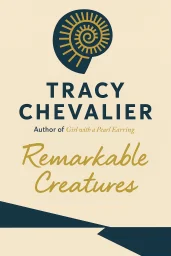
Remarkable Creatures
by Tracy Chevalier
