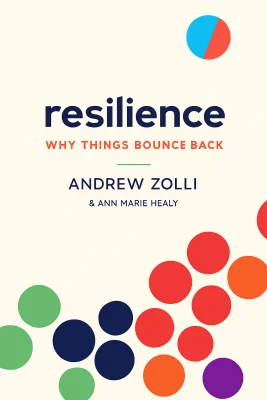
Resilience
Why Things Bounce Back
Categories
Business, Nonfiction, Self Help, Psychology, Science, Leadership, Audiobook, Sociology, Social Science, Cultural
Content Type
Book
Binding
Hardcover
Year
2012
Publisher
Free Press
Language
English
ISBN13
9781451683806
File Download
PDF | EPUB
Resilience Plot Summary
Introduction
# Resilience in Crisis: Stories of Adaptation and Recovery On January 12, 2010, at 4:53 PM local time, a catastrophic earthquake struck Haiti, reducing much of Port-au-Prince to rubble within thirty-five seconds. As buildings collapsed and communication networks failed, traditional disaster response systems found themselves paralyzed. Yet within hours, something extraordinary began to emerge from the chaos. Thousands of miles away, in dormitories and coffee shops across the globe, volunteers who had never set foot in Haiti began organizing the largest crowdsourced rescue operation in history. Using nothing but laptops and an urgent sense of shared humanity, they transformed desperate text messages from survivors into life-saving maps that guided rescue teams to people trapped beneath the debris. This remarkable story captures the essence of resilience in our interconnected age. In a world where distant events can cascade through hidden networks to create local catastrophes, where the systems we depend on can appear robust one moment and collapse the next, we discover that our greatest strength often lies not in rigid structures or perfect planning, but in our capacity to adapt, connect, and transform crisis into opportunity. Through stories spanning financial markets and rainforests, urban violence and natural disasters, this exploration reveals how individuals, communities, and entire systems develop the ability to bend without breaking, to find hope within hardship, and to emerge stronger from the trials that test us most severely.
Chapter 1: When Cooperation Fails: The Lehman Brothers Crisis
The mahogany-paneled conference room at the Federal Reserve Bank of New York had witnessed many tense moments in its history, but nothing quite like the weekend of September 13-14, 2008. Treasury Secretary Henry Paulson paced before an assembly of the most powerful figures in American finance, their faces grim as they contemplated the unthinkable. Lehman Brothers, a 158-year-old investment bank that had survived the Civil War, two World Wars, and the Great Depression, was hours away from collapse. The solution seemed obvious to everyone in the room: pool their resources, share the losses, and prevent a catastrophe that would devastate the global economy. Yet as the hours ticked by, cooperation proved maddeningly elusive. Each CEO understood intellectually that Lehman's failure would trigger a cascade of destruction through the interconnected web of modern finance. They knew their own institutions held billions in Lehman debt, that their trading relationships were so intertwined that one firm's collapse could topple them all like dominoes. But knowing and acting are different things entirely. Bank of America's Ken Lewis worried about overpaying for damaged goods. JPMorgan's Jamie Dimon questioned whether the government would truly allow such a massive failure. Barclays demanded guarantees that the American banks refused to provide. The neuroscience of trust offers insight into this tragic failure of collective action. When we cooperate with others, our brains release oxytocin, the same hormone that bonds parents to children and creates the warm feeling of social connection. But oxytocin has a darker side: while it increases generosity toward members of our own group, it can amplify suspicion and hostility toward outsiders. In that conference room, the very competitive dynamics that had driven these men to the pinnacle of their industry now prevented them from seeing beyond tribal boundaries to their shared fate. When the weekend ended without agreement, Lehman Brothers filed for bankruptcy, sending shockwaves through global markets and triggering the worst financial crisis since the Great Depression. The failure wasn't ultimately about complex derivatives or regulatory oversight, though both played their roles. It was about the human inability to transcend self-interest when cooperation matters most. In our interconnected world, individual rationality can lead to collective catastrophe, revealing how even the most sophisticated systems remain vulnerable to the ancient tensions between competition and collaboration that shape human nature itself.
Chapter 2: Rebuilding from Scratch: Borneo's Forest Restoration
Willie Smits stood in what had once been one of Earth's most biodiverse ecosystems, now reduced to a moonscape of red earth and scattered stumps. The Indonesian rainforest stretched endlessly in every direction, but where ancient trees had once created a cathedral of green, only devastation remained. Palm oil plantations had devoured millions of acres, leaving behind ecological destruction and displaced communities of both humans and wildlife. Most conservationists would have seen only irreversible loss, but Smits envisioned something unprecedented: rebuilding a complex rainforest ecosystem from nothing, creating not just environmental restoration but sustainable prosperity for local communities. The challenge seemed impossible. Rainforests are among the most complex systems on Earth, with thousands of species existing in delicate interdependence that scientists are only beginning to understand. You cannot simply plant trees and expect a forest to emerge; you must recreate the intricate web of relationships between soil microorganisms, pioneer species, canopy trees, and countless forms of wildlife. Smits began by studying the degraded soil, identifying which nutrients had been depleted and which beneficial bacteria and fungi had been destroyed. Then he carefully selected pioneer species that could survive in harsh conditions while preparing the ground for more sensitive plants. His project, Samboja Lestari, became a living laboratory of regeneration. Working with local communities, Smits planted over 1,800 different species of trees, creating multiple layers of forest canopy that would eventually support the return of displaced wildlife. Sugar palms were cultivated throughout the system, not just for their ecological benefits but because they could be tapped for ethanol production, providing sustainable income for local families. The project even included facilities for rehabilitating orphaned orangutans, giving these endangered primates a chance to return to their natural habitat as the forest recovered around them. Within just a few years, the transformation was remarkable. Rainfall increased by thirty percent as the growing forest began to influence local weather patterns. Temperatures dropped, humidity rose, and the red earth gradually disappeared under a carpet of green. Wildlife began returning in waves—first insects and birds, then larger mammals drawn by the abundance of food and shelter. The restoration had created positive feedback loops where each success made the next stage of recovery more likely, demonstrating that resilience isn't just about bouncing back from damage but about consciously designing systems that can regenerate and adapt, creating conditions where both nature and human communities can flourish together in mutual support.
Chapter 3: The Mind's Power to Heal: Overcoming Childhood Trauma
In the spring of 1945, as Allied forces liberated concentration camps across Europe, they discovered among the survivors six young children whose story would revolutionize our understanding of human resilience. These children, all under four years old, had somehow survived Theresienstadt concentration camp together, forming bonds that sustained them through unimaginable horror. They had no memory of parents, no experience of normal family life, and had witnessed atrocities that would haunt adults for decades. When they were brought to Anna Freud's reception center in England, experts predicted they would be permanently damaged by their experiences, scarred beyond any hope of normal development. What Anna Freud observed defied every expectation. Rather than being broken by trauma, the children had created their own family structure of extraordinary emotional sophistication. They shared food without being asked, comforted each other during nightmares, and showed remarkable empathy in their daily interactions. The older children naturally cared for the younger ones, while everyone contributed to the group's survival and wellbeing. They had transformed their shared suffering into shared strength, building relationships that provided the security and love that the adult world had failed to offer. Follow-up studies conducted decades later revealed even more surprising findings. These children, who had experienced humanity's darkest cruelty in their earliest years, had grown into remarkably healthy adults. They formed loving marriages, pursued successful careers, and showed no higher rates of mental illness than the general population. Many dedicated their lives to helping others, becoming teachers, social workers, and counselors who brought unusual depth of compassion to their work. Their early trauma, rather than destroying their capacity for connection, seemed to have forged an extraordinary ability to recognize suffering in others and respond with healing presence. This story transformed psychology's understanding of human resilience, revealing that the mind possesses remarkable powers of adaptation and recovery that we are only beginning to comprehend. The children's survival wasn't simply about individual strength—it was about their ability to create meaning and connection even in circumstances designed to destroy both. They had discovered that resilience emerges not from avoiding pain but from finding ways to transform suffering into wisdom, isolation into community, and despair into hope. Their legacy teaches us that even the most devastating experiences can become sources of strength when we learn to weave them into stories of growth and renewal rather than defeat and limitation.
Chapter 4: Crowdsourced Response: Haiti's Digital Rescue Network
When Patrick Meier received an urgent email asking if he wanted to help map the Haiti earthquake disaster, he was sitting in a cramped apartment in Somerville, Massachusetts, surrounded by graduate school textbooks and empty coffee cups. The request seemed almost absurd: could a handful of students really make a difference in a catastrophe that had killed hundreds of thousands and left millions homeless? Yet within hours of saying yes, Meier found himself at the center of the most ambitious crowdsourced crisis response in history, coordinating volunteers across six continents in a race against time to save lives buried beneath the rubble. The challenge was staggering in its complexity. Thousands of desperate text messages were pouring in from Haiti to the short code 4636, written in Kreyol and referencing street names that meant nothing to volunteers thousands of miles away. Survivors trapped under collapsed buildings were sending GPS coordinates and pleas for help to anyone who might be listening, but traditional disaster response systems had been overwhelmed within hours of the earthquake. How could scattered volunteers with no formal training possibly process this flood of information and turn it into actionable intelligence for rescue teams on the ground? The answer emerged through the spontaneous self-organization of a global network united by shared purpose. Students at Tufts University established operations centers that connected seamlessly with similar hubs in Geneva, London, and Washington D.C. Haitian expatriates in Montreal and Miami provided crucial translation services, while tech volunteers developed new protocols for processing and mapping urgent needs in real time. Each person contributed their unique skills—some spoke Kreyol, others knew Port-au-Prince geography, still others had expertise in mapping software and database management. Within days, this improvised network was processing thousands of messages per hour, translating them from Kreyol to English and plotting them on interactive maps that rescue teams could access instantly from their smartphones. When the U.S. Marines and Coast Guard began using these crowdsourced maps to guide their operations, they discovered that the information was often more current and detailed than anything their own intelligence systems could provide. Mission 4636 saved countless lives while pioneering entirely new approaches to disaster response, demonstrating that in our hyperconnected world, some of our greatest strengths emerge not from formal institutions but from the remarkable capacity of ordinary people to self-organize around shared challenges, transforming individual compassion into collective action that transcends every boundary of geography, culture, and expertise.
Chapter 5: Unintended Consequences: Bangladesh's Poisoned Wells
In the 1970s, Bangladesh faced a water crisis of heartbreaking proportions. Nearly a quarter million people died each year from waterborne diseases like cholera and typhoid, victims of contaminated surface water that carried deadly pathogens through crowded communities. UNICEF launched what seemed like a perfect solution: drilling millions of tube wells that would tap into clean groundwater far below the contaminated surface. The technology was simple, affordable, and effective. For two decades, the program appeared to be an unqualified triumph of development engineering, with child mortality rates plummeting as communities gained access to safe water. The tube wells became symbols of progress and prosperity throughout rural Bangladesh. Families took pride in their wells, often including them in marriage dowries as signs of good fortune and social status. By the late 1990s, over ten million wells had been installed, surpassing every goal and providing clean water to eighty percent of the population. Development experts celebrated Bangladesh as a model for the rest of the developing world, proof that simple technology could solve complex problems when deployed with sufficient scale and commitment. But in the early 2000s, a horrifying discovery shattered this success story. The groundwater that had seemed so pure was actually contaminated with arsenic, a colorless and odorless poison that causes skin lesions, organ damage, and cancer. Millions of Bangladeshis had been slowly poisoning themselves with every glass of water they drank. The World Health Organization called it "the largest mass poisoning of a population in history." The very solution that had saved so many lives from immediate threats was now condemning them to a slower, more insidious death. The response to this crisis revealed how technical solutions can fail when they ignore the complex social and cultural systems in which they operate. Officials painted contaminated wells red and safe wells green, assuming this simple color-coding would solve the problem. But they failed to consider that women and girls, who were responsible for collecting water, faced cultural restrictions on where they could travel. Many safe wells were located in areas that social norms made inaccessible, forcing families to continue using contaminated sources. The story of Bangladesh's wells serves as a sobering reminder that resilience cannot be engineered from the outside but must emerge from within communities themselves, honoring both their immediate needs and their deeper wisdom about how to live sustainably in their particular place and time.
Chapter 6: Violence as Contagion: Chicago's Street Intervention
On Chicago's South Side, Ameena Matthews walks streets where gunshots punctuate the night like a deadly percussion, where young men carry weapons as routinely as cell phones, and where mothers keep their children indoors after dark. As a violence interrupter for CeaseFire, Matthews brings an unusual perspective to her work: she understands that violence spreads through communities like an infectious disease, and like any epidemic, it can be interrupted and ultimately stopped through the right kind of intervention at the right moment in time. The program was founded by Gary Slutkin, an epidemiologist who had spent years fighting diseases like AIDS and tuberculosis in Africa. When he returned to Chicago, he was struck by how violence seemed to follow the same patterns as the epidemics he had studied abroad. It spread through social networks, clustered in certain neighborhoods, and created cycles of retaliation that could persist for generations. Traditional approaches focused on punishment after violence had already occurred, but Slutkin realized that violence could be prevented by interrupting its transmission before it turned deadly. CeaseFire's strategy operates on three interconnected levels. Violence interrupters like Matthews—often former gang members with street credibility—identify conflicts before they explode and mediate between opposing groups. These men and women have the respect and relationships necessary to talk someone down from committing violence, offering face-saving alternatives that allow everyone to walk away with their dignity intact. Outreach workers provide ongoing support to high-risk individuals, helping them navigate away from situations that might trigger violence. Finally, the program works to change community norms through public events and campaigns that make violence socially unacceptable. The results have been remarkable. In neighborhoods where CeaseFire operates, shootings have dropped by 40 to 67 percent, with some areas experiencing their first murder-free months in decades. The program has demonstrated that violence, like disease, responds to public health interventions that address root causes rather than simply treating symptoms after damage has been done. By understanding violence as contagious behavior that spreads through social networks, CeaseFire has developed tools for building community immunity against its spread, showing how resilience can be cultivated at the grassroots level through interventions that strengthen social bonds and transform cultural norms from within.
Chapter 7: Bridging Worlds: Palau's Conservation Leaders
In the crystal-clear waters surrounding Palau, a small island nation in the western Pacific, Noah Idechong faced a challenge that seemed to pit the past against the future. As the country's chief marine conservation officer, he watched traditional fishing practices collide with modern economic pressures, threatening both the pristine coral reefs that made Palau famous and the cultural heritage that gave its people their identity. Foreign tourists came seeking underwater paradises, while local fishermen struggled to make a living from increasingly depleted waters. Ancient conservation practices had been abandoned in favor of market-driven exploitation, and the very diversity that made Palau special was disappearing. Idechong understood that neither pure traditionalism nor unrestricted modernization would work. Instead, he began the patient work of weaving together the best of both worlds, creating what he called "mirror legislation" that gave legal force to traditional conservation practices while incorporating modern scientific knowledge. When village chiefs wanted to impose a bul—a traditional moratorium on fishing in certain areas—Idechong helped them navigate contemporary legal systems to make their decisions enforceable. When marine biologists brought new research about coral reef ecosystems, he ensured that local fishermen were involved in the studies and that their traditional knowledge was respected and incorporated. The key to Idechong's success was his ability to serve as a translator between different worlds of knowledge and experience. He spoke the language of government bureaucracy and international conservation, but he also understood the cultural values and practical needs of fishing communities. He brought together marine biologists and village elders, creating spaces where scientific research and traditional wisdom could inform each other. When presenting research findings to community leaders, he ensured that young Palauan scientists took the lead, allowing for the kind of respectful dialogue that Palauan culture required. Over time, this patient bridge-building transformed Palau's entire approach to conservation. Traditional no-take areas were legally protected while also being economically supported through green fees paid by tourists. Fishermen became tour guides and boat operators, earning more money from showing fish to divers than they ever could from catching them. The marine ecosystem began to recover dramatically, supporting both biodiversity and sustainable economic development. Idechong's story illustrates the crucial role of translational leaders in building resilient communities—individuals who work horizontally across different groups and vertically across different levels of organization, creating networks of relationships that can adapt to changing circumstances while honoring both heritage and hope.
Summary
These stories reveal a profound truth about resilience in our interconnected age: it emerges not from rigid strength or perfect planning, but from the dynamic interplay between individual courage and collective wisdom, between stability and adaptability, between honoring the past and embracing change. From the financial towers of Wall Street to the coral reefs of the Pacific, from the streets of Chicago to the rainforests of Borneo, we see that the systems which survive and thrive are those that can sense emerging threats, adapt their structures, and maintain their essential purpose even as their environment transforms around them. The most powerful lesson emerging from these diverse experiences is that resilience cannot be imposed from outside but must be cultivated from within. Whether rebuilding forests, interrupting violence, or responding to natural disasters, lasting solutions emerge when communities develop their own capacity to sense change, mobilize resources, and coordinate responses across traditional boundaries. This requires not just strong institutions or advanced technologies, but the social bonds, cultural wisdom, and collaborative spirit that enable people to work together toward common goals. In a world of accelerating change and increasing uncertainty, our greatest source of hope lies not in building walls against disruption, but in developing the adaptive capacity to transform challenges into opportunities for growth, connection, and renewal.
Best Quote
“Eight weeks of practice in meditation, even with those with no previous experience, was enough reconfigure the brains of participants. The gray matter which fuels worry shrank, and the area associated with healthy thought awareness group.” ― Andrew Zolli, Resilience: Why Things Bounce Back
Review Summary
Strengths: The book presents powerful and impactful ideas that have influenced the reader's holistic thinking approach. It provides significant concepts related to resilience, which the reader finds valuable for professional application, particularly in the context of water resource management. Weaknesses: The writing is criticized for being difficult to follow, with excessive jargon and inadequate explanation of central concepts. The use of large block quotes without context or clear attribution is noted as a major flaw. The connection between anecdotes and the central theme of resilience is described as loose and haphazard. Overall: The reader expresses disappointment with the book's writing quality but acknowledges the importance of its ideas. Despite its flaws, the book is recommended for its thought-provoking content, suggesting a need for further discussion to fully utilize its concepts.
About Author

Andrew Zolli
Zolli explores the intricate connections between innovation, social change, and resilience, offering a transformative approach to global challenges. His work centers on resilience thinking, a concept that delves into how individuals and systems can persist and thrive amid disruptions. This focus is evident in his roles, such as serving as Chief Impact Officer at Planet, where he leverages satellite imagery to address issues like climate change and disaster response. His impact extends through his leadership at PopTech, a network fostering collaboration among diverse innovators to tackle pressing global issues.\n\nHis acclaimed book, "Resilience: Why Things Bounce Back," co-authored with Ann Marie Healy, embodies his exploration of resilience across varied contexts, from coral reefs to urban landscapes. Zolli's career is marked by an ability to synthesize complex ideas into actionable strategies that benefit communities and organizations. Readers and practitioners in fields such as public health, environmental science, and urban planning gain valuable insights from his work, which combines practical solutions with forward-thinking perspectives.\n\nThis bio highlights Zolli's notable affiliations, including his fellowship with the National Geographic Society and advisory roles with organizations like OneConcern and CureViolence. His contributions to resilience and innovation are recognized in media outlets such as the New York Times and PBS, underscoring his status as a thought leader who not only theorizes but also implements impactful solutions.
Read moreDownload PDF & EPUB
To save this Black List summary for later, download the free PDF and EPUB. You can print it out, or read offline at your convenience.
Resilience
by Andrew Zolli
