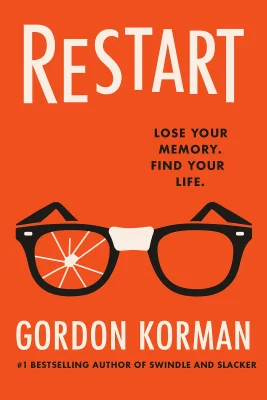
Restart
Categories
Fiction, Audiobook, Young Adult, School, Humor, Contemporary, Realistic Fiction, Childrens, Middle Grade, Friendship
Content Type
Book
Binding
Hardcover
Year
2017
Publisher
Scholastic Press
Language
English
ISBN13
9781338053777
File Download
PDF | EPUB
Restart Plot Summary
Introduction
The roof shingles are slick beneath Chase Ambrose's feet as he peers down at his neighbor's sunroom, phone in hand, ready to capture another humiliating moment. The Medal of Honor gleams in his pocket—stolen, hidden, forgotten by everyone except the old war hero who can no longer remember earning it. One moment of careless laughter, one hand reaching for his phone, and Chase is tumbling through space, the world spinning into darkness. When he wakes in the hospital four days later, thirteen years of memories have vanished like smoke. The face in the mirror belongs to a stranger. His own mother is unrecognizable. The trophies lining his bedroom walls celebrate victories he cannot recall, and the fear in other students' eyes hints at a reputation he never knew he'd built. But amnesia, Chase discovers, can be more than just loss—it can be the ultimate second chance.
Chapter 1: The Fall and Awakening: A Clean Slate
The fluorescent lights burn like fire against Chase's retinas as consciousness returns. Voices swirl around him—excited, tearful, disbelieving. A woman with dark-rimmed glasses clutches his hand, tears streaming down her face. "It's me," she whispers. "Mom." The word means nothing. This stranger's face, the sterile hospital room, even his own reflection in the bedside mirror—everything exists in a void where his memory should be. Dr. Cooperman explains the condition with clinical precision: acute retrograde amnesia, caused by traumatic brain injury. Thirteen years of life, erased. Chase's father arrives in a cloud of cologne and bravado, his booming voice filling the room with stories of championship games and glory days. The framed photograph on the principal's wall tells the tale—father and son, champions separated by decades, united by triumph. But when four-year-old Helene shrinks away from Chase's gentle touch, her terror speaks to a darker truth. At home, Chase's bedroom walls showcase a stranger's achievements. Newspaper clippings chronicle victories he cannot remember, trophies gleam with hollow meaning. His cracked phone reveals a final image—three boys grinning wildly around a destroyed jack-o'-lantern, their faces lit with cruel satisfaction. The question haunts him: what kind of person was he? The medical miracle that saved his life has become something more complex—a complete erasure of the boy he used to be.
Chapter 2: Discovering the Shadow Self: The Bully He Was
School becomes an archeological dig through his buried reputation. Kids scatter when Chase approaches, conversations die mid-sentence, and teachers react to his homework submissions with shocked amazement. The past seeps through in fragments—a scar across Brendan Espinoza's eyebrow, earned from Chase's casual shove at a water fountain. Three stitches, the boy explains, but the real wound was the indifference that followed. The court papers hidden in his mother's desk reveal the extent of his crimes: community service for planting cherry bombs in a piano during Joel Weber's performance. The judge's words burn across the page—pattern of intimidation, malicious behavior, pathway to criminality. Chase reads them with the horror of a stranger discovering evidence of his own capacity for evil. Aaron Hakimian and Bear Bratsky, his supposed best friends, circle him like predators testing wounded prey. Their loyalty comes with expectations, their friendship with demands for the old Chase to resurface. They speak of the "fun" they had tormenting Joel Weber, the satisfaction of watching their victim break under pressure. The memory gaps become blessings when Chase realizes what brutality they might contain. At Portland Street Assisted Living, where they serve court-mandated community service, Chase encounters the residents with fresh eyes. While Aaron and Bear mock the elderly, stealing cookies and pocketing tips from confused patients, Chase finds himself drawn to their stories. Mrs. Swanson offers twenty dollars for help rearranging furniture, and Bear snatches it with predatory glee. Chase returns the money later, slipping it under her door in shame. In room 121, he meets Julius Solway—Medal of Honor recipient, Korean War hero, the crankiest man in the building. Their unlikely friendship begins with war stories and grows into something deeper. But even here, shadows of his former self lurk. The empty display case in Solway's closet tells a story Chase isn't ready to remember.
Chapter 3: Building New Bridges: Finding Friends in Former Victims
Brendan Espinoza represents everything the old Chase despised—small, nerdy, ambitious in all the wrong ways. When the video club president needs help filming his latest YouTube masterpiece, desperation leads him to the most unlikely assistant. How to Clean Your Tricycle becomes an epic of comedy and courage as Brendan rides a children's bike through an automated car wash, emerging as a dripping, laughing legend. The collaboration reveals unexpected talents. Chase's steady camera work and creative suggestions transform Brendan's chaotic vision into viral gold. More importantly, it opens a door to the video club—a world where intelligence trumps intimidation, where creativity matters more than cruelty. Ms. DeLeo welcomes him despite the other members' skepticism, and slowly, Chase begins to build something he never had: genuine friendships. Shoshanna Weber embodies righteous fury in its purest form. Her brother Joel's exile to boarding school burns in her eyes, and Chase represents everything she despises about injustice unchecked. Yet when she needs a partner for the National Video Journalism Contest, pragmatism wins over principle. Their subject is Julius Solway, whose stories of war and loss create something beautiful between them—a shared purpose that transcends their history. Working together on Warrior, they discover an unexpected chemistry. Shoshanna's interviewing skills draw out Solway's hidden warmth, while Chase's technical expertise captures moments of rare vulnerability. The cranky war hero transforms under their attention, standing straighter, smiling more, finding purpose in sharing his memories. But beneath the surface, Chase carries the weight of a secret that threatens everything they're building. The video club becomes his sanctuary, a place where the new Chase can flourish without the shadows of the old. Yet acceptance comes with a price—the constant fear that his true nature will resurface when tested.
Chapter 4: Caught Between Worlds: Old Friends vs. New Identity
The cafeteria becomes a battleground of divided loyalties. Chase alternates between the football table, where Aaron and Bear hold court with increasingly suspicious glances, and the video club corner, where acceptance comes with cautious hope. His former teammates can't understand his betrayal of their code, while his new friends wait for proof that change is possible. When the football team corners Brendan after a pep rally, using him as a human pinball, Chase's response surprises everyone—including himself. He slams Joey Petronus against the wall with explosive violence, the old instincts surfacing like muscle memory. But this time, the aggression serves justice rather than cruelty. The intervention saves Brendan but costs Chase his standing with both groups. Aaron and Bear's patience finally snaps at Portland Street. Chase has become something they can't control—a wild card who might expose their secrets or, worse, abandon them entirely. During what should be routine community service, they corner him on the practice field. Bear's tackle sends Chase sprawling, and in that moment of violence, the truth spills out like blood from a wound. The Medal of Honor wasn't lost or misplaced. Chase stole it from Julius Solway's room, his sticky fingers drawn to the ultimate prize. The memory crashes back with sickening clarity—the weight of the medal in his palm, the triangular case hidden behind Solway's golf clubs, the casual cruelty of stealing a hero's greatest honor. Aaron and Bear want their cut of the profits, their share of the betrayal that defined their friendship. Chase's world tilts on its axis. Every moment spent with Solway becomes tainted, every story shared now carries the weight of his theft. The old Chase lurks just beneath the surface, and this revelation proves he was worse than anyone imagined—not just a bully, but a thief who preyed on the most vulnerable.
Chapter 5: The Medal of Honor: Confronting His Darkest Action
The loose cedar shake on his family's roof holds more than wood and nails—it holds the proof of Chase's deepest shame. Climbing back to the scene of his accident, driven by recovered memories and crushing guilt, he finds Julius Solway's Medal of Honor wrapped in its star-spangled ribbon. The five-pointed star catches the light like an accusation, beautiful and damning in equal measure. The memory floods back completely now. Chase's fall wasn't random misfortune but karmic justice—he was photographing his elderly neighbor doing yoga when gravity claimed its due. The medal had been his secret, his prize, his pathway to easy money. But amnesia had scattered his plans like leaves, leaving only the evidence of his crime hidden behind rotting wood. At Portland Street, Chase's attempt to return the medal secretly goes catastrophically wrong. Aaron and Bear, desperate to claim their share, pursue him through the corridors like hunting dogs. The vacuum cleaner becomes an unlikely safe, swallowing the medal into its dusty depths as Chase tries to protect what he's stolen from those who helped him steal it. The fight erupts in the hallway—Chase clutching the vacuum while Aaron and Bear rain blows on his head and shoulders. The video club arrives like unlikely cavalry, Brendan throwing himself at Bear despite being outmatched by forty pounds. Kimberly's scream pierces the chaos as Shoshanna tries to pull them apart. Julius Solway, moving without his walker, sends it crashing into the melee like a guided missile. When the dust settles and the medal emerges from the vacuum bag, gray with lint but gleaming with restored honor, Chase faces his greatest test. He could lie, could blame Aaron and Bear, could maintain the fiction that he's changed completely. Instead, he tells the truth—accepting responsibility for theft, betrayal, and the corruption of everything he's tried to become.
Chapter 6: The Reckoning: Facing Justice and Truth
The courthouse steps feel like a march to execution. Chase has been here before—the recovered memory shows him entering with Aaron and Bear, angry and defiant, certain that their status as athletes would shield them from consequence. This time, humility replaces arrogance, and genuine remorse fills the space where entitlement once lived. The gallery holds an impossible sight—nearly everyone Chase knows has come to support him. Video club members sit beside football players, teachers share rows with parents, and the Weber family occupies the front row despite having every reason to want his destruction. The boy who once terrorized half the school has somehow earned their forgiveness. Judge Garfinkle remembers him well. The warnings from their previous encounter hang in the air like storm clouds, and Chase's admission of guilt seems to seal his fate. Character witnesses parade forward—his mother's tears, his father's unexpected vulnerability, Dr. Cooperman's medical explanations of brain trauma and personality change. Then Shoshanna takes the stand, and everyone holds their breath. Her testimony surprises no one more than Chase himself. Yes, he's guilty. Yes, he's done terrible things. But he's also trying to change, and sometimes that effort counts more than perfection. Her measured words carry more weight than any passionate defense—if Shoshanna Weber can find hope in Chase Ambrose, perhaps redemption is possible. When Judge Garfinkle asks for his guarantee that the old Chase is gone forever, the answer should be easy. Salvation waits in a simple lie, freedom in a reassuring fiction. But Chase has learned that true change requires absolute honesty, even when the truth condemns him. He cannot promise what he doesn't know, cannot guarantee what remains uncertain. The admission seems to seal his fate—until Julius Solway shuffles through the courtroom doors.
Chapter 7: Second Chances: A Community Comes Together
The Medal of Honor gleams against Julius Solway's suit as he confronts the judge with righteous indignation. His lie is transparent—Chase never borrowed the medal, never had permission to take it. But the old soldier's deception serves a higher truth: some people deserve second chances, and some acts of courage happen long after the original crime. The courtroom erupts in celebration as the charges dissolve. Chase finds himself lifted on the shoulders of teammates who once shunned him, embraced by video club members who once feared him, forgiven by a community that has chosen hope over vengeance. The transformation is complete not because he's perfect, but because he's proven capable of growth. Shoshanna's hug surprises them both, Joel's laughter marks the end of terror, and even Brendan's swollen jaw can't dim his smile. The boy who fell from a roof in disgrace rises in a courtroom on the strength of human compassion. Julius Solway's medal gleams not just with military honor, but with the recognition that heroes sometimes wear the most unlikely faces. Back at school, Chase navigates a changed landscape. Aaron and Bear, exposed as the architects of cruelty they always were, find themselves isolated and irrelevant. The video club thrives with its returned member, their project Warrior claiming first prize in the national contest. Julius Solway becomes their unofficial mascot, sharing stories that span decades and teaching lessons that transcend any curriculum. The football team finds their rhythm with their captain's return, but Chase discovers that victory feels different now. The cheers are sweeter when earned through teamwork rather than domination, the satisfaction deeper when built on respect rather than fear. His talent remains unchanged, but his character has been reforged in the crucible of consequence and choice.
Summary
Chase Ambrose's fall from grace became, quite literally, his salvation. The roof that should have ended his story instead provided the blank slate he never knew he needed. Thirteen years of memories vanished in an instant, taking with them the accumulated cruelty, casual violence, and entitled arrogance that had defined his existence. What remained was not emptiness, but possibility—the chance to discover who he might become when freed from who he had been. The journey back to humanity required more than medical recovery. It demanded the courage to face his worst actions, the humility to accept responsibility for crimes he couldn't remember committing, and the wisdom to understand that change is measured not in perfection, but in the daily choice to do better. Through the eyes of his former victims, Chase learned that redemption is not a destination but a direction—a commitment to growth that must be renewed with each decision, each interaction, each moment of moral testing. In the end, the boy who terrorized Hiawassee Middle School became its most unlikely example of hope. His story proves that identity is not fixed fate but ongoing choice, that the worst among us might harbor the potential for the greatest transformation. Sometimes it takes losing everything—even yourself—to discover what you're truly capable of becoming.
Best Quote
“This is an awful thing that’s happened to you, but it’s also presenting you with a rare opportunity. You have the chance to rebuild yourself from the ground up, to make a completely fresh start.” ― Gordon Korman, Restart
Review Summary
Strengths: The review highlights the book's engaging storytelling, strong plot, and the ability to appeal to both young adults and adults. It praises the book for delivering a lesson-oriented tale without being preachy and maintaining interest throughout. The character development of Chase, who transforms from a bully to someone reevaluating his life after an accident, is noted as a compelling aspect. Overall: The reviewer expresses a highly positive sentiment, recommending the book as an excellent read. They appreciate the happy ending and the book's suitability for middle-grade readers, awarding it a high rating. The book is seen as a valuable addition to youth literature, particularly for those interested in character growth and redemption stories.
About Author

Gordon Korman
Korman explores the complexities of youth through engaging narratives that blend humor, adventure, and suspense. His career began serendipitously in seventh grade when a school project evolved into his first book, "This Can’t Be Happening at Macdonald Hall", published when he was only 14. This early success foreshadowed a prolific writing journey, during which he authored over 100 books and captivated a global audience with stories that have been translated into more than 30 languages. While initially drawing from his own school experiences for inspiration, Korman expanded his thematic repertoire to include suspense and adventure, as seen in his "Island Trilogy" and the crime-focused "Son of the Mob" series.\n\nHis writing method often involves thorough research, which ensures authenticity and depth in diverse topics such as survival challenges and complex social issues. Korman's ability to craft relatable young protagonists navigating everyday school life and extraordinary adventures has made his books especially appealing to both reluctant and avid readers. His bio reveals a talent for connecting with young audiences, making literature accessible and enjoyable while subtly weaving in themes of friendship and teamwork.\n\nReaders benefit from Korman’s vivid storytelling, which not only entertains but also encourages exploration of personal growth and moral dilemmas. Notable works like the "Swindle" series and contributions to "The 39 Clues" series further showcase his versatility and skill in keeping readers engaged. Over his career, Korman's books have consistently resonated with audiences, earning him spots on "The New York Times" bestseller list and reinforcing his impact on children's and young adult literature.
Read moreDownload PDF & EPUB
To save this Black List summary for later, download the free PDF and EPUB. You can print it out, or read offline at your convenience.
Restart
by Gordon Korman
