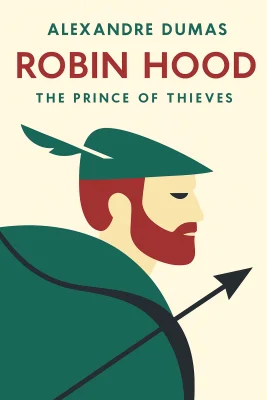
Robin Hood
The Prince of Thieves
Categories
Fiction, Classics, Historical Fiction, Fantasy, Literature, Historical, France, Novels, French Literature, Adventure
Content Type
Book
Binding
Hardcover
Year
2001
Publisher
Neuer Kaiser
Language
English
ISBN13
9783704313171
File Download
PDF | EPUB
Robin Hood Plot Summary
Introduction
# The Forest Crown: A Saxon Earl's Return to Honor Blood pooled beneath the dying forester's lips as he clutched Robin Hood's weathered hands, his final confession shattering twenty years of lies. The young archer who believed himself Gilbert Head's son was about to learn the truth that would reshape England itself—he was the rightful Earl of Huntingdon, stolen as an infant from his murdered father's castle and hidden in Sherwood's depths. In the year 1162, when Norman boots crushed Saxon necks and Baron Fitz-Alwine's cruelty knew no bounds, destiny was about to reclaim what had been stolen. The ancient oaks whispered secrets of royal blood as Robin's supernatural archery skills began to make sense. Every impossible shot, every act of instinctive nobility, every moment when common folk looked at him and saw something more than a forester's son—all of it pointed to a heritage written in his very bones. But knowledge comes with a price, and the usurpers who had murdered his father and stolen his birthright would stop at nothing to eliminate the threat of his return. In Sherwood Forest, where love and vengeance intertwined like thorns around a rose, the lost earl was about to begin his bloody journey home.
Chapter 1: The Hidden Earl: Blood and Birthright Revealed
The cottage burned like a funeral pyre against the midnight sky, twenty years of memories turning to ash and ember. Robin Hood knelt beside Gilbert Head's broken body, the old forester's blood seeping into the earth that had sheltered them both. With his dying breath, Gilbert spoke the words that would shatter everything Robin thought he knew about himself. "You are not my son," the old man whispered, pressing a silver pendant into Robin's palm. "You are Robin of Huntingdon, rightful heir to lands stolen by Norman dogs." The seal bore the ancient arms of his house—a heritage denied, a birthright buried beneath two decades of humble lies. Margaret lay still beside the hearth where she had once sung lullabies, her gentle hands forever stilled by Norman swords. The woman who had raised him with such tender care had died protecting the secret of his noble blood. As flames consumed the only home he had ever known, something hardened in Robin's chest like iron cooling in a forge. Roland Ritzon had confessed it all before his death—how young Robert Fitzooth had been poisoned by his own uncle Philip, how the infant heir had been marked for death, how only Gilbert's courage had saved the child from assassins' blades. The current Earl of Huntingdon, the usurper who wore Robin's stolen title, had grown suspicious. His agents were already searching the forest, and when they found their quarry, they would show no mercy. Standing in the ruins of his childhood, Robin felt the weight of destiny settling on his shoulders like a crown of thorns. The boy who had lived content among the greenwood paths was gone forever, replaced by something far more dangerous. The rightful Earl of Huntingdon had awakened, and with him came a hunger for justice that would not be easily satisfied.
Chapter 2: Hearts in the Greenwood: Love Among the Ancient Oaks
Dawn broke crimson through Sherwood's canopy as Robin's arrow found its mark—not in a deer's heart, but through the hand of a scarred brigand who dared threaten travelers on the King's road. The assassin's scream echoed through the forest as he fled, leaving behind his intended victims and a mystery that would change everything. Allan Clare lowered his sword as Robin emerged from the shadows, the young archer's bearing so noble that even a knight found himself trusting this forest stranger. But it was Allan's sister who truly captured Robin's attention. When Marian threw back her hood, revealing dark eyes that sparkled with intelligence and courage, the master archer felt his world tilt beneath his feet. Her face was a perfect oval framed by raven-black hair, her smile radiant enough to light the entire forest. They spoke long into the night by the fire's glow, sharing stories of loss and dreams of better days. Marian's voice was soft but strong, like silk wrapped around steel, and when she laughed at his tales, Robin felt his heart skip like a stone across still water. Allan spoke of their father's death, of lands seized and titles stripped away for the crime of opposing Norman rule. Baron Fitz-Alwine had marked them for elimination, sending assassins to finish what political persecution had begun. In the greenwood's safety, surrounded by the scent of pine and the whisper of wind through leaves, these dispossessed nobles found something approaching hope. When bandits attacked their camp that evening, Marian stood her ground while others fled, a small dagger glinting in her grasp. Robin's arrows found their marks before the brigands could close distance, but it was her courage that truly impressed him. As he helped her to her feet, their fingers touched, and something passed between them that transcended words—a recognition of kindred spirits who shared a passion for justice and contempt for tyranny.
Chapter 3: Stone Walls and Iron Will: Captivity and Escape
The massive walls of Nottingham Castle loomed against the grey sky like the bones of some ancient beast, their stones slick with morning mist and the blood of countless victims. Within those walls, Baron Fitz-Alwine held court with the casual cruelty of a man who had never known consequence, his scarred features twisted by years of absolute power and the slow poison of unchecked rage. Robin Hood stood defiant in his chains, green eyes blazing with contempt for the tyrant who held him prisoner. The great hall reeked of fear and madness as the Baron paced before his captive like a caged wolf, demanding to know Allan Clare's whereabouts. Each threat met with silence or sardonic wit, each promise of torture answered with a cold smile that made the Baron's blood boil. The interrogation became a battle of wills between old tyrant and young archer. Here was a mere peasant boy who showed no fear, no submission, no proper respect for his betters. When Fitz-Alwine's rage finally reached fever pitch, he screamed for the deepest dungeon, for chains and darkness that would teach proper humility. In the cell's dank embrace, carved from living rock beneath the castle's foundations, Robin's fingers found rotted wooden bars weakened by years of dampness. They crumbled at his touch like his captors' authority. Freedom lay just beyond the castle walls, and with it the chance to rescue Allan Clare and win the heart of beautiful Marian. The moon was rising as Robin squeezed through the narrow window and dropped silently onto the ramparts. Behind him lay captivity and death, ahead waited love and adventure. The chapel bells chimed midnight as four shadows crept through sacred darkness—Robin leading the way, his bow strung and ready, while Lady Christabel, her maid, and young Halbert followed like ghosts through corridors of stone and shadow.
Chapter 4: Brotherhood of Outlaws: The Gathering of the Dispossessed
Deep in Sherwood's heart, where sunlight filtered through leaves like scattered gold coins, Robin Hood's hidden camp took shape among ancient stones that marked sacred ground. What had begun as a handful of desperate men fleeing Norman justice had grown into something approaching an army—Saxon yeomen and dispossessed nobles, poachers and priests, all united by hatred of Norman rule and faith in the young man who led them. Little John stood nearly seven feet tall, his quarterstaff thick as a man's arm and twice as deadly. The giant had challenged Robin to single combat on a fallen log spanning a rushing stream, and their battle had lasted hours before ending in mutual respect and lasting friendship. Will Scarlett's red hair blazed like fire in the dappled light as he practiced swordwork, his blade singing through morning air with lethal grace. Friar Tuck blessed their arrows with holy water and their ale with enthusiastic consumption, his round belly shaking with laughter at his own jokes. The jovial priest could crack skulls with his cherry-wood quarterstaff while reciting scripture, claiming to serve the Prince of Peace even as he waged war on Norman oppression. They lived by a code as old as the forest itself—take from the rich, give to the poor, and show mercy to those who deserved it. When Norman merchants traveled the forest roads, they found themselves invited to dine with Robin Hood, whether they wished it or not. The meal was always excellent, the company entertaining, and the bill presented afterward precisely calculated to their ability to pay. Each night brought new refugees to their hidden sanctuary—farmers whose crops had been seized, craftsmen whose shops had been burned, women whose husbands had been hanged for the crime of being Saxon. Robin welcomed them all, understanding that every Norman injustice was a gift that strengthened his cause and swelled his ranks. In the cave that served as their great hall, carved by Saxon hands centuries before, ancient symbols covered the walls like messages from the past, reminding them that they were not the first to choose freedom over safety.
Chapter 5: Arrows of Justice: War Against Norman Tyranny
Baron Fitz-Alwine paced the great hall of Nottingham Castle like a caged wolf, his boots echoing off stone walls hung with Norman banners that seemed to mock his growing impotence. Reports flooded in daily of Robin Hood's growing boldness—tax collectors robbed and left tied to trees with mocking messages pinned to their chests, supply wagons seized and their contents distributed to Saxon poor, his own soldiers found naked and humiliated on the King's road. The baron's rage had reached legendary proportions, his face purpling with fury as each new humiliation arrived with the dawn. Gold could not buy what he truly needed—the courage to enter Sherwood Forest, where shadows moved with Saxon purpose and every tree might hide an archer's bow. His men whispered of supernatural accuracy, of arrows that split other arrows, of a young lord who seemed touched by divine protection. King Henry himself had taken notice of the outlaw who dared claim the title Earl of Huntingdon. Royal messengers brought writs of outlawry sealed with the royal seal, declaring Robin Hood an enemy of the crown and placing a price on his head that would make any man rich. But the king's gold could not reach into Sherwood's depths, where Saxon loyalty ran deeper than Norman law. The common people whispered Robin's name in alehouses and market squares, their voices dropping to reverent murmurs when they spoke of the young lord who had chosen exile over submission. Ballads began to spread from village to village, telling of impossible shots and daring rescues, each verse adding another layer to the legend growing beyond any man's ability to control. In the forest's green cathedral, Robin's war against Norman tyranny took on the character of divine judgment. His arrows became instruments of justice, finding their marks with supernatural precision. When Sir Guy of Gisborne led a hundred men into Sherwood to claim the bounty on Robin's head, they emerged three days later on foot, stripped of weapons and dignity, bearing a message carved into their leader's forehead: "Compliments of Robin Hood."
Chapter 6: The Cathedral's Blood: Love's Defense and Vengeance
The wedding bells of Nottingham Cathedral rang out across the city like a death knell, their bronze voices carrying news that struck Robin's heart like a physical blow. Marian Clare was to marry Sir Guy of Gisborne, the baron's chosen champion, in a ceremony designed to cement Norman power and crush Saxon hope forever. The bride waited at the altar in white silk that might as well have been a burial shroud, her face pale but composed as she accepted her fate with Saxon dignity. Robin stood on the cathedral steps in grey dawn light, his bow strung and ready, watching Norman nobles file past in their finest silks and furs. Inside, incense burned like offerings to a cruel god while Marian prepared to sacrifice her happiness on the altar of political necessity. The ceremony began with all the pomp Baron Fitz-Alwine could muster, but it would end in chaos and bloodshed. When the priest asked if any man objected to this union, Robin's arrow took Sir Guy through the heart before the bridegroom could speak his vows. The Norman champion fell across the altar steps, his blood staining white marble like spilled wine, his dreams of dynasty dying with him on consecrated ground. "I object," Robin called out, his voice carrying clearly through the stunned silence. "I am Robin of Huntingdon, rightful Earl, and I claim this lady as my bride." Norman soldiers rushed toward him, but his men were already among the crowd, their bows drawn and arrows nocked, turning the house of God into a battlefield. The battle that followed was brief but decisive. Norman steel met Saxon yew, and the Saxons proved the stronger. Baron Fitz-Alwine fell with an arrow through his black heart, his reign of terror ending on the cathedral floor where he had planned to celebrate his greatest triumph. When the smoke cleared and the last Norman had fled or fallen, Robin knelt before Marian and offered her his hand, asking if she would have an outlaw for a husband. Her answer was a kiss that tasted of tears and triumph, sealing a bond that no Norman law could break.
Chapter 7: Crown's Mercy: From Outlaw to Earl Restored
Years passed like seasons in the forest, each bringing new challenges and deeper bonds among the outlaw band. Robin's legend grew beyond England's borders, inspiring rebels in distant lands to take up arms against their oppressors. But legends, like men, must eventually face their reckoning, and King Henry himself came to Sherwood at last—not with an army, but with a proposal that surprised even Robin Hood. The negotiation took place beneath the same oak where Robin had first kissed Marian, ancient branches spreading like a natural cathedral above king and outlaw. Henry had grown weary of the endless cycle of rebellion and repression, seeing in the outlaw earl a chance for something approaching peace. Robin's noble blood and popular support made him too valuable to destroy—better to make him an ally than leave him as an enemy. The king offered a full pardon and restoration of the Huntingdon lands in exchange for Robin's service to the crown. It was generous terms, but they came with a price—Robin would have to abandon his outlaw band and accept the very system he had spent years fighting. The forest held its breath as the young earl considered his answer. Robin's response came not in words but in the ancient gesture of a vassal accepting his lord's protection. He knelt before his king, not in submission but in recognition of political reality, rising as Earl of Huntingdon with all the rights and responsibilities that title carried. His first act was to demand justice for every Saxon who had suffered under Norman rule. The compromise that followed satisfied no one completely but gave everyone something they could live with. Robin kept his title and his lands, but also his responsibility to the common people who had followed him into exile. The outlaw band became his household guard, their forest camp transformed into a proper castle where Saxon and Norman could meet on equal terms. Marian became his countess, their love finally blessed by both church and crown, while Sherwood Forest remained their true kingdom—a place where justice wore Lincoln green and mercy flew on feathered shafts.
Summary
In the shadows of Sherwood Forest, destiny had carved its path with arrows of truth and blades of justice. Robin Hood, the lost Earl of Huntingdon, had discovered not only his noble heritage but something far more precious—a brotherhood forged in defiance of tyranny and tempered by love's pure flame. His bow had become the instrument of divine judgment, his band of outlaws the champions of England's oppressed, proving that some thrones cannot be stolen and some rights cannot be denied. The ancient oaks bore witness to a transformation that echoed through the centuries. What began as one man's quest for vengeance had become a legend of hope for the dispossessed, a reminder that even in the darkest times, justice could find its mark. Robin's arrows had done more than pierce Norman hearts—they had pierced the veil between myth and reality, creating something that would outlive kings and kingdoms. In the greenwood's depths, where the rightful earl had claimed his crown of leaves and shadows, the true meaning of nobility had been restored—not in blood or birthright, but in the courage to stand for those who could not stand for themselves.
Best Quote
“une chose qui doit être bien faite ne doit point se faire à la hâte.” ― Alexandre Dumas, Le prince des voleurs
Review Summary
Strengths: The review highlights the freshness of Alexandre Dumas' take on the Robin Hood legend, despite being written in 1863. It praises Dumas' skill in crafting rakish heroes, furious villains, and intricate plot twists. The unique backgrounds and connections of well-known characters like Robin, Marian, and Little John are particularly appreciated. The language is described as fun and poetic, adding to the book's charm. Weaknesses: The review notes that although some characters die, the violence is not heavily focused on, and action scenes are brief. Some outdated views on women are present, though Dumas counters them with more respectful opinions. Overall: The reader expresses a positive sentiment, appreciating the novel's engaging narrative and character development. The book is recommended for its unique take on a classic legend, despite minor criticisms.
About Author

Alexandre Dumas
Dumas reframes the adventure genre through his vivid storytelling and intricate plots that captivate readers with historical narratives imbued with action and intrigue. Known for crafting swashbuckling tales such as "The Three Musketeers" and "The Count of Monte Cristo," Dumas combines suspenseful pacing with grand themes of justice, loyalty, and revenge, making his books staples of world literature. While his literary career began in the theater, he swiftly transitioned to novels, capitalizing on the popularity of serialized storytelling. This method allowed him to reach vast audiences, while his partnership with Auguste Maquet added depth through meticulous research and historical accuracy.\n\nBeyond his literary contributions, Dumas engages with themes of racial identity and social justice, likely influenced by his mixed-race heritage and his father's legacy as a prominent general. Through his novel "Georges," Dumas reflects on issues of colonialism and identity, using his platform to address race and injustice. Readers gain not only from his thrilling narratives but also from the moral and philosophical questions he poses. Despite his enormous success, Dumas faced financial troubles due to his extravagant lifestyle, yet his prolific output remained unaffected, contributing to a rich legacy that continues to inspire adaptations across multiple media. This bio captures his essence as an author whose works are both entertaining and thought-provoking, securing his place as a towering figure in literary history.
Read moreDownload PDF & EPUB
To save this Black List summary for later, download the free PDF and EPUB. You can print it out, or read offline at your convenience.
Robin Hood
by Alexandre Dumas
