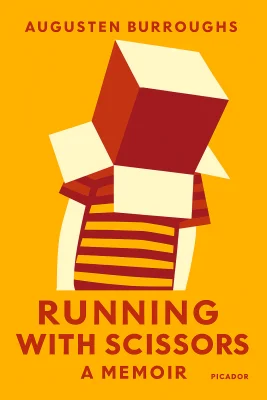
Running with Scissors
Categories
Nonfiction, Psychology, Biography, Memoir, Mental Health, Autobiography, Biography Memoir, Humor, Book Club, LGBT
Content Type
Book
Binding
Paperback
Year
2003
Publisher
Picador USA
Language
English
ASIN
031242227X
ISBN
031242227X
ISBN13
9780312422271
File Download
PDF | EPUB
Running with Scissors Plot Summary
Introduction
Growing up should come with certain guarantees: stability, protection, and adults who make sensible decisions. But what happens when the very people meant to provide safety become sources of chaos? What emerges when a child must navigate a world where the conventional rules don't apply, where psychiatrists become guardians and mental illness becomes a family affair? This extraordinary memoir chronicles a childhood unlike any other, set against the backdrop of 1970s and 1980s New England. Through the lens of one boy's experience, we witness a journey through dysfunction and resilience that challenges every assumption about family, mental health, and the nature of survival itself. Readers will discover how extreme circumstances can forge unexpected strength, how chaos can become a strange form of education, and how the human spirit adapts to even the most bewildering conditions. This is a story about finding identity in the midst of madness, about the peculiar forms that love can take, and about the remarkable capacity of young people to not just survive, but to transform their experiences into wisdom.
Chapter 1: Family Dysfunction and Early Signs of Crisis
The warning signs appeared gradually, like hairline cracks spreading across a pristine surface. What began as occasional arguments between highly educated parents evolved into something far more sinister, creating an atmosphere where a young boy learned to read the subtle shifts in adult behavior that signaled approaching storms. In the comfortable academic setting of Western Massachusetts, where professors discussed literature over dinner and children were expected to excel, one family's facade of normalcy began to crumble. The father, a mathematics professor, retreated into alcoholism and emotional distance, while the mother, a poet with dreams of literary fame, struggled with increasingly unstable moods and erratic behavior. The household became a study in contrasts: high culture alongside deep dysfunction, intellectual conversations punctuated by violent outbursts. Books lined the walls, but so did the evidence of rage—broken dishes, holes in walls, and the lingering tension that follows explosive arguments. For a child caught in this environment, survival meant developing an acute sensitivity to emotional weather patterns, learning to anticipate when intellectual discourse would give way to physical confrontation. As the parents' marriage deteriorated, their son found himself serving as both witness and casualty. The divorce that followed wasn't a resolution but rather the beginning of an even more complex journey. With his father increasingly absent and his mother's mental health declining, the stage was set for decisions that would fundamentally alter the trajectory of a young life. The breakdown of this academic family unit revealed how quickly the veneer of respectability could dissolve, leaving a child to navigate not just the emotional wreckage, but to find new definitions of home, safety, and belonging in circumstances that defied all conventional understanding of childhood.
Chapter 2: Life with the Finches: A New Kind of Madness
When traditional family structures collapse, sometimes the most unlikely alternatives emerge as salvation. Dr. Finch's household represented an entirely different approach to living, one that challenged every conventional notion of propriety, therapy, and family dynamics. This wasn't merely unconventional—it was a complete rejection of societal norms in favor of something resembling organized chaos. The Finch home operated on principles that would have horrified child welfare services. Patients lived alongside family members, boundaries between professional and personal relationships were nonexistent, and the concept of appropriate adult supervision was interpreted with remarkable creativity. Children were encouraged to express anger, experiment with adult behaviors, and make decisions typically reserved for people twice their age. Dr. Finch himself embodied contradictions that defied easy categorization. A licensed psychiatrist who nevertheless lived like an eccentric artist, he combined legitimate therapeutic insights with practices that bordered on the absurd. His belief in radical freedom extended to allowing children to skip school indefinitely, pursue relationships with much older individuals, and participate in household decisions with complete equality. The physical environment reflected this philosophical approach. The house itself seemed to exist in a state of controlled decay, with holes in ceilings, furniture arranged on the front lawn, and basic maintenance deferred in favor of more pressing concerns like emotional expression and creative fulfillment. For visitors from the conventional world, the Finch household appeared to represent everything wrong with 1970s permissiveness taken to its logical extreme. Yet within this apparent madness lay a different kind of education. Children learned to navigate complex adult emotions, developed unusually sophisticated psychological insights, and acquired survival skills that traditional upbringings rarely provide. The question remained whether this unconventional approach represented liberation or simply a different form of neglect disguised as enlightenment.
Chapter 3: Identity and Sexuality in a Boundary-less World
In environments where traditional rules don't apply, young people must create their own maps for understanding identity and desire. The absence of conventional boundaries can offer freedom, but it can also create confusion and vulnerability, particularly when adults fail to provide appropriate guidance and protection. For a teenage boy grappling with questions about sexuality, the Finch household presented both opportunities and dangers. The family's acceptance of non-traditional relationships and sexual identities offered a rare safe space in an era when such acceptance was uncommon. Gay identity wasn't treated as shameful or problematic, but rather as simply another aspect of human diversity to be acknowledged and supported. However, this acceptance came with complications that would have been avoided in more structured environments. The boundary between support and exploitation became blurred when relationships developed between individuals with significant age and power differences. What might have been presented as enlightened acceptance of natural human connections could also be viewed as the failure of adults to protect vulnerable young people. The exploration of identity in this context became intertwined with questions of consent, power dynamics, and the difference between freedom and abandonment. A young person's journey toward understanding his own sexuality became complicated by relationships that, while emotionally intense, raised serious questions about appropriate boundaries and protection. These experiences highlighted a fundamental tension in unconventional child-rearing: how to provide acceptance and freedom while still maintaining the protective structures that allow healthy development. The price of radical acceptance, it seemed, could be the loss of the very safety nets that make exploration possible without causing lasting harm. The lessons learned in this environment about identity and relationships would prove both valuable and troubling, offering insights into human nature while raising questions about the responsibilities adults bear toward the young people in their care.
Chapter 4: Navigating Relationships Without a Compass
When conventional social structures disappear, relationships become experiments conducted without the benefit of established guidelines. In an environment where traditional authority figures were absent or unreliable, forming connections with others required developing entirely new navigation systems based on intuition, necessity, and sometimes desperation. The relationships within the Finch household defied easy categorization. Siblings competed for attention and resources while simultaneously providing crucial emotional support. Adults shifted between parental figures, friends, and fellow survivors of chaotic circumstances. Romantic relationships bloomed and withered according to rules that seemed to change without notice. Perhaps most significantly, the relationship between the young narrator and Neil Bookman illustrated the complex dynamics that emerged when age-appropriate boundaries dissolved. What began as mentorship evolved into something more complicated, demonstrating how easily supportive relationships could become exploitative when proper safeguards weren't in place. The emotional intensity of such connections could feel like love while actually representing something far more problematic. Friendships, too, took on heightened significance in this environment. Relationships with peers like Natalie became lifelines, providing stability and shared understanding that adults failed to supply. These friendships carried the weight of family bonds, offering the loyalty and intimacy typically associated with siblings while also serving as partnerships in survival. The absence of conventional relationship models meant that everyone had to improvise their roles. Children became confidants to adults struggling with their own issues, while adults abdicated responsibilities that should have remained firmly in their hands. The result was a complex web of interdependence that could be simultaneously nurturing and destructive. Learning to form healthy relationships under such circumstances required developing extraordinary emotional intelligence while also accepting that some connections, however intense, might ultimately prove harmful. The challenge lay in distinguishing between genuine care and manipulation, between acceptance and exploitation.
Chapter 5: Education, Employment and Finding Direction
Traditional education assumes certain foundations: regular attendance, stable home life, and adults who prioritize academic achievement. When these assumptions prove false, alternative paths must be carved through sheer determination and creative problem-solving. The journey from academic failure to self-directed learning illustrates how unconventional circumstances can ultimately lead to unexpected forms of success. The rejection of formal schooling wasn't initially a choice but rather a survival mechanism. When conventional academic environments felt hostile or irrelevant, finding excuses to avoid them became a full-time occupation. The elaborate schemes to escape classroom attendance—including staged suicide attempts and fabricated medical emergencies—demonstrated both creativity and desperation. Yet the absence of formal education didn't mean the absence of learning. Living in the Finch household provided an intensive course in human psychology, crisis management, and adaptive behavior. These skills, while not typically measured on standardized tests, would prove invaluable in navigating adult challenges. The transition to employment followed a similarly unconventional path. Working at fast-food restaurants and waiting tables provided not just income but also a connection to mainstream society that had been largely absent. These jobs offered structure, clear expectations, and a sense of accomplishment that academic settings had failed to provide. Perhaps most importantly, the period of working conventional jobs while living independently provided space for self-reflection and planning. Away from the constant chaos of the Finch household, it became possible to imagine different futures and begin taking concrete steps toward achieving them. The discovery that writing might offer a path forward emerged gradually, through the encouragement of observant teachers and friends who recognized untapped potential. This realization that experiences initially viewed as purely destructive might actually contain the seeds of future success represented a crucial turning point in developing self-worth and direction.
Chapter 6: Breaking Away and Forging an Independent Path
The most difficult decision often involves leaving behind the only family you've known, even when that family has become toxic or destructive. The process of separation requires not just physical departure but emotional disentanglement from relationships and patterns that have defined your entire sense of self. When the truth about Dr. Finch's treatment of his mother finally emerged, the young narrator faced an impossible choice. Loyalty to the family that had taken him in conflicted with growing awareness that the very people who had provided refuge might also have been sources of harm. This recognition forced a painful reevaluation of relationships and experiences that had previously been accepted without question. The decision to leave required abandoning not just physical comfort but emotional connections that had become central to identity. Natalie, who had been both friend and surrogate sister, remained loyal to her father, creating a rift that seemed impossible to bridge. The loss of these relationships was perhaps more painful than the original family breakdown that had led to the Finch household in the first place. Living independently for the first time meant confronting practical challenges that had been handled by others: finding housing, managing finances, and creating structure in daily life. These mundane tasks represented a crucial education in self-reliance that formal schooling had never provided. The period of isolation that followed departure from the Finch household was both difficult and necessary. Working ordinary jobs and living in modest circumstances provided a chance to develop a sense of self separate from the chaotic relationships that had previously defined existence. This time of relative normalcy allowed for processing experiences and beginning to understand their long-term impact. The gradual recognition that survival itself was an accomplishment, and that the skills developed in extreme circumstances might actually be valuable in pursuing future goals, marked the beginning of a new chapter in which past experiences could be transformed from sources of shame into foundations for strength.
Chapter 7: The Aftermath: Lives Shaped by Shared Chaos
The ripple effects of unconventional upbringings extend far beyond childhood, influencing career choices, relationship patterns, and fundamental approaches to life's challenges. Years later, the various members of this makeshift family would find themselves scattered across different paths, each processing their shared experiences in unique ways. Some channeled their survival skills into conventional success, using their hard-won emotional intelligence and resilience to excel in traditional careers. Others struggled with the long-term effects of boundary violations and inconsistent care, finding that the very adaptability that had served them well in chaos made it difficult to thrive in stable environments. The question of how to evaluate Dr. Finch's unconventional approach remained complex. While his methods were clearly problematic and potentially harmful, some of those who passed through his household did develop remarkable resilience and insight. The challenge lay in determining whether positive outcomes occurred because of or despite their experiences. For the narrator, the journey toward understanding required years of distance and reflection. The process of transforming chaotic experiences into coherent narrative became both therapeutic exercise and professional calling. Writing offered a way to make sense of senseless experiences while also connecting with others who had faced similar challenges. The relationships formed during this period proved surprisingly durable, even when physical proximity ended. The bonds created through shared survival often proved stronger than conventional family ties, suggesting that chosen families, however imperfect, can provide lasting connection and support. Perhaps most significantly, the experience of surviving extreme circumstances while still young provided a unique perspective on resilience and adaptation. The recognition that it's possible to endure almost anything and still find ways to thrive became a source of strength that would prove valuable in facing future challenges and helping others navigate their own difficult circumstances.
Summary
At its core, this remarkable story demonstrates that human resilience can flourish even in the most chaotic circumstances, and that unconventional experiences, however painful, can become sources of unexpected strength and wisdom. The journey through dysfunction, abandonment, and exploitation ultimately led not to destruction but to a deeper understanding of human nature and the extraordinary capacity for survival and transformation. From this extraordinary childhood, readers can extract several crucial insights: that stability and safety, while precious, are not always necessary for developing strength and character, and that the most important education often happens outside formal institutions through direct engagement with life's complexities. Perhaps most importantly, the story illustrates that our most difficult experiences, when properly processed and understood, can become our greatest teachers and the foundation for helping others navigate their own challenges. This memoir serves as both cautionary tale and inspiring testament, offering hope to anyone who has felt abandoned by conventional support systems while demonstrating that it's possible to create meaning and purpose from even the most bewildering circumstances.
Best Quote
“I know exactly how that is. To love somebody who doesn’t deserve it. Because they are all you have. Because any attention is better than no attention. For exactly the same reason, it is sometimes satisfying to cut yourself and bleed. On those gray days where eight in the morning looks no different from noon and nothing has happened and nothing is going to happen and you are washing a glass in the sink and it breaks-accidentally-and punctures your skin. And then there is this shocking red, the brightest thing in the day, so vibrant it buzzes, this blood of yours. That is okay sometimes because at least you know you’re alive.” ― Augusten Burroughs, Running with Scissors
Review Summary
Strengths: The review categorizes memoirs into four distinct types, providing a clear framework for understanding different memoir styles. The reviewer appreciates the book's darker tone compared to its film adaptation, indicating a depth that might appeal to certain readers. Weaknesses: The review suggests a sense of disappointment due to the disparity between the book and its film adaptation, which may affect reader expectations. Additionally, the mention of a lawsuit related to the book's content raises concerns about its factual accuracy and ethical implications. Overall: The reviewer generally liked the book but felt misled by the film's portrayal, which was lighter and more humorous. The book's darker narrative and legal controversies may influence potential readers' perceptions and expectations.
About Author

Augusten Burroughs
Burroughs reframes the traditional memoir by blending dark humor with candid introspection, capturing the chaotic essence of a life marked by addiction and family dysfunction. His breakthrough book, "Running with Scissors," delves into a tumultuous childhood, establishing Burroughs as a compelling voice in contemporary literature. Through a narrative style rich with irony and unflinching honesty, he invites readers into his world, navigating themes of mental illness and recovery. This approach not only entertains but also offers solace to those grappling with similar experiences, demonstrating the cathartic power of storytelling.\n\nBeyond his memoirs, Burroughs extends his exploration of human complexity in works like "Dry" and "A Wolf at the Table," where he tackles his struggle with alcoholism and his troubled paternal relationship. His unique ability to infuse serious topics with humor makes his books resonate widely, transforming personal trauma into a shared narrative that encourages readers to reflect on their own lives. Therefore, his bio serves as a testament to the transformative potential of writing, reaching audiences across diverse cultural landscapes.\n\nBy engaging with Burroughs's work, readers gain more than just entertainment; they encounter a nuanced understanding of resilience and identity. His candid storytelling connects deeply with those familiar with life's darker sides, providing a sense of solidarity and validation. As a recognized author featured in numerous publications and literary festivals, Burroughs continues to challenge perceptions and inspire through his unconventional approach, ensuring his place as a significant figure in modern memoir writing.
Read moreDownload PDF & EPUB
To save this Black List summary for later, download the free PDF and EPUB. You can print it out, or read offline at your convenience.
Running with Scissors
by Augusten Burroughs
