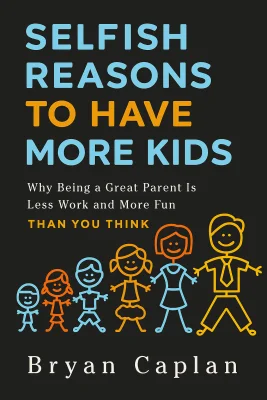
Selfish Reasons to Have More Kids
Why Being a Great Parent Is Less Work and More Fun Than You Think
Categories
Nonfiction, Self Help, Psychology, Philosophy, Parenting, Economics, Relationships, Sociology, Family, Childrens
Content Type
Book
Binding
Hardcover
Year
2011
Publisher
Basic Books
Language
English
ASIN
046501867X
ISBN
046501867X
ISBN13
9780465018673
File Download
PDF | EPUB
Selfish Reasons to Have More Kids Plot Summary
Introduction
Modern parenting has become an increasingly intense endeavor, with parents investing unprecedented time, energy, and resources into raising their children. Yet despite these heightened efforts, many parents report feeling exhausted, anxious, and overwhelmed. This paradox forms the foundation for a provocative reassessment of contemporary parenting practices and fertility decisions. The central argument challenges conventional wisdom about the relationship between parental effort and children's outcomes, suggesting that much of what modern parents do has little long-term impact on their children's development. The evidence for this counterintuitive position comes primarily from behavioral genetics research, particularly twin and adoption studies. These studies consistently show that while parents matter tremendously for children's happiness and immediate behavior, their long-term influence on traits like intelligence, personality, health, and success is surprisingly limited. This insight has profound implications not just for how we parent, but for fertility decisions as well. If raising children need not be as labor-intensive as contemporary culture suggests, perhaps having more children becomes not only feasible but potentially beneficial for parents themselves and society at large.
Chapter 1: Modern Parenting: The Unexamined Burden of Overparenting
The modern approach to parenting has evolved into something far more demanding than previous generations experienced. Today's typical parents spend more time directly engaging with their children than parents did in the 1960s, despite the fact that more mothers now work outside the home. This intensification of parenting manifests in numerous ways: elaborate schedules of extracurricular activities, constant supervision, educational enrichment beginning in infancy, and parental involvement in every aspect of children's lives. This high-investment parenting style creates a substantial burden. Parents shuttle children between activities, monitor homework, organize playdates, and generally structure every aspect of their children's experiences. Many parents report feeling constantly tired, stressed, and anxious about whether they're doing enough. The widespread assumption is that this level of involvement is necessary for children to develop properly and succeed in life. What makes this situation particularly problematic is how unexamined these parenting practices are. Most parents simply accept that good parenting requires these sacrifices, never questioning whether such intensive effort actually produces better outcomes. The anxiety is compounded by safety concerns, as parents believe the world has become increasingly dangerous for children despite statistical evidence to the contrary. This high-stress approach to child-rearing has significant costs beyond parental exhaustion. It crowds out couple time, personal pursuits, and career advancement. Parents frequently report having little time for themselves. The assumption that "good parenting" necessitates this level of sacrifice has become so entrenched that suggesting alternatives often elicits accusations of promoting negligence or selfishness. Yet this burden is largely self-imposed and unnecessary. Many parenting tasks could be simplified or eliminated without harming children's development. Parents could allow more independence, reduce scheduled activities, worry less about monitoring media consumption, and generally adopt a more relaxed approach. When examined critically, modern intensive parenting appears to be a cultural practice rather than a necessity for raising healthy, successful children. The unintended consequence of this parenting burden is reduced fertility. When people perceive parenting as overwhelmingly difficult, they rationally choose to have fewer children or none at all. The modern parenting paradigm thus creates a self-reinforcing cycle: as parenting becomes more intensive, fertility declines, which further reinforces the notion that each child deserves an extraordinary investment of resources.
Chapter 2: Behavioral Genetics: How Parents Matter Less Than We Think
The foundation for reconsidering parenting practices comes from behavioral genetics, which examines how nature (genes) and nurture (environment) influence human development. The most powerful methods in this field are twin and adoption studies, which allow researchers to separate genetic influences from environmental ones. Identical twins share 100% of their genes, while fraternal twins share only 50% on average. By comparing similarities between these different types of twins, researchers can estimate genetic influence. Similarly, adoption studies examine resemblances between adopted children and both their biological and adoptive families. The findings from these studies are remarkably consistent and challenge conventional wisdom about parental influence. For virtually every measurable trait—intelligence, personality, mental health, achievement, values—genes account for roughly 40-50% of the variation between individuals. The remaining variation is attributed to "non-shared environment"—unique experiences that even siblings raised in the same home don't share. Crucially, the "shared environment"—the family upbringing that parents provide equally to all their children—typically accounts for less than 10% of the variation in most traits. This pattern appears across multiple domains. Studies consistently show that adopted children resemble their biological parents far more than their adoptive parents in intelligence, personality traits, and even political views. When identical twins are separated at birth and raised in different families, they often turn out remarkably similar in preferences, abilities, and life outcomes. Conversely, adopted siblings raised in the same family from infancy typically bear little psychological resemblance to each other by adulthood. The implications are profound but easily misunderstood. This research doesn't suggest that parenting doesn't matter at all. Rather, it indicates that parenting matters differently than we think. Parents strongly influence their children's immediate behavior, values, and happiness. Children raised in abusive or severely neglectful environments suffer real harm. However, within the normal range of "good enough" parenting found in middle-class Western families, variations in parenting style have surprisingly little impact on how children ultimately turn out. What explains this pattern? The evidence suggests that children are remarkably resilient and self-programming. They adapt to their immediate environment, but their long-term development follows trajectories largely shaped by their genetic propensities. Parents can influence their children's behavior in the short term through discipline and guidance, but these effects tend to fade as children mature and develop according to their inherent tendencies. This research doesn't call for parental negligence but rather a more realistic view of parental influence. Parents matter tremendously for their children's current happiness and for the quality of the parent-child relationship itself. However, the notion that parents can mold their children's adult personalities, intelligence, or life outcomes through specific parenting techniques is largely unsupported by evidence.
Chapter 3: The Parenting Illusion: Short-Term Control vs. Long-Term Influence
The discrepancy between parental experience and behavioral genetics findings creates what might be called the "parenting illusion." Parents can see that they influence their children's behavior in the moment—when they discipline their children, the children respond. They teach their children to read, and the children learn. They enroll their children in activities, and the children participate. This creates a powerful impression of parental efficacy and control. What parents cannot easily observe, however, is the fade-out effect. The impact of parenting tends to diminish over time as children develop according to their genetic propensities. This pattern is well-documented in research. For example, adoption studies consistently show that when children are young, they resemble both their adoptive and biological parents in traits like intelligence and personality. However, as they grow older, the resemblance to adoptive parents fades while the resemblance to biological parents remains stable or even increases. The fade-out phenomenon explains why parents feel they have substantial influence despite the evidence from behavioral genetics. When parents see immediate responses to their parenting efforts, they naturally infer long-term effects. But the research suggests these effects are often temporary. Children may comply with parental expectations during childhood but gradually revert to their natural tendencies as they mature and gain independence. This pattern appears across multiple domains. Educational interventions often show initial gains that diminish over time. Parental influence on religious participation is strong during childhood but weakens considerably by adulthood. Parents can certainly affect their children's immediate behavior, but they cannot easily override their children's inherent dispositions in the long run. The parenting illusion is reinforced by selection effects. Parents who are intelligent, conscientious, and successful tend to provide enriched environments for their children. When their children turn out intelligent, conscientious, and successful, parents attribute this to their parenting rather than shared genes. Similarly, when parents observe differences between their children and other children, they attribute these to parenting differences rather than genetic differences. Understanding the parenting illusion doesn't mean parents should abandon their efforts. Rather, it suggests redirecting parental energy toward goals where it can make a lasting difference. Parents have substantial influence over the quality of family life, the memories children form, and the values children adopt. They can create environments where children are happy, feel loved, and develop according to their natural inclinations. What they cannot easily do is fundamentally reshape their children's personalities or determine their long-term outcomes. The recognition that parental influence has limits can be liberating. Parents can stop blaming themselves for every challenge their children face and recognize that children develop according to their own inherent trajectories. They can focus on creating loving relationships rather than trying to mold their children into particular forms. This perspective allows for a more relaxed and enjoyable approach to parenting.
Chapter 4: Safety and Security: Children Today Are Safer Than Ever
One of the most pervasive modern parenting anxieties concerns children's safety. Many parents believe the world has become increasingly dangerous for children, necessitating constant supervision and protection. This perception drives significant parental stress and restricts children's independence. However, objective data thoroughly contradicts this narrative. By virtually every measurable standard, children today are safer than at any point in modern history. Child mortality rates have plummeted over the past century. In 1950, approximately 35 out of every 1,000 children died before age five; today that number is below 7. Deaths from infectious diseases that once devastated young populations have been largely eliminated through vaccines and improved medical care. Even accident-related deaths have declined substantially despite increased car ownership and other potential hazards. The improvements extend beyond mortality statistics. Rates of physical abuse, sexual abuse, and serious violent crime against children have all declined since the 1990s. Contrary to popular perception, "stranger danger" is extraordinarily rare. According to the U.S. Department of Justice, stereotypical kidnappings (where a stranger abducts a child with intent to keep, harm, or ransom) affect fewer than 115 children annually in a nation of tens of millions of children. The probability of a child being victimized in this way is approximately one in a million per year. Despite these positive trends, parental anxiety about safety has paradoxically increased. Media coverage of child abductions, violent crimes, and accidents creates an impression that danger lurks everywhere, even as the actual incidence of these events declines. This phenomenon, known as the availability heuristic, leads people to overestimate the probability of vivid, emotionally charged events that receive disproportionate attention. The safety paranoia has real costs for both parents and children. Parents spend enormous energy monitoring their children, restricting their independence, and worrying about remote possibilities. Children lose opportunities for unsupervised play, independent exploration, and the development of risk assessment skills. The constant supervision represents a significant burden on parents' time and mental health without providing proportionate benefits. A more realistic assessment of safety would allow for a significant relaxation of parental vigilance. Children can be granted much more independence without subjecting them to meaningful risk. Walking to school, playing unsupervised, and navigating public spaces are activities that most school-age children can handle safely. Parents who adjust their safety practices to match actual rather than perceived risks can reduce their own stress while promoting their children's autonomy and development. Understanding the true safety landscape doesn't mean abandoning reasonable precautions. Rather, it means calibrating precautions to actual risks rather than media-amplified fears. This recalibration represents another opportunity to reduce the burden of modern parenting without compromising children's welfare.
Chapter 5: Enlightened Family Planning: Considering Lifetime Benefits of Children
Decisions about family size often focus disproportionately on the immediate challenges of raising young children. The sleepless nights, constant demands, and logistical complexities of the early years loom large in prospective parents' minds. This short-term focus, however, neglects the lifetime trajectory of parenting and parent-child relationships. Parenting is not a static experience but evolves dramatically as children grow. The demands of caring for infants and toddlers are intense but relatively brief. As children mature, they require less hands-on care and gradually become more independent. By adolescence, the physical demands of parenting have diminished substantially. And once children reach adulthood, the relationship typically transforms into one that provides parents with significant emotional benefits with minimal caregiving responsibilities. This lifecycle perspective reveals a critical flaw in fertility decisions based primarily on short-term considerations. When couples decide against having additional children because they feel overwhelmed by their current parenting responsibilities, they may be projecting temporary challenges onto a decades-long experience. The challenges that seem overwhelming when children are young—sleep deprivation, constant supervision, logistical complexity—generally diminish or disappear entirely as children grow. Meanwhile, the benefits of children tend to increase over time. Adult children typically provide companionship, emotional support, and a sense of family continuity that becomes increasingly valuable as parents age. Grandchildren represent another source of joy that many older adults prize highly. These long-term benefits are easily overlooked when fertility decisions focus primarily on immediate challenges. Viewing children as lifetime investments rather than short-term projects suggests a different approach to family planning. It encourages considering not just "How many children can I handle right now?" but also "How many children would I like to have in my life when I'm 60 or 70?" For many people, the answer to the second question would be higher than the answer to the first. Applying this lifetime perspective requires overcoming what behavioral economists call present bias—the tendency to overweight immediate experiences relative to future ones. Making fertility decisions with greater temporal scope means recognizing that the demanding phase of parenting is temporary, while the relationship with adult children potentially lasts for decades. It means considering not just today's parenting burden but tomorrow's potential for family connection. This enlightened approach to family planning doesn't suggest having unlimited children or ignoring genuine constraints on family size. Rather, it encourages weighing both short-term costs and long-term benefits when making fertility decisions. For many parents, this balanced assessment might justify having more children than a purely present-focused calculation would suggest.
Chapter 6: Population Benefits: Why More Children Improve Society
Beyond the personal benefits to parents, larger families contribute positively to broader society. This perspective challenges the prevalent notion that population growth threatens human welfare and ecological sustainability. While concerns about overpopulation dominated discourse in the late 20th century, more recent analysis suggests that moderate population growth offers substantial societal advantages. The primary mechanism through which population growth benefits society is innovation. Human progress depends fundamentally on new ideas, technologies, and solutions. More people means more potential innovators and a larger market for innovations. Throughout history, periods of population growth have typically coincided with accelerated technological advancement and rising living standards. The modern world's unprecedented prosperity developed alongside unprecedented population growth. This pattern emerges because innovation has unusual economic properties. Unlike physical resources, ideas can be shared without being depleted. Once discovered, a new technology or method can benefit billions of people at minimal additional cost. This non-rivalrous quality of innovation means that additional people don't merely divide existing wealth—they create new wealth through their ideas and contributions. Population growth also enhances quality of life through specialization and scale effects. Larger populations support more specialized services, cultural institutions, and businesses. This explains why cities typically offer more diverse restaurants, entertainment options, and specialized services than rural areas. As populations grow, the variety of available choices tends to increase, enriching the human experience. Contrary to common assumptions, population growth has historically coincided with environmental improvements in developed nations. Air and water quality in Western countries has significantly improved since the 1970s despite population growth. Resources have generally become more abundant rather than scarcer, with prices of most commodities declining over the past century when adjusted for inflation. These trends challenge the Malthusian view that population growth inevitably depletes resources. The societal benefits of population extend to social insurance systems like pensions and healthcare. These systems depend on favorable ratios of working-age people to retirees. As societies age due to declining fertility, supporting elderly populations becomes increasingly challenging. More children means more future workers to support retirees and maintain social services. From a global perspective, moderate population growth in developed nations helps balance worldwide demographic trends. Many developed countries now face fertility rates below replacement level, leading to population aging and eventual decline. This demographic shift creates economic and social challenges that moderate fertility increases could help address. These societal benefits align with the personal benefits of larger families. When parents choose to have more children, they enhance both their own long-term welfare and the welfare of society more broadly. This alignment of personal and social interests strengthens the case for policies and cultural changes that support larger families.
Chapter 7: Reproductive Technology: Expanding Options for Family Formation
Modern reproductive technologies have dramatically expanded the possibilities for family formation, allowing more people to have children and giving prospective parents greater control over timing and family composition. These technologies create new pathways to parenthood that can circumvent traditional constraints on fertility. Assisted reproductive technologies (ARTs) have revolutionized treatment for infertility. In vitro fertilization (IVF), which was experimental in the late 1970s, has become routine medical practice with steadily improving success rates. Other techniques include artificial insemination, intracytoplasmic sperm injection, and egg freezing. These technologies help overcome various biological barriers to conception, extending fertility options to people who previously had limited choices. The impact of these technologies extends beyond treating medical infertility. They also enable new family structures and reproductive timing. Single women can use donor sperm to have children without partners. Same-sex couples can use surrogacy or donor gametes to have genetically related children. Women can freeze eggs to preserve fertility while pursuing education or career advancement, potentially extending their reproductive window by years or decades. Genetic screening technologies further expand reproductive options by allowing parents to avoid passing certain genetic conditions to their children. Preimplantation genetic diagnosis (PGD) enables testing of embryos created through IVF before implantation. This technology allows parents with known genetic risks to select embryos without specific genetic conditions, reducing the incidence of hereditary diseases. These technological advances have significant implications for fertility decisions. They reduce the urgency of having children during peak fertility years, potentially allowing people to delay childbearing until they feel more prepared financially and emotionally. They expand the pool of potential parents to include those previously excluded by biological constraints. And they reduce the risks associated with hereditary conditions that might otherwise discourage having children. However, these technologies also raise complex ethical questions about the extent and limits of reproductive choice. The ability to select embryos based on genetic characteristics raises concerns about eugenics and the commodification of human life. The high cost of many reproductive technologies creates access disparities along socioeconomic lines. And some religious and cultural traditions raise objections to specific technologies. Despite these ethical complexities, reproductive technologies have become increasingly normalized and accepted. Treatments once considered extraordinary have become routine parts of family formation for millions of people. The continuing advance of these technologies suggests that reproductive options will further expand in coming decades, potentially including artificial wombs, more sophisticated genetic screening, and other innovations that further separate reproduction from biological constraints. For prospective parents considering family size, these technologies offer both practical options and psychological reassurance. They reduce some of the risks and constraints that might otherwise limit fertility choices. As these technologies become more accessible and effective, they may contribute to reversing fertility declines in developed nations by expanding both the possibilities for and the timing of family formation.
Summary
The central insight emerging from this comprehensive reassessment of parenting and fertility is that contemporary parenting practices involve substantial unnecessary burden while undervaluing the lifetime benefits of larger families. The evidence from behavioral genetics demonstrates that within the normal range of "good enough" parenting, variations in parenting style and intensity have surprisingly little impact on children's long-term outcomes. This scientific reality contradicts the cultural assumption that intensive parenting is necessary for children's success and well-being. This recognition opens the door to a more balanced approach to both parenting and fertility decisions. Parents can adopt more relaxed parenting styles without compromising their children's development, reducing the burden that makes larger families seem impractical. When combined with a lifetime perspective that considers the increasing benefits of children as they mature into adulthood, and the societal benefits of moderate population growth, a compelling case emerges for reconsidering smaller family norms. This perspective doesn't demand that everyone have large families but suggests that many people might find greater lifetime satisfaction with more children than current norms encourage. For those concerned with both personal fulfillment and social welfare, having more children represents a rare opportunity where individual self-interest aligns with broader societal benefit.
Best Quote
“Out of all the wishes on the Parental Wish List, “good memories” are one of the few that clearly depend upon how you raise your child. Don’t forget it.” ― Bryan Caplan, Selfish Reasons to Have More Kids: Why Being a Great Parent is Less Work and More Fun Than You Think
About Author

Bryan Caplan
Caplan interrogates the assumptions underpinning modern economics and public policy, offering critiques through his exploration of voter rationality and educational systems. His book "The Myth of the Rational Voter" challenges the belief in voter rationality by introducing the concept of "rational irrationality," which questions traditional public choice theories. Meanwhile, "The Case Against Education" scrutinizes the perceived value and efficiency of the education system, advocating for a reconsideration of its societal contributions. Caplan’s work stands out for its commitment to examining libertarianism and free-market capitalism, alongside a skepticism of government intervention.\n\nWhile Caplan’s writing delves deeply into economic theory, it is equally accessible and thought-provoking, making it relevant for both academic circles and general readers. His clear, engaging style often uses empirical evidence to challenge established norms and stimulate debate. Moreover, Caplan extends his influence through his prolific blogging and media presence, addressing themes such as the societal benefits of open borders and the application of economic reasoning to personal life decisions. This approach not only enriches public discourse but also provides valuable insights to readers interested in the intersections of economics, psychology, and public policy.\n\nIn addition to his influential books, Caplan’s contributions to the field have been recognized with accolades, such as "The Myth of the Rational Voter" being named “the best political book of the year” by the "New York Times". His active role as a media commentator and blogger further cements his position as a leading figure in contemporary economic thought. Through this work, Caplan not only questions the status quo but also invites readers to critically engage with complex economic and societal issues.
Read moreDownload PDF & EPUB
To save this Black List summary for later, download the free PDF and EPUB. You can print it out, or read offline at your convenience.
Selfish Reasons to Have More Kids
by Bryan Caplan
