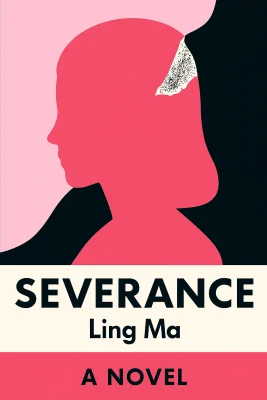
Severance
Categories
Fiction, Science Fiction, Audiobook, Adult, Book Club, Contemporary, Literary Fiction, Speculative Fiction, Post Apocalyptic, Dystopia
Content Type
Book
Binding
Hardcover
Year
2018
Publisher
Farrar, Straus and Giroux
Language
English
ASIN
0374261598
ISBN
0374261598
ISBN13
9780374261597
File Download
PDF | EPUB
Severance Plot Summary
Introduction
The yellow cab sits abandoned on a Pennsylvania highway, its meter still running, the fare light glowing like a desperate beacon. Inside, Candace Chen lies semiconscious in the backseat, the last refugee from a dying New York City. She had stayed longer than anyone else, documenting the city's collapse through her photography blog NY Ghost, watching the fever take everything she once knew. Now she's found by a group of survivors led by Bob, a man who promises safety at something called the Facility. Shen Fever spreads like a fungal whisper through the world, turning the infected into hollow echoes of themselves. They perform their old routines endlessly—folding clothes that will never be worn, serving meals to empty chairs, riding elevators that go nowhere. The fever doesn't kill quickly; it strips away consciousness while leaving the body to stumble through familiar motions. Candace has watched it claim her coworkers, her neighbors, even strangers she photographed in their final loops of memory. Now she carries a secret that makes her both precious and dangerous to Bob's group: she's pregnant with the child of Jonathan, the man who tried to save her by asking her to leave the city with him. But Candace chose work over love, routine over risk, and now she faces a world where both choices have led to the same devastating end.
Chapter 1: The Last Normal Days: Candace in Pre-Fever New York
The breakup happens on a summer night in Jonathan's Greenpoint basement, the air thick with humidity and unspoken endings. They've just watched Manhattan, Woody Allen and Diane Keaton dancing through a romanticized New York that feels nothing like the city Candace knows from her daily commute to Spectra, the publishing production company where she coordinates Bible manufacturing with factories in China. "I'm leaving New York," Jonathan tells her, his retainer gleaming in the dark. He's been talking about this for months—how the city transforms people into consumers, how authenticity dies under the weight of rising rents and corporate sameness. His friend Thom has a yacht; they'll sail to Puget Sound and find something real. Candace works in Bibles, overseeing the production of religious texts printed in Shenzhen factories she's visited but never truly understood. She calculates paper weights and binding costs while workers she's met breathe in dust that will eventually destroy their lungs. The Gemstone Bible project haunts her—a children's edition packaged with semiprecious stones crafted by laborers who develop pneumoconiosis from grinding mineral dust without proper ventilation. When the supplier shuts down due to a class-action lawsuit, Candace must find alternatives while the client demands their gemstones regardless of human cost. The night Jonathan leaves, they have sex one last time, rough and desperate on his bare mattress. She bites him; he pulls her hair. Neither admits this feels like goodbye forever. In the morning, he drives her to work in the U-Haul, and she watches him disappear into traffic while sirens wail in the distance. The pregnancy test will come later, two pink lines appearing like a cruel punctuation mark on their relationship. At work, Spectra distributes personal protective equipment as Shen Fever begins appearing in news reports. The first cases originated in Shenzhen, the same Chinese manufacturing hub where Candace's Bibles are printed. Workers at Phoenix Sun and Moon Ltd., the printer she knows well, start developing symptoms. Her contact Balthasar emails her with dignity and desperation, explaining that seventy-one percent of his workforce has become fevered, including his own daughter. The global supply chain that built her career is collapsing, one infected worker at a time.
Chapter 2: The Slow Unraveling: As Shen Fever Spreads
Lane's apartment building becomes a harbinger of what's coming. Candace discovers her elderly neighbor through an unlocked door, sitting in a flooded apartment with every appliance running, laughing at commercials on a television that broadcasts to no one. The old woman wears winter clothes in summer heat, her makeup smeared like a child's finger painting. When the ambulance arrives, the paramedic asks how long she's been fevered with the weary tone of someone who's seen this too many times. At Spectra, Seth from Gifts and Specialty locks himself in his office for an entire weekend, sending emails about printing jobs completed years ago. The cleaning crew finds him motionless at his computer, surrounded by coffee mugs and the detritus of a mind stuck in permanent rewind. The company brings in antifungal specialists who spray mysterious chemicals into corners and dust carpets with powder that makes everyone's eyes water. Candace watches the city thin out like cream left too long in coffee. The tourists who remain wear I ♥ NY masks and take selfies with Marvel superheroes who've lost their enthusiasm for performance. Food carts disappear overnight; shuttle buses replace the flooded subway system. The Art Girls at work—Lane, Blythe, and Delilah—apply for leaves of absence as Manhattan transforms into a ghost town maintained by security guards from Sentinel, a private military contractor that once worked in Afghanistan. Hurricane Mathilde arrives like an exclamation point on the city's decline. Candace and Jonathan spend their last night together in her Bushwick apartment as the storm rages outside, having sex that feels both nostalgic and final. She doesn't tell him about the pregnancy; he doesn't tell her he's already mentally gone. In the morning, the power is out and the future feels negotiable again, but only briefly. When the lights return, he leaves for good, and she's alone with a secret growing inside her. Storm damage accelerates the city's collapse. Without maintenance crews, infrastructure fails in cascading waves. The elevator in Candace's office building breaks down, trapping her between floors until she manages to reach someone at 911 who sounds more like a therapist than an emergency operator. "What are you still doing in there?" the woman asks, as if Candace is the strange one for trying to maintain normalcy while the world ends.
Chapter 3: Staying Behind: Documenting a City's Death
Spectra offers Candace a contract too lucrative to refuse: stay behind as the sole employee maintaining the New York office while everyone else works remotely. The money represents freedom—air conditioning, taxi rides, a larger apartment, everything her immigrant parents worked toward but never quite achieved. She signs the papers with shaking hands, not understanding she's volunteering to document the end of the world. The office empties like a theater after a bad play. Blythe and Delilah pack their Art Books projects and head for Connecticut, leaving Candace alone with thirty-two floors of abandoned cubicles and the perpetual hum of air conditioning cooling spaces meant for hundreds. She takes the stairs—thirty-one flights each morning—because the elevator remains broken and no one's coming to fix it. Candace resurrects NY Ghost, her photography blog from college, and begins documenting Manhattan's transformation. She photographs carriage horses trotting freely down Broadway, their bells jingling like Christmas morning. She captures the Juicy Couture saleswoman, fevered but still folding clothes with mechanical precision, half her jaw missing but her customer service training intact. The blog becomes a lifeline to the outside world, read by people in cold-climate islands who can't believe New York is actually dying. The fevered wander through empty streets performing phantom routines. A fruit vendor near Ground Zero hawks rotted bananas to no one. A homeless couple shakes empty change cups in Tompkins Square Park. They're not dangerous, just irrelevant, stuck in loops of behavior that once had meaning. Candace photographs them with respectful distance, understanding she's documenting humanity's strangest epitaph. Moving into the Spectra office, she claims Michael Reitman's corner suite with its Barcelona chaise lounge and skylight view of stars now visible above the darkened city. She breaks into vending machines with office supplies, organizes expired snacks by date, and establishes routines that feel both essential and absurd. Work becomes its own reward when there's nothing else left to structure time around.
Chapter 4: The Road to Nowhere: Bob's Group and False Promises
Bob finds Candace half-dead in the taxi, her dehydration and pregnancy making her weak enough to need rescue. He leads a group of eight survivors—former brand strategists and human resources specialists who Google everything from fire-building to gun shooting because none of them know how to actually survive. They've tattooed lightning bolts on their wrists like some suburban warrior cult, convinced they're chosen rather than simply lucky. Bob speaks with the confidence of someone who's found his calling in catastrophe. He wears his wounded arm in a sling and carries a vintage rifle, scraping its muzzle along walls as they move from house to house in systematic "stalks." The group performs elaborate rituals before entering homes—removing shoes, chanting mantras, saying grace—as if their middle-class manners can sanctify theft and murder. They call it "releasing" the fevered, Bob explains, because letting them cycle through routines indefinitely would be cruel. In a powder-blue colonial in Ohio, Candace watches Bob shoot a father, mother, and son execution-style as they attempt their endless family dinner. The grace they say before each meal becomes their final prayer, Bob's rifle ensuring they never have to clean up afterward. The group's destination is the Facility in Chicago, Bob's promised land of safety and renewal. He speaks of it like revelation—high ceilings, skylights, individual rooms for everyone, maybe even a working movie theater. They'll grow vegetables and make art and love each other's children. Chicago represents America's heart, he claims, the place where they'll rebuild civilization from the ashes of the old world's failures. But cracks appear in Bob's authority when Ashley leads them on a nighttime stalk to her childhood home. The house reeks of death and abandonment, her father's corpse maggot-infested in his La-Z-Boy. Ashley becomes trapped in a loop of trying on old dresses, her fevered mind cycling through memories of teenage vanity. When Bob arrives to "release" her, Janelle throws herself between Ashley and his gun. Both women die in the space between one heartbeat and the next, Bob's mercy indistinguishable from murder.
Chapter 5: Confinement at the Facility: A Mall as Prison
The Facility is a dead shopping mall in suburban Illinois, its promises as empty as its store windows. Deer Oaks Mall stretches like a mausoleum under grimy skylights, filled with the artificial plants and broken fountains of America's retail dreams. Bob claims partial ownership through some shady developer friend, but ownership of ruins feels like a cosmic joke. The group converts storefronts into bedrooms—Hot Topic for Bob, J.Crew for Genevieve, the Apple Store for Adam. They fill their spaces with stolen furniture and pilfered belongings, playing house in the corpse of consumer culture. The food court becomes their meeting place, where Bob holds breakfast sessions that feel like corporate team-building exercises crossed with religious revival meetings. Candace's pregnancy makes her valuable but dangerous to Bob's vision of control. He locks her in L'Occitane behind a metal security gate, claiming it's for her own protection while the baby develops. Her meals arrive through Rachel, delivered with prenatal vitamins and lies about temporary arrangements. The confinement stretches from days to weeks to months as winter settles over the mall like a burial shroud. From her cell, Candace watches the group's routines become as repetitive as the fevered they once killed. Evan does laundry and cooks meals, his defiance ground down to compliance. Todd and Adam run errands outside while Genevieve and Rachel tend the vegetable garden by the food court windows. They're building a life, Bob insists, but it looks more like an elaborate form of dying. The mall's darkness conceals Bob's own transformation. At night, Candace hears him walking endless circuits through empty corridors, his key ring jingling like warning bells. His muttered mantra—"We need more inventory"—echoes through the space where teenagers once flirted and grandparents once power-walked. The boy who hid here from his parents' fights has returned to claim his sanctuary, even if it means imprisoning others to keep it.
Chapter 6: Breaking Free: Escape from Routine's Grasp
Evan's death arrives without drama, just an empty bed and scattered Xanax pills on Christmas morning. Bob finds him first, his body already cooling in Journeys while the rest of the group celebrates their "one-month anniversary" with Spam and pancakes. The breakfast decorations—fake flowers and tablecloths from Anthropologie—mock the violence hiding beneath their domestic pretensions. Bob grants Candace limited freedom, moving her to a larger cell in Sephora surrounded by baby furniture and Ikea fixtures. She tells him stories of New York's final days, spinning tales like Scheherazade to maintain his interest and buy time. He listens with the hunger of someone who's lost the ability to imagine life beyond these walls, finding vicarious meaning in her accounts of the world's death. The key comes through accident masquerading as fate. Todd and Adam return from a supply run and leave their car key outside Bob's door as instructed. But Bob never retrieves it because Bob can no longer retrieve anything—he's fevered now, walking his endless circuits with the blank stare of someone trapped in their own remembered motions. The mall has finally claimed its most devoted worshipper. Candace kicks Bob until her feet hurt and his blood pools on the mall's beige tiles. Years of compliance and accommodation explode into fury that surprises her with its purity. Adam arrives to find her standing over their leader's broken form, keys in hand, laughing with the sound of rocks in a washing machine. There's nothing left to negotiate or explain. She drives the stolen Nissan through suburban Illinois as dawn breaks over strip malls and corporate parks. The radio plays static; the fuel gauge drops toward empty. Behind her, the Facility grows smaller until it disappears entirely, just another failed experiment in American dreaming. Ahead lies Chicago, the city Jonathan once loved, where maybe she can find others who've survived the fever's patient hunger.
Chapter 7: Towards an Uncertain Future: Chicago and New Beginnings
Chicago spreads before Candace like a promise written in architectural steel and reflected light. She follows Milwaukee Avenue through changing neighborhoods—immigrant grocery stores giving way to yoga studios, dive bars becoming cocktail lounges—as her stolen car coughs toward its final miles. The fuel light blinks its desperate morse code while she navigates between abandoned vehicles and fallen construction cranes. The city carries Jonathan's ghost in its familiar grid of stories he'd told during drowsy bedside conversations. She drives through neighborhoods he'd described—the apartment above the laundromat where he'd lived for three years, the streets where gentrification had pushed gang warfare further west until even the gunshots grew quiet. This is where he'd first become himself, away from his family in southern Illinois, before New York taught him that escape was just another form of imprisonment. Traffic grows denser as she approaches downtown, vehicles abandoned during some final rush hour that never ended. A tower crane has toppled across a major intersection, its wreckage creating the kind of obstacle that stops civilizations cold. The Nissan finally dies beside the Chicago River, its engine offering one last mechanical groan before accepting defeat. Candace walks across the red bridge toward the skyline, her belly heavy with Luna—the name she's given to her daughter who kicks most actively at night, like someone eager to be born into a world worth seeing. Below the bridge, the river flows with urban debris and broken dreams, but it still flows. The city's heartbeat may be irregular, but it hasn't stopped entirely. Somewhere in Chicago's maze of neighborhoods, other survivors might be building something new from the fever's aftermath. Maybe they've learned different lessons about community and control, about the difference between safety and imprisonment. Candace carries her mother's advice like a compass—keep moving, stay useful, never stop until you find what you're looking for, even if you won't know it until you see it.
Summary
Candace's journey from corporate drone to reluctant survivor traces the arc of American collapse through the intimate lens of personal transformation. She begins as someone who chooses routine over risk, work over love, staying over leaving—each decision seemingly practical but ultimately revelatory of how thoroughly systems of control have colonized even her deepest desires. The fever that strips consciousness while leaving bodies to repeat familiar motions becomes a grotesque mirror of her own pre-apocalypse existence, showing how little distance separates the fevered from the compliant. The story's power lies in its recognition that survival requires more than just staying alive—it demands the courage to break from cycles that promise security at the cost of agency. Bob's Facility represents the seductive appeal of authoritarian comfort, where someone else makes all decisions in exchange for surrendering autonomy. Candace's violent escape becomes not just a physical liberation but a spiritual awakening, her laughter among Bob's blood marking the moment she chooses uncertainty over safety, movement over stasis. Walking into Chicago with her unborn daughter, she carries the possibility that love and hope might still take root in the ruins of the old world's certainties.
Best Quote
“To live in a city is to live the life that it was built for, to adapt to its schedule and rhythms, to move within the transit layout made for you during the morning and evening rush, winding through the crowds of fellow commuters. To live in a city is to consume its offerings. To eat at its restaurants. To drink at its bars. To shop at its stores. To pay its sales taxes. To give a dollar to its homeless. To live in a city is to take part in and to propagate its impossible systems. To wake up. To go to work in the morning. It is also to take pleasure in those systems because, otherwise, who could repeat the same routines, year in, year out?” ― Ling Ma, Severance
Review Summary
Strengths: The review highlights the book's gripping narrative and effective use of flashbacks and flashforwards, which enrich character development and propel the story. The atmosphere created by Ling Ma is described as claustrophobic and engaging, mirroring the feelings of millennials under capitalism. The book's commentary on capitalism, race, gender, and immigrant experiences is noted as insightful and powerful. Overall: The reviewer expresses a highly positive sentiment, awarding the book 4.5 stars and describing it as a "quirky, cynical, yet important read." The book is recommended for its thought-provoking themes and its ability to resonate with personal experiences, particularly those related to immigrant families and the effects of capitalism.
About Author

Ling Ma
Ma interrogates the complexities of the Chinese-American experience through her unique blend of speculative and realist storytelling. Her work often delves into themes such as the female body, labor, capitalism, and alienation. By setting her narratives in familiar environments disrupted by surreal events, she invites readers to question the boundaries between everyday reality and the extraordinary. This approach not only enriches the narrative texture but also offers sharp social commentary, making her works resonate with those interested in the intersections of identity and society.\n\nReaders benefit from Ma's storytelling as it provides a lens through which to view contemporary issues related to identity and memory. Her debut novel, "Severance", merges post-apocalyptic horror with office satire to explore the aftermath of a deadly fever outbreak in the U.S. Meanwhile, her collection "Bliss Montage" dives into the surreal aspects of identity and memory, garnering critical acclaim for its inventive narrative. These works attract a diverse audience, appealing to both speculative fiction enthusiasts and those who appreciate realist narratives infused with a speculative edge.\n\nIn recognition of her innovative contributions to literature, Ma has received numerous accolades, including the Kirkus Prize and the National Book Critics Circle Award for "Bliss Montage". Her bio also highlights her academic role as a professor at the University of Chicago, where she influences the next generation of writers. Therefore, Ma's literature not only entertains but also provokes thought, making her a significant figure in contemporary fiction.
Read moreDownload PDF & EPUB
To save this Black List summary for later, download the free PDF and EPUB. You can print it out, or read offline at your convenience.
Severance
by Ling Ma
