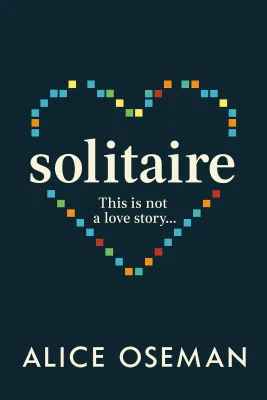
Solitaire
Categories
Fiction, Mental Health, Audiobook, Mystery, Romance, Young Adult, Contemporary, LGBT, Queer, Young Adult Contemporary
Content Type
Book
Binding
Paperback
Year
2014
Publisher
Harper Collins Children's Books UK
Language
English
ASIN
B00SLWM28C
File Download
PDF | EPUB
Solitaire Plot Summary
Introduction
Tori Spring stands at her locker, watching pink Post-it notes appear like breadcrumbs through the corridors of Harvey Greene Grammar School. Each arrow points forward, deeper into the maze of teenage indifference that has become her world. At sixteen, she has perfected the art of existing without living, of moving through days like a ghost haunting her own life. The trail leads to an abandoned computer room where a mysterious URL awaits: SOLITAIRE.CO.UK. What begins as idle curiosity transforms into something far more dangerous when a peculiar boy named Michael Holden bursts through the door, his mismatched eyes blazing with recognition. "Victoria Spring!" he cries, as if he's been searching for her forever. But Tori doesn't know she's lost, doesn't realize she's been drowning in plain sight until anonymous pranks begin targeting their school—pranks that seem to know her better than she knows herself.
Chapter 1: The Lonely Player: Tori Spring's Detachment from Life's Game
The common room buzzes with post-Christmas numbness, students sprawled like casualties across swivel chairs. Tori drops into her seat beside Becky Allen, her purple-haired best friend who has become more acquaintance than confidant over the years of growing apart. "Tori, you look a little bit like you want to kill yourself," Becky observes with casual brutality. "It's funny because it's true," Tori replies, sinking deeper into her chair. The exchange carries the weight of ritual—they've performed this dance of dark humor and dismissal countless times. She introduces herself to us with clinical detachment: Victoria Spring, maker of stories in her head that only breed sadness, lover of sleep and blogging, future corpse. The self-awareness cuts sharp, but offers no relief. Around her, classmates debate Harry Potter shipping theories with the fervor of theologians, their passion highlighting her own emotional vacuum. When the conversation demands participation, Tori fumbles, accidentally questioning the entire premise of their fictional romance analysis. The room's energy shifts, subtle but decisive. She mumbles an excuse and flees, leaving behind friends who feel increasingly like strangers. The pink Post-it notes appear like a trail of breadcrumbs through empty corridors. Each arrow points deeper into the school's forgotten spaces, past oblivious students who never question the strangeness blooming around them. The final note bears a URL that will change everything, though Tori doesn't know it yet. She follows the trail not from curiosity but from a desperate need for something—anything—to break the monotonous pattern of her days. The abandoned computer room C16 waits like a tomb, filled with ancient machines and dust-heavy silence. Here, in this forgotten space, the first thread of mystery reveals itself: SOLITAIRE.CO.UK glowing on a pink slip of paper, innocent as a child's game but weighted with promises of chaos to come.
Chapter 2: Persistent Intrusion: Michael Holden and the Unwanted Connection
The door crashes open with theatrical violence. Michael Holden explodes into the abandoned computer room like a force of nature barely contained in human form. His oversized glasses catch the light as he surveys the ancient computers with mock reverence. "Dear God, the age of the computers in here must be a criminal offense," he declares, then freezes when he notices Tori. His eyes—one blue, one green, a genetic accident that makes him seem perpetually surprised—widen to comic proportions. He lunges forward with predatory enthusiasm, thrusting a torn photograph into her face. It's her school portrait from the previous year, stolen from the staff room display. The image shows her before she cut her hair, when long strands hid most of her features like a protective veil. "Victoria Spring!" he shouts with religious fervor, as if he's discovered a lost prophet in a dusty tomb. Michael Holden moves through the world like someone who believes everything matters intensely. He peers at the Post-it note bearing the mysterious URL with the focus of a detective examining crucial evidence. When Tori pulls up the website on her phone—revealing nothing but an empty blog—his face crumples with genuine disappointment. The moment breaks something in both of them. Michael's manic energy deflates as he stares at the blank screen, looking suddenly lost. Tori feels an unexpected stab of sympathy for this strange boy who seems to care about everything while she cares about nothing. "Can we really not be friends?" he asks with the earnestness of a child afraid of abandonment. The question hangs between them as Tori struggles with the complexity of connection. She's spent years perfecting the art of emotional distance, but Michael refuses to respect the boundaries she's built. When the assembly announcement crackles over the speakers, Michael vanishes as abruptly as he appeared, leaving Tori holding the Post-it note. She stares at the URL, sensing that something has shifted in the architecture of her carefully controlled isolation.
Chapter 3: Digital Disruption: The Mysterious Rise of Solitaire
The Sixth Form meeting transforms into chaos when Darth Vader's Imperial March thunders from the loudspeakers. Kent, the deputy head with his Alan Rickman severity, climbs the hall stairs as his face appears on the projection screen—morphed into Yoda, then Jabba the Hutt, finally Princess Leia in a golden bikini. Students erupt in delighted horror. The real Kent maintains his composure with admirable stoicism, marching from the room as his digitally manipulated face cycles through increasingly absurd Star Wars characters. The prank reveals technical sophistication that impresses even as it terrorizes. Solitaire's calling card appears: the blog URL blazing across the screen as the music reaches crescendo. What had been an empty page now displays a single post—a photograph of Kent's passive-aggressive expression captured in real-time, uploaded with surgical precision. The pranks escalate with methodical creativity. All school clocks vanish, replaced by papers reading "Tempus Fugit." Two cats appear in classrooms, one evading capture for days while prowling lessons like furry anarchists. Madonna's "Material Girl" plays on endless loop until students contemplate violence against stereo equipment. Each incident appears on the Solitaire blog within minutes, documented with professional efficiency. The anonymous authors become local celebrities, their follower count swelling as the school administration flails helplessly. Prefects patrol corridors like prison guards while the digital insurgency adapts and evolves. Tori watches the chaos with growing unease. The pranks feel personal somehow, targeting specific memories and preferences with uncomfortable accuracy. Star Wars from her childhood obsession, cats she's always loved, music that speaks to something deep in her past. The coincidences accumulate like evidence in a case where she's both detective and prime suspect. Michael finds her during the cat incident, his eyes bright with conspiratorial glee. "Aren't mysteries fun?" he asks, but Tori realizes she doesn't wonder about anything anymore. The apathy that protects her from disappointment also shields her from curiosity, leaving her floating in a gray space between caring and complete surrender.
Chapter 4: Reluctant Bridges: Building Unexpected Relationships
Lucas Ryan materializes from Tori's distant past like a ghost gaining substance. The crying boy from primary school has transformed into a lanky teenager draped in hipster aesthetics—Hawaiian shirts and carefully curated awkwardness that feels performative rather than genuine. He remembers her birthday. April fifth. The detail hits Tori like a small violence, proof that someone has carried pieces of her through years of silence. His nervousness seems authentic beneath the studied coolness, fumbling words tumbling over each other as he attempts to rebuild bridges burned by time and growing up. "We should catch up," he says, and the simple phrase carries impossible weight. How do you resurrect a friendship that died of natural neglect? How do you explain becoming someone who talks less, feels less, hopes for less than the child who once shared Pokémon battles and secret playground bases? Michael's investigation into Solitaire intensifies with each prank. He appears at Becky's birthday party dressed as Sherlock Holmes, the costume both mockery and mission statement. When Tori escapes to the bathroom—overwhelmed by social performance and Lucas's tentative overtures—Michael pursues with relentless determination. They crash in Becky's room, watching Beauty and the Beast while Michael talks about being an only child and the particular loneliness that comes from having no siblings to practice human connection with. When the Beast dies, Michael cries genuine tears that embarrass them both. The movie ends in Disney's mandatory resurrection and transformation. Michael weeps for fictional death while Tori marvels at his capacity for emotional investment. His tears feel like proof of some fundamental difference between them—he still believes stories can matter, still trusts that caring won't always lead to disappointment. "Tell me something interesting about you," he demands, and Tori offers the fact that she was born the day Kurt Cobain killed himself. The synchronicity feels meaningful until Michael notes the romantic mythology people build around self-destruction, how suicide becomes aesthetic rather than tragedy. In the darkness of the bedroom, surrounded by Becky's teenage detritus, they edge toward something that might be friendship if either knew how to trust it.
Chapter 5: Escalating Chaos: When Virtual Pranks Become Real Danger
Charlie's breakdown shatters the night like glass. Tori returns from the party to find her younger brother barricaded in the kitchen, surrounded by obsessively organized food and bloodstained tissues. The eating disorder that seemed defeated has returned with vicious intensity. Nick Nelson, Charlie's rugby-player boyfriend, has fled after an argument, leaving Oliver to make the emergency call that brings Tori racing home. At seven years old, Oliver shouldn't know the signs of his brother's self-destruction, but their family has learned to read the warning signals of minds that turn against themselves. They clean the kitchen together—Nick returning shamefaced to help restore order to chaos. Charlie sits hollow-eyed as they force him through the ritual of supervised eating, each bite a small victory against the disease that whispers he doesn't deserve sustenance. The Clay Festival transforms into a battlefield of fire and screaming. Solitaire's voice booms across the crowd through hijacked speakers, announcing their "biggest operation yet" while fireworks launch from within the pressed bodies. What begins as celebration becomes stampede as explosions rain sparks on teenagers who scatter like startled birds. Tori finds herself trapped against the riverbank as a firework fuses beside her feet. Time dilates into crystalline clarity—the spark racing toward powder, Michael screaming her name from across the water, the choice between certain burning and hypothermic shock. She leaps into the river as the world explodes behind her. Michael crashes through the water toward her, his glasses fogged with spray, both of them shaking with cold and shock and the strange intimacy of shared near-death. The festival dissolves into emergency vehicles and injured teenagers while they cling to each other in the freezing current. "Nobody cries alone," Michael whispers, or maybe "nobody dies alone"—the words lost in wind and chaos but their meaning clear. They've crossed some invisible line between stranger and essential, between curiosity and desperate need. The Solitaire blog updates with chilling efficiency: photographs of the chaos, casualty counts treated like game scores. The anonymous authors have evolved from pranksters to terrorists, weaponizing nostalgia and rebellion until people bleed in service of their digital revolution.
Chapter 6: Behind the Screen: Unmasking Solitaire's Creator
The common room interrogation feels like theater, with Michael and Tori circling each other through careful questions about the mounting coincidences. Every Solitaire prank has touched something personal—Star Wars, violin music, cats, Madonna—as if the anonymous puppet masters are reading directly from her childhood diary. "You're a Star Wars fan," Michael observes with dangerous casualness. "And you can play the violin." The pattern emerges like a photograph developing in chemical baths. Solitaire isn't random chaos—it's targeted manipulation, each prank calibrated to catch Tori's attention with surgical precision. Someone has been watching her, studying her, building an elaborate digital courtship disguised as anarchic rebellion. Lucas's avoidance becomes suspicious, his hipster transformation suddenly sinister rather than merely annoying. When Michael finally corners him in the empty common room, the truth spills out with pathetic inevitability. "I made it," Lucas confesses in the art conservatory, his voice breaking like a child's. "I made Solitaire." The revelation hits like physical violence. Lucas Ryan, the crying boy from primary school, has orchestrated months of escalating chaos because he thought Tori looked suicidal playing computer solitaire in the common room. His childhood crush metastasized into digital stalking, elaborate pranks justified as interventions in a tragedy only he could see. "I am in love with you," he declares with the devastated honesty of someone confessing to murder. But love becomes meaningless when it manifests as manipulation, when affection justifies violence against innocent bystanders. The Ben Hope attack, designed to avenge Charlie's beating. The fireworks at the Clay Festival, spinning joy into terror. Every prank carries collateral damage that Lucas dismisses in service of his romantic delusions. He's quit Solitaire now, he claims, but his followers have taken control of the movement he birthed. Tori runs from the revelation, fleeing through empty corridors as the architecture of her world collapses. Lucas Ryan—innocent, awkward Lucas—has been pulling the strings of her isolation, manufacturing crises to position himself as savior. Even her pain has become someone else's performance, her genuine struggles transformed into props in his elaborate fantasy. The truth tastes like poison: everyone lies, everyone manipulates, everyone uses other people's emotions as raw material for their own satisfaction.
Chapter 7: Standing on the Edge: Confronting the Ultimate Choice
Friday arrives heavy with snow and the weight of Solitaire's final promise. The blog post appears at eight PM Thursday night—cryptic announcement of the "greatest operation" scheduled for Harvey Greene Grammar School. Tori escapes her house at dawn, armed with nothing but desperate purpose and the certainty that she must do something to stop the escalating madness. The school lies empty except for three figures huddled in Kent's classroom: Evelyn Foley, her secret boyfriend Aaron Riley with his ridiculous quiff, and Lucas Ryan trying to talk them out of whatever final violence they've planned. Through the window, Tori watches the confrontation unfold—Lucas pleading, Aaron brandishing a novelty lighter like a weapon, Evelyn providing moral support for amateur arson. Becky Allen appears in Superman pajamas and fury, having tracked Tori's midnight flight through maternal intuition and stubborn loyalty. Together they witness the pathetic finale: Aaron's failed attempt to burn evidence, his theatrical collapse when challenged by a sleep-deprived girl in cartoon clothing. But the real fire starts after the amateur terrorists flee. The plastic bag smolders, catches, spreads with hungry efficiency through displays and furniture. The school transforms into an inferno while Tori and Lucas struggle uselessly with broken fire extinguishers and spreading flames. Michael arrives like an avenging angel, yanking Tori from the smoke before throwing the extinguisher through a window rather than using it. His secret emerges in that moment of sabotage—he wants the school to burn, needs to see the institution that has ground him down reduced to ash and memory. They flee to the roof of the art conservatory as Harvey Greene Grammar School dies behind them. The field below fills with teenagers drawn by social media alerts, witnesses to the spectacular destruction of their academic prison. The crowd cheers like spectators at a gladiator match, finding joy in institutional collapse. Tori stands at the edge of the concrete roof, looking down at the drop that promises peace from the relentless weight of consciousness. The ledge calls with gentle insistence—here is escape from the prison of self-awareness, from the exhausting work of existing in a world where everyone lies and nothing stays beautiful for long. But Charlie appears in the crowd below, screaming her name with desperate love. Michael dangles from the main building's roof, tears streaming down his soot-stained face as he pleads with her to step back from the edge. "You can't leave me here alone," he cries, and the raw need in his voice cuts through her numbness like a blade. The moment crystallizes into choice: the easy darkness of the fall, or the difficult light of continuing to breathe, to feel, to hope despite all evidence that hope leads only to disappointment. Michael's tears prove that even the strongest among them carry unbearable weight, that her pain isn't unique but universal—and maybe that makes it bearable. She steps back from the edge and into his arms as the school burns and their classmates cheer the destruction of everything they've known. In that moment of choosing life over escape, Tori discovers something she'd forgotten: she is not alone in her darkness, and perhaps that makes all the difference.
Summary
The ashes of Harvey Greene Grammar School settle over the frozen field like gray snow, marking the end of an institution and the beginning of something harder to name. Tori Spring and Michael Holden sit in Nick Nelson's overcrowded car, heading toward hospitals and explanations and the long work of learning to live with themselves. Charlie holds Nick's hand over the gearstick while Becky dozes on Lucas's lap, exhaustion finally claiming them all. The digital revolution that promised liberation delivered only chaos, proving that destruction is easier than creation, that tearing down requires less courage than building up. Solitaire dies with its final spectacle, leaving behind scarred teenagers and questions about the price of belonging to something larger than loneliness. They've learned that even anonymous movements have human hearts, that behind every screen waits someone desperate for connection, willing to destroy rather than admit their need. But in the aftermath of fire and revelation, something genuine emerges from the digital wreckage. Love—not the manufactured obsession that drove Lucas to manipulation, but the quiet recognition between damaged souls who choose each other despite the certainty that all stories end badly. Tori and Michael discover that survival sometimes requires accepting help, that the weight of consciousness becomes bearable when shared with someone who understands the temptation of the ledge. The school may be gone, reduced to smoke and memory, but they remain—scarred, uncertain, alive, and finally ready to write their own story without anonymous puppeteers pulling the strings.
Best Quote
“But books–they’re different. When you watch a film, you’re sort of an outsider looking in. With a book–you’re right there. You are inside. You are the main character.” ― Alice Oseman, Solitaire
Review Summary
Strengths: The book is praised for its relatability, particularly in addressing themes relevant to the current generation such as anxiety, depression, and LGBT+ topics. Alice Oseman's writing style is noted for its flow and authentic portrayal of teenagers. Characters like Nick and Charlie are well-received, especially by those familiar with Oseman's other works. Weaknesses: Some readers found the writing awkward and stilted, and there was dissatisfaction with certain characters and the ending. The book's polarizing nature is highlighted, with some readers unsure of their stance. Overall: The review reflects a mixed sentiment, with strong appreciation for the themes and writing style, but also notable criticisms. The book is recommended for those who appreciate authentic teenage narratives, though it may not appeal to everyone.
About Author

Alice Oseman
Oseman charts the emotional complexities of adolescence through her diverse body of work, reflecting a profound commitment to themes of identity and mental health. Her approach is characterized by a seamless integration of realistic portrayals of teenage life, which resonates powerfully with young adult readers. By exploring the struggles of characters navigating academic pressures and self-discovery, Oseman sheds light on the broader spectrum of sexual and romantic orientations. This thematic richness is exemplified in her novels like "Solitaire" and "Loveless", as well as her acclaimed "Heartstopper" graphic novel series. Her work is noted for its authenticity and emotional depth, providing a resonant mirror to the lives of her audience.\n\nIn her role as an author and screenwriter, Oseman has extended her influence into television with the successful adaptation of "Heartstopper" for Netflix. This transition from page to screen highlights her versatility and dedication to storytelling that remains true to her characters’ nuanced experiences. The Emmy Award-winning series has been celebrated for its inclusive representation, echoing the inclusive ethos of her written works. Readers and viewers alike benefit from Oseman’s dedication to inclusivity and diversity, as her stories offer solace and understanding to those grappling with their own identities.\n\nAlice Oseman’s literary and screen contributions have earned her significant accolades, including the British Book Award for Illustrator of the Year and recognition as "Attitude" Person of the Year in 2023. Her career trajectory, from a young writer with her debut "Solitaire" to an influential voice in young adult literature, underscores her impact on contemporary narratives. This short bio encapsulates a career defined by a commitment to meaningful storytelling, with Oseman continuing to inspire through both her books and visual media.
Read moreDownload PDF & EPUB
To save this Black List summary for later, download the free PDF and EPUB. You can print it out, or read offline at your convenience.
Solitaire
by Alice Oseman
