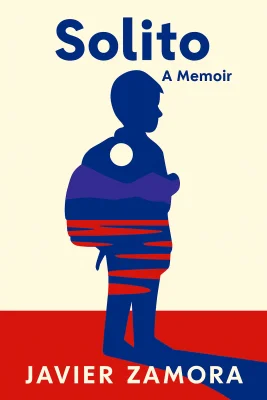
Solito
A Memoir
Categories
Nonfiction, Biography, Memoir, Audiobook, Adult, Autobiography, Social Justice, Biography Memoir, Book Club, Latinx
Content Type
Book
Binding
Audiobook
Year
2022
Publisher
Books on Tape
Language
English
ASIN
0593611144
ISBN
0593611144
ISBN13
9780593611142
File Download
PDF | EPUB
Solito Plot Summary
Introduction
# Solito: A Child's Journey Through Borders to Find Family In the pre-dawn darkness of a Guatemalan beach, a nine-year-old boy clutches a small backpack containing everything he owns, preparing to board an overcrowded fishing boat that will carry him across the Pacific Ocean toward an uncertain future. This moment captures the extraordinary courage of Javier Zamora, whose 1999 journey from El Salvador to the United States would test every limit of human endurance and reveal the profound bonds that can form between strangers united by shared desperation and hope. Javier's odyssey unfolds against the backdrop of Central American migration, where families torn apart by economic necessity make impossible choices between staying together in poverty or separating in pursuit of survival. Through his innocent yet perceptive eyes, we witness the complex network of smugglers and safe houses, the arbitrary cruelty of borders, and the unexpected kindness that emerges in humanity's darkest moments. His story illuminates three profound truths about the human experience: that family extends far beyond blood relations to encompass those who choose to protect us, that children possess reserves of resilience that emerge only when survival demands everything they have to give, and that the journey toward reunion often transforms us more than the destination itself. This remarkable account offers insights into the migrant experience while revealing universal truths about love, loss, and the unbreakable bonds that sustain us through our most harrowing trials.
Chapter 1: Childhood in El Salvador: Growing Up in Separation
Javier's earliest memories were shaped by absence rather than presence, by the phantom weight of parents who existed only as voices on crackling phone lines and faces in fading photographs. His father had departed for the United States when Javier was barely two, leaving behind only the faint memory of a mustache and strong hands. His mother followed when he was five, her departure creating a void that his grandmother Neli, grandfather Chepe, and aunt Mali tried desperately to fill with their boundless love and fierce protection. In the small fishing village of La Herradura, Javier constructed a childhood around longing and imagination. He excelled in school with the driven intensity of a boy trying to make absent parents proud, becoming valedictorian year after year while his classmates celebrated with mothers and fathers who could actually attend their ceremonies. His afternoons were spent helping at his grandmother's pupusa stand, selling cold drinks to clinic patients, and weaving elaborate fantasies about the life awaiting him in "La USA" with its promised swimming pools, fruit trees, and the comfort of sleeping between his parents for the first time in his conscious memory. The separation created a peculiar form of childhood where every holiday became a reminder of incompleteness, every family gathering at school an exercise in explaining why grandparents sat where parents should be. Yet this same absence fostered an extraordinary capacity for hope and imagination. Javier would lie awake at night constructing detailed visions of reunion, sustained by care packages containing toys and movies that served as both comfort and torment, tangible proof of love from people who remained essentially strangers to him. The decision to send for him represented both the fulfillment of years of dreaming and the beginning of a nightmare no nine-year-old should face. When Don Dago, the coyote who had successfully transported his mother, began appearing more frequently at their home, the whispered conversations about timing and routes transformed abstract longing into concrete terror. Javier understood instinctively that the journey ahead would demand a courage he wasn't certain he possessed, yet the alternative of remaining separated from his parents had become unbearable. His grandfather's preparation sessions under the mango trees took on the solemnity of military training, as Chepe taught him to read maps, memorize Mexican geography, and most importantly, how to lie convincingly about his identity. The fake documents and coached accent represented more than practical necessities; they were the first steps in a transformation that would require him to shed his authentic self in service of survival, a psychological complexity that would haunt him long after the physical journey ended.
Chapter 2: The Decision to Journey: Preparing for the Unknown
The transformation from protected child to migrant began months before Javier actually left El Salvador, as his family initiated him into the complex rituals of preparation that would determine whether he lived or died during the crossing. His grandfather Chepe became his primary instructor, teaching him not just the geography of Mexico but the subtle art of deception that would allow him to pass as Mexican rather than Salvadoran, a distinction that could mean the difference between safe passage and immediate deportation. Under the shade of their family's mango trees, Javier memorized the Mexican national anthem, learned to replace "pues" with "órale" in his speech, and studied the faces of Mexican presidents whose names he would need to recite if questioned by authorities. These lessons carried the weight of life and death, yet they were delivered with the gentle patience of a grandfather teaching his grandson to ride a bicycle, creating a surreal juxtaposition between the ordinary rhythms of family life and the extraordinary dangers that lay ahead. The psychological preparation proved as challenging as the practical training. Javier had to learn to use indoor toilets, a seemingly minor detail that represented the vast cultural adjustments awaiting him in a world beyond his grandmother's outdoor latrine. More significantly, he had to begin the process of emotional separation from everything that had defined his identity, giving away his most treasured possessions to friends while claiming his parents wanted him to perform acts of kindness, when in reality he was saying goodbye to his childhood. The nights before departure carried an intensity that compressed years of love and guidance into precious final moments. His aunt Mali would lie beside him, both of them counting stars through their skylight while carefully avoiding direct discussion of the dangers ahead. These conversations, heavy with unspoken fears and desperate hopes, created a foundation of love that would sustain him through the trials to come, even as they highlighted the magnitude of what he was leaving behind. When Don Dago finally arrived to collect him, Javier carried more than just his small backpack and fake documents; he bore the accumulated prayers, fears, and dreams of a family that had sacrificed everything for this moment. The boy who had never traveled beyond his village was about to embark on a journey that would test not just his physical endurance but his very conception of identity, family, and survival.
Chapter 3: Ocean Crossing and Mexican Transit: Surviving with Strangers
The Pacific Ocean, which Javier had known only through television shows and his imagination, became a very real and terrifying adversary during the eighteen-hour crossing from Guatemala to Mexico. Crammed into an overcrowded fishing boat with twenty-five other migrants, he experienced his first taste of the vulnerability that would define his journey, surrounded by strangers whose desperation matched his own but whose intentions remained unknown and potentially dangerous. The boat crossing served as a brutal initiation into the realities of migrant travel, where survival depended not on individual strength but on collective endurance and mutual protection. Patricia, a young mother traveling with her daughter Carla, instinctively extended her maternal care to include this solitary boy, while Chino, Marcelo, and Chele formed an unlikely protective circle around the children. These bonds, forged in shared misery and seasickness, would prove stronger than many relationships built over years of comfortable familiarity. The ocean revealed both the cruelty and beauty of their situation with equal intensity. Flying fish burst from the waves like silver bullets, creating moments of wonder that briefly transformed terror into awe, while the same waters that produced this magic also generated waves that threatened to swamp their overloaded vessel. The constant smell of gasoline, the bone-jarring impact of waves against the hull, and the very real possibility of capsizing created a crucible that stripped away pretense and revealed the essential character of each passenger. During the coldest hours before dawn, when hypothermia threatened and the boat seemed impossibly small against the vast Pacific, Javier learned his first crucial lesson about the kindness of strangers. Chino wrapped the shivering boy in his own jacket and held him through the night, an act of protection from someone who owed him nothing but chose to care anyway. This gesture became a template for understanding that family could be chosen as well as inherited, that love could emerge quickly under extreme circumstances. The successful completion of the ocean crossing filled Javier with a dangerous sense of accomplishment, as if the worst trials were behind him. In reality, the boat had merely delivered him to Mexico, where new forms of danger awaited in the shape of corrupt officials, military checkpoints, and the constant threat of deportation. Yet the relationships forged during those eighteen hours at sea would sustain him through trials that made the ocean crossing seem like a gentle introduction to the real challenges ahead.
Chapter 4: Desert Crossing: Testing the Limits of Endurance
The Sonoran Desert stretched before them like an alien landscape designed to test every aspect of human endurance, its beauty masking dangers that had claimed thousands of lives and would claim thousands more. As their group of migrants prepared for the night crossing that would either deliver them to their dreams or become their final journey, Javier confronted the reality that his small size and limited experience might not be sufficient for the trial ahead. The desert demanded everything: physical stamina to walk for eight hours through thorny brush and over rocky terrain, mental fortitude to resist panic when disorientation threatened, and emotional resilience to continue when every instinct screamed for rest. Water became more precious than gold, each sip carefully rationed against the possibility that their journey might take longer than anticipated. Javier learned to ignore his burning throat and trust that his chosen family would not allow him to fall behind, even when his legs trembled with exhaustion. Navigation through this trackless wilderness required skills that separated experienced coyotes from amateurs, as they followed paths invisible to untrained eyes while avoiding areas where Border Patrol vehicles prowled like mechanical predators. The group moved in single file, a human chain linked by shared purpose and mutual dependence, where the stumbling of one person could endanger everyone. When Javier's strength began to fail, Chino lifted him without hesitation, demonstrating once again that survival was a collective rather than individual endeavor. The psychological challenges matched the physical ones as the desert played tricks on exhausted minds, creating mirages of hope and despair in equal measure. Distant lights could signal salvation or capture, the sound of engines might herald rescue or deportation, and the calls of night birds had to be distinguished from the signals of their guides. Javier learned to find comfort in the steady presence of his traveling companions even when fear and exhaustion made each step an act of pure will. As dawn approached after their successful crossing, the group had been fundamentally transformed by their shared ordeal. The boy who had begun the journey as a protected passenger had become an active participant in collective survival, his courage tested and proven in the crucible of the desert. The strangers who had started as fellow travelers had evolved into something approaching family, bound together by the knowledge that they had faced death together and emerged victorious through mutual support and shared determination.
Chapter 5: Capture, Release, and Perseverance: Facing the System
The sudden appearance of Border Patrol vehicles shattered the desert silence and transformed their careful progress into desperate flight, as spotlights swept the landscape and helicopter rotors churned the air above their hiding places. In those terrifying moments when capture seemed inevitable, Javier experienced the full weight of his vulnerable status as an undocumented child whose fate would be determined by systems and policies far beyond his understanding or control. The processing facility became a strange new world where childhood and institutional machinery intersected in uncomfortable ways, creating surreal environments where playground games mixed with the serious business of deportation proceedings. Javier found himself navigating bureaucratic complexities that challenged many adults, learning to present the carefully rehearsed story that might mean the difference between continued detention and release back into the desert he had worked so hard to cross. Within the sterile environment of holding cells, unexpected moments of humanity sometimes emerged from the most unlikely sources. A Border Patrol agent who saw beyond statistics to recognize a frightened child, offering hot chocolate and gentle words in broken Spanish. These glimpses of compassion provided crucial reminders that even within systems designed for enforcement, individual conscience could still assert itself, though such moments remained frustratingly rare and unpredictable. The experience of detention taught valuable lessons about resilience and adaptation that would serve Javier throughout his life. Surrounded by adults facing their own uncertain fates, he observed how people maintained dignity in the face of powerlessness, how they found ways to care for each other even when their own futures remained in doubt. The bonds with Patricia, Carla, and Chino proved strong enough to survive even physical separation, as they found ways to communicate across the barriers that divided them. Release came with its own challenges, as the group found themselves back where they started but forever changed by their encounter with the immigration system they had tried so hard to avoid. The experience had stripped away any remaining illusions about the ease of their journey, but it had also revealed reserves of strength and determination they hadn't known they possessed. They emerged from detention more cautious but not defeated, their shared experience having forged even stronger bonds between them and renewed their commitment to reaching their destination regardless of the obstacles ahead.
Chapter 6: Reunion and Reflection: Healing from the Journey
The moment of reunion carried an emotional intensity that years of separation and weeks of mortal danger had built to an almost unbearable crescendo, as the door opened to reveal faces that had existed only in Javier's memory and imagination for most of his conscious life. His parents, older than his recollections but unchanged in their fundamental love, embraced him with the fierce desperation of people who had never expected to see him again, their tears mixing with desert dust on his cheeks as the family fractured by necessity was finally made whole through sheer force of will and sacrifice. The transition from constant danger to safety proved more psychologically complex than anyone had anticipated, as Javier struggled to believe that his journey was truly over and that he could sleep without fear of sudden awakening or eat without rationing every bite. The hypervigilance that had kept him alive in the desert could not simply be switched off with the closing of a door; his nervous system would require time to accept that the crisis had passed and that he was finally, genuinely safe. His chosen family faced their own moment of separation as they prepared to continue their individual journeys to different destinations across the United States, knowing that the bonds forged in crisis would have to survive the test of distance and time. Patricia's final embrace carried the weight of a mother's blessing for a child she had protected as her own, while Chino's handshake conveyed the respect of one survivor for another who had proven himself worthy of the protection offered. The years that followed brought the slow, complex work of integrating an experience that had compressed a lifetime of learning about human nature, survival, and the price of freedom into seven weeks of intense trial. School, homework, and playground games seemed almost surreal after the life-and-death decisions that had once filled his days, while the ordinary demands of American childhood clashed with the extraordinary knowledge he carried about vulnerability, resilience, and the arbitrary nature of borders that separate families. Memory became both burden and gift, preserving not just the trauma of the journey but also the profound connections that had sustained him through it. The faces of his traveling companions remained vivid in his mind even as years passed, their voices clear in his memory as he wondered about their fates and hoped that Patricia, Carla, and Chino had found the safety and opportunities they deserved. The desert had taken much from him, but it had also given him a voice that could speak for those who had not survived to tell their own stories, transforming his individual experience into a window through which others might understand the broader struggles of human migration and family separation.
Summary
Javier Zamora's extraordinary journey from El Salvador to California reveals that the most profound human transformations often occur in the spaces between safety and danger, between despair and hope, where survival depends entirely on the bonds we forge with strangers who choose to become family. His story demonstrates that courage is not the absence of fear but the decision to continue moving forward despite overwhelming odds, and that children possess reserves of strength and resilience that emerge only when circumstances demand everything they have to give. From this remarkable tale of endurance and love, we learn that the relationships forged in crisis can prove stronger than those created in comfort, and that the true cost of immigration policies extends far beyond statistics to encompass the profound human drama of separation, sacrifice, and reunion. His experience offers crucial insights for anyone seeking to understand the migrant experience or the extraordinary capacity for compassion that can emerge between strangers united by shared vulnerability, reminding us that behind every border crossing lies a story of love powerful enough to overcome any obstacle placed in its path.
Best Quote
“Mom likes to call them my "angels," but I worry that takes away their humanity and their nonreligious capacity for love and compassion they showed a stranger.” ― Javier Zamora, Solito
Review Summary
Strengths: The review highlights the emotional impact of "Solito," emphasizing the author's ability to resonate with readers through shared fears and worries. The memoir's narrative is praised for its beautiful language and the portrayal of the protagonist's resilience, humor, innocence, and hope. The vivid depiction of the migration journey and its challenges is also noted as a strength. Weaknesses: The review mentions that the book may not evoke every emotion for every reader and suggests that it may not be the best-written book, though it implies this is a minor concern compared to the story's importance. Overall: The reader expresses a strong emotional connection to the memoir, recommending it highly for its poignant storytelling and the author's compelling journey. The book is seen as a special and beautiful work that is likely to be appreciated by many.
About Author

Javier Zamora
Zamora delves into the profound effects of migration and displacement through his work, rooted in his personal experiences as a migrant from El Salvador. His poetry and memoir writing delve into themes of identity and trauma, while exploring the intersections of cultural heritage and the immigrant condition. With a narrative informed by his own perilous journey across borders as a child, Zamora's writing is a testament to the resilience and challenges of transnational family life. By weaving Spanish language elements into his English texts, he offers an authentic representation of his dual heritage, enabled by contemporary publishing trends that embrace diverse voices.\n\nFor readers interested in the immigrant narrative, Zamora's work provides a deeply personal yet universally resonant perspective. His debut poetry collection, "Unaccompanied," addresses the impact of the Salvadoran Civil War on his family, while his memoir "Solito" recounts his harrowing journey to reunite with his parents in the United States. These works not only highlight the complexities of the migrant experience but also encourage empathy and understanding among a broad audience, from academics to casual readers.\n\nAs an author recognized for his literary contributions, Zamora has received numerous fellowships and awards, including a 2017 Narrative Prize. His commitment to storytelling and activism is evident in his roles as a Stegner Fellow and a Radcliffe Fellow, reflecting his dedication to preserving authentic immigrant voices. This brief bio encapsulates how Zamora’s writing continues to resonate, offering insights into migration's multifaceted realities and sparking conversations around identity and belonging.
Read moreDownload PDF & EPUB
To save this Black List summary for later, download the free PDF and EPUB. You can print it out, or read offline at your convenience.
Solito
by Javier Zamora
