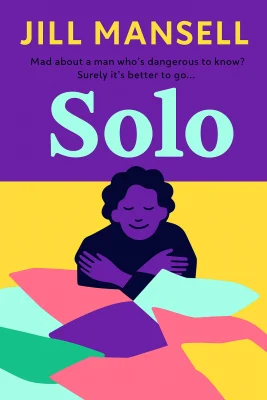
Solo
Categories
Fiction, Audiobook, Romance, Adult, Contemporary, British Literature, Contemporary Romance, Chick Lit, Womens Fiction
Content Type
Book
Binding
Paperback
Year
2001
Publisher
Headline Paperbacks
Language
English
ASIN
0747267456
ISBN
0747267456
ISBN13
9780747267454
File Download
PDF | EPUB
Solo Plot Summary
Introduction
# Dancing Solo: The Art of Independence in a Duet of Hearts The champagne glass slipped from Tessa Duvall's fingers, crystal shattering against marble as she fled through the hotel's gilded corridors. Behind her, the Christmas party blazed on, oblivious to the collision that had just occurred between Bath's most notorious playboy and a woman who wanted nothing he could offer. Ross Monahan stood frozen in the conservatory, watching paint-stained denim disappear into the winter night, unaware that this moment would unravel everything he thought he knew about conquest and desire. What began as a chance encounter at the Charrington Grange Hotel would become a battle of wills that neither could win and neither could abandon. She was an artist who had learned not to trust charming men with easy smiles. He was a man who collected women like fine wines, sampling each before moving to the next vintage. Their collision would produce consequences that would bind them together across months of pride, pregnancy, and the slow, painful discovery that some walls are built not to keep others out, but to keep oneself from falling too far.
Chapter 1: The Anonymous Encounter: When Pride Meets Passion
The December wind cut through Tessa's thin coat as she stood outside the Charrington Grange, questioning every decision that had led her to this moment. Holly's invitation had seemed harmless enough—a Christmas party, free drinks, a chance to escape her cramped studio for one evening. But the hotel's golden windows revealed a world she didn't belong to, where diamonds caught the light and conversations flowed in accents that spoke of old money and older privilege. She almost turned back when Ross Monahan appeared beside her on the moonlit terrace, his presence as sudden and unsettling as a storm front. He moved with the predatory grace of a man accustomed to getting what he wanted, his dark eyes scanning the crowd behind them before settling on her face with uncomfortable intensity. The click of expensive heels on stone grew closer, and he slid an arm around her waist without invitation, using her as camouflage from whatever pursuit he was avoiding. "Desperate times," he murmured against her ear, his breath warm in the winter air. Tessa recognized him instantly—the younger Monahan brother, co-owner of this temple to luxury, whose romantic conquests filled the society pages with predictable regularity. She should have pulled away, should have left him to face whatever consequence he was dodging. Instead, she found herself studying the sharp angles of his face, noting how the confident mask slipped when he thought no one was watching. Their conversation stretched through the night like a chess match played with words instead of pieces. Ross deployed his practiced charm with surgical precision, but Tessa deflected each advance with humor sharp enough to draw blood. She refused to give him her name, her number, any thread he could follow back to her ordinary life. When he offered to show her the hotel's private spaces, she accepted out of curiosity rather than desire, following him through rooms that spoke of wealth beyond her comprehension. Dawn found them in his suite, the careful distance they had maintained finally collapsing under the weight of attraction neither could deny. What happened between them was raw and desperate, a collision of need that left them both shaken. But morning brought clarity along with regret. Tessa slipped away while he slept, leaving behind only a twenty-pound note stuffed into an empty champagne bottle—his money for a taxi, returned with silent contempt that spoke louder than any goodbye.
Chapter 2: Unexpected Consequences: A Pregnancy and a Search
Ross woke to emptiness and the bitter taste of rejection. The twenty pounds felt like a slap across the face, a deliberate insult from a woman who had vanished like smoke, leaving no trace except the lingering scent of her perfume on his pillows. He had offered her something he rarely gave—genuine interest, real conversation—and she had fled as if from contamination. The sting of abandonment was unfamiliar and unwelcome, a wound to pride that had rarely been tested. Days blurred into weeks as he haunted the places where she might appear, questioned mutual acquaintances with casual desperation, followed every thread that might lead back to the mysterious woman who had turned his world sideways in a single night. But Bath's social circles were smaller than they appeared, and a woman who painted for a living while cycling through winter streets remained frustratingly elusive. She had disappeared as completely as if she had never existed. Meanwhile, Tessa discovered that some consequences couldn't be escaped through pride or distance. The pregnancy test confirmed what her body had already whispered—she was carrying Ross Monahan's child, the result of one night when her careful defenses had crumbled. The irony cut deep: she had spent years watching her mother's heart break over charming, unreliable men, only to repeat the same mistake with devastating precision. Holly's well-meaning interference finally connected the pieces Ross had been desperately seeking. Her casual mention of a pregnant friend, an artist whose work might suit the hotel's refined aesthetic, sent recognition blazing through his mind. The timeline clicked into place with mathematical certainty—the Christmas party, the mysterious departure, the child she was carrying in stubborn solitude. The woman who had haunted his dreams for months had been hiding his child from him. The confrontation, when it came, crackled with unresolved tension and wounded pride. Ross arrived at her cottage armed with accusations and demands, his usual confidence fractured by months of fruitless searching. Tessa met his fury with quiet dignity, neither denying the pregnancy nor apologizing for her silence. She had made her choice to face this alone, and his belated discovery changed nothing. The child was hers to protect, and she had learned long ago that protection sometimes meant keeping dangerous men at a distance, even when those men happened to be fathers.
Chapter 3: Proposals and Refusals: The Battle for Independence
The proposal came with all the romance of a business transaction, delivered in her paint-splattered studio with the confidence of a man who had never heard the word no. Ross dropped to one knee among her canvases, his offer of marriage presented as the obvious solution to their situation. He could give her everything—security, status, a name for their child—and seemed genuinely baffled when she laughed in his face. Tessa's refusal hit him like a physical blow. She was an artist struggling to pay rent, cycling through Bath's winter streets because she couldn't afford a car, living in a cottage that leaked when it rained. He could solve all her problems with a signature on a marriage certificate, yet she rejected his offer as if he had proposed something obscene. Her independence wasn't pragmatic—it was pathological, a stubborn refusal to accept help even when she desperately needed it. Their arguments became a twisted form of courtship, each encounter charged with sexual tension and mutual frustration. Ross couldn't understand why his wealth and status weren't enough; Tessa couldn't explain that they were exactly the problem. She had watched her mother surrender her autonomy for love, only to be discarded when a younger, prettier option appeared. Marriage to Ross Monahan would be a golden cage, beautiful and suffocating in equal measure. Max Monahan watched his brother's obsession with growing alarm. Ross had charmed countless women over the years, but never pursued one with such desperate intensity. This Tessa Duvall seemed immune to the Monahan magnetism, which only made Ross want her more. Max suspected calculation, a deliberate campaign to trap his brother into marriage and gain access to the family fortune. His confrontation with Tessa erupted in spectacular fashion, ending with red wine soaking his expensive shirt and the entire restaurant watching in stunned silence. The battle lines were drawn with surgical precision. Ross deployed every weapon in his considerable arsenal—charm, persistence, financial pressure disguised as opportunity. Tessa countered with stubborn pride and the kind of independence that bordered on self-destruction. Neither would yield, neither could retreat. They were locked in a war where victory would mean the destruction of everything they were fighting to protect.
Chapter 4: Artistic Complications: Paintings, Pride, and Persistence
Ross changed tactics with the calculating precision of a general adapting to battlefield conditions. If Tessa wouldn't accept his marriage proposal, he would make himself indispensable through other means. Her artistic talent became his weapon of choice—he would make her successful, independent, financially secure. Then she would have no excuse to refuse him, no reason to maintain the walls she had built around her heart. The campaign began subtly, almost invisibly. A commissioned painting for his office, priced far above her usual rates. Introductions to wealthy hotel guests who might want portraits of their children, their pets, their country estates. Casual mentions of her work to influential friends who collected art like other people collected stamps. Ross Monahan had spent years building a network of connections across England's upper classes; now he deployed them all in service of his stubborn courtship. Tessa found herself caught between gratitude and suspicion as opportunities multiplied around her like flowers after rain. The money was real, desperately needed, but every sale felt like another link in a golden chain. Ross was making himself indispensable, proving that her success depended on his patronage. It was manipulation of the subtlest kind, all the more effective because it was genuinely helpful and undeniably generous. The portrait of Nico Coletto represented the pinnacle of Ross's strategy. Two thousand pounds for a single painting—more than Tessa usually earned in six months of struggle. The commission would establish her reputation among London's cultural elite, open doors that had remained stubbornly closed to an unknown artist from Bath. It was everything she had dreamed of, wrapped in Ross's fingerprints and delivered with his characteristic smile. Their relationship evolved into something neither had expected—a friendship built on mutual respect and carefully suppressed desire. Ross learned to court her mind as well as her body, engaging her in conversations about art and ambition that stretched through long afternoons in her studio. Tessa discovered depths beneath his playboy facade, glimpses of the man he might become if he ever stopped running from genuine intimacy. But the pregnancy progressed, and with it came new complications that neither charm nor stubbornness could resolve.
Chapter 5: The Health Scare: When Priorities Shift
The pain struck without warning during their flight back from London, where Tessa had delivered the Coletto portrait to universal acclaim. One moment she was laughing at Ross's dry commentary on the art world's pretensions, the next she was doubled over in agony, blood seeping through her clothes as panic blazed in his dark eyes. The helicopter that landed on a cricket field beside the Royal United Hospital carried more than just a medical emergency—it carried the moment when everything changed. Ross paced the hospital corridors like a caged predator, his usual confidence shattered by the possibility of losing both Tessa and their child. The hours stretched like years as doctors ran tests, consulted specialists, delivered updates in the careful language of medical professionals who had learned not to promise miracles. When the crisis passed and both mother and baby were pronounced safe, Ross's relief transformed into something deeper and more dangerous than mere gratitude. The enforced bed rest became an unexpected intimacy, stripping away the careful defenses both had maintained for months. Ross installed Tessa in the hotel's finest suite, surrounding her with every luxury he could imagine—flowers that filled the room with fragrance, books chosen specifically for her tastes, art supplies arranged with the precision of a surgical instrument tray. But it was the quiet moments that mattered most, when he would sit beside her bed reading aloud from newspapers or sharing stories about his childhood that he had never told another soul. Tessa felt her resistance crumbling under the assault of his tenderness. This wasn't the playboy she had expected to tire of domesticity within weeks, but a man transformed by the possibility of loss. He helped her with sketches when her hands grew tired, brought her tea at exactly the right temperature, and learned to read her moods with the accuracy of a meteorologist tracking storm patterns. When he asked again about marriage, she couldn't summon her usual quick refusal. The hotel staff watched their boss's transformation with fascination and growing respect. Ross Monahan, who had never spent more than a week with the same woman, was devoting himself entirely to one who wouldn't even share his bed. He canceled meetings, rearranged schedules, and turned down social invitations that would have been unthinkable to refuse just months earlier. It was either the greatest love story they had ever witnessed or the most elaborate seduction in recorded history.
Chapter 6: Surrendering to Possibility: The Evolution of Resistance
Spring arrived with a softening that went beyond mere weather patterns. Tessa's pregnancy advanced into its final months, her body changing in ways that made denial impossible and pretense pointless. The child was real now, moving and kicking with increasing vigor, a constant reminder of the choice she had to make. She could continue her solitary path, raising Ross's child alone as her mother had done, or she could take the terrifying leap of trusting someone else with her carefully guarded heart. Ross had proven his constancy through the long months of her resistance, demonstrating a patience that surprised everyone who knew his reputation. He had been gentle when she was difficult, steadfast when she pushed him away, protective without being possessive. The playboy facade that had once terrified her began to seem like ancient history, replaced by evidence of a man capable of growth and genuine commitment. Their conversations grew deeper as her defenses weakened, touching on subjects they had both avoided for months. Ross spoke about his fear of becoming like his father, a man who had treated women as disposable entertainment. Tessa admitted her terror of losing herself in someone else's life, of becoming another casualty in the war between love and independence. They were mapping the territory of trust with the careful precision of explorers in dangerous country. The proposal, when it came again, was different from his previous attempts. No grand gestures or dramatic declarations, just Ross sitting beside her hospital bed after another routine checkup, his hand covering hers as he spoke quietly about the future he wanted to build with her. Not because of the baby, but because he couldn't imagine life without her stubborn independence, her fierce talent, her unexpected capacity for forgiveness. Tessa's acceptance was equally quiet, a simple yes that carried the weight of surrender and the promise of possibility. She was still afraid—of losing herself, of being hurt, of discovering that love wasn't enough to bridge the gap between their different worlds. But she was more afraid of spending her life wondering what might have been, of denying their child the chance to grow up in a family bound by choice rather than obligation.
Chapter 7: The Unfinished Canvas: Love's Perfect Imperfection
The wedding was everything their first attempt had not been—small, intimate, focused on promises rather than performance. They exchanged vows in the hotel's garden, surrounded by friends who had watched their battle of wills transform into something deeper and more durable than passion. Holly wept through the entire ceremony, her own romantic dreams finally bearing fruit as she stood beside Tessa in a simple blue dress that complemented rather than competed with the bride's understated elegance. Olivia, now six months old and blessed with her father's dark eyes and her mother's stubborn chin, served as an unofficial witness to her parents' commitment. She gurgled contentedly in Ross's arms as he promised to love and protect both his girls, to be the kind of husband and father he had never thought himself capable of becoming. The transformation was visible in his face, the sharp edges of his former arrogance softened by responsibility and genuine affection. Tessa's vows were characteristically direct, promising to try trusting him with her independence, to believe that love didn't require the surrender of self. She spoke about learning to dance with a partner instead of always performing solo, about discovering that the strongest foundations were built on mutual respect rather than mutual need. Her words carried the weight of hard-won wisdom, the understanding that some lessons could only be learned through pain and forgiveness. The reception was held in the same conservatory where they had first talked through the night, the space transformed by fairy lights and the kind of simple elegance that spoke of confidence rather than display. Ross and Tessa moved through their guests with the easy grace of people who had finally stopped fighting themselves and each other, their happiness evident in small gestures—his hand at the small of her back, her fingers adjusting his tie, the way they seemed to communicate in glances and half-smiles. As the evening wound down and the last guests departed, they found themselves alone in the garden where they had pledged their future to each other. Olivia slept peacefully in her carrier, exhausted by the excitement of her parents' wedding day. Ross and Tessa sat in comfortable silence, watching the stars emerge over Bath's ancient skyline, both understanding that this was not an ending but a beginning—the first page of a story they would write together, one day at a time.
Summary
In the end, Tessa Duvall learned that true independence wasn't about standing alone, but about choosing when and how to let someone in. Her journey from suspicious resistance to cautious acceptance revealed that the strongest walls are built not from stone but from fear, and that love, patient and persistent, can erode even the most carefully constructed defenses. She discovered that dancing solo was only beautiful until you found the right partner to share the music. Ross Monahan's transformation from careless playboy to devoted partner proved that change is possible when the stakes are high enough and the motivation is genuine. He learned that true conquest isn't about taking what you want, but about becoming worthy of what you need. Their child would grow up knowing that the greatest love stories aren't about perfect people finding each other, but about flawed souls choosing to become better together. In a world where hearts break as easily as promises, theirs became a reminder that sometimes the most unlikely partnerships create the strongest foundations, and that love's perfect imperfection is more beautiful than any fairy tale ending.
Best Quote
“companion” ― Jill Mansell, Solo
About Author

Jill Mansell
Mansell charts the intricacies of human relationships through her engaging romantic comedies. Her books, including "Making Your Mind Up" and "Fast Friends", captivate readers with witty dialogue and heartwarming plots. These stories often delve into themes of love, friendship, and personal growth, set against lively community settings. While Mansell's style is lighthearted, it also possesses emotional depth, focusing on the subtleties of connection without resorting to explicit content. Her method involves creating relatable, down-to-earth characters who navigate the complexities of life, thereby engaging readers who seek both humor and genuine emotional resonance in fiction.\n\nThe transition from a career in the NHS to becoming a full-time author highlights Mansell's dedication to her craft. After initially facing rejections, her persistence paid off as she found success in the literary world. Her impact on readers is significant, offering them not only entertainment but also insightful reflections on everyday life. Her novels, like "Sheer Mischief" and "Solo", resonate with those who appreciate narratives that celebrate life's ups and downs with warmth and humor. The author’s extensive catalog of over 35 books has sold millions of copies worldwide, affirming her status as a beloved figure in contemporary fiction.\n\nThis brief bio of Jill Mansell underscores her influence and the widespread appreciation of her work. Recognized with accolades such as the RNA Romantic Comedy Prize, her contributions to the genre have solidified her position as a key voice in romantic comedy literature. Mansell’s ability to blend humor with heartfelt storytelling continues to attract a diverse audience, making her books a staple for those who value narratives that combine levity with meaningful insights into human relationships.
Read moreDownload PDF & EPUB
To save this Black List summary for later, download the free PDF and EPUB. You can print it out, or read offline at your convenience.
Solo
by Jill Mansell
