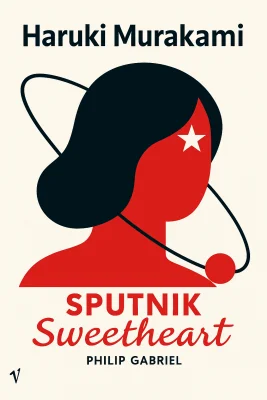
Sputnik Sweetheart
Categories
Fiction, Romance, Literature, Asia, Japan, Contemporary, Magical Realism, Novels, LGBT, Japanese Literature
Content Type
Book
Binding
Paperback
Year
2002
Publisher
Vintage
Language
English
ASIN
0099448475
ISBN
0099448475
ISBN13
9780099448471
File Download
PDF | EPUB
Sputnik Sweetheart Plot Summary
Introduction
In the spring of her twenty-second year, Sumire fell in love for the first time—an intense, tornado-like love that would reshape the gravitational pull of her small universe. The object of her desire was Miu, a sophisticated Korean-Japanese woman seventeen years her senior, married, and utterly unattainable. What began as a chance encounter at a wedding reception would spiral into a labyrinthine tale of unrequited passion, mysterious disappearances, and the thin membrane between this world and whatever lies beyond. The story unfolds through the eyes of a nameless narrator, a elementary school teacher who harbored his own secret love for Sumire—a brilliant, chain-smoking aspiring novelist who lived like a character from a Kerouac novel. Their friendship formed the stable orbit around which all other relationships revolved, until Miu's gravitational force pulled Sumire into a different trajectory entirely. What follows is a haunting exploration of desire, loss, and the spaces between people that can never quite be bridged.
Chapter 1: Unrequited Constellations: The Narrator, Sumire, and Miu
The wedding reception was the kind of stiff, formal affair that Sumire normally avoided like tuberculosis. She sat beside Miu by pure chance, both reluctant guests at her cousin's elaborate ceremony in an Akasaka hotel. When Sumire mentioned Jack Kerouac, Miu tilted her head thoughtfully and asked, "Wasn't he a Sputnik?" The mistake—Beatnik, not Sputnik—became the spark that ignited everything that followed. Miu was unlike anyone Sumire had ever encountered. Elegant in her navy-blue dress, she spoke three languages fluently, drove a twelve-cylinder Jaguar, and possessed the kind of effortless sophistication that comes from navigating multiple worlds. She had abandoned a promising career as a concert pianist to run her father's trading company, and now specialized in importing wine and arranging concerts. When she offered Sumire a job as her personal assistant, it felt less like employment than destiny. The narrator watched this transformation with a mixture of fascination and dread. He had loved Sumire since college, treasuring their long conversations about literature and life. She was the only person who could expand his world, who made him feel connected to something larger than his quiet existence as a teacher. But he knew, with the painful clarity that comes with one-sided love, that Sumire had never seen him as anything more than a cherished friend. As Sumire began working for Miu three days a week, she underwent a startling metamorphosis. Gone were the herringbone coat and work boots, replaced by tailored suits and Italian shoes provided by Miu's well-dressed friends. She quit smoking, learned Italian, and began keeping regular hours. The narrator hardly recognized the polished woman who had replaced his disheveled, chain-smoking companion. Yet beneath the surface changes, he could sense something deeper shifting—a restlessness that all the external transformation couldn't quite contain.
Chapter 2: Transformation: Sumire's Metamorphosis in Miu's Orbit
Sumire threw herself into her new role with characteristic intensity. In Miu's small office near Harajuku, she managed correspondence, made reservations, and accompanied her employer to high-end restaurants where they sampled wines that cost more per bottle than most people earned in a week. Miu taught her about terroir and vintage, about the subtle differences between regions and producers. These weren't just business dinners—they were education in a way of living that Sumire had never imagined possible. The work suited her more than she had expected. Her Italian improved rapidly, her natural curiosity serving her well as she navigated Miu's world of small wine producers and traveling musicians. But more than the work itself, it was Miu's presence that transformed her daily existence. Every interaction became charged with possibility, every shared meal a kind of communion that left Sumire both fulfilled and desperately wanting more. The narrator noticed the changes during their increasingly infrequent meetings. Sumire had stopped calling him at three in the morning, stopped bringing him her chaotic manuscripts to read. When they did meet, she seemed distracted, as if part of her attention remained elsewhere. She spoke about Miu constantly—her intelligence, her grace, the way she could taste the difference between wines from neighboring vineyards. Yet for all her outward success in this new life, Sumire found herself unable to write. The novels that had once poured out of her in torrents had dried up completely. It was as if her creative energy had been redirected into the singular focus of her desire for Miu. She confided in the narrator that she felt like she was living inside someone else's story, that the person she had been was slowly disappearing, replaced by someone she didn't entirely recognize. But she couldn't bring herself to care, not when being near Miu felt like finally coming alive.
Chapter 3: Letters from Another World: European Journeys and Writings
The European trip began as a business venture but evolved into something more intimate and transformative. Miu had initially planned to travel alone to Italy and France, visiting vineyards and renewing old relationships with producers. At the last minute, she invited Sumire to accompany her as her assistant, citing practical reasons but perhaps driven by less definable motivations. From their base in Milan, they traveled through Tuscany's rolling hills, Sumire navigating while Miu drove their rented Alfa Romeo with fluid precision through endless curves. They stayed in small hotels with vine-covered terraces, ate meals that lasted for hours, and discovered a rhythm of companionship that felt both natural and charged with unspoken possibilities. Sumire's letters to the narrator captured the intoxicating blend of travel, work, and proximity to the object of her desire. In Burgundy, they stayed at a friend's manor house, taking picnic lunches into the surrounding woods and drinking wine that seemed to capture the essence of the ancient soil. It was here that Sumire finally heard the story that would haunt the remainder of their journey—Miu's account of what had happened to her fourteen years earlier in Switzerland, the experience that had turned her hair white overnight and left her fundamentally altered, split in two like light passing through a prism. The invitation to the Greek island came from an elegant Englishman they met at dinner, a writer who owned a cottage on a remote island and offered it to them for as long as they wished to stay. The prospect of unlimited time together, away from the demands of business and the outside world, felt like a gift. Neither woman could have anticipated that this idyllic interlude would end not in fulfillment, but in a disappearance that would defy all explanation.
Chapter 4: Vanishing Point: The Mysterious Disappearance on a Greek Island
The Greek island cottage perched on a hillside overlooking the Aegean, surrounded by bougainvillea and blessed with a view that seemed to encompass eternity. Miu and Sumire fell into a routine that felt like a glimpse of paradise: early morning walks over the mountains to a secluded beach where they swam naked in crystalline water, afternoons spent reading and writing on the sun-drenched veranda, evenings in the harbor watching ferries arrive from Rhodes. For the first time since meeting Miu, Sumire found herself able to write again. She produced two documents that would later provide the only clues to her state of mind in those final days. The first explored her recurring dreams of trying to reach her dead mother, dreams that always ended with separation and loss. The second reconstructed Miu's story of her night trapped in a Swiss Ferris wheel, watching through binoculars as another version of herself made love to a stranger in her own apartment. The crisis came after four days of this suspended reality. That final night, Sumire experienced some kind of breakdown, found by Miu crouched in the corner of her bedroom in sweat-soaked pajamas, a washcloth clenched between her teeth. As Miu gently undressed her and wiped away the sweat, Sumire's need finally overwhelmed her restraint. She reached for Miu with desperate hunger, seeking the physical connection that had tormented her dreams for months. But Miu's body remained unresponsive, a fact she explained with heartbreaking honesty. The incident in Switzerland had left her split in two, she said—one half trapped on the other side of an impassable mirror, taking with it her capacity for sexual desire. They were like satellites, she told Sumire, briefly crossing paths in space before continuing on their separate orbits, forever alone. By morning, Sumire had vanished as completely as if she had never existed, leaving behind only her passport, her belongings, and a mystery that would never be solved.
Chapter 5: Crossing Boundaries: The Search Across Physical and Metaphysical Realms
The phone call came at two in the morning, a crackling international connection that pulled the narrator from sleep into nightmare. Miu's voice, distorted by distance and desperation, cut straight to the point: something had happened to Sumire, and he needed to come to Greece immediately. The journey felt surreal—business class flights across multiple time zones, airports and connections blurring together as he traveled from his orderly Tokyo existence into something that felt increasingly like a dream. The Greek island existed outside normal time and space, a sun-baked fragment of rock and mythology where the ancient and modern worlds intersected. The local police treated Sumire's disappearance with the resigned patience of people accustomed to tourists who overindulged in local wine or wandered too far from the beaten path. They searched the island methodically but found no trace—no witnesses, no evidence, no body. The narrator read Sumire's final writings in her cottage room, documents that seemed to map the territory between this world and some other place accessible only through dreams or madness. Her exploration of boundaries—between the known and unknown, the living and dead, this side and the other side—felt less like literary exercise than desperate reconnaissance. She had been preparing for a journey none of them understood. On his final night, the narrator was awakened by distant music drifting down from the mountaintop, a haunting melody that seemed to emanate from nowhere and everywhere at once. Following the sound up rocky paths in brilliant moonlight, he experienced a moment of complete dissociation, as if his body had become a empty shell manipulated by unseen forces. The music ceased abruptly, leaving him alone under alien stars with the growing certainty that some doorway had opened and closed, carrying Sumire to a place from which there could be no return.
Chapter 6: The Other Side: Miu's Ferris Wheel and the Split Self
Fourteen years before meeting Sumire, Miu had lived as a different person entirely—a passionate young pianist studying in Paris, confident in her talent and her future. The summer in Switzerland was meant to be a brief interlude, a favor for her father combined with attendance at a nearby music festival. The charming lakeside town seemed like the perfect retreat, until it gradually revealed itself as something more sinister. The transformation began subtly: a man named Ferdinando who appeared too often to be coincidence, phone calls that ended in silence, a growing sense of being watched. The idyllic town began to feel like a trap, its beauty masking something predatory. When Miu impulsively decided to ride the Ferris wheel at the local amusement park, she had no idea she was stepping into a mechanism that would fundamentally alter her existence. Trapped overnight in the slowly rotating gondola, Miu discovered that the boundaries between reality and hallucination were far more porous than she had ever imagined. Through binoculars, she watched her own apartment window and saw herself there, making love with Ferdinando in acts of calculated degradation designed to destroy something essential within her. The experience split her consciousness like light through a prism—one version of herself trapped in the wheel as observer, another participating in her own violation. When they found her the next morning, Miu's hair had turned completely white, every strand transformed overnight as if by some supernatural shock. But the physical change was nothing compared to the psychological splitting that left her feeling like only half a person. The passionate, sexual woman who had studied piano in Paris was gone, trapped on the other side of an invisible barrier. What remained was a beautiful shell, capable of love but not desire, forever separated from the completeness she had once taken for granted.
Chapter 7: Return to Emptiness: Life in the Absence of Connection
The narrator returned to Tokyo carrying Sumire's absence like a stone in his chest. Back in his classroom, facing thirty-five ten-year-olds who expected him to make sense of the world, he struggled to maintain the fiction that life continued normally when someone could simply vanish from existence without explanation. His brief affair with a student's mother ended in a sterile parking lot conversation about what was right and what was wrong, neither of them able to articulate the real question—what was possible when the fundamental coordinates of reality had shifted. Months passed with no word from Miu, though he caught a glimpse of her once in Tokyo traffic, driving her navy-blue Jaguar with her hair now completely white, looking like a beautiful ghost navigating the streets of the living. The woman who had briefly opened her heart to Sumire was gone, replaced by someone who had retreated so far into herself that she barely seemed present in her own life. The loss had emptied her as completely as it had him. Sumire's phone was eventually disconnected, her apartment rented to strangers. The physical traces of her existence gradually disappeared, leaving behind only the narrator's memories and the documents she had written on that final night. He read them obsessively, searching for clues to where she might have gone, but finding only evidence of her growing conviction that some boundary could be crossed, some door opened between this world and another. The search for meaning in her disappearance became its own kind of prison. She had written about symbols and signs, about the difference between dreaming and waking, about the possibility of living permanently in the realm of dreams. Perhaps she had found what she was looking for—a way to step through the mirror that trapped Miu's other self, to join the passionate, complete woman who existed on the other side. If so, she had achieved a kind of victory, even if it meant abandoning everyone she claimed to love on this side of reality.
Summary
In the end, all three remained trapped in their separate orbits, forever circling around the absent center that Sumire's disappearance had created. The narrator continued teaching, living a carefully constructed life that felt increasingly hollow without the gravitational pull of his lost friend. Miu returned to her wine business and her passionless marriage, beautiful and unreachable as a satellite spinning in the void. And somewhere, perhaps, Sumire had found her way to the other side of the mirror, where the complete version of Miu waited to love her as she had never been loved in this world. The mystery remained unsolved because it existed beyond the realm where solutions were possible. Some doors, once opened, could never be closed again. Some losses were so complete they created their own geography, mapping territories of absence that the living could sense but never enter. The narrator learned to carry Sumire's vanishing like a compass that always pointed toward true north—the knowledge that love, even unrequited, even lost, remained the only force powerful enough to bridge the impossible distances between one human heart and another.
Best Quote
“Why do people have to be this lonely? What's the point of it all? Millions of people in this world, all of them yearning, looking to others to satisfy them, yet isolating themselves. Why? Was the earth put here just to nourish human loneliness?” ― Haruki Murakami, Sputnik Sweetheart
Review Summary
Strengths: The review highlights Murakami's ability to evoke strong emotions and create a dream-like reading experience. It praises his skill in portraying loneliness and the complexity of human connections through simple yet profound imagery. The unique narrative style and the evocative language are also commended. Overall: The reviewer expresses a deep appreciation for Murakami's work, particularly "Sputnik Sweetheart," associating it with themes of loneliness and unrequited love. The book is recommended for its ability to strip life of flamboyance and expose its mundane reality, leaving readers with a lingering emotional impact.
About Author

Haruki Murakami
Murakami reframes the boundaries of fiction by intertwining the surreal with the everyday, creating narratives that resonate with readers seeking depth and introspection. His books, such as "Norwegian Wood" and "Kafka on the Shore," explore existential themes and the complexities of human consciousness. This distinctive style, marked by magical realism and a blend of Western and Japanese influences, challenges readers to consider the nuances of identity and memory. Murakami's work stands out for its ability to transport audiences to worlds where the lines between reality and fantasy blur, prompting introspection and a profound connection with the text.\n\nUtilizing a method that combines postmodernism with a unique narrative voice, Murakami situates his characters in settings that reflect the isolation and alienation prevalent in contemporary life. This approach not only appeals to a wide audience but also engages readers who appreciate a blend of philosophical musings and imaginative storytelling. Works like "1Q84" exemplify his inventive narrative structures, while books such as "The Wind-Up Bird Chronicle" offer profound thematic explorations. By tapping into universal themes, Murakami's novels transcend cultural barriers, providing readers with an enriching experience that extends beyond conventional storytelling.\n\nReaders benefit from Murakami's works as they delve into rich, multi-layered stories that invite them to reflect on their own lives and the world around them. His ability to weave intricate plots with compelling character development encourages a deeper understanding of personal and societal challenges. Furthermore, Murakami's recognition, including prestigious awards like the Franz Kafka Prize, underscores his impact on global literature. This bio of the author highlights how his narratives not only captivate but also offer solace and insight, making them an essential addition to any reader's collection.
Read moreDownload PDF & EPUB
To save this Black List summary for later, download the free PDF and EPUB. You can print it out, or read offline at your convenience.

Sputnik Sweetheart
by Haruki Murakami
