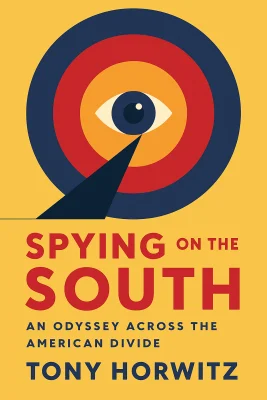
Spying on the South
An Odyssey Across the American Divide
Categories
Nonfiction, Biography, History, Memoir, Politics, Audiobook, Travel, American History, Southern, Civil War
Content Type
Book
Binding
Audio CD
Year
2019
Publisher
Penguin Audio
Language
English
ISBN13
9781984888648
File Download
PDF | EPUB
Spying on the South Plot Summary
Introduction
# Following Olmsted's Path: Democracy, Division, and the American Landscape In the autumn of 2013, a writer stood in his New England barn, surrounded by boxes of college textbooks destined for donation. Among the dusty volumes, one caught his eye: a worn copy of "The Cotton Kingdom" by Frederick Law Olmsted. What began as a moment of nostalgic browsing became an extraordinary journey of rediscovery. The pages revealed vivid accounts of riverboat gamblers, plantation masters ruling over vast estates, and the complex tapestry of antebellum American life that would captivate him for years to come. This chance encounter sparked a remarkable adventure that would take the author across thousands of miles, retracing Olmsted's 1850s journey through the American South and into Texas. What emerged was not just a historical exploration, but a profound meditation on how the past continues to shape our present. Through Olmsted's eyes, we witness a nation grappling with fundamental questions about freedom, democracy, and human dignity—questions that resonate powerfully in our own divided times. The journey reveals how one man's quest to understand America's deepest contradictions ultimately led him to envision spaces where all people could come together and find common ground.
Chapter 1: The Restless Idealist: Olmsted's Journey from Wanderer to Visionary
Frederick Law Olmsted's early life reads like a catalog of false starts and abandoned dreams. Born into a prosperous Connecticut merchant family in 1822, he drifted between boarding schools run by stern clergymen, tried his hand at farming, sailed to China as a ship's boy, and dabbled in various pursuits without finding his calling. His friends worried about his lack of stability, watching him cycle through enthusiasms with restless energy. When his fiancée Emily Perkins suddenly broke their engagement, citing a "revulsion of feeling," Olmsted's father noticed something curious: his son seemed relieved, "like a man who has thrown off a tremendous weight." Yet beneath this apparent aimlessness lay a searching intelligence and a deep sensitivity to beauty, particularly in nature. The young Olmsted possessed what one friend called an "enthusiast's nature"—a quality that would prove both blessing and curse. He traveled to Europe with his brother and Yale friends, absorbing the "People's Gardens" of Liverpool that would later influence his park designs. He experimented with scientific farming on Staten Island, reading voraciously about agricultural reform and landscape design. Most importantly, he began to develop a philosophy that would guide his life's work: the belief that beautiful, well-designed spaces could elevate and unite people across class and cultural divides. Olmsted's wandering years were not wasted time but essential preparation. His diverse experiences gave him an unusual breadth of perspective, teaching him to observe human nature in all its forms and to envision how thoughtful design might bridge the growing divisions in American society. The restless young man who couldn't settle on a career was unconsciously preparing for a mission that would transform the American landscape and demonstrate that democracy requires not just political institutions, but shared spaces where citizens can encounter one another as equals.
Chapter 2: River Tales and Southern Encounters: Slavery's Human Reality
The Ohio River in Olmsted's time pulsed with life and commerce, carrying three million passengers annually on vessels packed with livestock, furniture, whiskey, and dreams of western prosperity. When the modern writer attempted to retrace this journey, he discovered a very different waterway. Instead of passenger steamboats, he found himself aboard a coal-laden towboat, the Roger W. Keeney, pushing fifteen thousand tons of cargo at a crawling pace that made Olmsted's "slow" steamboat seem swift by comparison. The crew worked grueling three-week shifts, living in cramped quarters below the waterline, their lives regulated by the monotonous rhythm of "front watch, back watch." Life aboard the towboat revealed a hidden world of modern river commerce. The pilot, Ryan, spent twelve hours daily in solitary confinement in the pilothouse, fighting boredom on straight stretches where "not even a single goddamn bend" broke the tedium. The cook, Pam, served as mother confessor to the all-male crew, listening to their troubles while preparing endless variations of "country, Southern" cuisine. The river itself had been transformed since Olmsted's day—where he described snag-filled waters that could strand boats for months, twenty dams now maintained consistent depths, taming the wild Mississippi into a series of industrial pools. Yet human nature remained constant. Like Olmsted's fellow passengers, the towboat crew found ways to maintain dignity and community in difficult circumstances, sharing stories and taking pride in their specialized skills. The river that had once carried pioneers toward manifest destiny now transported the fuel that powered America's industrial civilization, but it still demanded the same qualities of endurance, cooperation, and hope that had sustained travelers in Olmsted's era.
Chapter 3: German Dreams in Texas: Communities of Freedom and Resistance
In the Texas Hill Country, Olmsted discovered a remarkable experiment in democratic living that offered hope for America's future. German immigrants had established communities like New Braunfels and Sisterdale, where they practiced radical ideals of equality and free thought. These settlements buzzed with intellectual energy—former university professors split shingles by day and debated philosophy by night, while their wives organized schools and cultural societies that welcomed people regardless of background. The German Texans had fled the failed revolutions of 1848, bringing with them a fierce commitment to human liberty that manifested in newspapers condemning slavery, mutual aid societies caring for the poor, and communities where merit mattered more than birth. Olmsted was particularly struck by their treatment of Mexican neighbors, whom they welcomed as equals rather than conquered subjects. Here was proof that Americans could choose cooperation over domination, that diverse communities could thrive when built on principles of mutual respect. The Germans established newspapers that condemned slavery, created mutual aid societies that cared for the poor, and built communities where intellectual discourse flourished alongside practical cooperation. But these idealistic communities faced constant pressure from their Anglo neighbors, who viewed German opposition to slavery as a threat to the established order. The immigrants found themselves caught between their principles and their survival, forced to moderate their public positions while maintaining their private convictions. Some abandoned their settlements entirely, while others learned to navigate the dangerous currents of Texas politics with careful diplomacy. Olmsted saw in these German communities a blueprint for America's potential future—diverse, democratic, and dedicated to human flourishing. Their struggles revealed both the possibility of creating more just societies and the fierce resistance such efforts would encounter, teaching him that social transformation requires not just individual courage, but communities willing to support and protect those who dare to live differently.
Chapter 4: Mules, Mud, and Memory: Personal Trials on the Frontier
The author's own attempt to retrace Olmsted's Texas journey on muleback became a comedy of errors that illuminated deeper truths about perseverance and human nature. Paired with an irascible guide named Buck and riding an unpredictable mule called Hatcher, the author found himself thrown into situations that tested every assumption about his own capabilities. When Hatcher head-butted him into unconsciousness, leaving him with a concussion that lasted weeks, the physical pain became a metaphor for the difficulty of truly understanding the past. Buck, the guide, embodied the complex character of modern Texas—part cowboy philosopher, part harsh taskmaster, suspicious of outsiders yet deeply knowledgeable about the land. His treatment of the author revealed the same dynamics Olmsted had observed in the 1850s: the tendency to establish pecking orders, to test newcomers through hardship, and to mask vulnerability behind displays of toughness. The mule journey became a crash course in frontier psychology, where every interaction carried lessons about power, respect, and survival. Yet even as the author struggled with his mount and his guide, the Texas landscape worked its magic. The rolling hills dotted with wildflowers, the clear-running creeks shaded by ancient oaks, the vast skies that seemed to dwarf human concerns—all of this natural beauty offered moments of transcendence that made the hardships worthwhile. He began to understand why Olmsted had been so moved by these vistas, and how they had shaped his vision for America's parks. The mule journey taught profound lessons about the relationship between challenge and growth. Just as Olmsted's difficult travels had prepared him for his life's work, the author's struggles on horseback deepened his appreciation for both the physical demands of nineteenth-century travel and the inner resources required to persist through adversity and emerge transformed.
Chapter 5: Border Crossings: Identity and Freedom at the Rio Grande
At the Rio Grande, Olmsted encountered a world where identities blurred and boundaries meant little to those who crossed them daily. In Eagle Pass, Texas, and Piedras Negras, Mexico, he met families who lived on both sides of the river, spoke multiple languages, and navigated complex loyalties that defied simple national categories. Here, the rigid racial hierarchies of the plantation South gave way to more fluid arrangements where survival often mattered more than skin color. The most poignant encounters involved escaped slaves who had found refuge in Mexico, where they could live as free people despite lacking formal documentation. Olmsted interviewed one such man who had learned Spanish, joined the Catholic church, and built a new life as a mechanic. Yet this freedom remained precarious—slave catchers regularly crossed the border to kidnap former bondspeople, and the man lived in constant fear of being dragged back to bondage. The border revealed America's contradictions in stark relief: while the United States proclaimed itself a beacon of liberty, Mexico offered actual freedom to those fleeing American slavery. The river that separated the two nations became a symbol of the gap between American ideals and American reality. The courage of those who crossed the Rio Grande in search of liberty would inspire Olmsted's later efforts to create spaces where all Americans could experience what he called "enlarged freedom." These border encounters taught him that true democracy required not just the absence of formal barriers, but the presence of genuine opportunity for human flourishing. The fluid world of the borderlands offered a glimpse of what America might become—a place where identity was chosen rather than imposed, where community was built through shared struggle rather than inherited privilege, and where the promise of freedom could be realized regardless of one's origins or circumstances.
Chapter 6: Parks as Democracy: Creating Spaces for Common Ground
When Olmsted returned from his southern travels, he carried with him a revolutionary vision: public spaces that could heal America's divisions by bringing people together across lines of class, race, and background. His appointment as superintendent of Central Park gave him the chance to test this theory on a grand scale. The park he and his partner Calvert Vaux designed was intended as nothing less than a democratic experiment, a place where the banker and the laborer could share the same sunset, where families from tenements could picnic alongside mansion dwellers. Every element of Central Park reflected Olmsted's southern insights. The winding paths were designed to slow down hurried urbanites and encourage contemplation, just as his travels had taught him the value of patient observation. The varied landscapes—meadows, woodlands, lakes—offered different experiences within a single space, much like the diverse communities he had encountered across the South. Most importantly, the park was free and open to all, a radical departure from the private pleasure gardens that served only the wealthy. The park's success exceeded even Olmsted's hopes. Immigrants found respite from crowded neighborhoods, children who had never seen grass could run freely across open meadows, and visitors learned to share space, to appreciate beauty together, and to see each other as fellow citizens rather than competitors. The park became what he had envisioned: a place where democracy could be practiced rather than merely preached. Central Park's enduring popularity proves the wisdom of Olmsted's vision. In our own divided times, the park continues to serve its original mission, offering a space where differences can be temporarily set aside in favor of shared wonder. The democratic experiment that began with a young man's journey through the antebellum South continues to flourish, demonstrating that the work of building community happens one encounter at a time.
Chapter 7: America's Persistent Divides: Then and Now
The author's journey following Olmsted's path revealed striking parallels between the America of the 1850s and our own fractured nation. In small-town diners and urban neighborhoods, in conversations with diverse Americans across the political spectrum, the same fundamental questions emerged: Who belongs? How do we live together? What does freedom really mean? The geographical divisions Olmsted mapped—between North and South, urban and rural, native-born and immigrant—persist in new forms today, manifesting in political polarization, economic inequality, and cultural conflicts that echo the tensions he witnessed over 150 years ago. Yet the journey also revealed reasons for hope. In Eagle Pass, Texas, the author witnessed Halloween celebrations where Mexican-American families welcomed him into their traditions, creating the kind of cross-cultural encounters Olmsted had envisioned for his parks. In New Orleans, he found communities working to preserve both their heritage and their future, much like the German Texans who had sought to balance principle with survival. At Franklin Avenue Baptist Church, he experienced the same transcendent worship that had moved Olmsted, where people came together and were lifted above their ordinary concerns through shared participation in something larger than themselves. The most profound lesson of retracing Olmsted's journey was the recognition that social change happens not through grand gestures, but through countless small encounters between people willing to see each other's humanity. Olmsted's parks succeeded because they created opportunities for such encounters, and his writings endured because they insisted on the complexity and dignity of every person he met, regardless of their circumstances. The path forward lies not in retreating to separate corners, but in creating new spaces—physical and metaphorical—where Americans can discover their common ground. The work of democracy is never finished, but it continues in every moment when strangers choose curiosity over fear, connection over division, and hope over despair.
Summary
Frederick Law Olmsted's journey through a divided America offers timeless wisdom for our own troubled times. His travels revealed that lasting social change requires more than political victories or economic reforms—it demands the patient work of creating environments where human dignity can flourish. From the cotton fields of Louisiana to the German settlements of Texas, from the slave markets of New Orleans to the democratic experiment of Central Park, his story demonstrates that hope lies not in grand gestures, but in the daily choice to see and honor each other's humanity. The most powerful lesson of Olmsted's legacy is that we all have the capacity to be landscape architects of democracy, creating spaces in our own communities where understanding can grow and divisions can heal. Whether through the parks he designed, the writings he left behind, or the example he set of patient, empathetic observation, Olmsted showed us that the work of building a more perfect union happens one encounter at a time. His journey reminds us that even in our darkest moments, the possibility of transformation remains as close as our willingness to step outside our comfort zones and truly see the world through another's eyes.
Best Quote
“There was another, much clearer survival of freethinking ways. Sisterdale had never had a church, and Joe said his family had rarely spoken of religion except to dismiss it. "Dad would tell us, 'Dat's for Catholics', or 'Dat's for Lutherans, not us,' and said that if he wanted to talk to God he could do it in the fields.” ― Tony Horwitz, Spying on the South: An Odyssey Across the American Divide
Review Summary
Strengths: The review highlights the unique narrative style of Tony Horowitz, who personally narrates his book, enhancing its special quality. The author effectively retraces Frederick Olmstead's historical journey, providing insightful comparisons between past and present. The review appreciates Horowitz's skill in eliciting honest responses from diverse characters, adding humor and depth to the narrative. The book is praised for being informative, entertaining, and allowing readers to form their own opinions. Overall: The review conveys a positive sentiment, recommending the book as a satisfying read that combines historical exploration with engaging storytelling, humor, and insightful observations on societal changes.
About Author

Tony Horwitz
Horwitz interrogates the layers of American history and identity by weaving narratives that blend rigorous investigation with immersive storytelling. His work spans travel, history, and personal exploration, frequently focusing on the American South to address complex themes such as slavery, race, and memory. Rather than maintaining a detached scholarly stance, Horwitz brings an authentic engagement to his subjects, reflecting his belief in living fully to convey compelling stories. This approach is evident in books like "Confederates in the Attic," which reflects on Civil War memory, and "Spying on the South," his final book that reconsiders historical divides through Frederick Law Olmsted's journeys.\n\nHorwitz's narrative style is characterized by a conversational and accessible tone, making intricate historical subjects engaging for general readers. He leverages his background as a Pulitzer Prize-winning journalist to ensure precision and depth, as seen in "Baghdad Without a Map," where he uncovers human connections in unexpected circumstances. This combination of journalistic skill and literary narrative creates a unique voice that both informs and entertains, offering readers insights into the American past and its lingering effects on the present.\n\nHis contributions have been recognized through prestigious awards, including the Pulitzer Prize for National Reporting. His work not only enriches the field of historical literature but also resonates with readers interested in the intersection of history and contemporary society. By reframing historical narratives through personal investigation, Horwitz enables audiences to explore America's diverse and often conflicted heritage, encouraging a deeper understanding of national identity.
Read moreDownload PDF & EPUB
To save this Black List summary for later, download the free PDF and EPUB. You can print it out, or read offline at your convenience.
Spying on the South
by Tony Horwitz
