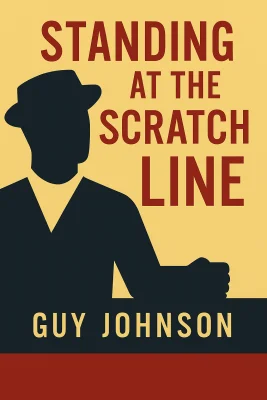
Standing at the Scratch Line
Categories
Fiction, Historical Fiction, Family, Cultural, Book Club, African American, 20th Century, War, Southern, African American Literature
Content Type
Book
Binding
Paperback
Year
2001
Publisher
Villard
Language
English
ASIN
0375756671
ISBN
0375756671
ISBN13
9780375756672
File Download
PDF | EPUB
Standing at the Scratch Line Plot Summary
Introduction
# Blood and Honor: Standing at the Scratch Line The Louisiana bayou stretched like a wound across the earth, its dark waters reflecting nothing but shadows and secrets. In 1916, eighteen-year-old LeRoi Tremain poled his flat-bottomed skiff through these treacherous channels, following his Uncle Jake's silent hand signals as they hunted the DuMont clan. The morning mist clung to the cypress trees like funeral shrouds, and death waited in the reeds with the patience of a serpent. LeRoi's arrows had already tasted DuMont blood in this generations-old feud, but today's raid would go wrong in ways that would reshape his destiny forever. When the gunfire finally stopped and Uncle Jake lay dying with a bullet in his gut, LeRoi found himself branded a cop-killer with a price on his head. The family elders made their decision with the cold efficiency of men who understood survival. The boy who had spilled blood for family honor was now its greatest liability. As the freight train pulled away from Dead Man's Slough in the pre-dawn darkness, LeRoi watched Louisiana disappear into the night, carrying with him a burning promise that would echo through the years. He would return as something harder and more dangerous than the swampland had ever seen, and when he did, the scratch line would be drawn in blood.
Chapter 1: From Bayou to Battlefield: The Making of King Tremain
The ambush went wrong from the first shot. LeRoi Tremain crouched in the Louisiana marsh grass, watching his Uncle Jake's face go pale as blood soaked through his shirt. What should have been a simple raid on DuMont territory had turned into a three-way firefight when they stumbled into a gun-running operation. Pirates, deputies, and feuding families all opened fire in the chaos, turning the morning mist red with violence. LeRoi's arrows found their marks with deadly precision. Two deputies fell with shafts through their hearts, their badges glinting in the dawn light as they toppled into the dark water. But Uncle Jake was gut-shot and dying, his weathered hands pressed against the wound that was stealing his life away drop by drop. "You got to get out of here, boy," Jake whispered, blood frothing on his lips. "We done killed some pirates and some sheriff's men too. They'll be coming back with reinforcements." LeRoi had made a fatal mistake. His distinctive arrows were scattered across the battlefield like calling cards, each one bearing the carved marks that would identify him to any lawman with eyes. At Jake's funeral, the verdict came swift and final. Papa Henry, the family patriarch, delivered the news with the weight of generations behind his words. The sheriff knew LeRoi was involved in killing those deputies. The boy had to leave Louisiana, maybe for years. Even his father's farm would be given to others. The Tremain blood ran too hot to be cooled by distance, but survival demanded exile. The freight train carrying colored soldiers became his escape route. As the Arkansas Shuttle pulled away from Dead Man's Slough, LeRoi sat alone in the caboose, watching his homeland fade into darkness. But the anger burning in his chest made a promise that would define the rest of his life. He would return, and when he did, he would take back everything that was his. The boy leaving Louisiana that night would come back a man forged by war, tempered by violence, and hungry for the reckoning that had been too long delayed.
Chapter 2: Forged in War: From Trenches to Empire
The trenches of northern France turned boys into killers, and LeRoi Tremain proved to be a natural student of death. Assigned to the 351st Negro Regiment, he found himself in a suicide squad behind enemy lines, where the rules of civilized warfare meant nothing and survival demanded embracing the darkness within. The mud reeked of cordite and rotting flesh, but for LeRoi, it offered something precious that America never had—respect earned through courage rather than granted by skin color. Sergeant McGraw, an Irish brute who had terrorized the colored soldiers since basic training, crouched beside LeRoi as German artillery pounded their position. "Tremain," McGraw hissed, his face pale with fear, "you're the best shot we got. Think you can take out that machine gun nest?" LeRoi studied the German position through his rifle scope, calculating distance and wind. Two years of war had honed his natural marksmanship into something lethal. The mission to Kastledorf Bridge changed everything. When McGraw and his racist squad turned their guns on the colored soldiers, claiming they were cleaning up problems, LeRoi's response was swift and merciless. He killed them all, hanging McGraw from a lamppost with the cold efficiency of an executioner. The French resistance fighters who witnessed the carnage gave him a new name—Le Roi du Mort, the King of Death. Professor Morris, the educated soldier who had become LeRoi's closest friend, watched the transformation with growing unease. "You're becoming something inhuman," he warned after another brutal engagement. But LeRoi had found his calling in the chaos of war. The pain of losing family, the rage at injustice, the simple pleasure of being very good at killing—it all crystallized into a perfect weapon. When the armistice came, LeRoi had become King Tremain, a man who commanded respect through fear and competence. His squad had survived missions that decimated other units, not through luck but through his willingness to do whatever was necessary. The boy from the Louisiana bayous had learned the most important lesson war could teach—that violence, properly applied, solved problems that words could never touch. As the 369th Regiment marched through Harlem in their victory parade, King felt the weight of what he had become. He was no hero. He was something far more dangerous.
Chapter 3: Urban Warfare: Building Power in Harlem's Streets
New York City in 1919 pulsed with jazz and possibility, but for King Tremain, it represented something else entirely—opportunity. The Rockland Palace, Harlem's premier nightclub, became his first conquest. Partnering with bandleader Jim Europe and his army buddies Big Ed and Professor, King invested his share of gold looted from a French bank into the establishment. But success in the city came with a price, and that price had a name—the Minetti crime family. Tino Minetti and his thugs swaggered into Jim Europe's office demanding protection money, treating the colored owners like servants in their own establishment. When Tino called King a racial slur, the response was swift and educational. King's hands found Tino's throat, and his companion's head met the desk with a sickening crack. The message was clear—these were not the kind of colored men who bowed and scraped. King understood that killing Minetti soldiers was only the beginning. Using skills learned in French interrogation chambers, he extracted everything the captured men knew about the family's operations. Then, with military precision, he orchestrated a war between the Minettis and their rivals, the Milanos, using their own weapons and tactics against them. The plan was elegant in its simplicity. King's squad, disguised as roofers, set up sniper positions overlooking a Minetti family meeting. When the shooting stopped, the old don lay dead along with his lieutenants. Across town, similar hits eliminated the Milano leadership. The newspapers blamed it on gang warfare, never suspecting that colored veterans had orchestrated the entire bloody ballet. Professor, sickened by the violence, tried to reason with his friend. "This isn't war anymore, King. This is just murder for money." But King had learned a harder truth in the trenches—that respect came from the barrel of a gun, and in America, a colored man had to take respect because it would never be freely given. The gold from their hits would fund bigger dreams, but first, the streets of Harlem had to learn a new name for fear.
Chapter 4: Love and Betrayal: The Search for Lost Blood
The war King orchestrated between the crime families painted New York's streets red, but it also painted a target on his back. When the Minettis sent a hit squad to the Rockland Palace, the bullets meant for King found Professor Morris instead, gut-shot and dying in a hospital ward that reeked of neglect and indifference. Professor's death hit King like a physical blow, his friend whispering warnings about the cost of violence with his last breath. Mamie Walcott moved through the smoky speakeasy like music made flesh, her coffee-colored skin gleaming in the gaslight. When she smiled at King, he felt something he'd never experienced—vulnerability. Within months, they were married, and Mamie was carrying his child. But happiness was a luxury King's world rarely allowed. Mamie died in childbirth, taking their son with her, or so King was told by the midwife who attended her. The grief nearly destroyed him, but it also forged something harder in his heart. When he learned years later that his son might have survived, hidden away by enemies who understood that family was his only weakness, King's search became an obsession. Every lead took him deeper into a maze of lies and betrayal, each dead end another twist of the knife in his heart. Big Ed, sickened by the endless cycle of violence, made his choice. He would take his share of their blood money and return to Nebraska with Leah, the dancer who had captured his heart. They would build something clean and honest from the soil, far from the concrete canyons where death lurked around every corner. King watched his friend leave with mixed emotions, understanding that Big Ed represented the path not taken. The final confrontation came in a Bronx apartment where the surviving Minetti and Pascarella dons met to plan their retaliation. King's snipers turned the meeting into a slaughter, but victory tasted like ashes in his mouth. Everyone he cared about was being torn away, leaving him alone with his guns and his ghosts. The boy who had dreamed of blank pages and new beginnings was gone forever, replaced by a man whose story could only be written in blood.
Chapter 5: Western Expansion: California Dreams and Family Fractures
The fog rolled in from San Francisco Bay like a gray shroud as King Tremain established his new empire on the West Coast. The year was 1932, and Prohibition had made him wealthy beyond his boyhood dreams. But wealth couldn't fill the void left by his missing son or heal the wounds in his marriage to Serena, the light-skinned woman who had become both his salvation and his curse. Their household had become a battlefield disguised as domestic tranquility. Serena, now a polished society matron, threw herself into social climbing and real estate ventures, desperate to prove her worth. She had given King two sons—LaValle, born of violence and shame, and Jacques, their true child together. But even motherhood couldn't bridge the chasm between them. King watched his sons with the calculating eye of a man who understood that character revealed itself early. Jacques, dark-skinned and fierce, showed the Tremain fire from infancy. He faced challenges head-on, never backing down from a fight. LaValle, lighter-skinned and favored by his mother, ran to Serena's skirts whenever life grew difficult. The family's dysfunction reached its peak when King discovered Serena's ultimate betrayal. Through a private investigator, he learned that his missing son—now called Elroy Fontenot—had been found years earlier in a Texas orphanage. Serena had known his location all along, even sending money for his care, but had never told King. She'd chosen to protect LaValle's position as the eldest son over reuniting King with his firstborn. "You left my blood to rot in an orphanage while you played mother to another man's bastard," King said, his voice carrying the weight of absolute judgment. The confrontation shattered their marriage beyond repair. King moved out, taking Jacques with him, leaving Serena alone with LaValle and the bitter knowledge that her choices had cost her everything she'd tried to protect. The scratch line had been drawn through the heart of their family, and there would be no crossing back.
Chapter 6: The Price of Legacy: Sons, Curses, and Consequences
The war had changed Jacques Tremain, though he still preferred his childhood nickname of Jack. He returned from the Pacific theater in 1945 as a decorated officer, his boyhood softness burned away by combat and command. At twenty-three, he stood tall and broad-shouldered, with his father's dark eyes and an air of quiet authority that made other men step aside. King watched his son with pride and growing concern. Jack had inherited the Tremain strength but tempered it with something King had never possessed—mercy. Where King would kill an enemy without hesitation, Jack sought solutions that didn't require bloodshed. It was admirable but potentially fatal in their world. The test came when LaValle, now a weak-willed gambler and drunk, fell into debt with Rocky Tisdale, a brutal enforcer working for the Italian mob. Tisdale made the mistake of thinking King wouldn't care about his wife's bastard son, but family was family, even when it disappointed. The confrontation came in a barn where Tisdale held his illegal boxing matches. Jack refused to let his father handle the situation alone, facing Tisdale in single combat. The boxer was bigger, stronger, and more experienced, but Jack had learned different lessons in the war. He fought not with boxing rules but with the brutal efficiency of a soldier. When Tisdale fell unconscious, his skull cracked against the wooden floor, Jack stood over him breathing hard but victorious. As they disposed of Tisdale's body in the cold waters of the Pacific, King shared a terrible secret. A voodoo woman in New Orleans had prophesied that both LaValle and Jack would die young, victims of the curse Serena had brought upon their family by abandoning King's firstborn son. The prophecy hung over them like a sword, turning every victory into a countdown to tragedy. King held his newborn grandson close, whispering promises into the baby's ear, knowing that this child would likely be orphaned before his tenth birthday, left to carry on the Tremain name alone.
Chapter 7: Standing at the Final Line: Reckoning and Inheritance
The christening party for Jack's newborn son should have been a celebration, but King Tremain felt the weight of destiny pressing down like a physical force. Little Jackson Saint Clare Tremain lay in his grandfather's arms, a perfect child who represented both hope and tragedy. The voodoo woman's prophecy cast its shadow over the elegant ballroom, turning the gathering into a wake for the living. Serena moved through the celebration like a ghost, bound by a contract signed in her own blood after she'd begged King to save LaValle from Tisdale's men. The curse she'd unleashed by abandoning Elroy had already claimed her sisters—Della's miscarriages, Tini's suicide—and now it was coming for her sons. She'd given LaValle everything she had to give, but it had never been enough. Her protection had made him weak, her love had made him dependent. LaValle sat in a corner drinking heavily, his face still bruised from King's public beating. He'd finally learned the truth about his parentage, that he wasn't King's blood son but the product of rape and sacrifice. The knowledge had broken something inside him, leaving him bitter and desperate for acceptance he would never receive. King understood the full weight of what was coming. He'd built an empire through violence and will, but some debts could only be paid by future generations. The scratch line that had defined his life—that invisible boundary where a man either stands his ground or falls—would soon claim his sons, leaving only his grandson to carry the burden forward. The party continued around them, a glittering facade over the darkness that was approaching. Jack laughed with his friends, unaware that his days were numbered. Serena smiled at the society matrons who'd finally accepted her, not knowing the price of that acceptance. Only King saw the true arithmetic of their existence—every choice had consequences, every victory carried the seeds of future tragedy, and the Tremain name would survive only because someone was always willing to pay the price in blood.
Summary
Standing at the Scratch Line chronicles the rise and fall of King Tremain, a man who refused to accept the limitations imposed by his race and era. From the Louisiana bayous to the streets of San Francisco, King carved out an empire through violence and determination, discovering that every victory carried the seeds of future tragedy. His wife Serena's betrayal—abandoning his firstborn son to protect her own child's position—unleashed a curse that would claim multiple generations, proving that some choices echo through time with devastating consequences. The novel's power lies not in its violence, though that is considerable, but in its unflinching examination of how personal choices create generational trauma. King's refusal to bow created opportunities for his family, but his methods ensured that peace would remain forever out of reach. In the end, he stands as both hero and cautionary tale—a man who won every battle but lost the war for his family's soul. The scratch line runs through every page, that invisible boundary where courage meets consequence, reminding us that standing up for principle always comes with a price, and sometimes that price is paid by those we love most. King Tremain got everything he wanted and lost everything that mattered, leaving behind a legacy written in blood and a grandson who would inherit both his power and his burden.
Best Quote
Review Summary
Strengths: The book is praised for its unique narrative and portrayal of an African American protagonist in a pre-Civil Rights setting, which is considered novel and refreshing. The character Serenna is highlighted as a complex and well-developed figure. The author, Guy Johnson, is commended for his realistic storytelling approach, where potential plot directions may not always materialize, reflecting the unpredictability of real life. Weaknesses: The protagonist, King Tremain, is noted as lacking depth compared to other characters. Overall: The reviewer expresses high admiration for the book, appreciating its unpredictability and realistic portrayal of life’s complexities. The book is recommended for its originality and engaging character development.
About Author

Guy Johnson
Adichie reframes societal norms through narratives that challenge conventional perspectives on gender and identity. Her work often delves into the complexities of cultural intersections, presenting stories that encourage readers to reconsider preconceived notions. Meanwhile, her exploration of power dynamics in relationships provides a platform for examining broader social issues. This thematic focus invites an audience seeking to deepen their understanding of diverse cultural experiences and the forces that shape them.\n\nThrough parallel storytelling and richly developed characters, Adichie's books capture the nuances of personal and collective identity. For example, one of her notable works addresses the impact of migration and the duality of belonging and alienation. Therefore, readers are offered a lens through which to view the intricacies of human experiences that transcend geographical boundaries. Her ability to interweave individual and communal narratives helps demystify complex societal issues, making her works particularly relevant to those interested in social justice and cultural discourse.\n\nThe author’s distinct approach to narrative allows readers to engage with her bio in a way that highlights the transformative power of literature. By offering a unique blend of storytelling and social commentary, Adichie’s work not only entertains but also educates, prompting readers to reflect on their role in an interconnected world. This resonates with a diverse readership, providing insights that are both personal and universal in scope.
Read moreDownload PDF & EPUB
To save this Black List summary for later, download the free PDF and EPUB. You can print it out, or read offline at your convenience.
Standing at the Scratch Line
by Guy Johnson
