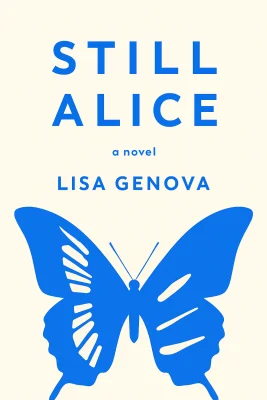
Still Alice
Categories
Psychology, Fiction, Mental Health, Audiobook, Adult, Medical, Book Club, Contemporary, Adult Fiction, Realistic Fiction
Content Type
Book
Binding
Paperback
Year
2007
Publisher
Iuniverse Inc
Language
English
ASIN
0595440096
ISBN
0595440096
ISBN13
9780595440092
File Download
PDF | EPUB
Still Alice Plot Summary
Introduction
Dr. Alice Howland stood at the podium in Stanford's auditorium, the words flowing effortlessly from her lips as they had for twenty-five years at Harvard. She was explaining the neural pathways of language, her area of expertise, when something terrifying happened. Mid-sentence, a word simply vanished. Not on the tip of her tongue, not forgotten momentarily, but gone entirely. The audience waited patiently as she fumbled, her face growing hot with panic she'd never experienced before. At fifty, Alice was at the pinnacle of her career, a renowned psycholinguist whose mind had always been her greatest asset. But neurons in her brain, near her ears, were already being strangled to death too quietly for her to hear them. The molecular murder had begun, and Alice's extraordinary life was about to become a battleground between the person she had always been and the disease that would systematically dismantle everything she thought made her who she was. What started as occasional lapses would soon become a devastating journey through the landscape of early-onset Alzheimer's disease.
Chapter 1: The First Cracks in a Brilliant Mind
Alice tried to convince herself it was stress. The forgotten word at Stanford, the morning she couldn't find her way home from Harvard Square despite walking those streets daily for decades, the Christmas Eve when she stood helpless in her own kitchen, unable to remember a single step of her mother's bread pudding recipe she'd made every year since childhood. These weren't normal memory lapses. The most frightening incident came during her regular run along the Charles River. After finishing her usual route, she found herself standing in Harvard Square, completely disoriented. The familiar bookstores and cafes looked foreign, threatening. A woman with wild hair grabbed her arm, shouting about Jesus and sin, and Alice fled across the street only to realize she had no idea which direction led home. For terrifying minutes, she was lost in a place she'd known for twenty-five years. When John finally found her that evening, having missed dinner with friends, Alice broke down. She couldn't tell him about getting lost, couldn't admit that her brilliant mind was betraying her. Instead, she blamed exhaustion and work stress, watching his concerned face in the hallway mirror. He held her as she cried, neither of them understanding that those tears marked the beginning of the end of the Alice they both knew. Her attempts to rationalize the symptoms grew desperate. She researched menopause online, finding memory problems listed among the effects of hormonal changes. She wrote herself increasingly complex reminder notes, carried her BlackBerry like a lifeline, and began checking her refrigerator to ensure she was in her own kitchen. But late at night, when John's snoring filled their bedroom, Alice lay awake knowing something was terribly, irreversibly wrong.
Chapter 2: Diagnosis: Confronting the Unthinkable Truth
Dr. Davis at Massachusetts General Hospital's Memory Disorders Unit delivered the verdict with clinical precision. Alice had performed brilliantly on most cognitive tests, scoring in the ninety-ninth percentile for attention and reasoning. But her recent memory showed devastating impairment. When he'd asked her to remember John Black's address from their previous session, she could recall neither the street number nor the name. The genetic testing confirmed her worst fears. She carried the presenilin-1 mutation, autosomal dominant, with one hundred percent penetrance. This wasn't age-related decline or stress-induced forgetfulness. This was early-onset Alzheimer's disease, written into her DNA, inevitable as sunrise. At fifty, Alice had perhaps ten years of declining cognitive function ahead of her, maybe less. John accompanied her to the follow-up appointment, spinning his wedding ring nervously as Dr. Davis explained the progression. Alice would need constant supervision eventually. She should stop traveling alone, consider medication that might slow the decline, and prepare legal documents while she still could. The Activities of Daily Living questionnaire painted a horrific picture of her future: unable to feed herself, incontinent, requiring full-time care, her speech becoming unintelligible until language itself disappeared. Walking out of the hospital into the January cold, Alice felt like she was viewing her life from outside her body. The woman who had just received a death sentence for her mind looked exactly like the Harvard professor who had walked in an hour earlier. But inside, everything had changed. She was no longer Dr. Alice Howland, respected academic. She was Alice Howland, Alzheimer's patient, and the distinction would define every remaining day of her life.
Chapter 3: Family Bonds Tested by Genetic Fate
Telling their children required a courage Alice didn't know she possessed. Tom, Anna, and Lydia gathered in their Cambridge living room for Easter brunch, the conversation flowing normally until John cleared his throat. Alice watched their faces change as she spoke the words that would alter their lives forever: early-onset Alzheimer's disease, genetic mutation, fifty percent chance for each of them. Tom, the medical student, grasped the implications immediately. Anna, always the analytical lawyer, peppered them with questions about treatment and prognosis. But it was Lydia who surprised Alice most. Her youngest daughter, the one who had rejected college for acting in Los Angeles, asked the most penetrating question of all: what did it feel like to have this disease? The genetic testing split the siblings down an inevitable line. Tom and Anna chose to know their fate, visiting the genetic counselor together, holding hands like children facing a monster. Anna tested positive, inheriting her mother's curse. Tom was spared. The relief and guilt in his eyes when they returned with the results cut Alice deeper than her own diagnosis had. Lydia refused testing altogether, declaring she would rather live with uncertainty than the weight of knowing. Anna threw herself into planning, researching in vitro fertilization with preimplantation genetic diagnosis to ensure her future children would be safe. But Alice saw the fear lurking beneath her daughter's efficiency. Late one evening, Anna broke down, confessing her terror of becoming symptomatic while raising young children. Alice held her firstborn, feeling the devastating weight of the genetic legacy she'd unknowingly passed on, wondering if she would have chosen differently had she known what her DNA contained.
Chapter 4: Professional Identity Unraveling
The first sign that Harvard noticed came through student evaluations. Alice's motivation and emotion course, once rated consistently excellent, received scathing reviews. Students complained she taught the same lecture twice, skipped crucial material, and seemed confused by her own content. The woman who had never received less than stellar feedback was suddenly being called unprepared and ineffective. Eric Wellman, department head and longtime colleague, called her into his office. Alice sat across from him reading the brutal comments, feeling each criticism like a physical blow. When Eric gently probed about possible personal problems or substance abuse, Alice made a decision that terrified her. She told him the truth: she had Alzheimer's disease. The conversation that followed felt like attending her own funeral. Eric, protective and pragmatic, explained that parents paying forty thousand dollars annually wouldn't accept a professor with dementia teaching their children. Students were already contesting grades she'd given. Her teaching days were over, effectively immediately. She could remain as Dan's thesis advisor and attend seminars, but her active role at the university where she'd built her identity was finished. Walking through William James Hall afterward, Alice felt like a ghost haunting her former life. Colleagues who had been warm friends suddenly found reasons to avoid her. The psychology lunch seminar became a lesson in isolation as people chose to stand rather than sit beside her. When she offered the same intelligent critique twice during one presentation, the room fell silent with embarrassment. Her brilliant mind, once her greatest asset, had become a source of shame and pity.
Chapter 5: Building Lifelines While Memory Fades
Desperate for connection with others who understood her experience, Alice reached out to Mass General's social worker. The hospital had support groups for caregivers but nothing for patients themselves. Most people with Alzheimer's, she was told, weren't capable of participating in such forums. But Alice wasn't most people, not yet. Through persistent effort, she connected with three others living with early-onset dementia: Mary, a former real estate agent; Cathy, a pharmacist who'd had to abandon her career when she could no longer safely measure medications; and Dan, a firefighter whose family had been devastated by the disease for generations. Meeting in Alice's living room, they shared stories of lost words, confused moments, and the peculiar loneliness of watching their minds desert them while their bodies remained strong. These monthly gatherings became Alice's lifeline. Here, she could speak honestly about her fears, her rage, her grief for the woman she was losing day by day. Mary talked about hiding money and forgetting where she'd put it. Cathy described the relief of finally having a diagnosis after years of thinking she was going insane. Dan shared the terrible irony of recognizing the symptoms from watching his mother but being powerless to stop them in himself. Together, they navigated the strange landscape of early-stage dementia, offering each other the understanding that their families, despite loving intentions, couldn't provide. They were pioneers in uncharted territory, documenting their own descent while still possessing the language and awareness to describe what was happening to them. In a world that seemed eager to write them off, they insisted on being seen, heard, and valued for who they still were.
Chapter 6: Still Alice: Finding Voice in the Fog
When the Alzheimer's Association invited Alice to give the opening keynote at their national conference, she almost declined. Standing before seven hundred healthcare professionals seemed impossible for someone who now struggled to complete sentences. But with John's support and careful preparation, she accepted the challenge. The morning of her speech, Alice stood at the podium wearing her mother's butterfly necklace for luck. Her typed pages trembled slightly in her hands as she faced the audience. She didn't dare look up from her notes, afraid of losing her place, but she had something crucial to say. People with Alzheimer's, she told them, weren't gone. They were still living, still feeling, still deserving of respect and inclusion. She spoke of the isolation, the way conversations stopped when she entered rooms, how people looked through her rather than at her. She challenged the audience to see past the scarlet A of Alzheimer's to the human beings still fighting for dignity and connection. Her voice grew stronger as she described living in the moment, finding meaning in each day even as yesterdays disappeared and tomorrows grew uncertain. When Alice finally looked up after reading her final words, the entire ballroom was standing, applauding. Tom and Anna were crying. John stood tall in his lucky gray t-shirt, love and pride shining in his eyes. Mary, Cathy, and Dan beamed from the front row. For twenty minutes, Alice had been herself again completely, brilliant and articulate, teaching and inspiring. It was a moment of triumph she would hold onto as the disease continued its relentless advance.
Chapter 7: The Final Chapters of Consciousness
The speech marked both a peak and a beginning of the end. Alice's energy, depleted by the enormous effort required to function publicly, never fully returned. She slept longer, cried without specific reason, and struggled with increasingly basic tasks. The morning she couldn't figure out how to put on a sports bra and emerged from her bedroom with underwear on her head, laughing at her own absurdity, John couldn't find the humor she still possessed. Their marriage became a battlefield over John's job offer from Sloan-Kettering in New York. Alice begged him to take his sabbatical year, to spend their remaining time together while she still knew who he was. But John couldn't bear to watch her decline, couldn't sit idle while his career opportunities passed by. Their fight revealed the cruel mathematics of Alzheimer's: one of them would lose everything, and both knew it wouldn't be the disease. As spring brought the birth of Anna's twins, Alice experienced moments of pure joy holding her grandchildren, knowing they would never face her genetic curse. But these bright spots became increasingly rare. She got lost in her own neighborhood, mistook a neighbor's house for her own, and began to lose the thread of conversations mid-sentence. The woman who had built her identity on intellectual achievement could no longer read a book or compose an email. Her family rallied around her, but Alice could see the strain in their faces, the way they looked at her now with a mixture of love and pity. Tom studied her like a medical specimen. Anna managed her care with lawyer-like efficiency. Lydia, surprisingly, seemed most comfortable with the changing Alice, accepting her mother's new reality without trying to fix it or hold onto what was already gone. In quiet moments, Alice wondered if her youngest daughter's artistic training had taught her to see beauty and truth even in tragedy.
Summary
Alice Howland's journey from Harvard professor to Alzheimer's patient reveals the brutal mathematics of a disease that steals identity piece by piece. Her story illuminates not just the medical reality of early-onset dementia, but the profound questions of what makes us human when memory fails and language disappears. Through Alice's eyes, readers witness the courage required to live with dignity while losing everything that once defined a life worth living. The butterfly necklace that Alice wore throughout her decline serves as a metaphor for transformation and beauty persisting even in tragedy. Like the butterflies her mother once described as living beautiful lives despite their brevity, Alice's remaining time held meaning precisely because she chose to embrace it fully. Her family learned to love not just who she had been, but who she was becoming, finding grace in small moments of connection that transcended the boundaries of disease. In losing her extraordinary mind, Alice ultimately discovered that her essence, her capacity for love and her fundamental humanity, existed beyond the reach of even Alzheimer's relentless advance.
Best Quote
“You're so beautiful," said Alice. "I'm afraid of looking at you and not knowing who you are.""I think that even if you don't know who I am someday, you'll still know that I love you.""What if I see you, and I don't know that you're my daughter, and I don't know that you love me?""Then, I'll tell you that I do, and you'll believe me.” ― Lisa Genova, Still Alice
Review Summary
Strengths: The review highlights the emotional depth and immersive storytelling of Alice's journey with Alzheimer's, praising Genova's ability to convey the protagonist's perspective effectively. The narrative's ability to evoke empathy and the author's background knowledge on Alzheimer's are also commended. Weaknesses: The review notes that some plot points are lost due to the narrative style, and certain descriptions, particularly of Boston and medical details, can feel overly lengthy and clinical. Additionally, the inclusion of a chapter from John's perspective is seen as a minor disappointment. Overall: The reviewer expresses a strong emotional connection to the story, appreciating its poignant portrayal of Alzheimer's. Despite minor criticisms, the book is recommended for its compelling narrative and insightful depiction of the disease.
About Author
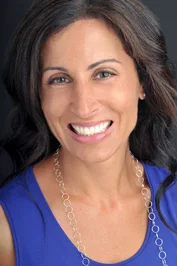
Lisa Genova
Genova investigates the human mind through the lens of neurological disorders, offering a profound exploration of how these conditions intersect with personal identity and relationships. Her writing is informed by her background in neuroscience, where she leverages scientific accuracy to provide an authentic portrayal of brain diseases such as Alzheimer's, bipolar disorder, and ALS. In novels like "Still Alice" and "Inside the O'Briens," Genova seamlessly blends intricate scientific details with narrative empathy, allowing readers to grasp the complex realities faced by those living with neurological conditions. Her approach serves both educational and emotional purposes, making the science of the brain accessible and deeply moving.\n\nBy focusing on the lived experiences of her characters, Genova not only raises awareness but also promotes a more profound understanding of neurological disorders among her readers. Her works have been compared to those of Oliver Sacks and Michael Crichton for their ability to translate complex medical concepts into engaging stories. This unique fusion of storytelling and science is further demonstrated in her non-fiction book "Remember: The Science of Memory and the Art of Forgetting," which explores the mechanics of memory. Through her books and public speaking, including widely viewed TED talks, Genova empowers audiences to gain insight into both the scientific and human aspects of these conditions, fostering greater empathy and knowledge.\n\nHer ability to convey these themes has earned Genova significant recognition in both literary and scientific communities. "Still Alice," her most acclaimed work, was not only a bestseller but also adapted into an Oscar-winning film, showcasing her impact on broader cultural discussions about neurological health. Through her narrative artistry, Genova continues to enrich public discourse and understanding, making her a pivotal figure in contemporary fiction that bridges the gap between complex science and everyday life.
Read moreDownload PDF & EPUB
To save this Black List summary for later, download the free PDF and EPUB. You can print it out, or read offline at your convenience.
Still Alice
by Lisa Genova
