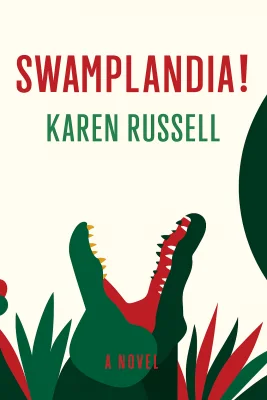
Swamplandia!
Categories
Fiction, Audiobook, Fantasy, Book Club, Contemporary, Magical Realism, Novels, Coming Of Age, Adult Fiction, Literary Fiction
Content Type
Book
Binding
Kindle Edition
Year
2011
Publisher
Vintage
Language
English
ASIN
B004FGMQZC
File Download
PDF | EPUB
Swamplandia! Plot Summary
Introduction
# Swamplandia!: A Family's Descent Through Grief and Wilderness The spotlight cuts through Florida darkness, illuminating Hilola Bigtree as she stands twenty-seven feet above a pit writhing with ninety-eight alligators. For three generations, the Bigtree family has ruled their kingdom of terror and wonder—Swamplandia!, an alligator wrestling theme park deep in the Everglades where tourists come to witness the impossible dance between woman and monster. But cancer stalks different prey than reptilian predators, and when Hilola dies, she takes with her the beating heart of their empire. Chief Bigtree and his three children—seventeen-year-old Kiwi, sixteen-year-old Osceola, and thirteen-year-old Ava—find themselves marooned on their hundred-acre island as creditors circle like buzzards and the corporate World of Darkness theme park bleeds away their customers. While Kiwi flees to the mainland seeking salvation in the enemy's embrace, Osceola opens doorways to realms far more dangerous than any alligator pit, communing with the ghost of a Depression-era dredgeman named Louis Thanksgiving. And young Ava, clutching dreams of championship glory and a secret red alligator that might save them all, will follow her vanished sister into the heart of the swamp where the living and dead converge in ways that defy both reason and survival.
Chapter 1: The Last Dive: When the Star Falls Silent
The alligators knew before anyone else that Hilola Bigtree was dying. They stopped eating, floating motionless in their concrete pit like prehistoric logs, their yellow eyes tracking her movements with ancient patience. The tourists still came to Swamplandia!, drawn by faded brochures promising authentic Florida wilderness, but something had shifted in the humid air—a scent of endings that even mainland visitors could sense. Ava watched her mother climb the diving platform one final time, her wrestler's grace replaced by something fragile and deliberate. The cancer had been eating at Hilola for months, though the family maintained their performance of normalcy. Chief Bigtree worked the spotlight with trembling hands, following his wife's silhouette as she prepared for her last dance with death. Their eldest son Kiwi operated the music system while Osceola sold popcorn with a dreamy smile that fooled no one. This was their world—a wooden stadium surrounded by mangrove tunnels, where the Bigtree Wrestling Dynasty had performed for three generations. Tourists came to witness something wild and real in an increasingly artificial world, to see a woman dive into waters that could crush bone with two thousand pounds of pressure per square inch. Hilola emerged victorious from every encounter, proof that human will could triumph over nature's most perfect killing machine. But victory was temporary, and death patient. When Hilola finally succumbed, she left behind more than a grieving family—she left behind an empire built on her legend, a business that depended on her nightly defiance of mortality. The morning after her funeral, Chief Bigtree sat in the empty stadium staring at ninety-eight Seths basking in Florida sun, each one named after the biblical son who had replaced the murdered Abel. Without their star performer, they were just dangerous animals in a failing business. The complaints began immediately. Disappointed tourists demanded refunds, their faces twisted with the petty rage of the cheated. They had paid good money to see death defied, not to confront its reality. The Chief created consolation packages—foam alligator hats and crystal flamingo necklaces—but nothing could replace what they had lost. Within weeks, the steady stream of visitors that had sustained Swamplandia! for decades dwindled to a trickle, leaving the family to face the terrible arithmetic of their decline.
Chapter 2: Fractured Islands: A Family Adrift After Loss
The ferry that connected Swamplandia! to the mainland became a barometer of their collapse. Where once it arrived daily heavy with tourists, now it came sporadically, carrying only supplies and the occasional confused European clutching an outdated guidebook. Empty stadium seats gathered dust and bird droppings while the alligators continued their ancient patrol, indifferent to the absence of human drama above. Chief Bigtree threw himself into increasingly desperate schemes, speaking of Carnival Darwinism and saltwater crocodiles that would draw new crowds. His plans filled blackboards with wild calculations and impossible budgets, dreams that required money they didn't have and tourists who no longer came. The debt mounted like flood water, threatening to drown everything their family had built on this hundred-acre island in the Ten Thousand Islands chain. Kiwi watched his father's delusions with growing horror. While Ava clung to hope and Osceola retreated into books, Kiwi saw the numbers with brutal clarity. The park was hemorrhaging money, and his father's refusal to acknowledge reality would drag them all down. He had been accepted to mainland schools but stayed to help save the family business, cataloging their decline with scientific precision—noting tourist numbers, water temperatures, feeding schedules of creatures that might soon belong to someone else. The breaking point came during a family meeting in the Swamp Café, surrounded by the detritus of their failing enterprise. Kiwi laid out his plan with the cold precision of an autopsy report: sell the equipment, liquidate the alligators, enroll the children in mainland schools. Chief Bigtree's response was volcanic, a rage that shook the building's foundations. How dare his son suggest abandoning their mother's legacy, their ancestral home, their very identity as Bigtrees? That night, Kiwi packed his duffel bags in silence. He took three hundred dollars from his father's wallet—not theft, he told himself, but an advance on his inheritance. As dawn broke over the swamp, he stood at the ferry dock with their neighbor Gus Waddell, leaving behind the only world he had ever known. His note, pinned beneath a Swamplandia! magnet on the refrigerator, spoke of fiscal responsibility and educational opportunities, but the truth was simpler: he was seventeen years old, and he was running for his life.
Chapter 3: Separate Shores: Kiwi's Escape and Osceola's Descent
The World of Darkness rose from the Florida landscape like a fever dream of corporate ambition, its massive Leviathan attraction visible from miles away. Kiwi found himself in the belly of this beast, mopping floors and cleaning artificial whale intestines for five dollars and seventy-five cents an hour. His coworkers called him Margaret Mead after discovering a book in his locker, and he endured their mockery with the stoic determination of a prisoner of war. The irony cut deep—he had fled his family's authentic monster kingdom only to find himself enslaved to a mechanical imitation. The World of Darkness was everything wrong with America made manifest: corporate, soulless, designed to extract maximum profit from minimum experience. Yet it thrived while Swamplandia! withered, proof that authenticity was no match for marketing budgets and highway access. His dormitory room was a windowless cell two levels below the main attraction, where the sound of screaming tourists filtered down like distant thunder. At night, surrounded by strangers who spoke in acronyms and casual cruelties, Kiwi studied for his GED with desperate intensity. He enrolled in night school where his homeschool education proved both asset and liability—he could discuss alligator mating habits with scientific precision but struggled with basic social interactions his classmates took for granted. Meanwhile, back on the island, Osceola discovered solace in death. The Spiritist's Telegraph, a moldering tome salvaged from their grandmother's belongings, became her gateway to realms beyond the living world. She practiced with her Ouija board in their shared bedroom while Ava watched with growing unease, the pointer moving with increasing confidence across the alphabet, spelling out endearments from beyond the grave. Her first contacts were tentative—forgotten celebrities and Depression-era baseball players whose names appeared in dusty obituaries. But these early dalliances were mere preparation for the great love that would consume her. Louis Thanksgiving came to her not through newspaper clippings but through the rusted porthole of a derelict dredge barge that had washed up in their back canal. He was seventeen, like her, frozen forever at the moment of his violent death in the Florida swamp of 1936. The dredge itself was both tomb and portal, filled with the detritus of Depression-era ambition. Model Land Company maps showed canals that were never completed, dreams of drainage and development that died with their dreamers. Among the artifacts, Osceola found Louis's work shirt, still bearing his initials in faded raspberry thread. When she put it on, she felt his presence like electricity in her bones, and her descent into spectral romance began in earnest.
Chapter 4: The Bird Man's Bargain: Ava's Journey Into Darkness
The morning Ava discovered Osceola's farewell note pinned to a cypress tree, the world tilted on its axis. "I am eloping with Louis," the letter read in her sister's careful handwriting. "We are going to the underworld to get married." The old Model Land dredge barge was gone from the canal, leaving only disturbed water and the impossible echo of Depression-era machinery somehow brought back to life. Before Ava could process this impossibility, a stranger appeared at their kitchen door. The Bird Man was tall and gaunt, wrapped in a coat of black feathers that seemed to absorb light. He claimed to be a professional who cleared problem birds from properties, but there was something ancient and otherworldly about him that made Ava's skin prickle with recognition. When she told him about Osceola's disappearance, he nodded with the weary knowledge of someone who had seen such things before. He spoke of the underworld as if it were a real place, accessible through certain passages in the deep swamp. The authorities, he warned, would never believe her story about ghosts and supernatural elopements. They would dismiss Osceola as a runaway or worse, commit her to an institution for the mentally ill. Only he could guide Ava through the maze of mangrove tunnels to where the living and dead intersected, to the ancient Calusa shell mounds known as the Eye of the Needle. The decision felt like stepping off a cliff, but as Ava looked at the empty canal where the dredge had been, she realized she had already fallen. They loaded supplies into the Bird Man's cypress skiff and set off into waterways that led away from any official map. Above them, buzzards wheeled in patterns that the Bird Man read like navigation charts, their dark wings spelling out directions to places that existed in no guidebook. Ava clutched her secret weapon—a juvenile red alligator she had been training in secret, a genetic anomaly with scales the color of dried blood that she believed could save their family's fortunes. The red Seth rode in a wooden carrier, her ruby eyes reflecting the strange light that filtered through the canopy as they poled deeper into wilderness. For two days they traveled through increasingly alien landscape, the familiar plants of Ava's childhood giving way to species she couldn't identify. The Bird Man told stories of the Seminole Wars, of ecological crimes committed against the Everglades, of thin places where spirits could cross between worlds. His knowledge of the swamp's secret geography convinced her, as did his apparent command over the very birds that served as their guides. But as they approached their destination, his stories grew darker, filled with warnings about the dangers of the underworld and the price of crossing between life and death.
Chapter 5: Predators and Prey: Survival in the Heart of the Swamp
The truth revealed itself on a small island where pitcher plants opened their pale throats to the sky like hungry mouths. The Bird Man's coat of feathers was just fabric, his whistle silent, his promises as hollow as the shells that littered the beach. When he spread the green tarp and told Ava to lie down, she finally understood that there was no underworld, no magical realm where her sister waited. There was only a predator who had used her desperation to lure her into the wilderness. What happened next carved itself into Ava's body with the precision of an alligator's bite. The pain was dazzling, transformative, a violence that rewrote her understanding of the world in the space between one breath and the next. She lay beneath him and stared into the pitcher plants, watching ants stream across their pale surfaces while her childhood died among the cypress roots. The mosquitoes continued their ancient song, indifferent to the small apocalypse occurring beneath their wings. But Ava was a Bigtree, raised among predators, and when the moment came, her training saved her. She released her red Seth directly into the Bird Man's chest, the juvenile alligator's jaws finding purchase in soft flesh with instinctive precision. In the chaos that followed—screaming, thrashing, the metallic taste of blood in the air—she ran, crashing through cypress domes and saw grass prairies with the desperate strength of prey that refuses to be consumed. The wilderness that had seemed magical now revealed its true face: indifferent, vast, and deadly. Ava wandered for days, drinking brackish water and eating grass buds, her body burning with thirst and infection. She encountered strange visions in her delirium—a woman hanging clothes on lines strung between trees, garments that seemed to belong to the dead, including items she recognized as her sister's and mother's. The boundary between reality and hallucination blurred as she pushed deeper into the swamp's heart. She was found three days later by alligator hunters who heard her screams echoing across the water. They pulled her from a hammock of Brazilian pepper trees, delirious with fever and clutching the empty carrier that had once held her red Seth. The hunters radioed for help, and soon the swamp filled with the sound of airboat engines and search helicopters, the modern world crashing back into her consciousness like a physical blow. In the hospital, social workers asked careful questions about the Bird Man, but Ava's answers were fragmentary, confused by trauma and medication. He had vanished back into the wilderness, leaving behind only the knowledge that monsters wore human faces and that survival sometimes required becoming something harder than what you were before. The red Seth was never found, presumably claimed by the same dark water that had nearly claimed her.
Chapter 6: Wings Over Water: Kiwi's Return and the Sisters' Rescue
At the World of Darkness, Kiwi's life had taken an unexpected turn. After saving a drowning girl in the park's artificial Lake of Fire, he had become a local hero, earning the nickname "Hell's Angel" and a chance to train as one of the park's stunt pilots. The irony wasn't lost on him—the boy who had fled his family's failing spectacle was now learning to perform death-defying acts for tourists' entertainment. His flight instructor, Dennis Pelkis, was a gruff ex-military pilot who treated aviation like a religion. As Kiwi learned to navigate the controls of a Cessna floatplane, he found himself drawn to the aerial view of his homeland. From a thousand feet up, the Everglades revealed patterns invisible from the ground—the Army Corps' destructive dikes, the cancer-like spread of invasive melaleuca trees, the delicate network of islands where his family had built their dreams. On his check ride, Kiwi spotted a figure waving frantically from a remote island deep in the Ten Thousand Islands chain. Something about the desperate gestures seemed familiar, and without consulting his instructor, he brought the plane down in a water landing that nearly killed them both. The figure was Osceola, stranded and half-mad, wearing their mother's wedding dress and babbling about a ghost who had abandoned her at the altar. She had piloted the antique dredge boat deep into the swamp, following what she believed were her dead lover's instructions. The machinery had failed miles from civilization, leaving her alone with her delusions and the growing realization that Louis Thanksgiving was as unreliable in death as the living men who had failed her family. She had survived for days on rainwater and the fading hope that her spectral fiancé might return to complete their otherworldly wedding. Kiwi's arrival felt like resurrection—proof that the living world still had claim on her soul. As they flew back toward civilization, Osceola pressed her face to the window and watched the swamp shrink beneath them, her ghostly romance finally broken by the simple fact of rescue. The dredge boat remained behind, another piece of failed machinery claimed by the Everglades' patient appetite for human ambition. The reunion at Loomis County Hospital was awkward and painful, shot through with the recognition that they were all different people than they had been when Swamplandia! was still their home. Chief Bigtree emerged from his own exile—he had been working nights at a casino, emceeing beauty pageants for aging strippers to pay the family's debts. The revelation that their father had been living a double life, performing his own degrading spectacle, completed the destruction of everything they thought they knew about their world.
Chapter 7: New Ground: Rebuilding Life After the Waters Recede
The Bigtree family's reunion took place in a mainland hotel room that smelled of bowling alley wax and industrial disinfectant. They were refugees from their own lives, gathered around a television that showed news footage of their abandoned theme park being reclaimed by the state. Swamplandia! was officially closed, its alligators relocated to facilities across Florida, its wooden structures already beginning to rot in the humid air. Ava emerged from the hospital transformed, carrying secrets that would take years to fully understand. The doctors had treated her physical injuries, but the deeper wounds remained hidden beneath layers of trauma and medication. She spoke little of her time in the swamp, and her family learned not to ask about the Bird Man or what had happened during those missing days. Some stories were too dangerous to tell, too painful to remember. Osceola was medicated into a manageable version of herself, her ghostly visions reduced to a pharmaceutical whisper. The doctors called it a psychotic break brought on by grief and isolation, but Ava wondered if her sister had simply seen too far into the spaces between worlds. The Spiritist's Telegraph was confiscated, along with the Ouija board and other artifacts of her supernatural romance. Louis Thanksgiving was exorcised by antipsychotics and therapy sessions, relegated to the realm of adolescent delusion. Kiwi had learned to navigate the mainland's casual cruelties, his swamp origins hidden beneath a veneer of corporate normalcy. He finished his education and found work that had nothing to do with alligators or family legacies, building a life that felt like wearing someone else's skin. His heroic reputation at the World of Darkness had opened doors, but each success felt like another step away from the boy who had once believed in the magic of authentic wildness. They moved to a mainland apartment with brown carpets and wallpaper the color of dead squirrels, a place that felt like exile from everything they had ever known. The Chief took a job selling insurance, his carnival barker's boom reduced to the quiet desperation of cold calls and commission checks. He spoke sometimes of returning to the islands, of rebuilding what they had lost, but his words carried no conviction. The age of the Bigtree Wrestling Dynasty was over, claimed by the same forces that had drained the Everglades and paved the wilderness. But something essential had survived the drowning of their world. In quiet moments, they could still feel the pulse of the old magic—the knowledge that they were descended from people who had wrestled monsters and won, who had built impossible dreams on shifting ground and made them real, however briefly. They were still Bigtrees, still a tribe, still bound by the ancient covenant between predator and prey, between the stories we tell and the truths we survive.
Summary
The Everglades had claimed Swamplandia!, but it had not claimed the Bigtrees. They learned to live on solid ground, in a world of traffic lights and strip malls, where the only alligators were logos on tourist t-shirts and the only magic was the kind that could be manufactured and sold. Ava carried her scars like a secret language, Osceola learned to love the living instead of the dead, and Kiwi discovered that escape was possible but never complete. Chief Bigtree aged into an ordinary man selling ordinary insurance to ordinary people, his feathered headdress gathering dust in a closet that smelled of mothballs and regret. Yet in the deepest hours of the night, when the mainland's fluorescent certainties dimmed to nothing, they could still hear the ancient pulse of the swamp calling them home. The show, as the Chief had always insisted, must go on—it just took different forms now, performed on smaller stages for audiences of one. They were survivors of a drowned world, keepers of stories that grew more mythical with each telling, living proof that some kinds of wildness can never be completely tamed. The water remembers everything, and so do the children of the water, carrying forward the weight of what was lost and the promise of what might yet be found in the spaces between the possible and the real.
Best Quote
“The beginning of the end can feel a lot like the middle when you are living in it.” ― Karen Russell, Swamplandia!
Review Summary
Strengths: The plot of "Swamplandia!" is described as original, featuring a unique setting of a family living in a swamp amusement park with intriguing elements like alligator wrestling and ghostly affairs. Weaknesses: The novel is criticized for having inconsistent characters, poor pacing, a disappointing ending, and a lack of reward for the reader's investment. The atmospheric quality, praised in Russell's short stories, is said to become diffuse and lackluster over the novel's length. Overall: The reviewer expresses significant disappointment, noting that the novel fails to deliver on the promise of Russell's earlier short stories. The sentiment is largely negative, with a recommendation to approach with caution.
About Author

Karen Russell
Russell delves into the intersections between fantastical elements and psychological realism, crafting narratives that delve into themes of transformation, redemption, and the interplay between humanity and nature. Her work, such as the short story collection "St. Lucy’s Home for Girls Raised by Wolves" and her acclaimed novel "Swamplandia!," explores the tension between adolescence and adulthood, and the wild versus the civilized. These themes resonate with readers by providing a lens through which to view their own experiences with change and growth. Her narratives, set in vividly imagined locales like the Florida Everglades, draw on her rich storytelling to create worlds that are both familiar and surreal.\n\nRussell’s writing method seamlessly blends mythic and environmental elements with deep psychological insight, producing a unique style that has garnered critical acclaim. Her short story collections "Vampires in the Lemon Grove" and "Orange World and Other Stories" showcase her ability to intertwine the magical with the real, making her work both thought-provoking and entertaining. This distinctive approach not only captivates readers but also invites them to reflect on their own worldviews. Her contributions to literature have earned her numerous accolades, including a MacArthur "Genius Grant" Fellowship, highlighting her impact on contemporary fiction.\n\nFor those seeking a deeper understanding of the human condition through a fantastical lens, Russell’s books offer both intellectual stimulation and imaginative escape. Her bio underscores her success in bridging the gap between high art and popular appeal, making her an essential voice in modern literature. Through her imaginative storytelling, Russell has created a lasting impact on readers, offering them new ways to perceive and engage with the complexities of life.
Read moreDownload PDF & EPUB
To save this Black List summary for later, download the free PDF and EPUB. You can print it out, or read offline at your convenience.
Swamplandia!
by Karen Russell
