
Talks to Teachers on Psychology and to Students on Some of Life's Ideals
Categories
Nonfiction, Psychology, Philosophy, Education, Classics, Essays
Content Type
Book
Binding
Paperback
Year
2000
Publisher
Adamant Media Corporation
Language
English
ASIN
0543953254
ISBN
0543953254
ISBN13
9780543953254
File Download
PDF | EPUB
Talks to Teachers on Psychology and to Students on Some of Life's Ideals Plot Summary
Introduction
How can teachers truly understand the complex mental machinery of their students? In classrooms across the world, educators struggle with fundamental questions about learning, attention, memory, and motivation, often relying on intuition rather than scientific insight. William James, the father of American psychology, recognized that effective teaching requires a deep understanding of how the mind actually works. This foundational work establishes a comprehensive psychological framework for education, grounding teaching practice in scientific principles of consciousness, habit formation, and human behavior. James argues that the mind operates as a stream of interconnected experiences, where native instincts combine with acquired behaviors to shape learning outcomes. The book addresses core theoretical questions about the relationship between consciousness and conduct, the role of attention in learning, and how teachers can systematically develop character and intellectual capacity in their students. Rather than offering mere pedagogical techniques, James provides educators with a systematic understanding of psychological principles that can transform their approach to teaching and student development.
Chapter 1: The Stream of Consciousness and Mental Life
The human mind operates not as a collection of separate mental elements, but as a continuous stream of flowing experiences. James introduces this revolutionary concept to challenge the prevailing view that consciousness consists of distinct ideas mechanically combined like building blocks. Instead, he demonstrates that our mental life resembles a river, with each moment of awareness containing both a focal center of attention and a surrounding margin of dimmer perceptions, memories, and feelings. This stream metaphor reveals the dynamic nature of consciousness, where thoughts, sensations, and emotions constantly shift and blend into one another. At any given moment, what occupies the focus of our awareness represents only a small fraction of our total mental activity. The margins contain a wealth of background thoughts, bodily sensations, and emotional undertones that influence our experience without demanding direct attention. For instance, while a student focuses intently on solving a mathematics problem, the margins of their consciousness may contain awareness of classroom sounds, memories of previous difficulties with similar problems, and feelings of confidence or anxiety about their performance. Understanding this structure proves crucial for educators because it explains why students often struggle with divided attention and why teaching must account for the total mental field, not just the intended lesson content. When teachers recognize that learning occurs within this broader stream of consciousness, they can better appreciate why external distractions, emotional states, and prior experiences all influence educational outcomes. The stream of consciousness also explains why effective teaching requires creating experiences that naturally capture and hold the focal center of student awareness. James emphasizes that this psychological understanding liberates educators from mechanistic approaches to teaching that treat the mind as a passive container for information. Instead, teachers must work with the active, flowing nature of consciousness, guiding students' mental streams toward productive educational experiences. This foundational insight shapes every subsequent aspect of psychological education, from attention and memory to habit formation and character development.
Chapter 2: The Behaving Organism and Educational Application
James fundamentally reconceptualizes the relationship between mind and behavior by viewing mental processes through the lens of biological function. Rather than treating thoughts and feelings as isolated phenomena, he argues that all mental activity serves the practical purpose of guiding action and adaptation to the environment. This perspective transforms education from mere intellectual cultivation into systematic training for effective living and behavioral competence. The biological conception reveals that consciousness evolved primarily to help organisms navigate their environment successfully. Our sensations alert us to opportunities and dangers, our memories provide guidance based on past experience, and our thoughts help us plan future actions. This means that even abstract intellectual activities ultimately connect to practical behavior and real-world effectiveness. Students naturally learn best when they can connect new information to potential actions and concrete outcomes, rather than treating knowledge as purely theoretical content. This framework directly addresses the perennial educational question of relevance by demonstrating that all genuine learning must somehow connect to the student's behavioral repertoire. Teachers can leverage this insight by consistently linking academic content to real-world applications, decision-making scenarios, and practical skills. Mathematics becomes more meaningful when students see its connection to financial planning, construction, or scientific inquiry. Literature gains relevance when students understand how it illuminates human behavior and social dynamics. The behavioral perspective also explains why successful education requires active engagement rather than passive reception. Students must practice applying knowledge, making decisions, and executing plans to truly master any subject. This principle supports hands-on learning approaches, problem-based curricula, and experiential education methods. When teachers understand that the mind naturally seeks to translate understanding into effective action, they can design learning experiences that work with rather than against students' psychological nature. James argues that this biological approach to mind ultimately serves democratic ideals by preparing students to navigate complex social and practical challenges. Education becomes character formation in the deepest sense, developing not just intellectual capacity but the ability to act wisely and effectively in diverse life situations.
Chapter 3: Habit Formation and the Power of Association
The formation of habits represents one of the most powerful mechanisms through which education shapes human character and capability. James explains that habits emerge from the plasticity of the nervous system, which grows into the patterns of activity it repeatedly performs. Like a sheet of paper that permanently retains its creases after being folded, our neural pathways become increasingly established through repetition, eventually allowing complex behaviors to occur automatically with minimal conscious effort. This neurological foundation reveals why early education holds such profound importance for long-term development. The habits formed during childhood and adolescence become the unconscious infrastructure upon which all later learning and behavior depends. Students who develop strong study habits, careful attention to detail, and persistent effort create neural pathways that serve them throughout life. Conversely, habits of carelessness, impulsivity, or avoidance become increasingly difficult to change as students mature. James provides specific principles for effective habit formation that teachers can apply systematically. First, habits should be launched with maximum determination and supporting circumstances, rather than attempted halfheartedly. Second, no exceptions should be allowed during the initial formation period, as each lapse undoes significant progress. Third, students should seize the first opportunity to act on any resolution, translating good intentions immediately into concrete behavior. Finally, teachers should focus on establishing positive habits rather than merely prohibiting negative ones. The associative dimension of habit formation explains why environmental design and social modeling prove so crucial in education. Students automatically form associations between their behaviors and surrounding circumstances, making classroom atmosphere, peer interactions, and teacher examples powerful forces in habit development. A well-organized learning environment naturally promotes habits of orderliness and attention, while chaotic or unpredictable conditions foster distraction and carelessness. Understanding habit formation also illuminates why education must balance automation with conscious reflection. While many skills benefit from becoming habitual and effortless, students must also maintain the ability to examine and modify their behavioral patterns when circumstances change. The most effective education develops both reliable habits and the metacognitive awareness to recognize when those habits need updating or refinement.
Chapter 4: Interest, Attention, and Memory in Learning
The psychological trilogy of interest, attention, and memory forms an interconnected system that determines learning effectiveness. James demonstrates that these processes operate according to discoverable principles that teachers can leverage to enhance educational outcomes. Interest naturally directs attention, sustained attention enables effective memory formation, and strong memories provide the foundation for developing new interests, creating a positive cycle of intellectual growth. Interest emerges from the connection between new experiences and existing knowledge or concerns that already engage the student. Children naturally attend to sensory-rich, dramatic, or personally relevant content because these materials connect with their inherent curiosities and developmental needs. Teachers can systematically build interest by linking unfamiliar subjects to familiar experiences, showing practical applications, or revealing surprising connections. The key insight is that interest cannot be arbitrarily imposed but must be cultivated through skillful association with what students already find meaningful. Attention operates in brief pulses rather than as a continuous stream, requiring teachers to understand its rhythmic nature and plan accordingly. Voluntary attention, which students must exert to focus on initially uninteresting material, quickly exhausts itself without support from genuine interest or varied presentation. Effective teaching alternates between capturing spontaneous attention through engaging content and gradually building students' capacity for sustained voluntary attention through progressive challenges. Memory depends fundamentally on association rather than mere repetition, explaining why mechanical drilling often proves less effective than meaningful connection-making. Students remember best when new information becomes thoroughly integrated with existing knowledge through multiple pathways of association. This principle supports teaching methods that emphasize relationships, patterns, and conceptual frameworks rather than isolated facts. Teachers can strengthen memory by encouraging students to elaborate on material, find personal connections, and practice retrieval in varied contexts. The interplay between these three processes reveals why successful teaching requires artistic sensitivity to student responses combined with systematic application of psychological principles. Teachers must constantly monitor student interest levels, adjust presentation methods to maintain attention, and design activities that promote deep, associative learning rather than superficial memorization.
Chapter 5: Will, Apperception, and Character Development
The development of will represents the culmination of psychological education, as it determines how students will apply their knowledge and skills throughout life. James analyzes will not as a mysterious spiritual force, but as the result of systematic training in attention, habit formation, and character development. Strong will emerges when students learn to sustain attention on appropriate ideas long enough for those ideas to guide action effectively. Apperception, the process by which new experiences are received and interpreted through existing mental frameworks, plays a crucial role in character formation. Students constantly encounter new situations that require decision-making, and their responses depend on how they categorize and understand these experiences. Teachers can influence character development by helping students develop rich, nuanced frameworks for interpreting moral and practical challenges. When students possess adequate conceptual tools for analyzing situations, they can make better decisions and act more consistently with their values. The interplay between will and apperception becomes evident in how students approach difficult or tempting situations. A student facing academic pressure may apperceive the situation as an opportunity for growth and respond with increased effort, or may interpret it as an unfair burden and respond with resentment or avoidance. Teachers can influence these interpretive patterns through the conceptual frameworks they provide and the examples they model. Character development requires systematic cultivation of both intellectual understanding and practical habits of action. Students need clear principles to guide their thinking, but they also need repeated practice in applying these principles under challenging conditions. This dual requirement explains why effective character education combines moral reasoning with concrete opportunities for ethical behavior, leadership responsibilities, and service to others. James emphasizes that character formation ultimately depends on students developing the capacity for sustained attention to their highest ideals, even when immediate impulses pull in other directions. This capacity grows through practice and requires supportive environments where such attention is valued and rewarded. Teachers serve character development not primarily through preaching, but through creating conditions where students can successfully practice living according to their best understanding.
Chapter 6: Relaxation and Psychological Balance
The principle of relaxation addresses a crucial but often overlooked dimension of psychological health and educational effectiveness. James observes that many students and teachers suffer from chronic over-tension, maintaining unnecessary muscular and mental strain that impedes both learning and well-being. This habitual tension creates a cycle of exhaustion, irritability, and reduced effectiveness that undermines the educational process. Physical relaxation serves as the foundation for mental ease and optimal performance. When students learn to release unnecessary muscular tension, maintain natural breathing patterns, and adopt comfortable postures, their minds become more receptive to learning and less susceptible to fatigue. This principle applies not only to formal relaxation exercises but to the general atmosphere and pacing of educational activities. Classrooms that allow for natural movement, comfortable seating, and periodic physical release support better learning outcomes than those that enforce rigid physical constraints. Mental relaxation involves learning to focus attention effectively without excessive strain or anxiety about outcomes. Students often impede their own performance by monitoring their efforts too closely, worrying about results, or trying to force concentration beyond natural limits. Paradoxically, the most effective learning often occurs when students become absorbed in activities rather than focused on their own performance. Teachers can promote this state by creating intrinsically engaging activities and reducing performance anxiety through appropriate evaluation methods. The cultivation of relaxation requires systematic attention to both environmental factors and individual habits. Educational environments should minimize unnecessary stressors while providing appropriate challenges. Students benefit from learning specific techniques for managing tension, such as conscious breathing, progressive muscle relaxation, and mindful attention to their physical and mental state. These skills prove valuable not only for immediate learning effectiveness but for lifelong stress management and performance optimization. James emphasizes that relaxation does not mean laziness or lack of effort, but rather the intelligent application of energy without waste. Students who master this principle can sustain longer periods of productive work, recover more quickly from fatigue, and maintain better emotional equilibrium under pressure. This understanding supports educational approaches that emphasize sustainable learning practices over short-term achievement at the cost of student well-being.
Chapter 7: The Blindness to Others' Inner Experiences
Perhaps the most profound psychological insight James offers concerns the universal human tendency to remain blind to the inner experiences and values of others. This blindness manifests as the inability to recognize the significance, meaning, and worth that different activities and perspectives hold for people whose backgrounds, interests, or circumstances differ from our own. Understanding this limitation proves essential for effective teaching and democratic citizenship. The phenomenon occurs because each person's sense of meaning and value emerges from their unique combination of experiences, temperament, and circumstances. What appears trivial or meaningless to an outside observer may represent profound significance to the person actually living the experience. Teachers regularly encounter this dynamic when student interests, cultural backgrounds, or learning styles differ from their own expectations or preferences. The ability to recognize and respect these differences marks the distinction between truly effective education and mere knowledge transmission. This blindness operates reciprocally, with students equally unable to fully appreciate their teachers' perspectives, commitments, and expertise. Rather than viewing this as an obstacle, James suggests that acknowledging our mutual blindness can foster humility, curiosity, and genuine respect for different ways of being in the world. Teachers who recognize their own perceptual limitations become more open to learning from their students and more skilled at finding points of connection across differences. The practical implications extend far beyond individual classroom relationships to encompass broader questions of educational equity and social justice. When educators understand that their own values and perspectives represent only one way of making sense of the world, they become more capable of creating inclusive learning environments that honor diverse forms of intelligence, cultural knowledge, and personal meaning-making. This understanding challenges educational systems that implicitly assume certain backgrounds, interests, or learning styles as normative. James argues that overcoming this blindness, even partially, represents both an intellectual and moral achievement. It requires genuine curiosity about others' experiences, willingness to suspend judgment, and commitment to seeking understanding rather than merely confirming existing beliefs. Teachers who cultivate this capacity model essential democratic virtues while creating more effective and humane learning environments for all students.
Summary
The deepest educational insight reveals that effective teaching works with rather than against the natural operations of mind, respecting both the flowing unity of consciousness and the individual significance each student brings to the learning process. James demonstrates that psychological understanding transforms education from mechanical instruction into artful cultivation of human potential through systematic attention to interest, habit, character, and the recognition of diverse forms of meaning and value. This psychological framework offers educators a foundation for creating learning environments that honor both scientific understanding of mental processes and the profound individuality of human experience. Such education develops not merely knowledgeable individuals, but people capable of sustained attention, wise action, and genuine appreciation for the diverse ways consciousness manifests in different lives, ultimately serving both personal flourishing and democratic society.
Best Quote
“Invention, using the term most broadly, and imitation, are the two legs, so to call them, on which the human race historically has walked.” ― William James, Talks to Teachers on Psychology and to Students on Some of Life's Ideals
Review Summary
Strengths: The review highlights the clarity and accessibility of William James's writing style in "Talks to Teachers on Psychology and to Students on Some of Life's Ideals," describing it as vivid, personal, and comprehensible. It praises the complementary nature of the lectures, which effectively connect psychology with educational practices and emphasize the importance of physical activity in learning. The review also appreciates James's insightful observations on memory and the role of passion and desire in overcoming challenges. Overall: The review conveys a positive sentiment, recommending the book for its practical application of psychology in education and its engaging, straightforward style. It suggests that James's work remains relevant and valuable for both educators and students.
About Author
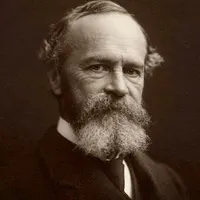
William James
James probes the interplay between philosophy and psychology, using his medical training to offer a nuanced perspective on human cognition and behavior. His writing delves into themes such as belief, experience, and the nature of consciousness, aiming to challenge and expand the prevailing orthodoxies of his time. Through works like "The Principles of Psychology," James explores the intricacies of the human mind, while in "Essays in Radical Empiricism," he presents a philosophical stance that prioritizes lived experience over abstract theorizing. His commitment to pragmatic philosophy, shared with peers like Charles Sanders Peirce, highlights the importance of practical consequences and lived experience as the benchmarks of truth.\n\nIn bridging disciplines, James's methods reflect a unique synthesis of rigorous scientific inquiry and accessible philosophical discourse. His book, "The Varieties of Religious Experience," showcases how psychological analysis can illuminate the profound impact of spirituality on human behavior, attracting both scholarly and general audiences. James's pioneering role in establishing the first experimental psychology laboratory in America underscores his impact on the academic landscape, while his pragmatic philosophy invites readers to reevaluate the nature of truth and belief.\n\nReaders gain a multifaceted understanding of the human experience through James's insightful explorations. His bio reflects a commitment to broadening the scope of intellectual inquiry, making his work relevant to students, academics, and those interested in the philosophical underpinnings of psychology. By challenging conventional views and integrating various fields of study, James's intellectual legacy continues to inspire and inform, emphasizing the interconnectedness of human thought and experience.
Read moreDownload PDF & EPUB
To save this Black List summary for later, download the free PDF and EPUB. You can print it out, or read offline at your convenience.

Talks to Teachers on Psychology and to Students on Some of Life's Ideals
by William James
