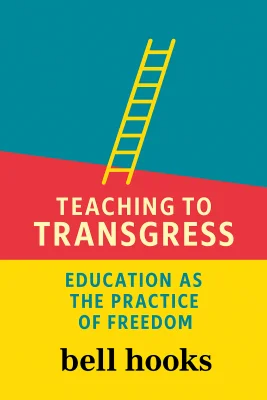
Teaching to Transgress
Education as the Practice of Freedom
Categories
Nonfiction, Philosophy, Education, Politics, Feminism, Essays, Social Justice, Theory, Race, Teaching
Content Type
Book
Binding
Paperback
Year
1994
Publisher
Routledge
Language
English
ASIN
0415908086
ISBN
0415908086
ISBN13
9780415908085
File Download
PDF | EPUB
Teaching to Transgress Plot Summary
Introduction
In a small classroom at Stanford University, a young Black woman sits surrounded by predominantly white peers, feeling the weight of unspoken assumptions about her intellectual capacity. When she raises her hand to challenge the professor's assertion that "all women" share similar experiences, the room falls silent. The discomfort is palpable, yet something powerful happens in that moment of tension—a crack appears in the façade of neutral, objective education, revealing the political nature of all teaching and learning. 本书explores the revolutionary potential of education when it becomes a practice of freedom rather than domination. Through personal narratives and critical analysis, it examines how classrooms can be transformed from spaces of silence and conformity into vibrant communities where all voices are heard and valued. The author argues that truly liberating education requires us to challenge not only what we teach, but how we teach—embracing the whole person, body and mind, emotion and intellect, in the pursuit of knowledge that empowers and transforms.
Chapter 1: Personal Journey: From Southern Classrooms to Academic Rebellion
Growing up in the racially segregated South, the author experienced education as a site of profound contradiction. In her all-Black elementary school, learning was electric with possibility. The teachers, mostly Black women, knew their students intimately—their families, their struggles, their dreams. They understood that education was a political act, a form of resistance against white supremacy. These educators saw their mission as preparing young minds not just to absorb information, but to think critically and challenge the world around them. The classroom buzzed with intellectual excitement. Teachers connected lessons to students' lived experiences, making knowledge relevant and transformative. Students weren't passive recipients of information but active participants in their own liberation. The school was a place where being smart was celebrated, where thinking differently was encouraged, and where education truly felt like a practice of freedom. Black children understood that their devotion to learning was itself a revolutionary act. But everything changed with racial integration. Moving to predominantly white schools, the author encountered a fundamentally different educational philosophy. Gone was the messianic zeal to transform minds and lives. Instead, knowledge became merely about information transmission. Teachers no longer knew or cared about students' home lives, their struggles, or their potential. The classroom became a place of conformity rather than critical thinking. In these integrated settings, Black students quickly learned that eagerness to learn could be seen as threatening to white authority. The politics of the classroom shifted from counter-hegemonic resistance to simple reaction against white assumptions. Education was no longer about the practice of freedom but about reinforcing existing hierarchies of power and privilege. This jarring transition revealed the fundamental difference between education as liberation and education as domination. It planted the seeds of a lifelong commitment to transforming pedagogical practices, showing how the same subject matter could either empower or oppress depending on how it was taught and by whom.
Chapter 2: Engaged Pedagogy: Holistic Learning Beyond Mind-Body Separation
Years later, as a college professor, the author sat across from a student named Gary in her yellow kitchen, sharing lunch and deep conversation about literature, life, and social justice. This wasn't unusual—her teaching extended far beyond the formal classroom, creating spaces where genuine learning could flourish. Gary later wrote about how these informal moments were just as educational as any lecture, perhaps more so because they honored his whole person, not just his intellect. Traditional academic settings demand a strict separation between mind and body, public and private, intellectual and emotional. Professors are expected to be disembodied voices of authority, transmitting knowledge without acknowledging their own humanity or that of their students. This approach creates alienation and limits the transformative potential of education. When students can only bring their minds to class while leaving their bodies, experiences, and emotions at the door, learning becomes partial and incomplete. Engaged pedagogy demands wholeness. It recognizes that we are not just minds seeking information but complete human beings with bodies that carry histories, emotions that inform understanding, and experiences that shape perspective. This approach requires teachers to be vulnerable, to share not just expertise but also passion, struggle, and growth. It means creating classroom communities where everyone's presence is acknowledged and valued. The work is demanding, both intellectually and emotionally. Unlike traditional banking education where professors deposit information into passive student accounts, engaged pedagogy requires constant creativity, flexibility, and genuine care for student growth. It means being willing to change course when the planned lesson isn't connecting, to address conflicts and tensions rather than suppress them, and to model the critical thinking and emotional honesty we want students to develop. This holistic approach to education transforms not only students but teachers as well. When we bring our whole selves to the classroom, we open ourselves to learning from our students, growing through our encounters with different perspectives and experiences, and constantly evolving in our understanding of both subject matter and pedagogy.
Chapter 3: The Language of Liberation: Breaking Barriers Through Voice
A Guatemalan peasant woman stands before a crowd, speaking in broken Spanish mixed with her indigenous tongue, telling her story of resistance and survival. Her words carry power not despite their "incorrect" usage, but because of it. The ruptures in standard language become sites of rebellion, creating meaning that transcends conventional grammar and touches something deeper in her listeners. This is language as liberation, not domination. In academic settings, language often becomes a weapon of exclusion. Standard English is presented as the only legitimate form of intellectual discourse, silencing those whose first language carries different rhythms, structures, and ways of knowing. Students from diverse linguistic backgrounds learn to hide their vernacular speech, seeing it as a mark of inferiority rather than a source of strength and alternative knowledge. The author began to recognize how she was losing her connection to Black vernacular speech by rarely using it in predominantly white academic settings. This loss felt like a betrayal of her roots and a diminishment of her expressive power. She started deliberately integrating Southern Black vernacular into her writing and teaching, even when editors tried to "correct" it into standard English. This wasn't about being difficult or anti-intellectual, but about reclaiming language as a site of cultural resistance and authentic expression. When students in her classes began speaking in their first languages and translating for others, something beautiful happened. The classroom became a space where multiple ways of knowing could coexist. White students initially complained that they couldn't understand everything being said, feeling excluded from conversations conducted in languages other than English. But this discomfort became a learning opportunity—a chance to experience what it feels like to be a linguistic outsider and to practice listening without the need to master or control meaning. True democracy in education requires that we make space for all voices, not just those that conform to dominant linguistic norms. This means accepting that sometimes we won't understand everything being said, and that partial understanding can itself be a form of knowledge. It means recognizing that broken, vernacular, and non-English speech can carry truths that standard academic language cannot express, and that honoring diverse voices enriches rather than diminishes the educational experience.
Chapter 4: Confronting Class and Race in Academic Spaces
The first time she walked into a Stanford University classroom, the author felt the weight of unspoken questions. "Are you here on scholarship?" peers would ask, the implication being that financial aid somehow diminished her legitimacy. She quickly learned that class was about much more than economics—it shaped values, attitudes, social relations, and the very ways knowledge was transmitted and received in academic settings. The university operated on bourgeois assumptions about appropriate classroom behavior. Silence and obedience to authority were rewarded, while loudness, emotional expression, or unrestrained laughter were seen as vulgar disruptions associated with lower classes. Students from working-class backgrounds faced an impossible choice: assimilate by abandoning their cultural ways of being, or remain authentic and risk being seen as disruptive outsiders. Many of her Black students spoke openly about the stress of code-switching between academic and home environments. They felt pressure to become "clones" of their more privileged peers in order to succeed, but this often meant betraying family values and community connections. The psychological toll was enormous—some students dropped out not because they couldn't do the academic work, but because the contradictions between required and authentic behaviors became unbearable. In Women's Studies classes, the author found spaces where these issues could finally be addressed. Feminist professors were more willing to acknowledge that not all women shared the same experiences, that race and class created different realities even within gender categories. These classrooms became laboratories for exploring how multiple systems of oppression intersected, and how pedagogical practices could either reinforce or challenge existing hierarchies. Yet even in these progressive spaces, the author encountered resistance when she challenged the universalization of white, middle-class women's experiences. Speaking from her own reality as a working-class Black woman wasn't always welcomed, even by those who claimed to support diversity. The struggle to make space for her voice taught her that true inclusion requires more than good intentions—it demands a fundamental willingness to share power and transform pedagogical practices.
Chapter 5: Eros and Emotion: Reclaiming Passion in Teaching
In a literature class discussing Toni Morrison's work, something electric filled the air. Students leaned forward in their seats, voices rising with excitement as they connected the text to their own experiences of love, loss, and identity. The professor moved around the room, no longer hidden behind a podium but fully present, body and voice animated by genuine passion for both the subject matter and the students' insights. This was education as it should be—fully engaged, emotionally alive, transformatively powerful. Traditional academic settings systematically erase the body and deny the role of emotion in learning. Professors are trained to present themselves as disembodied minds, transmitting objective knowledge without acknowledging the passionate investment that drives real intellectual work. Students learn to suppress their emotional responses, as if genuine learning could happen without feeling, without the whole self being engaged in the process. But passion and critical thinking are not opposites—they are partners in the quest for transformative knowledge. When students are emotionally engaged, they remember more, think more deeply, and connect learning to their lived experiences in ways that create lasting change. The classroom becomes a space of possibility rather than just information transfer, a place where minds and hearts work together in the pursuit of understanding. The author learned to embrace the erotic energy that naturally emerges when people gather to explore ideas that matter. Not erotic in a sexual sense, but in the broader meaning of life force—the energy that propels growth, change, and authentic connection. When this energy is present in the classroom, learning becomes joyful rather than dutiful, transformative rather than merely accumulative. Students often wrote in their journals about "loving" classes where they felt this kind of engagement. They described the classroom as a place of "ecstasy," where the usual boundaries between teacher and student, mind and body, self and other temporarily dissolved in the shared pursuit of truth. This wasn't about entertainment or lowered standards, but about education at its most powerful—when it touches not just the intellect but the whole person, creating possibilities for fundamental transformation.
Chapter 6: Building Community: Dialogue Across Differences
During a heated classroom discussion about abortion rights, tensions ran high. A young Black woman from a conservative religious background found herself arguing with white feminist classmates who assumed all women shared the same views on reproductive choice. Rather than shutting down the conflict, the professor created space for everyone to speak their truth, to listen deeply to different perspectives, and to grapple with the complexity of issues that couldn't be reduced to simple position statements. Building genuine learning communities requires moving beyond the illusion of harmony to embrace what the author calls "difficult dialogues." True democracy in education means creating space for disagreement, conflict, and the messy work of thinking through differences together. This is much more challenging than maintaining polite classroom decorum, but it's also where the most meaningful learning happens. Many students enter college having never been asked to engage seriously with perspectives radically different from their own. They've been trained to avoid conflict, to seek comfortable consensus rather than wrestle with contradiction and complexity. But growth happens at the edges of our comfort zones, in the spaces where our assumptions are challenged and our worldviews expanded. The author developed pedagogical strategies to help students learn how to disagree respectfully while still engaging passionately with ideas. She taught them to listen not just for confirmation of their own beliefs, but for the deeper truths that might emerge from encounters with difference. Students learned to see conflict as generative rather than destructive, as an opportunity to refine their thinking rather than simply defend their positions. In one memorable semester, students from vastly different backgrounds—urban and rural, wealthy and poor, different races and religions—learned to create what one called "a learning family." They disagreed often and sometimes intensely, but they did so within a framework of mutual respect and shared commitment to understanding. By the end of the term, several students reported that the class had fundamentally changed how they approached disagreement in all areas of their lives, teaching them that authentic community requires not the absence of conflict but the courage to work through differences together.
Chapter 7: The Courage to Transform: Navigating Institutional Resistance
Standing before a packed auditorium at a prestigious university, the author watched as her critique of traditional academic practices made some professors squirm in their seats. After her lecture on transformative pedagogy, several faculty members approached with barely concealed hostility. "Your students seem to really enjoy your classes," one said with a sneer. "What are you doing wrong?" The implication was clear: if students are engaged and excited about learning, the education must be somehow deficient. Institutional resistance to engaged pedagogy takes many forms, from subtle dismissal to overt sabotage. Professors who dare to challenge traditional teaching methods often find themselves marginalized, their work deemed "not serious enough" or "too emotional." The academy rewards conformity to established patterns of domination, making it risky for faculty to experiment with more democratic, inclusive approaches to education. Students, too, sometimes resist transformative pedagogy. Trained by years of banking education to be passive consumers of pre-packaged knowledge, they may initially feel uncomfortable when asked to think critically, share their own experiences, or take responsibility for their learning. Some prefer the familiar hierarchy where the professor has all the answers and students simply memorize and regurgitate information. The author learned that sustaining engaged pedagogy requires tremendous courage and commitment. It means being willing to fail, to have difficult classes where community doesn't gel, to face criticism from colleagues who don't understand or approve of different approaches to teaching. It means accepting that transformative education is often uncomfortable, that meaningful learning sometimes involves struggle and even pain as old ways of thinking are challenged and new possibilities emerge. But the rewards make the risks worthwhile. Students who experience education as the practice of freedom carry that experience into all areas of their lives. They become more critical thinkers, more engaged citizens, more capable of creating change in their communities and beyond. They learn that knowledge is not something to be consumed passively but something to be created actively, in partnership with others, in service of human liberation and growth.
Summary
Through powerful stories of classroom transformation and institutional resistance, 本书 reveals that education is never politically neutral—it either functions to reinforce systems of domination or serves as a practice of freedom. When teachers dare to challenge traditional banking models of education, creating spaces where students can bring their whole selves to learning, remarkable transformations become possible. Students discover their voices, develop critical consciousness, and learn to see knowledge not as something to consume but as a tool for liberation. The path to transformative education requires courage from both teachers and students—courage to embrace conflict and difference, to challenge comfortable assumptions, to risk failure in pursuit of authentic community. It demands that we reject the false separation between mind and body, emotion and intellect, personal experience and academic knowledge. When we create learning communities that honor the full humanity of all participants, education becomes what it was always meant to be: a joyful, passionate, life-changing encounter with possibilities we never imagined. The classroom becomes not just a place to gain credentials, but a space where we learn to live more fully, think more deeply, and work together to create a more just and loving world.
Best Quote
“There are times when personal experience keeps us from reaching the mountain top and so we let it go because the weight of it is too heavy. And sometimes the mountain top is difficult to reach with all our resources, factual and confessional, so we are just there, collectively grasping, feeling the limitations of knowledge, longing together, yearning for a way to reach that highest point. Even this yearning is a way to know.” ― bell hooks, Teaching to Transgress: Education as the Practice of Freedom
Review Summary
Strengths: The review highlights bell hooks' intelligent and passionate writing, particularly her exploration of race, gender, and class dynamics in education. The reviewer appreciates hooks' ability to balance generosity, firmness, and excitement in her essays, which evoke a sense of discovery and connection. The nuanced critique of Paulo Freire's work and the engaging chapters on Essentialism, Experience, Language, and Ecstasy are also praised. Weaknesses: The review notes discomfort with the chapter on eros due to concerns about boundaries in teacher-student relationships. Additionally, the use of jargon and "Big Terms" is criticized for potentially limiting accessibility outside academic contexts. Overall: The reader expresses a positive sentiment, finding the book insightful and relevant, particularly for college-level educators, despite some reservations about specific content and terminology.
About Author
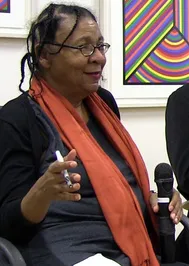
bell hooks
hooks challenges societal norms through her exploration of intersectionality, focusing on the interconnected systems of race, class, and gender oppression. Her writing, marked by clarity and accessibility, seeks to dismantle the marginalization of Black women while advocating for a more inclusive feminism. This methodical approach is exemplified in her seminal work "Ain’t I a Woman: Black Women and Feminism," where she delves into the unique challenges faced by Black women. Meanwhile, her book "All About Love: New Visions" reframes love as a transformative force for social change, urging readers to embrace a broader understanding of love's potential impact on society.\n\nBy integrating critical analysis with accessible prose, hooks' works are designed to reach a diverse audience, spanning both academic circles and the general public. Her emphasis on education as liberation underscores her belief in personal transformation beyond mere vocational training. Therefore, readers benefit from her insights into the dynamics of power and identity, which encourage critical engagement with entrenched societal narratives. Her bio underscores her role as a public intellectual who tirelessly contributed essays and lectures to promote social justice and cultural criticism.\n\nIn recognition of her contributions, hooks received numerous accolades, including induction into the Kentucky Writers Hall of Fame. Her legacy endures through the bell hooks Institute and her role as Distinguished Professor in Residence at Berea College. Her writing, which extends into poetry and children's literature, continues to influence scholars and activists globally. Consequently, hooks' books offer vital perspectives that challenge readers to reconsider their understanding of feminism, education, and social justice, ensuring her impact remains profound and far-reaching.
Read moreDownload PDF & EPUB
To save this Black List summary for later, download the free PDF and EPUB. You can print it out, or read offline at your convenience.
Teaching to Transgress
by bell hooks
