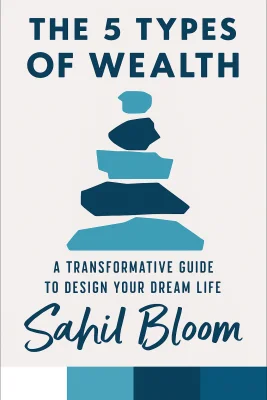
The 5 Types of Wealth
A Transformative Guide to Design Your Dream Life
Categories
Business, Nonfiction, Self Help, Psychology, Philosophy, Finance, Productivity, Audiobook, Money, Personal Development
Content Type
Book
Binding
Hardcover
Year
2025
Publisher
Ballantine Books
Language
English
ASIN
059372318X
ISBN
059372318X
ISBN13
9780593723180
File Download
PDF | EPUB
The 5 Types of Wealth Plot Summary
Introduction
When Alexis Lockhart received the job offer she'd been working toward for years, her first feeling wasn't excitement but conflict. The position would advance her career and significantly increase her salary, but it required relocating away from her aging parents. As she weighed her options, calculating the financial benefits against the lost Sunday dinners and impromptu visits, Alexis realized she was using an incomplete scorecard to measure success—one that prioritized financial gain while overlooking the wealth of time with loved ones. This scenario reflects a dilemma many of us face in modern life. We've been conditioned to pursue financial wealth as the primary measure of success, often at the expense of other crucial dimensions that make life truly rich. We chase promotions, salary increases, and investment returns, frequently sacrificing our time, relationships, mental clarity, and physical wellbeing in the process. This book introduces a revolutionary framework that expands our definition of wealth beyond money to encompass five distinct dimensions: Time Wealth, Social Wealth, Mental Wealth, Physical Wealth, and Financial Wealth. By adopting this multidimensional view, we gain clarity about what truly matters and can make decisions with full awareness of their impact across all aspects of a well-lived life.
Chapter 1: The Scoreboard Problem: Redefining Success in Modern Life
Greg was living what many would consider the dream. As a vice president at a prestigious investment bank, he had achieved remarkable success by his early thirties. The corner office, the impressive salary, the respect of colleagues and clients - all the external markers of success were firmly in place. His career trajectory pointed skyward, with seemingly limitless potential ahead. Then came a moment that changed everything. His five-year-old son's preschool was hosting a "Doughnuts with Dad" event, but Greg would be away on an important business trip. When his wife broke the news to their son, the boy's response was devastating in its simplicity: "That's okay, Dad's never around anyway." Those words cut through Greg like a knife. This wasn't the first family event he'd missed, but somehow, hearing his son's matter-of-fact acceptance of his absence made it unbearable. The incident became what Greg later called "the final straw." Within months, he had resigned from his position at the investment bank. It was a decision that puzzled many of his colleagues, who couldn't understand walking away from such "success." But for Greg, the definition of success had fundamentally changed. "I quit my job at Goldman Sachs later that year," he would later explain. "My son is twenty-four years old now. No regrets." Greg's story illustrates what many discover too late: we're playing with a broken scoreboard. Society teaches us to measure success almost exclusively through financial achievement, but this narrow focus often comes at the expense of everything else that matters. We celebrate the promotion while missing the recital, chase the bonus while neglecting our health, and pursue status symbols while relationships wither. The scoreboard problem leads to what ancient Romans called a Pyrrhic victory - winning the battle but losing the war. What if we measured our lives differently? What if our scoreboard tracked not just financial wealth, but the richness of our time, relationships, mental fulfillment, and physical vitality? This broader perspective doesn't diminish the importance of financial security but places it within a more complete picture of a well-lived life. The wealthiest person isn't necessarily the one with the most money, but rather the one with abundance across multiple dimensions of life. The journey to redesigning your life begins with redesigning your scoreboard. When you measure the right things, you naturally take the right actions. And when you take the right actions consistently, you create the outcomes that lead to genuine fulfillment - the kind that doesn't show up on a bank statement but resonates deeply in moments of quiet reflection.
Chapter 2: Time Wealth: Creating Space for What Truly Matters
Alexis Lockhart had always been unusually aware of how fleeting childhood is. "Since they were young, I had been saying that you don't get your children for eighteen years, you get them for about twelve or thirteen, if you're lucky," she explained. "After they cross that line, you become a chauffeur, a taxi, and a hotel—they need food, a bed, and transportation to events with friends, sports, school activities, and, soon enough, jobs and dates." This awareness led Alexis to cherish every moment with her three sons. In early 2019, she surprised them with a ski trip to Colorado during spring break - "a huge treat" since her older sons were either working or in school. A few weeks later, she threw a birthday party for her middle son, Jackson, complete with presents and a cookie cake, despite his protests that he was "too old" for such celebrations. Life was good, and Alexis was intentionally making the most of their time together. Then on May 23, 2019, the unthinkable happened. Jackson, just days after celebrating his twentieth birthday, was killed in a tragic motorcycle accident. In an instant, the future Alexis had imagined with her son vanished. There would be no more birthdays to celebrate, no more family trips, no more ordinary moments that suddenly become extraordinary in retrospect. When sharing her story years later, Alexis offered this heartbreaking wisdom: "Always remember, everyone we love, they are on loan to us for a short period of time. They are gone in the blink of an eye." Her words echo what data from the American Time Use Survey reveals in stark clarity - the time we spend with parents, siblings, and children follows predictable patterns, peaking in certain life stages before declining dramatically. Consider this sobering reality: time spent with your children peaks in their early years and then steadily declines. The window during which you are your child's entire world is devastatingly brief. Similarly, time with parents and siblings drops sharply after age twenty, creating a finite opportunity for connection that many don't recognize until it's too late. Meanwhile, time spent alone increases throughout life, making it essential to find comfort and purpose in solitude. These patterns aren't just statistics; they're a call to awareness. Time Wealth begins with recognizing the precious, impermanent nature of our days and the relationships that fill them. This awareness then enables us to direct our attention more deliberately toward what truly matters and away from the endless distractions competing for our focus. Ultimately, Time Wealth manifests as control - the freedom to choose how we spend our hours, with whom, and where.
Chapter 3: Social Wealth: The Power of Deep Human Connection
Erik Newton was living what many would consider a good life. In his forties, he and his wife Aubrie had welcomed their daughter Romy two years earlier, bringing a joy they had never experienced before. Erik had recently left his position as chief operating officer at a Silicon Valley startup to pursue his own entrepreneurial path. The future seemed bright with possibility. Then came the phone call that changed everything. After months of fatigue that doctors had dismissed as normal for a new mother, Aubrie finally got extensive blood work done. One evening after putting Romy to bed, the doctor called. "Doctors don't just call you at nine p.m.; we knew something was wrong," Erik recalled. The next twenty-four hours were a blur of tests and hospital rooms, ending with the devastating diagnosis: Aubrie had a rare form of blood cancer, and her body was "covered in tumors." The following eight months were a roller coaster of hope and despair. Treatments would show promise, then fail. Aubrie's condition would improve, then worsen dramatically. Throughout this time, Erik witnessed something remarkable – their love deepened in ways he hadn't thought possible. "Aubrie and I fell in love early and fast, but we fell more in love during the time she was convalescing than I thought was possible," he shared. "Facing death every day allowed us to set aside the silly things and focus on what matters." When Aubrie passed away in November 2023, Erik was left to navigate his grief while caring for their young daughter. Reflecting on what he had learned through this heartbreaking journey, Erik shared Aubrie's one regret: "She hadn't spent more time deepening relationships with the people she cared about." This regret became an insight that Erik now carries forward: "The only thing that matters at all is the quality of the relationships with the people we love." This profound realization invites a powerful question: Who will be sitting in the front row at your funeral? Close your eyes and imagine the scene. Who are the people who would occupy those special seats? These are your Front-Row People – the ones who truly matter in your life. Are you prioritizing time with them? Are you letting them know what they mean to you? Or are you allowing precious opportunities for connection to slip away? Social Wealth is built upon three pillars: depth of connection with a small circle of meaningful relationships; breadth of connection to extended communities; and earned status that comes not from material possessions but from character and contribution. In a world where technology has made us more connected yet somehow lonelier than ever, deliberately cultivating these relationships becomes increasingly important.
Chapter 4: Mental Wealth: Cultivating Purpose, Growth and Curiosity
The ninety-year-old man sat down in the front row of the college lecture hall and took out his notebook. When class started, he listened intently and jotted down notes on the big bang, the solar system, and the eventual fate of the sun. When class ended, he smiled, gathered his things, and walked out, almost blending in with the sea of eighteen-year-old Harvard College freshmen exiting the introductory astronomy class. The man's name was Hank Behar, and his story begins with a simple birthday wish. When his wife Phyllis asked what he wanted for his ninetieth birthday, Hank replied, "I've always wanted to see what those geniuses were up to at Harvard. I'd like to spend a day there." Through connections, arrangements were made, and Hank found himself attending classes alongside students seventy years his junior. He arrived early, took detailed notes, and even asked questions when concepts weren't clear. What makes Hank's story remarkable isn't just his age, but the childlike curiosity that drove him to spend his special day in pursuit of knowledge with no practical application. At ninety, Hank wasn't taking astronomy to advance his career or earn credentials. He was learning purely for the joy of discovery – maintaining the same wonder about the universe that most of us lose somewhere between childhood and adulthood. Science confirms that this curiosity is more than just charming – it's vital for cognitive health. Research shows that the brain systems engaged by curiosity contribute to maintaining cognitive function, mental health, and physical health as we age. Curiosity has been linked to higher life satisfaction, more positive emotions, and lower anxiety levels. If curiosity were a pharmaceutical product, it would be hailed as a miracle drug. Yet despite these benefits, studies show that intellectual curiosity and openness to new experiences tend to decline with age, beginning in late adolescence and continuing throughout adulthood. We're born with boundless curiosity – just watch any toddler exploring their world – but gradually lose it as adult responsibilities and routines take over. The "busyness" of life crowds out the space for wonder, exploration, and growth. This loss represents a fundamental challenge to Mental Wealth – the connection to purpose that guides your decisions, the belief in your ability to grow and change, and the creation of space for reflection and renewal. Mental Wealth asks a powerful question: What would your ten-year-old self say to you today? Would that curious, mischievous child be impressed by your continued growth and learning? Or would they be disappointed by how you've settled for less than you deserve?
Chapter 5: Physical Wealth: Building Vitality for a Life Well-Lived
When Dr. Peter Attia was in medical school, he developed a bias against overweight patients. Though he wouldn't have admitted it at the time, he silently judged them for what he perceived as a lack of willpower and discipline. This unconscious bias continued into his early medical practice, where he often found himself thinking that if these patients would just eat less and exercise more, their health problems would resolve. Then came a pivotal moment that changed everything. In his mid-thirties, despite being physically active and maintaining what appeared to be a healthy weight, Dr. Attia received shocking news during a routine physical: his bloodwork showed pre-diabetes, inflammation markers were elevated, and his insulin resistance was concerning. By all conventional metrics, he looked healthy on the outside, but metabolically, he was heading toward serious illness. This discovery forced Dr. Attia to confront his own biases and completely rethink his understanding of physical health. "I had the realization that I was the one who lacked the discipline," he later admitted. "I wasn't willing to acknowledge that our understanding of this problem was fundamentally flawed." His personal health crisis launched him on a journey to understand the true drivers of longevity and physical vitality. Through years of research and self-experimentation, Dr. Attia developed what he calls the "centenarian decathlon" – a framework for thinking about physical health not just in terms of lifespan (how long you live) but healthspan (how well you live during those years). He asks a simple but profound question: "What physical abilities would you want to maintain at age 100?" The answers typically include being able to get up from the floor without assistance, lift a suitcase into an overhead bin, play with grandchildren, and maintain independence in daily activities. Working backward from these desired outcomes, Dr. Attia identified four pillars of physical wealth: stability/mobility (how you move), strength (what you can lift and carry), endurance (how long you can sustain activity), and body composition (your ratio of muscle to fat). Each pillar requires specific types of training and nutrition strategies, and all become increasingly important as we age. What makes Dr. Attia's approach revolutionary is its focus on proactive investment rather than reactive medicine. Most healthcare systems are designed to treat disease once it appears, but physical wealth is built through consistent, deliberate practices long before problems arise. It's about making deposits into your "physical bank account" through regular movement, proper nutrition, quality sleep, and stress management – deposits that compound over time and can be withdrawn when needed in later years.
Chapter 6: Financial Wealth: Finding Your Personal 'Enough'
Morgan Housel, a partner at Collaborative Fund and author of financial wisdom, tells a story about a man named Ronald Read that challenges everything we think we know about wealth accumulation. Read was a janitor and gas station attendant in Brattleboro, Vermont, who lived a quiet, frugal life. He drove a used Toyota, used safety pins to hold his coat together when it tore, and cut his own firewood well into his 90s. Nothing about his lifestyle suggested unusual financial means. When Read passed away in 2014 at age 92, the community was stunned to learn he had accumulated an $8 million fortune. This janitor, who had never earned more than a modest salary, left $2 million to his stepchildren and over $6 million to the local hospital and library. How was this possible? Read had followed a simple formula: he lived well below his means, invested consistently in blue-chip stocks, and allowed those investments to compound over decades. Contrast Read's story with that of Richard Fuscone, a Harvard-educated Merrill Lynch executive who retired in his 40s to a life of luxury in Greenwich, Connecticut. Fuscone had everything that signaled "wealth" – multiple mansions, extravagant parties, and all the trappings of high society. Yet in 2010, he declared bankruptcy, unable to pay his debts after the financial crisis affected his highly leveraged investments. Despite earning more in a year than Read earned in a lifetime, Fuscone ended up with less. These contrasting stories reveal a fundamental truth about financial wealth: it's not about how much you make, but how much you keep, how long you keep it, and how well you understand what "enough" means for you personally. Ronald Read never earned an impressive income, but he understood the power of living below his means and letting compound interest work its magic over time. Richard Fuscone earned millions but fell victim to lifestyle inflation and the perpetual pursuit of more. Financial wealth begins with a clear definition of "enough" – the point at which you have sufficient resources to support the life you want without constant anxiety about money. This number varies dramatically from person to person and depends on your values, goals, and desired lifestyle. Without defining "enough," you risk falling into what Housel calls "the treadmill of wanting more" – a never-ending pursuit where satisfaction remains perpetually out of reach. The path to financial wealth follows three core principles: growing your income through valuable skills and contributions, managing expenses to create a gap between what you earn and what you spend, and investing that difference in assets that appreciate over time. The magic happens when you maintain this pattern consistently over years and decades, allowing compound growth to work in your favor.
Summary
The journey through the five dimensions of wealth reveals a profound truth: a truly wealthy life cannot be measured by financial metrics alone. Through stories like Greg leaving his prestigious banking career after realizing what his absence meant to his son, Alexis cherishing every moment with her children before tragedy struck, Erik discovering the supreme importance of relationships as his wife battled cancer, Hank pursuing knowledge at ninety simply for the joy of learning, and the contrast between a millionaire janitor and a bankrupt executive, we see that wealth transcends money. The five-wealth framework offers a new scoreboard for measuring success – one that values the freedom to control your time, the depth of your relationships, the clarity of your purpose, the vitality of your body, and yes, the security of your finances. This balanced perspective doesn't diminish the importance of financial stability but places it within a more complete picture of what makes life worth living. When we expand our definition of wealth, we naturally make different choices about how to invest our limited time and energy. Perhaps the most powerful insight is that these five dimensions are interconnected and mutually reinforcing. Financial wealth creates options, but Time Wealth allows you to exercise those options meaningfully. Social Wealth provides the connections that give life texture and meaning, while Mental Wealth guides your purpose and growth. Physical Wealth supplies the energy and vitality to pursue it all. By nurturing all five dimensions, you create a life of genuine abundance – one where success is measured not by comparison to others but by alignment with your deepest values and aspirations.
Best Quote
“Treat your body like a house you have to live in for another seventy years.” He added, “If something has a minor issue, repair it. Minor issues become major issues over time. This applies equally to love, friendships, health, and home.” ― Sahil Bloom, The 5 Types of Wealth: A Transformative Guide to Design Your Dream Life
Review Summary
Strengths: The book is described as transformative, with each chapter filled with substantial insights that prompt reflection. It offers practical concepts like anti-goals, life razor, and the importance of time wealth over financial wealth. The reviewer appreciates the book's depth and applicability, especially for new graduates.\nOverall Sentiment: Enthusiastic\nKey Takeaway: The book stands out in the self-help genre by providing dense, thought-provoking content that encourages readers to reflect on their life priorities, emphasizing the importance of defining personal values and optimizing for time wealth.
About Author

Sahil Bloom
Sahil Bloom is an entrepreneur, investor, and content creator. He is a former private equity associate who built a massive following on Twitter/X by sharing "mental models" and business insights. Bloom is known for his ability to simplify complex topics into viral threads. He manages a venture investment fund and hosts a popular newsletter, The Curiosity Chronicle.\n\nHe is the author of The 5 Types of Wealth: A Guide to Prosperity, Independence, and Joy. Bloom argues that money is only one form of wealth. He expands the definition to include time, health, relationships, and status. His work focuses on "lifestyle design," encouraging readers to optimize their lives for freedom and fulfillment rather than just a bank balance. He combines stoic philosophy with modern productivity hacks.
Read moreDownload PDF & EPUB
To save this Black List summary for later, download the free PDF and EPUB. You can print it out, or read offline at your convenience.
The 5 Types of Wealth
by Sahil Bloom
