
The American Crisis
By Thomas Paine - Illustrated
Categories
Nonfiction, Philosophy, History, Politics, Classics, Essays, American History, American Revolutionary War, War, American Revolution
Content Type
Book
Binding
Kindle Edition
Year
2017
Publisher
Language
English
ASIN
B074N639LL
File Download
PDF | EPUB
The American Crisis Plot Summary
Introduction
During the transformative period of American independence, fundamental questions arose about the nature of liberty, the legitimacy of revolution, and the moral foundations of political authority. These inquiries emerged not merely as abstract philosophical debates, but as urgent practical concerns demanding immediate resolution in the face of armed conflict and political upheaval. The circumstances of colonial resistance to British rule created a unique laboratory for examining how principles of natural rights, popular sovereignty, and republican government could be translated from theoretical constructs into lived political reality. The analysis presented here employs a distinctive approach that combines moral reasoning with practical political calculation, demonstrating how revolutionary action could be simultaneously principled and pragmatic. Rather than treating independence as an inevitable historical development, the examination reveals it as a carefully reasoned choice requiring sustained intellectual justification. This method of argumentation—weaving together appeals to universal moral principles, economic analysis, and strategic political thinking—offers modern readers insights into how transformative political movements construct their legitimacy and maintain popular support through periods of uncertainty and conflict.
Chapter 1: Paine's Vision of American Liberty and the Revolutionary Cause
The foundation of revolutionary legitimacy rests upon a fundamental distinction between legitimate and illegitimate exercises of political power. Liberty, properly understood, represents not merely the absence of external constraints, but the positive capacity of a people to govern themselves according to their own rational deliberation and consent. This conception directly challenges the prevailing notion that political authority derives from inherited tradition or divine sanction, instead locating sovereignty firmly within the rational capacity of ordinary citizens. The revolutionary cause emerges from this philosophical foundation as both a defensive action against tyrannical overreach and a constructive project of popular self-governance. When established authority violates the fundamental compact between ruler and ruled—by imposing taxation without representation, denying basic legal protections, or employing military force against peaceful subjects—resistance becomes not merely permissible but morally obligatory. The colonists find themselves in the position of defending universal principles of human dignity against a system that has abandoned its own founding commitments to constitutional government. This vision of liberty necessarily encompasses both individual rights and collective self-determination. Personal freedom cannot exist without secure institutional frameworks that protect property, conscience, and civil discourse. Yet these institutions themselves require active citizen participation and vigilant defense against both external enemies and internal corruption. The revolutionary moment thus represents a unique opportunity to establish government upon genuinely popular foundations rather than accepting inherited arrangements that may lack democratic legitimacy. The American situation demonstrates how abstract principles of natural rights can guide practical political action. The colonists possess both the philosophical justification for independence and the practical capacity to establish alternative institutions of governance. Their resistance draws strength from universal moral principles while addressing specific historical grievances, creating a revolutionary movement that transcends mere rebellion to become a constructive act of political founding. The cause of American liberty therefore serves as a test case for broader questions about human political capacity. If a diverse population spread across a vast territory can successfully establish republican government through peaceful deliberation and rational discourse, this provides powerful evidence for the universal human capacity for self-governance. The revolutionary struggle becomes simultaneously a local contest for independence and a global demonstration of human political potential.
Chapter 2: The Moral Authority of Independence Against British Tyranny
The moral case for independence derives its force from the systematic violation of fundamental principles of just government by British authorities. Political legitimacy requires that governmental power serve the common good rather than merely advancing the narrow interests of those who wield authority. When rulers consistently subordinate public welfare to their own advantage, when they employ violence against peaceful subjects, and when they refuse to acknowledge reasonable grievances through established legal channels, they forfeit their claim to obedience from those they govern. British conduct toward the American colonies reveals a pattern of escalating oppression that transforms what might initially have been viewed as policy disputes into fundamental questions of political legitimacy. The imposition of taxation without colonial representation in Parliament violates basic principles of consent that form the foundation of legitimate government. The deployment of military forces against civilian populations, the suspension of normal legal procedures, and the encouragement of violence by irregular forces all demonstrate contempt for the rule of law that governments exist to protect. The doctrine of parliamentary sovereignty, as applied to the American situation, claims unlimited authority over colonial affairs regardless of colonial consent or constitutional constraints. This assertion of absolute power contradicts the fundamental principle that legitimate government derives its authority from the consent of the governed. No human institution can rightfully claim unlimited power over other human beings, for such claims deny the fundamental equality and dignity that characterize authentic human community. The progression from petition to resistance follows a logical sequence that exhausts peaceful remedies before resorting to force. Colonial attempts to address grievances through established legal channels met with contempt and violence rather than reasoned response. The British government consistently chose escalation over negotiation, military force over legal deliberation, and absolute assertion of power over constitutional compromise. This pattern demonstrates that the breakdown of political relationships resulted from governmental tyranny rather than colonial intransigence. Independence emerges not as an aggressive act of rebellion but as a defensive measure necessary to protect fundamental human rights against systematic assault. The colonists seek not to overthrow legitimate authority but to escape from illegitimate domination that has proven impervious to reform through normal political processes. The moral authority for this decisive step derives from the prior failure of established institutions to fulfill their basic obligations to protect the rights and welfare of those they govern.
Chapter 3: Republican Virtue and the Principles of Democratic Government
Republican government requires more than merely institutional arrangements designed to prevent tyranny; it demands active cultivation of civic virtues that enable citizens to participate effectively in democratic deliberation and self-governance. The success of popular government depends upon the capacity of ordinary citizens to transcend narrow self-interest and consider the broader implications of public policy for the common good. This capacity develops through practice in democratic participation rather than emerging automatically from institutional design alone. The American experiment provides a unique opportunity to establish government upon genuinely republican foundations rather than adapting existing monarchical or aristocratic institutions to popular purposes. Democratic legitimacy requires that political authority flow upward from the consent of citizens rather than downward from inherited tradition or external imposition. This fundamental reorientation of political relationships necessitates new forms of civic education and public discourse suited to the requirements of popular self-governance. Virtue in the republican context encompasses both private morality and public spiritedness. Citizens must possess sufficient personal integrity to resist corruption and sufficient public concern to sacrifice immediate personal advantage for long-term collective benefit. The cultivation of these qualities requires institutional arrangements that reward public service while preventing the concentration of power in ways that tempt individuals to abuse their authority for personal gain. The separation of legislative, executive, and judicial functions serves not merely to prevent tyranny but to create multiple venues for citizen participation in governance. Representative institutions must remain closely connected to their constituents while maintaining sufficient independence to deliberate effectively about complex policy questions. This balance between responsiveness and deliberation represents one of the central challenges of republican government. Democratic institutions prove their worth through their capacity to adapt to changing circumstances while maintaining fidelity to fundamental principles of human equality and popular sovereignty. The American colonies possess both the philosophical understanding and practical experience necessary to establish such adaptive institutions. Their long experience with local self-governance provides a foundation for expanding democratic participation to the national level, while their commitment to universal principles prevents mere parochialism from undermining broader human solidarity.
Chapter 4: The Economics of War: Financing Independence and National Sacrifice
The material foundation of independence requires careful analysis of both the costs of continued resistance and the economic advantages that flow from successful establishment of autonomous governance. Revolutionary war imposes immediate burdens upon the population through taxation, military service, and economic disruption, yet these temporary sacrifices must be weighed against the long-term costs of continued subjection to external economic control and political domination. British commercial policy toward the American colonies demonstrates how political dependence creates systematic economic disadvantage that transfers wealth from colonial producers to imperial authorities. Trade restrictions, currency manipulation, and preferential policies favoring British manufacturers impose hidden taxes upon American economic activity while preventing the development of domestic industries that could provide employment and retain wealth within local communities. Independence offers the prospect of eliminating these artificial constraints and allowing American economic potential to develop according to natural comparative advantages. The financing of revolutionary resistance requires both immediate resource mobilization and careful attention to long-term fiscal sustainability. Popular government cannot survive if it imposes crushing tax burdens that destroy the economic foundation upon which public revenue depends. Yet military defense requires adequate funding that can only come from taxation or borrowing that ultimately depends upon public revenue. The resolution of this dilemma requires both efficient administration and broad public understanding of the relationship between current sacrifice and future prosperity. Currency policy becomes a crucial tool for managing the economic pressures of wartime while maintaining public confidence in governmental institutions. The creation of continental currency allows for immediate financing of military operations while distributing the burden of payment across the entire population through inflation rather than concentrated taxation. This approach requires careful management to prevent excessive depreciation that would undermine both economic stability and public confidence in revolutionary institutions. The economic argument for independence demonstrates that political freedom and economic prosperity reinforce each other in ways that make continued dependence increasingly costly over time. A free people can adapt their economic institutions to changing circumstances and opportunities, while dependent populations remain subject to external decisions that may sacrifice colonial prosperity for imperial advantage. The temporary disruptions of revolutionary war thus represent an investment in long-term economic autonomy that will justify present sacrifices through future prosperity.
Chapter 5: European Alliances and America's Position in Global Politics
The success of American independence depends not only upon domestic unity and resolve but upon the broader international context that shapes the strategic calculations of potential allies and enemies. European powers possess their own interests that may either align with or conflict with American aspirations for independence, creating opportunities for diplomatic cooperation that could prove decisive in the military struggle against British forces. The Franco-American alliance represents a convergence of interests rather than mere sentiment or ideological sympathy. France seeks to weaken British global dominance while America requires naval and military assistance that only a major European power can provide. This mutual advantage creates a foundation for reliable cooperation that serves the strategic interests of both parties without requiring either to sacrifice fundamental principles or long-term objectives. American diplomatic strategy must balance the immediate necessity of foreign assistance with long-term requirements for national independence and neutrality in European conflicts. Alliance relationships that serve current military needs should not create permanent entanglements that compromise future freedom of action or draw America into conflicts unrelated to American interests. The challenge lies in securing essential support while maintaining sufficient autonomy to determine future policy according to American rather than European priorities. The broader European balance of power creates opportunities for American diplomacy that arise from competition among European powers rather than from American strength alone. Britain's enemies have reason to support American independence even without particular sympathy for republican government or American prosperity. This situation allows American diplomats to obtain crucial assistance while avoiding excessive dependence upon any single European power. The establishment of American independence contributes to global political stability by creating a new center of power that can help prevent any single European nation from achieving dominance that would threaten the independence of smaller nations. American success demonstrates the possibility of republican government on a large scale, providing an alternative model to monarchical and aristocratic systems that dominate European politics. This broader significance of the American experiment helps explain why European intellectuals and politicians support American independence beyond immediate strategic calculations.
Chapter 6: The Path to Peace and the Construction of a New Nation
The transition from military resistance to stable peacetime governance requires careful attention to both immediate post-war challenges and the long-term institutional foundations necessary for republican government. Victory in war provides the opportunity for political independence, but the construction of legitimate and effective governmental institutions requires sustained effort and popular commitment that extends well beyond the cessation of hostilities. The establishment of federal union among the American states addresses the fundamental challenge of creating governmental authority sufficient to maintain independence and domestic order while preserving the local self-governance that motivated the original resistance to British rule. The federal system allows for coordination of defense and commerce while maintaining space for the diverse local institutions and cultural practices that characterize different regions of the continent. Post-war economic policy must address both the immediate challenge of paying war debts and the long-term objective of promoting general prosperity through sound fiscal and monetary policies. The public debt contracted during the revolutionary war represents a collective obligation that requires equitable distribution among citizens according to their capacity to pay, while tax policy should encourage productive economic activity rather than merely extracting maximum revenue for governmental purposes. The integration of former opponents into the post-war political system poses crucial questions about the requirements of reconciliation and the limits of political forgiveness. Those who remained loyal to British authority during the conflict cannot simply be excluded from citizenship, yet their reintegration must not compromise the security or legitimacy of republican institutions. The resolution of this challenge will demonstrate whether republican government can maintain both justice and mercy in ways that promote long-term political stability. The American experiment in republican government provides a model for other nations while serving American interests in promoting global political stability and commercial cooperation. Success in establishing stable democratic institutions encourages similar developments elsewhere, creating potential allies who share American commitment to popular government and individual rights. This broader significance of American political development helps justify the sacrifices made during the revolutionary struggle and provides guidance for future foreign policy decisions.
Summary
The revolutionary argument for American independence demonstrates how universal principles of human rights and democratic governance can guide practical political action in specific historical circumstances. The case for independence emerges not from mere grievance or local patriotism, but from careful analysis of the requirements for legitimate government and the systematic failure of existing institutions to meet those requirements. This method of argumentation—combining moral philosophy with strategic analysis—provides a framework for evaluating political legitimacy that extends beyond the particular circumstances of eighteenth-century America. The broader significance of this revolutionary project lies in its demonstration that ordinary citizens possess the intellectual and moral capacity necessary for democratic self-governance. The successful establishment of republican institutions under challenging circumstances provides evidence for human political potential that challenges both pessimistic assumptions about popular government and fatalistic acceptance of inherited political arrangements. This achievement offers enduring inspiration for those who seek to expand democratic participation and strengthen governmental accountability in their own historical circumstances.
Best Quote
“These are the times that try men's souls.” ― Thomas Paine, The American Crisis
Review Summary
Strengths: The review highlights the emotional impact and stirring nature of the work, noting its passionate and unabashed expression of patriotism. The reviewer finds it more emotionally stirring than Thomas Paine's "Common Sense" and appreciates the powerful language used to inspire perseverance. The combination of reading this work alongside a historical fiction novel about George Washington enhances the experience. Overall: The reviewer expresses a positive sentiment, finding the work heartening and emotionally impactful. They recommend it for its passionate portrayal of patriotism and its ability to inspire perseverance in challenging times. The review suggests that the work's emotional resonance is amplified when read in conjunction with related historical fiction.
About Author
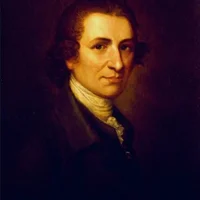
Thomas Paine
Paine interrogates the pillars of political and religious authority, presenting a compelling case for radical reform and independence. With a fervent belief in liberty and egalitarianism, Paine’s writings serve as a clarion call for change, using persuasive, accessible language to engage a broad audience. In "Common Sense," Paine makes a powerful argument for American independence, capturing the revolutionary spirit of his time and galvanizing colonial resolve. Meanwhile, in "Rights of Man," he defends the French Revolution's ideals, directly challenging Edmund Burke’s conservative views and further cementing his role as a radical thinker. This focus on revolutionary thought and human rights, conveyed through clear and vigorous prose, showcases Paine’s commitment to transforming societal norms.\n\nPaine’s method of engaging readers through relatable language and Enlightenment rationalism has left a lasting impact on political thought. He deftly blends reason with impassioned appeals for justice, thereby making complex ideas accessible to ordinary people. This approach not only broadened his readership but also amplified his influence on democratic movements. By promoting a deistic worldview in "The Age of Reason," Paine challenges institutional religion and advocates for individual skepticism, resonating with freethought circles. His unique ability to synthesize complex philosophical ideas with practical calls to action renders his work a crucial resource for those interested in the development of modern democracy and human rights.\n\nReaders and scholars benefit from Paine’s insightful critique of political and religious structures, finding in his work a rich source of inspiration and guidance. His clear articulation of radical ideas provides a framework for understanding and advancing democratic principles, making his books essential reading for those exploring the intersections of politics, philosophy, and social justice. This bio thus captures not just the achievements of a prolific author but also the enduring relevance of his vision for an equitable society.
Read moreDownload PDF & EPUB
To save this Black List summary for later, download the free PDF and EPUB. You can print it out, or read offline at your convenience.

The American Crisis
by Thomas Paine
