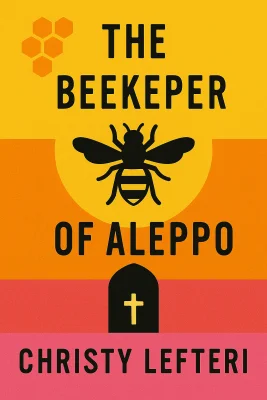
The Beekeeper of Aleppo
Categories
Fiction, Audiobook, Historical Fiction, Book Club, Historical, Contemporary, Novels, War, Literary Fiction, Middle East
Content Type
Book
Binding
Hardcover
Year
2019
Publisher
Ballantine Books
Language
English
ISBN13
9781984821218
File Download
PDF | EPUB
The Beekeeper of Aleppo Plot Summary
Introduction
In a concrete courtyard by the English seaside, Nuri Ibrahim tends to a wingless bee, watching her crawl across dandelion petals in a makeshift garden. The creature survives without flight, just as he has learned to exist without home, without his son, without the man he used to be. The bee is all that remains of his former life as a keeper of apiaries on the outskirts of Aleppo, where golden hives once dotted fields beneath the Syrian sun. His wife Afra sits nearby, her grey eyes seeing nothing since the day their world exploded. She rolls a glass marble between her fingers—their dead boy's marble—while seagulls cry overhead like the ghosts of all they've lost. They are asylum seekers now, waiting in this English limbo for officials to decide their fate, but their real journey began long before, in the ruins of their ancient city where Nuri once understood the language of bees and Afra painted landscapes that seemed to breathe with life itself.
Chapter 1: The Keeper of Lost Hives: Life Before the Darkness
The morning sun caught the wings of ten thousand bees as they rose from their hives like golden smoke. Nuri moved among the wooden boxes without protective gear, reading their moods in the pitch of their humming. When they smelled of bananas, he knew to step away—danger pheromones released when the colony prepared to attack. But today they sang their working song, content in their purpose. His cousin Mustafa emerged from the field office, coffee flask in hand, grinning with the enthusiasm that had driven their business from four backyard hives to five hundred colonies. "Look what we've built," he called, gesturing at the apiaries that stretched toward the desert horizon. Mustafa was the dreamer, the university professor who understood honey's crystalline chemistry, while Nuri possessed the beekeeper's intuition—the ability to think like the hive mind itself. Their empire produced ten tonnes of honey annually, exported across Europe and Asia. In downtown Aleppo, Mustafa's shop "Aya's Paradise" sold honey-scented soaps and creams, named for his young daughter who believed the store smelled like a world without humans. The cousins had found each other by the Queiq River fifteen years earlier, a meeting Nuri's mother would have called yuanfen—the mysterious force that draws lives together. At home on the hill above the city, Afra painted landscapes that captured more than geography. Her canvases showed the truth of places: the struggling Queiq rendered as storm drain, the drought-stricken plateau where rivers evaporated into salt marshes. She won awards for these visions, selling them at the covered souq while baby Sami slept on her knee. Her laugh in those days could shake the house. Her love consumed everything like desert sun. Every Saturday they gathered at Mustafa's courtyard beneath the lemon tree, where he cooked with scientific precision while his wife Dahab mocked his obsessive measuring. Their children, Firas and golden-haired Aya, would help serve the feast. The jasmine-scented evenings felt eternal then, even as Mustafa's eyes sometimes darkened with unnamed fears. He had lost his mother in childbirth and lived forever on the edge of imagined catastrophe, grateful for every moment of peace. But peace, like the failing rivers of the steppe, was already evaporating. The protests in Damascus had begun. Civil war crept across the country like shadow across sundial. Mustafa sent his wife and daughter to safety in England, planning to follow once the immediate danger passed. He couldn't abandon the bees, he told Nuri. The bees were family. Neither man yet understood that family could die in a single night, burned to ash by strangers who hated the very idea of something thriving in their wasteland.
Chapter 2: When the Sky Shattered: Loss and Departure
The morning Nuri found the apiaries, silence struck him like a physical blow. Where five hundred colonies had hummed their ancient song, only charred skeletons remained. The vandals had burned them in the night—wooden boxes reduced to geometric shadows, sixty thousand bees transformed to carbon and regret. He walked among the ruins stamping on survivors, a mercy killing for creatures with no hive to return to. Mustafa sat cross-legged in the ash field, eyes closed, communing with ghosts. That winter when bodies began floating in the Queiq with bullets in their heads and hands bound, Mustafa volunteered at a makeshift morgue. He recorded deaths in a black notebook with stub pencil, cataloguing the anonymous dead until the day Nuri brought him his own son's body, pulled from the frozen river. The professor stared down at Firas for a long moment, then opened his ledger and wrote: "Name: My beautiful boy. Cause of death: This broken world." He never recorded another name. Seven days later, Nuri watched his own son die beneath the fig tree in their garden. Sami had begged to play outside—a seven-year-old prisoner of war desperate for sunlight and space. Afra had relented, watching from the window as he arranged worms in his toy truck, telling them he would drive them to the moon. The whistle came first, that terrible shriek of metal tearing sky. Nuri ran toward the garden as light exploded behind his eyes. When darkness receded, he held Sami's lifeless body while Afra screamed. The blast had stolen her sight, but not before she saw their child's eyes reflecting the last blue sky he would ever know. She stopped speaking except to ask what Nuri saw each day when he foraged for food. She needed every detail of the city's destruction, as if witnessing its death could somehow resurrect her son. The soldiers finally came for Nuri at a checkpoint, demanding he take up arms. He bargained for days to care for his wounded wife, but when they returned that night to his house, he knew their time had ended. Hidden in the hole he'd dug beneath the garden—close to Sami's grave—he and Afra waited in the flooded earth while boots thundered overhead. Her tears fell on his neck in the darkness. For the first time since the explosion, she admitted she was afraid to die. "I want to leave here," she whispered when dawn came and the soldiers were gone. They packed what remained of their lives: clothes, water, passports, and the money that might buy them passage to wherever Mustafa waited. Nuri slipped Sami's passport into the bundle—he couldn't abandon even that small ghost of his boy. Afra found the glass marble among the wreckage of toys, its red vein glowing like trapped blood. She closed it in her palm and would not let go.
Chapter 3: Crossing Blind Waters: The Perilous Journey
The Turkish smuggler led them through moonlit woods to the Asi River, where refugees waited to cross in makeshift boats. A man struggled to push his young daughter into a saucepan suspended on cables—improvised ferry across the black water. When she clung to his neck sobbing, he slapped her face and sent her floating into darkness. Nuri knew the father would never see her again, understood they were all trading children for the possibility of survival. In Istanbul, they waited three weeks in a cramped apartment with twenty others. A seven-year-old boy named Mohammed befriended Nuri, his black eyes holding questions about drowning, about the men who lined up children for execution. The boy carried a bronze key his father had given him, promised it would unlock a safe house that didn't break like the ones at home. Nuri told him stories to help him sleep, ancient tales of brass cities empty of life, while drug addicts gathered outside their window. The night crossing from Turkey lasted six hours in a rubber dinghy meant for twelve but carrying forty souls. Mohammed fell overboard in the darkness, and Nuri plunged after him, searching black waves until exhaustion nearly claimed them both. A stranger pulled the boy from the water, wrapping him in women's scarves while Afra pressed against Nuri's chest, feeling for his heartbeat like checking for signs of life. On the Greek island of Farmakonisi, they warmed themselves by a fire of burning life jackets. Mohammed ate chocolate spread on bread while describing his mother's voice in the water, how she had told him not to sleep forever. The boy's matter-of-fact acceptance of his own near-death made Nuri remember Sami's fearless questions about everything—why birds flew, where worms went in winter, whether heaven had sandcastles. From Leros to Athens on a cargo ferry painted with yellow stars, Afra began to draw again. Her blindness transformed her art into something otherworldly—landscapes where colors screamed impossible truths, where memory and imagination merged into visions more real than reality. She drew with one hand while the other followed pencil grooves across paper, reading her own pictures like braille scripture of everything she'd lost. In Athens they found themselves trapped in Pedion tou Areos—the Field of Ares, god of murder and blood. Thousands of refugees waited in this park of predators and broken dreams while borders closed around Europe like a fist. The city had become a maze with no exit, where hope came to die among the olive trees.
Chapter 4: Ghosts in Athens: Waiting in Purgatory
The park revealed its horrors slowly, like wounds opening in daylight. By day, children played football between tents while old Greek women distributed bread and bottled water. But when darkness fell, men gathered in the woods with hunting eyes, and teenage boys disappeared for hours, returning with new shoes and hollow stares. Nuri met a musician named Nadim who played rebab beneath a statue of some forgotten war hero. The Afghan's melodies washed over the camp like rain on desert sand, but his forearms bore strange scars—parallel cuts he inflicted on himself in forest clearings, eyes rolling white with some private agony. Twin brothers from Kabul accepted his money, then his protection, then vanished into the shadows that swallowed children. Angeliki wandered through the camp like a broken angel, her breasts leaking milk for a baby someone had stolen while she slept. She spoke of poisoned blood and stolen breath, of men who had bashed her head against floors until her soul came loose. From Somalia she had carried her infant daughter across continents, only to wake one morning with empty arms and a small pouch of baby hair—all that remained of love. Afra found strange comfort in Angeliki's presence, two women navigating different darknesses. She drew pictures for the Somali refugee—impossible gardens where flowers bloomed in broken light. At night Angeliki would cover her face with talcum powder and tell stories of Odysseus, how he made his men tie him to the mast so he could hear the Sirens' song without dying. Athens was full of such deadly music, she warned—sounds that called the desperate toward destruction. The twins never returned from their final night journey. Nadim continued playing his hypnotic melodies until the evening vigilante justice found him in the woods. Nuri gripped the baseball bat until his knuckles went white, looking down at the man who had bought and sold children like livestock. When Nadim whispered something only Nuri could hear, the weapon fell with sickening force. Some mercy killings feel like murder anyway. In his pocket, Mustafa's emails arrived like messages from another planet: news of British black bees, of lavender fields where honest work waited. Where there are bees, there are flowers, his cousin wrote. Where there are flowers, there is new life and hope. But hope seemed as extinct as the burned apiaries, and Nuri began to understand he was becoming something other than the man who once spoke the language of hives.
Chapter 5: Wounds Unseen: The Cost of Passage
The Greek smuggler Constantine Fotakis offered passage to England for seven thousand euros and three weeks of drug deliveries through Athens. His apartment reeked of stale spices and cannabis, its windows facing brick walls like the view from a tomb. Nuri drove packages through the night while Afra waited locked in their moldy room, counting heartbeats until his return. She gave him the room key each evening, insisting he lock her inside. "I want to know that you have it," she said, but Nuri understood she was giving him a reason to remember her existence during those dark hours when abandonment seemed simpler than love. The key in his back pocket pulled him home like a compass needle pointing toward the one person left who needed him to survive. Constantine bleached Afra's hair platinum for their fake Italian passports. Gloria and Bruno Baresi, the documents declared—refugees transformed into European tourists with money for flights instead of boats. The blonde stranger in their mirror looked like a ghost of the woman who once painted rivers and laughed until houses shook. Her grey eyes had deepened to the color of winter seas. The final night, Nuri forgot the key on the coffee table in his haste to complete the last delivery run. When he returned at dawn, Constantine emerged from their room zipping his trousers, silver tooth glinting in his smile. Afra lay motionless on the mattress, a red scratch across her cheek where his ring had torn skin. The door key dangled from the smuggler's finger like a trophy. "She should have been quieter," Constantine said, pocketing the key. "Lucky for her you came back when you did." Afra would not speak of what happened in those hours, would not let Nuri touch her scratched face or ask the questions that would make the nightmare real. Some violations live in silence, eating souls from the inside. At Athens airport, they watched police drag four young asylum seekers away from their gate—Syrians with forged documents who had rolled the same dice and lost. The boy who stumbled over Nuri's bag looked back with eyes that held all the world's accumulated grief. Then Gloria and Bruno Baresi boarded their flight to Madrid, then London, carrying new names toward an uncertain absolution while their broken hearts beat Syrian rhythms in Italian chests.
Chapter 6: The Broken Mind's Labyrinth: Arrival and Aftermath
The English seaside town felt like the edge of the world, all seagulls and salt wind and strangers who queued politely for everything. Their bed-and-breakfast housed other asylum seekers: Hazim the elderly Moroccan who read "How to Be a Brit" while waiting for news of children he'd lost somewhere between hope and bureaucracy; Diomande from Ivory Coast whose bent spine hid scars that looked like burn marks from some unimaginable cruelty. Nuri found himself falling asleep in storage closets and gardens, his mind fragmenting like broken honeycomb. A wingless bee became his companion, a fellow exile learning to survive without the gift that once defined her purpose. He built her a flower garden in the concrete courtyard—dandelions and clover where she could crawl instead of fly, making home from whatever remained. The asylum interviews felt like examinations in a language he'd never learned. Immigration officers asked him to sing Syria's national anthem, to recite street names from a bombed city, to prove his authenticity through bureaucratic ritual. They wanted his story straightforward and coherent, but trauma moves in spirals, not straight lines. How could he explain that Mohammed existed and didn't exist, that some ghosts carry more truth than official documents? Afra's doctor appointment revealed the cruel mathematics of loss: her pupils dilated normally, suggesting psychological rather than physical blindness. She had shut down when forced to witness Sami's death, her mind choosing darkness over unbearable vision. Sometimes our bodies find ways to cope, the doctor explained, when consciousness becomes too much to bear. "It wasn't the bomb that blinded me," Afra whispered afterward. "I saw Sami die. That's when everything went black." She was learning to see shadows and light again, but refused to venture outside their room. The world held too much brightness for someone who had chosen darkness as sanctuary from memory. Mohammed appeared in dreams and waking visions, leading Nuri through reimagined Aleppo streets to magical doors that opened onto the past. The boy existed and had never existed, a composite ghost built from grief for his own lost son. Sami's marble rolled across floorboards in the night, its red vein catching moonlight like captured blood—the last relic of a child who once planned to drive worms to the moon in toy trucks.
Chapter 7: Finding Light: Reconnection and Reunion
Mustafa arrived on their doorstep carrying the scent of English countryside—lavender and rain and the possibility of new beginnings. His embrace held fifteen years of friendship and loss, two men reunited on the far shore of devastation. His face had aged decades since Aleppo, grief etching deep lines around eyes that still sparked with the old enthusiasm when he spoke of his British black bees. "I knew you would come," he whispered, and Nuri broke like a dam, sobbing for the first time since Sami's funeral. Yorkshire waited, Mustafa explained—hives of native bees more resilient than imported colonies, workshops where refugees learned the ancient art of honey-making, fields of heather stretching toward horizons free of falling bombs. In the concrete garden, hoopoe birds landed in the cherry tree—migrants from the east with striped wings and crown feathers. Afra looked up at their black-and-white beauty and smiled for the first time in months. "They have come to find us," she said, and Nuri understood she could see them perfectly, that her blindness had never been complete, only selective. That night he touched his wife's body as if it were made of the finest glass, afraid she might shatter under his fingertips. But she pulled him closer, and he tasted her tears like communion wine, swallowing all the darkness they had carried across continents. Her rose perfume filled his lungs with the memory of everything they had been before war taught them that love meant surviving the unsurvivable. "Maybe we can have another child," he whispered against her belly. "We'll tell them everything about Sami." The marble rolled from her fingers onto the bedside table—their son's last toy finally at rest. Mohammed faded like smoke in daylight, leaving only the true ghost: a boy who had feared water but dreamed of space travel, who believed houses could be built that bombs couldn't break. The wingless bee slept on her dandelion as dawn painted the courtyard gold. She had learned that survival sometimes meant accepting limitations, that home could be built from whatever fragments remained. In the distance, church bells rang like promises across a country where different wars had ended, where other refugees had once found sanctuary among strangers who learned to see humanity in foreign faces.
Summary
In the end, love proves more resilient than war's worst destructions. Nuri and Afra have traveled from Aleppo's ruins to England's healing shores, but their true journey moved through the geography of grief itself—mapping the distance between who they were and who trauma forced them to become. The beekeeper who once understood the collective wisdom of hives had to learn that sometimes survival means accepting individual winglessness, building new homes from whatever beauty remains. Their story echoes in every displacement, every family torn from familiar ground by forces beyond their control. Yet something golden survives the crossing—call it love, or stubborn hope, or simple human refusal to let darkness have the final word. Where there are bees, Mustafa had written, there are flowers. Where there are flowers, there is new life and hope. In a concrete English garden, beneath blossoming trees that shelter both native birds and eastern migrants, two broken people discover they can still create small paradises from the seeds of what they've lost, still tend wingless creatures back to something like flight.
Best Quote
“Where there are bees there are flowers, and wherever there are flowers there is new life and hope.” ― Christy Lefteri, The Beekeeper of Aleppo
About Author

Christy Lefteri
Lefteri delves into the complex interplay between trauma and resilience, weaving narratives that highlight themes of displacement, migration, and humanitarian crises. Her experiences as the child of Cypriot refugees and her volunteer work with refugees in Athens inform her compassionate storytelling, which seeks to illuminate personal histories against the backdrop of broader social and political issues. By focusing on intimate, small-scale stories, she connects readers to the pressing realities of the refugee crisis and environmental disasters, grounding these large-scale issues in human experiences.\n\nIn her acclaimed book "The Beekeeper of Aleppo", Lefteri explores the harrowing journey of a Syrian refugee couple, drawing directly from her volunteer experiences. This work not only earned her the 2020 Aspen Words Literary Prize but also underscored her skill in presenting refugee trauma with emotional depth. Her subsequent novels, such as "Songbirds" and "The Book of Fire", continue to address the exploitation of migrant workers and the environmental impacts of forest fires, respectively, offering readers poignant reflections on survival and hope amid adversity.\n\nLefteri's contributions as an author extend beyond mere storytelling; they engage readers with empathy and insight, shedding light on urgent global issues through the lens of personal narratives. Her work has been recognized for its ability to resonate with audiences and provide a platform for marginalized voices. Those who seek a bio that intertwines the personal with the political will find Lefteri’s books a profound exploration of the human spirit in the face of displacement and trauma.
Read moreDownload PDF & EPUB
To save this Black List summary for later, download the free PDF and EPUB. You can print it out, or read offline at your convenience.
The Beekeeper of Aleppo
by Christy Lefteri
