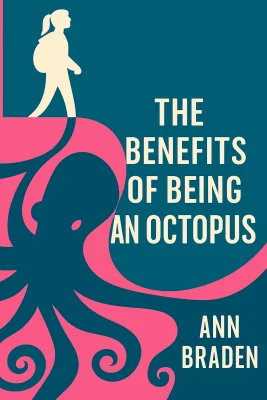
The Benefits of Being an Octopus
Categories
Fiction, Audiobook, Young Adult, Family, Abuse, Contemporary, Realistic Fiction, Middle Grade, Friendship, Poverty
Content Type
Book
Binding
Hardcover
Year
2018
Publisher
Sky Pony Press
Language
English
ISBN13
9781510737488
File Download
PDF | EPUB
The Benefits of Being an Octopus Plot Summary
Introduction
Thirteen-year-old Zoey Albro has perfected the art of becoming invisible. In her cramped middle school classroom, she shrinks into her desk like an octopus folding itself into the smallest crevice of a reef, watching classmates debate which animal reigns supreme while her own brilliant insights about cephalopods remain trapped in her throat. At home in the trailer she shares with her exhausted mother, baby brother Hector, and younger siblings Bryce and Aurora, invisibility serves a different purpose—keeping the peace in a house where her mother's boyfriend Lenny has slowly turned love into a cage of criticism and control. But when Zoey discovers that her best friend Fuchsia has been threatened at gunpoint by an abusive man, and realizes her own family is drowning under Lenny's psychological torment, she begins to understand that sometimes the most dangerous thing you can do is stay silent. Like the octopus she admires, Zoey must learn when to camouflage herself and when to release her ink cloud of defiance. In a world where seventh-graders casually dismiss their classmates as monsters, where domestic violence hides behind neat curtains and alphabetized DVD collections, finding your voice isn't just about winning debates—it's about survival itself.
Chapter 1: The Girl Who Wished for Octopus Arms
The debate packet lies forgotten on her windowsill as Zoey watches the Patriots fumble their way through another playoff game. Around her, the trailer hums with the familiar chaos of her life—baby Hector throwing Cheerios while Bryce and Aurora wage imaginary war with plastic battlebots. She should be working on her assignment about which animal reigns supreme, but instead she finds herself dreaming of eight powerful tentacles. If she were an octopus, everything would be different. One arm to hold squirming Hector during his afternoon meltdown. Two more to guide Bryce and Aurora safely across busy streets without Aurora darting into traffic like a fearless three-year-old. Another to adjust her ill-fitting shirt, inherited from some church donation box. One to actually do homework occasionally. The remaining arms could handle the endless stream of dropped Cheerios and maybe even swipe a can of Easy Cheese from Cumberland Farms—because nothing makes her siblings happier than alphabet crackers spelled out in processed dairy magic. Lenny bursts through the door, his boots stomping snow across his perfectly aligned living room, and the football fantasy evaporates. He's their salvation—the man who gave them this clean trailer with its nice curtains and working appliances, who paid for their mother's new teeth when her old ones rotted away. But as Zoey watches him criticize the bacon-wrapped hot dog bites their mother spent hours preparing, she sees something else lurking beneath his neat exterior. The power cuts out just as the Patriots are mounting their comeback. In the sudden darkness, Lenny's frustration explodes. He blames their mother for the electrical bill mix-up, his voice cutting through the black air like a blade. Later, when Zoey's siblings finally fall asleep, she discovers her mother's secret—the assistance form that Lenny swore he'd submitted but never did. The form that would have prevented this humiliation. Her mother filled out a new one herself and turned it in, but the damage to her confidence was already done. Zoey touches the octopus tattoo she drew on her shoulder with permanent marker, its tentacles wrapped around her like armor. Some predators don't announce themselves with fangs and claws. Some wear the mask of respectability while slowly draining the life from their prey.
Chapter 2: Drowning Voices and Unexpected Lifelines
The morning sun reveals Aurora stranded in the middle of Route 3, frozen between lanes of honking traffic while Bryce screams from the sidewalk. Zoey had been late—just five minutes late—to their bus stop, but five minutes was enough for everything to go wrong. She clutches baby Hector against her chest as she wades into the street to rescue her sister, every horn blast a reminder of how quickly safety can shatter. At school, she hides her incomplete debate packet while classmates showcase their polished presentations. Matt Hubbard stands at the front of the classroom like he was born to hold an audience, distributing Swedish Fish while explaining orca hunting techniques. His confidence radiates from every gesture, every carefully modulated word. When Kaylee Vine follows with her owl presentation, Zoey recognizes the predator's gaze—the way Kaylee's eyes sweep the room, cataloging weaknesses, noting who belongs and who doesn't. Zoey knows her octopus facts cold. She could discuss chromatophores and camouflage techniques that would make these students rethink everything they assume about intelligence and adaptation. But knowledge without courage is just another kind of invisibility. When her turn comes, she mumbles excuses about forgotten homework and endures Ms. Rochambeau's disappointed sigh. The social studies teacher's words follow her home: "I hope you surprise me." The phrase echoes in Zoey's mind as she picks up her siblings from their after-school program and navigates the delicate choreography of keeping them fed, entertained, and out of Lenny's way. Connor at the Pizza Pit offers the only bright spot in her day, his infectious smile and creative would-you-rather questions creating a pocket of warmth in her mother's workplace. That evening, pressed against the thin trailer wall, Zoey discovers she can see directly into her mother's bedroom through a hole Bryce's toy lightsaber made last summer. What she witnesses there changes everything. Lenny doesn't need to raise his fists to destroy someone. His words are precision instruments, carving away at her mother's sense of reality until she questions her own perceptions. Little Miss Clueless, he calls her. And slowly, terrifyingly, Zoey watches her mother begin to believe it.
Chapter 3: When Bullets Shatter More Than Glass
The lockdown drill isn't a drill at all. Huddled in the library corner among the biographies of dead heroes, Zoey feels her carefully constructed invisible shield crack as panic seeps through the walls. Around her, classmates trade notes about Mars colonization while she battles memories of a man's face pressed against their car window four years ago, crowbar in hand, her mother fighting him off with nothing but keys and desperation. The official announcement brings relief but no answers. Someone fired shots in the parking lot. No injuries, but the violence was real enough to shatter windows and assumptions. By the next morning, the gossip machine has identified its villain: Silas Fletcher, the quiet boy from her trailer park who hasn't spoken in class since fifth grade. His crime? Owning camouflage clothing and keeping his mouth shut in a world that mistakes silence for danger. Zoey watches the mob mentality take hold with sick familiarity. Brendan Farley leads the prosecution, painting Silas as a ticking time bomb simply because he doesn't perform his emotions for public consumption. The logic is brutally simple: different equals dangerous. Quiet equals guilty. She thinks of her own camouflage jacket, hidden in her locker, and wonders how long before they turn their suspicion on her too. But it's Fuchsia who carries the real terror. She appears in the school bathroom like a ghost, her trademark sarcasm replaced by bone-deep fear. The shooting wasn't random violence—it was a message delivered by Crystal's new boyfriend Michael, a man who thought nothing of pressing a gun to a fourteen-year-old's temple to ensure her compliance. Three shots fired: one through the car window, two more for emphasis. The sound of shattering glass still echoes in Fuchsia's nightmares. That night, Zoey sits in her shared bedroom, watching her siblings sleep while her mother argues with Lenny through paper-thin walls. The world feels full of predators wearing masks of normalcy. Some carry guns. Others carry systematic cruelty disguised as love. All of them feed on silence, counting on their victims to swallow their voices along with their pain. The octopus tattoo on her shoulder burns like a brand, a reminder that even the smartest cephalopod needs more than camouflage to survive.
Chapter 4: Speaking Truth Against the Current
Ms. Rochambeau's debate club assignment lands like a challenge thrown at Zoey's feet: argue both sides of gun ownership in America. Around the library table, her classmates sort themselves into predictable camps. Matt and Lydia dismiss gun owners as either "dumb as rocks or straight-up monsters," their liberal certainty as rigid as any conservative dogma. They've never seen hunting feed a family or watched a father and son bond over tracking bobcat prints through morning snow. Zoey thinks of Silas and his patient pursuit of an invisible predator, of Frank's paranoid but genuine fear of government overreach, of the complexity hidden beneath everyone's surface assumptions. But when she tries to articulate this nuanced reality, Lydia's contempt cuts her down. The camo jacket becomes evidence of moral corruption. The trailer park address transforms into a scarlet letter. One of them, Lydia calls her, as if proximity to poverty makes Zoey's opinions automatically suspect. The explosion, when it comes, surprises everyone including Zoey herself. Standing behind Harry Potter's cardboard cutout, she watches Matt argue for complete disarmament while an eighth-grader advocates for guns in every classroom, and something inside her snaps. The words pour out like octopus ink—dark, honest, and impossible to take back. She calls out the comfortable certainty of kids who've never had their backs against the wall, who mistake ideological purity for wisdom. Her voice cracks as she describes a world where actual people navigate impossible choices: girls who must choose between homelessness and abuse, families who face armed threats with nothing but car keys for weapons, boys whose only escape from daily torment comes through solitary hunts in frozen wilderness. The debate club stares at her like she's speaking a foreign language—which, in many ways, she is. The language of survival doesn't translate well to comfortable middle-class assumptions. Walking home through February wind, Zoey feels the exhilaration of finally releasing her voice mixed with terror at its consequences. She's broken her own rule about staying invisible. Worse, she's revealed the depth of her difference from the world around her. There's no taking back the moment when you stop camouflaging yourself and show your true colors to predators who've been circling just out of sight.
Chapter 5: Recognizing the Shape of Control
The grocery store investigation confirms Zoey's worst suspicions. Her mother did turn in that electrical assistance form herself, quietly fixing Lenny's "oversight" without confrontation or accusation. But rather than celebrating this competence, she's internalized his version of reality so completely that she believes her own efficiency was somehow inadequate. The gaslighting has become as automatic as breathing. In their cramped bathroom sanctuary, Zoey shows her mother the evidence—the original form hidden in Lenny's underwear drawer like a trophy of psychological warfare. But instead of anger, her mother responds with a slap that echoes off the tile walls. The truth hurts too much to accept because accepting it would mean admitting that the safety she's built for her children rests on quicksand. Later, crouched in her familiar spy position by the washing machine, Zoey witnesses another performance of systematic degradation. Lenny has lost his nursing home job after screaming at an elderly patient, but somehow this becomes her mother's fault too. The gas tank. The ground beef. Every decision becomes ammunition in his campaign to convince her that she's fundamentally incompetent. Little Miss Clueless, he calls her, and Zoey watches her mother shrink a little more with each repetition. The cruelty is surgical in its precision. Lenny doesn't need violence when psychological manipulation works better. He's isolated her from friends like Connor, made her dependent on his approval, convinced her that any other life would be worse than this careful degradation. The trailer's neat organization becomes a symbol of the cage he's built—beautiful, functional, and inescapable. But children learn through observation, and four-year-old Bryce begins parroting Lenny's dismissive phrases. When he tells three-year-old Aurora that she knows "less than nothing" and is "just a stupid bug," Zoey sees the infection spreading to the next generation. The poison doesn't stay contained to one relationship. It seeps into everything, teaching children that love looks like contempt and that the strong survive by crushing the weak. That night, alone with her permanent marker, Zoey adds details to her octopus tattoo—sharper tentacles, more determined eyes. The creature on her shoulder represents everything she refuses to become: another victim who learns to call her cage home.
Chapter 6: Building a Raft from Broken Pieces
The domestic violence hotline gives her mother words for the nameless dread that's been growing in their home. Not all abuse leaves visible bruises. Sometimes the deepest wounds come from systematic erosion of self-worth, from being made to question your own perceptions until you can't trust your own mind. The counselor explains protective orders and safety planning, but the shelter is full and the waiting list for low-income housing stretches for years. Fuchsia's crisis crystallizes their impossible situation. Crystal's plan to move in with Michael—the man who fired three shots to terrorize her daughter—represents the kind of choice that shouldn't exist in a civilized world. But when you're drowning, you grab whatever floats, even if it's likely to pull you under. Zoey recognizes the logic because she's lived it her whole life. The solution, when it comes, sounds as desperate as it is: seven people crammed into a one-bedroom apartment, splitting rent that barely covers basic survival. But Crystal's alternative is a man with a gun and a history of violence. Her mother's alternative is psychological torture disguised as stability. Sometimes the least terrible option is the best you can hope for. Packing becomes an exercise in military precision. Every minute counts as they stuff their lives into garbage bags while Lenny helps a neighbor move furniture. Bryce's forgotten lightsaber becomes a symbol of all the small securities they're abandoning—toys and night-lights and the illusion that their refuge was ever really safe. Aurora's excitement about living with Jane Kitty provides the only brightness in a day defined by loss and fear. But when Lenny returns unexpectedly, his rage strips away any pretense of civility. The lamp hurled at Connor's borrowed car shatters more than glass—it breaks the last illusion that his love was ever anything but possession. Driving away from the trailer park, Zoey watches in the side mirror as their former sanctuary recedes into memory, taking with it any lingering doubt about the choice they've made.
Chapter 7: The Courage to Swim Away
Crystal's apartment reeks of too much bird from the neighbor lady's collection, but it smells like freedom to Zoey. Seven people sharing one bedroom means sleeping arrangements that would challenge a geometry professor, but no one complains about the crowding. Space feels different when it's not poisoned by constant criticism and emotional manipulation. The protective order proceedings move with surprising efficiency. The judge takes one look at her mother's documentation and grants immediate relief. Lenny is legally prohibited from contact, though Zoey knows paper barriers only work if the person respects authority more than their own wounded pride. Still, it's something—a line drawn in legal sand that says this behavior has a name and consequences. Adjustment comes in small victories and persistent challenges. Hector delights in having more people to charm with his dimpled smile. Aurora achieves her life's greatest dream by sleeping next to Jane Kitty every night. But Bryce struggles with nightmares that leave him sweat-soaked and shaking, his four-year-old mind trying to process why their safe place became dangerous and why they had to run in the dark. At school, unexpected allies emerge from familiar faces. Matt Hubbard apologizes for his assumptions about Silas, revealing his own insecurities about having his mother write his speeches. Even debate club begins to feel possible again when Zoey realizes that her experiences—however painful—give her insights that can't be taught from textbooks or gleaned from comfortable assumptions. The tournament application sits in her backpack like a dare. Ms. Rochambeau's faith feels simultaneously terrifying and empowering. For so long, Zoey's intelligence has been her secret weapon, hidden behind protective camouflage. But camouflage only works when you're trying to hide. Sometimes survival requires making yourself seen, heard, and impossible to ignore. Standing in the February wind outside their new building, watching Crystal learn to fill out her own protective order paperwork while Fuchsia finally breathes without her inhaler clutched in her fist, Zoey touches her octopus tattoo and feels its truth settling into her bones.
Summary
In the end, courage isn't about becoming someone different—it's about refusing to let others define who you are. Zoey's journey from invisible observer to fierce advocate mirrors the octopus she admires, a creature that survives not through brute strength but through intelligence, adaptability, and the wisdom to know when concealment serves survival and when it enables destruction. Her voice, so long trapped behind walls of fear and learned powerlessness, finally breaks free in defense of herself and those she loves. The apartment they share is cramped and imperfect, but it's theirs in ways the neat trailer never could be. Here, Bryce sleeps peacefully without nightmares. Aurora experiences the simple joy of a kitten's purr against her cheek. Their mother rediscovers the competence that systematic degradation had buried beneath layers of manufactured self-doubt. Most importantly, they've learned that sometimes the bravest thing you can do is admit you deserve better and fight for it, even when the outcome remains uncertain. In a world that often mistakes suffering for strength, Zoey has discovered that true power lies in breaking the silence that allows cruelty to flourish unchallenged.
Best Quote
“When you're living in a pond of algae, you turn green. It doesn't matter how many times someone tells you to stop.” ― Ann Braden, The Benefits of Being an Octopus
Review Summary
Strengths: The book is praised for its well-written narrative, particularly the development of the main character, Zoey. The story effectively explores complex issues such as poverty, bullying, and gun violence, with a focus on the emotional experiences of young characters. The ending is noted as satisfying, and the book is considered a worthy read by some reviewers. Weaknesses: Criticisms include the writing being described as dry and unconvincing, with a lack of emotional connection for some readers. The main character's portrayal is seen as unrealistic, with her maturity level not aligning with her age. Some parts of the story could have benefited from better suspense and build-up. Overall: The book receives mixed reviews, with some readers appreciating the character development and thematic exploration, while others find it lacking in emotional authenticity and narrative engagement. The recommendation level varies, reflecting differing reader experiences.
About Author

Ann Braden
Braden investigates resilience and self-empowerment in her middle-grade novels, focusing on young characters who learn to stand up for themselves despite challenging circumstances. Drawing from her background as a middle school teacher, she crafts narratives that tackle difficult themes such as social marginalization and domestic adversity. This approach is evident in books like "The Benefits of Being an Octopus," which Edutopia hailed as a pivotal read for middle schoolers, and "Flight of the Puffin," which engaged students nationwide through read-aloud sessions.\n\nHer writing style emphasizes empathy and courage, encouraging readers to explore their voices and inner strength. Braden's work is marked by its commitment to inclusivity and kindness, promoting social awareness among young readers. Her most recent novel, "Opinions and Opossums," showcases these themes and was recognized as a School Library Journal Best Book of the Year.\n\nBeyond her books, Braden actively contributes to her community by advocating for social causes. She founded the Local Love Brigade, which sends supportive postcards to those facing hate, and GunSenseVT, a group that successfully pushed for gun safety legislation in Vermont. Through these initiatives and her novels, she connects literature with real-world impact, fostering a more compassionate and understanding society.
Read moreDownload PDF & EPUB
To save this Black List summary for later, download the free PDF and EPUB. You can print it out, or read offline at your convenience.
The Benefits of Being an Octopus
by Ann Braden
