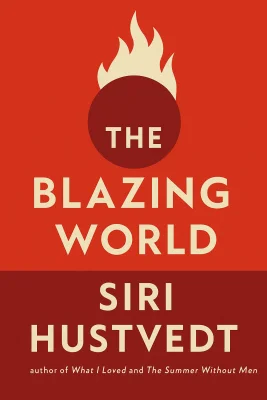
The Blazing World
Categories
Fiction, Art, Feminism, Womens, American, Book Club, Contemporary, Novels, New York, Literary Fiction
Content Type
Book
Binding
Hardcover
Year
2014
Publisher
Simon & Schuster
Language
English
ISBN13
9781476747231
File Download
PDF | EPUB
The Blazing World Plot Summary
Introduction
# The Blazing World: A Woman's War Against Artistic Invisibility In the shadows of a Red Hook warehouse, Harriet Burden stands before a towering nude Venus, her bronze skin crawling with fragments of art history's greatest masterpieces. The sculpture will make headlines, critics will swoon, collectors will bid millions. But the name on the gallery wall won't be hers. It belongs to Anton Tish, a twenty-four-year-old nobody who couldn't tell Giorgione from a grocery list. This is Harriet's revenge against an art world that spent thirty years ignoring Felix Lord's brilliant wife while celebrating the dealer himself as a visionary. At sixty-two, widowed and wealthy but artistically invisible, Harriet has devised the ultimate experiment in prejudice and perception. She will create art behind three male masks, watching as the same work dismissed under her name suddenly becomes genius when credited to young men. What begins as an elaborate prank will spiral into something far more dangerous, revealing not just the art world's deepest biases, but the terrifying price of recognition in a culture that sees talent through the lens of gender, race, and youth.
Chapter 1: The Shadow Artist: From Felix's Widow to Invisible Genius
The morning Felix Lord collapsed face-first into his soft-boiled egg, Harriet's world cracked along invisible fault lines. One moment her husband was lifting the spoon to his mouth, the next his forehead pressed against buttered toast while morning light from their Park Avenue window cast everything in sharp, unforgiving relief. She would carry that frozen tableau forever—the fallen spoon, the blue tablecloth, the green salt shakers inches from his graying temple. Thirty years of marriage had taught Harriet to be the perfect art world wife. She hosted dinner parties beneath their Klee, directing conversation with subtle gestures while her own sculptures gathered dust in a cramped studio. Gallery owners had dropped her twice. Critics dismissed her architectural pieces with their emotional figures and dense philosophical texts as "confused and naïve." She was Felix Lord's wife first, artist second, woman always. The grief nearly killed her. For months after the funeral, she vomited everything she ate, her body rejecting sustenance as violently as the art world had rejected her vision. Doctors found nothing wrong. It was Dr. Adam Fertig who finally spoke the words that changed everything: "There's still time to change things, Harriet." The vomiting stopped that day, replaced by something far more dangerous—clarity. She fled Manhattan for a warehouse overlooking New York Harbor, transforming the industrial space into both sanctuary and laboratory. The building became a refuge for artistic strays—poets, performers, and damaged souls who drifted through her doors seeking shelter. But in the solitude of her vast studio, surrounded by heated sculptures that pulsed with artificial warmth, Harriet began plotting her masterpiece. Not a work of art, but a work of deception so elegant it would expose the machinery of reputation itself. The art world had taught her to be invisible. Now she would use that invisibility as a weapon.
Chapter 2: First Deception: Anton Tish and the Birth of Maskings
Anton Tish slouched against the bar at Sunny's Red Hook tavern, studying Harriet's ink drawing of the regulars with the desperate intensity of someone discovering fire. Tall and angular with restless eyes that never quite settled, he possessed the hungry emptiness Harriet needed for her first experiment. When her eccentric lodger shouted "Harry did it!" across the smoky room, Anton's education in borrowed genius began. The boy was spectacularly ignorant. He knew Warhol but not Giorgione, could identify his friends' Instagram posts but couldn't explain why Duchamp's urinal changed everything. Harriet saw opportunity in his vacancy. She set him up in a studio, fed him a crash course in art history according to Harriet Burden—where Duccio mattered more than Michelangelo—and began crafting their collaborative deception. The centerpiece would be her Venus, a colossal reclining nude whose bronze skin crawled with hundreds of tiny reproductions from art history's canon. Working alongside Anton and her assistants, Harriet embedded jokes, references, and anagrams across the goddess's body. A quote from Diderot appeared on Venus's thigh, lifted from a French edition never translated to English. PRIMITIVE was scrawled across her forehead, RESTRICTED etched on her thumb. Seven wooden boxes surrounded the sculpture, each containing miniature scenes of domestic suffocation—the real art, as far as Harriet was concerned. Opening night arrived without its true creator. Harriet had promised to stay away, to let Anton bask in borrowed glory. But as reviews poured in celebrating the young genius's "sophisticated commentary on artistic tradition," she tasted the first sweet poison of vindication. The same critics who had dismissed her work now praised its brilliance when filtered through masculine youth. The experiment was working perfectly. Perhaps too perfectly. Anton began believing his own myth, his pronouns shifting from "she made" to "we created" to "I conceived." The fairy godmother had created not just art, but a monster who would soon devour her.
Chapter 3: The Perfect Collaborator: Phineas and the Art of Transformation
Phineas Q. Eldridge arrived at the Red Hook warehouse like a theatrical savior wrapped in the compact frame of a mixed-race performer who understood masks better than most. Born John Whittier in small-town Virginia, he had shed his original skin in 1995, emerging as Phinny—a creature of stage and gallery who bent gender and race into art. When Harriet's previous protégé nearly died in her hallway, Phinny stepped in to restore order to her chaotic sanctuary for struggling artists. Their collaboration bloomed into genuine partnership. Where Anton had been a reluctant vessel, Phinny became Harriet's co-conspirator, her intellectual equal in the game of artistic deception. Together they conceived The Suffocation Rooms—seven identical kitchens connected by doors, each slightly larger than the last, creating the illusion that visitors shrank as they progressed through domestic hell. The installation was Harriet's autobiography in metaphor. In every room sat the same grim furniture, the same breakfast dishes, the same two stuffed figures growing progressively more aged and heated. From wooden boxes emerged their masterpiece—a hermaphroditic creature made of translucent wax, slowly escaping its prison as the rooms progressed until it finally stood free in the seventh chamber, gazing into a mirror while the metamorphs noticed its presence for the first time. When the show opened in spring 2002, just months after September 11th, critics read the heated final room as trauma response, the escaping figure as survivor crawling from wreckage. Phineas Q. Eldridge was hailed as a profound voice exploring identity and transformation in a wounded city. Hidden in plain sight on every room's wallpaper, Harriet had written the truth: "Phineas Q. Eldridge is really Harriet Burden." But nobody looked closely enough to see it. The art world's blindness was complete, willful, and exactly what she had predicted. When love called Phinny to Argentina, he left knowing their experiment had succeeded in ways that felt like failure.
Chapter 4: Playing with Fire: Rune and the Seduction of Power
Rune Larsen moved through gallery openings like a predator, all sharp cheekbones and calculated indifference. His crosses—simple, multicolored variations on the Red Cross symbol—sold for millions, making him the art world's golden boy at thirty-four. When Harriet approached him at the Reim Gallery, she was taking her most dangerous gamble yet. Unlike Anton's emptiness or Phinny's collaboration, Rune brought his own charisma to their partnership, his own agenda, his own capacity for cruelty. On Nantucket, in Harriet's isolated summer house, they planned their collaboration through games that grew increasingly sinister. Harriet showed him the masks she had created—blank faces that could transform anyone into anyone else. When Rune slipped one over his features, something shifted in the room's atmosphere. "I'm Ruina," he announced in a higher pitch, his body language becoming submissive, pleading. Harriet donned the other mask, became Richard Brickman—authoritative, dismissive, cruel. What began as playful theater quickly turned violent. Richard dominated, Ruina cowered, and Harriet discovered a capacity for brutality that both thrilled and terrified her. The games escalated with each session, Richard's hands rising to strike, Ruina's whimpering growing more desperate. They filmed everything, creating a disturbing record that would become part of their final work together. But Rune was not Anton. He had his own secrets, his own connections to Harriet's past. When he casually mentioned knowing Felix before their meeting, showing her a brief video of himself with her dead husband—just two men sharing a mysterious smile—the game changed completely. Harriet realized she was not the puppet master she imagined, but another player in a contest whose rules she did not understand. The mask of collaboration was slipping, revealing something far more dangerous underneath. Rune had been watching her long before she thought to watch him.
Chapter 5: Blood on the Pier: When Masks Become Weapons
The installation that became Beneath emerged from the ashes of September 11th, when Rune grabbed his camera and rushed downtown to document devastation. But the labyrinthine maze that appeared in galleries bore Harriet's fingerprints as much as his—translucent walls that forced visitors to pay attention or remain forever lost, windows revealing fragments of their masked performances, the violent waltz of Richard and Ruina playing on endless loop. Opening night arrived like a fever dream. Harriet stood across the street from the gallery, watching the art world's elite queue to enter her maze while Rune basked in their adoration. Critics swooned over his "muscular, cerebral work" and "transcendent achievement." Every word of praise was stolen from her lips, every moment of recognition a knife twist in her chest. The betrayal came with surgical precision. When confronted about Harriet's claims to authorship, Rune delivered the killing blow in a magazine interview, dismissing her as "a kind lady, but a little confused from time to time" who had been "in psychiatric treatment for years." He weaponized her own psychological insights against her, turning their filmed sessions into evidence of her instability rather than her brilliance. The final confrontation came on a gray afternoon by the Red Hook waterfront. They faced each other on the windswept pier, Manhattan glittering behind them like a promise neither would keep. Rune revealed more secrets—his connection to Felix, his knowledge of her vulnerabilities, his calculated seduction of her trust. When words failed to satisfy his appetite for destruction, he escalated to mockery, his gestures becoming effeminate parodies designed to wound. Something snapped in Harriet's chest. Decades of rage erupted in pure violence. Her fist connected with Rune's face, blood streaming over his fingers as he staggered backward. She hit him again before he recovered enough to throw her to the concrete. Bystanders intervened, but the damage was done. Rune walked away with his wounds and reputation intact, while Harriet lay bleeding on the pier, her coat stained with his blood and her own humiliation.
Chapter 6: The Final Canvas: Death, Truth, and Artistic Immortality
Cancer arrived like a thief, stealing first Harriet's strength, then her hope. The diagnosis came with clinical brutality: stage four ovarian cancer, spread to the liver, prognosis measured in months. The organs that had marked her as female, that had made her invisible in the art world, were now killing her from within. They gutted her like a fish, she wrote in her journal, removing everything that had once made her a woman. As her body failed, her mind blazed with final clarity. The morphine could not dull the sharp edges of understanding that cut through her consciousness like light through crystal. She saw now what her experiment had truly revealed—not just the art world's prejudices, but the deeper truth about identity itself. The masks she had worn were never separate from herself. Richard Brickman, the cruel authoritarian, lived within her alongside Ruina, the cowering victim. Rune's death came as she lay dying, a final twist of fate's knife. He died in his own installation, a spectacular suicide disguised as performance art that commanded attention even in death. The art world mourned him as a tragic genius while Harriet remained invisible in her own obituary, a footnote in someone else's story. Her daughter Maisie documented everything, filming her mother's final months for a documentary that would tell the true story of Maskings. But Harriet knew that truth was a luxury the art world rarely afforded its victims. In her studio, surrounded by the sculptures that had always been her true companions, she returned to her greatest work: "The Blazing World," a massive sculpture of a pregnant woman giving birth to entire civilizations. When death finally claimed her, it came not as defeat but as liberation. Bruno held her hand as she spoke her final word—"No"—a last act of defiance against the dying of the light. The masks fell away, the games ended, and what remained was the work itself, blazing with its own inner light, waiting for a world that might someday learn to see.
Chapter 7: Legacy Unmasked: The Blazing World She Left Behind
The aftermath rippled through lives like stones thrown into still water. Bruno remained guardian of her legacy in the Red Hook studio, while Maisie completed her documentary, weaving fragments of her mother's story into a testament that would outlive them all. "The Natural Mask" became Harriet's final exhibition, her last chance to speak directly to the world that had spent so long refusing to listen. The art world continued its eternal dance largely unchanged, preferring comfortable fictions of male genius to uncomfortable truths about female invisibility. Some critics reassessed works once attributed to her pseudonyms, but most chose willful blindness over difficult recognition. The system that had crushed Harriet Burden remained intact, ready to claim new victims. Yet something shifted in deeper cultural currents. Young artists, particularly women, began understanding that the game itself might be rigged. They studied Harriet's strategies, learned from her mistakes, devised new forms of resistance. Her masks became templates for others to follow, her failure a roadmap for future success. In her studio, now a shrine to unrecognized genius, "The Blazing World" continued its eternal act of creation. Tiny figures poured endlessly from their giant mother's womb—artists, lovers, murderers, saints—all human drama contained within a single creative act. Among them, a small figure of Harriet herself walked free at last, unencumbered by others' expectations or the weight of borrowed names.
Summary
Harriet Burden's experiment succeeded too well, proving her theories while destroying her chance to claim credit for the proof. The art world embraced her creations while erasing her existence, a magic trick that left only the rabbit and disappeared the magician. Her three masks revealed the brutal mathematics of cultural value—how gender renders brilliance invisible, how youth trumps wisdom, how the right name transforms genius into mediocrity and back again. The tragedy lies not in her death but in her life—decades of extraordinary work dismissed because it bore the wrong signature. Yet her final creation suggests a different kind of immortality. Like Margaret Cavendish, the seventeenth-century philosopher who inspired it, Harriet's blazing world may find its true audience in future generations who have learned to see past the masks we all wear. Her greatest artwork was not any single piece, but the entire performance of Maskings—a complex meditation on identity, recognition, and the price of being seen in a world determined to look away. In the end, she achieved something rarer than fame: she created a mystery that continues generating new meanings, new questions about authenticity in an age obsessed with performance, proving that some truths burn too bright to be extinguished by mere death.
Best Quote
“We project our feelings onto other people, but there is always a dynamic that creates those inventions. The fantasies are made between people, and the ideas about those people live inside us ... And, even after they die, they are still there. I am made of the dead.” ― Siri Hustvedt, The Blazing World
Review Summary
Strengths: The review acknowledges the "studied, sophisticated, artistic intelligence" of the book, suggesting a level of respect for the author's craft and writing style. Weaknesses: The book is described as "pedantic," "dense," and "alienating," with pretentiousness overshadowing the reading experience. The reviewer criticizes the fictional and overly constructed footnotes as "mind-numbingly boring" and expresses a lack of connection with the characters, particularly Harriet/Harry. The narrative is perceived as potentially a personal rant, and the conceptual complexity is seen as excessive for the average reader. Overall: The review conveys a mixed sentiment, appreciating the author's intelligence but finding the execution alienating and pretentious. The recommendation level seems low, particularly for readers not versed in complex academic concepts.
About Author

Siri Hustvedt
Hustvedt delves into the complexities of human identity through a rich interplay of narrative and interdisciplinary themes. Her writing, known for its intellectual depth, integrates concepts from philosophy, neuroscience, and art, thereby challenging readers to explore the multifaceted nature of perception and memory. Notably, her book "What I Loved" exemplifies her fascination with art and its relationship to the self. By employing repetitive themes such as voyeurism and identity, Hustvedt's novels, including "The Blindfold" and "The Enchantment of Lily Dahl," invite readers to reconsider their understanding of connection and estrangement.\n\nMoreover, Hustvedt's academic background and scholarly contributions enhance her literary work, providing a foundation of rigor and insight. Her essays extend beyond fiction to explore art history and theory, enriching the thematic scope of her books. As a lecturer in psychiatry at Weill Cornell Medical College, she brings a nuanced understanding of the human psyche, which informs her exploration of characters and their experiences. This synthesis of disciplines not only appeals to literary enthusiasts but also to readers interested in the intersections of literature, science, and philosophy.\n\nReaders benefit from Hustvedt's work by gaining a deeper understanding of the human condition through the lens of her diverse academic interests. Her novels and essays resonate with audiences who appreciate a blend of lyrical prose and scholarly inquiry. With numerous translations and international recognition, including the Los Angeles Times Book Prize for Fiction, her impact transcends cultural and linguistic barriers, establishing her as a significant voice in contemporary literature. This bio of Hustvedt reflects her commitment to exploring the depths of human identity and her influence as an author across multiple genres.
Read moreDownload PDF & EPUB
To save this Black List summary for later, download the free PDF and EPUB. You can print it out, or read offline at your convenience.
The Blazing World
by Siri Hustvedt
