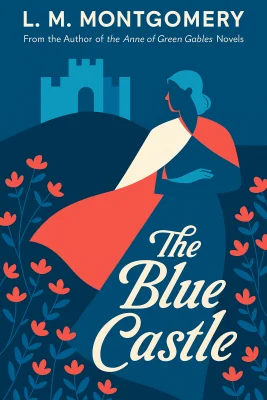
The Blue Castle
Categories
Fiction, Classics, Audiobook, Historical Fiction, Romance, Young Adult, Historical Romance, Book Club, Historical, Canada
Content Type
Book
Binding
Mass Market Paperback
Year
1989
Publisher
Bantam Books
Language
English
ASIN
0553280511
ISBN
0553280511
ISBN13
9780553280517
File Download
PDF | EPUB
The Blue Castle Plot Summary
Introduction
The rain that fell on Deerwood that May morning changed everything for Valancy Stirling. At twenty-nine, she had lived her entire existence as a shadow—unmarried, unwanted, suffocating under the weight of her family's expectations and her own paralyzing fear. The Stirlings had long since written her off as a hopeless old maid, destined to remain forever under her mother's thumb, piecing quilts and swallowing purple pills in their suffocating brick house on Elm Street. But when Dr. Trent's letter arrived with its brutal diagnosis—angina pectoris, one year to live—something extraordinary happened. Death, that ultimate fear, became Valancy's liberation. For the first time in her life, she had nothing left to lose. The terrified mouse who had spent decades apologizing for her existence was about to discover what it meant to truly live.
Chapter 1: The Prisoner of Elm Street: Valancy's Stifled Existence
The morning of her twenty-ninth birthday found Valancy lying in her ugly bedroom, staring at the water-stained ceiling that had witnessed every one of her tears. The familiar prison surrounded her—faded wallpaper, a cracked mirror, and the eternal grin of a hooked rug dog that seemed to mock her spinster's fate. Downstairs, the ritual awaited: her mother's disapproving silence, Cousin Stickles' perpetual complaints, and the crushing weight of another meaningless day. At breakfast, they served the usual fare of judgment and condescension. Her mother, Mrs. Frederick, wielded silence like a weapon, while Christine Stickles whined about everything from the weather to the price of oatmeal. "Doss will be sure to catch the mumps," Stickles prophesied with grim satisfaction, as if Valancy's misfortunes were as predictable as the sunrise. The family's treatment of her was a masterclass in casual cruelty. Uncle Benjamin tormented her with riddles about old maids, his pig-like whispers cutting deep into wounds that had never healed. "Not thinking of getting married yet, my dear?" he would bellow, followed by his trademark laugh that echoed through the rooms like a death rattle. Twenty years of such humiliation had worn Valancy down to nothing—a ghost haunting her own life. But that rain-soaked morning held a different kind of awakening. When her mother demanded she wear flannel petticoats and take purple pills, when Cousin Stickles fussed about rubbers and catching cold, something inside Valancy began to crack. She was twenty-nine years old, and she had never made a single decision for herself. Every breath had been monitored, every step predetermined by the suffocating conventions of the Stirling clan.
Chapter 2: Death's Liberation: A Terminal Diagnosis and a Courageous Rebellion
The visit to Dr. Trent changed everything in the space of a single, devastating letter. His words burned themselves into her consciousness: "angina pectoris—evidently complicated with an aneurism—in the last stages." One year, maybe less. The diagnosis hit her like lightning, but instead of despair, she felt something unexpected—a wild, soaring freedom. Death had cast out fear. What could the Stirlings do to her now? Disapprove? Disinherit her? The threats that had controlled her entire life suddenly seemed laughable. She was going to die, but for the first time, she was also going to live. The transformation was immediate and shocking. When Uncle Benjamin trotted out his tired riddles about old maids, Valancy looked him straight in the eye and told him his jokes were stale. When her mother demanded she wear brown silk and behave properly, Valancy cut her hair in a scandalous bob and bought a green dress that showed her ankles. The family watched in horror as their meek little mouse revealed claws. At Uncle Herbert's silver wedding dinner, Valancy unleashed twenty-nine years of suppressed fury. She defended Barney Snaith, that notorious outlaw who lived in the woods, against their vicious gossip. She spoke of things that made the Stirlings clutch their pearls—birth and death and the raw realities they spent their lives pretending didn't exist. When Uncle James thundered about the Ten Commandments, she smiled and suggested he consider the ninth—about bearing false witness. The evening ended with Valancy walking out into the night air, breathing freely for the first time in her life. Behind her, the Stirlings sat in stunned silence, wondering what demon had possessed their tractable Doss. They would never understand that it wasn't possession—it was resurrection.
Chapter 3: Escaping the Cage: Valancy's Flight to Roaring Abel's
The decision to leave came with startling clarity. Roaring Abel Gay needed a housekeeper for his dying daughter Cissy, and Valancy needed to escape before her family could lock her away as insane. She packed her few belongings and walked out of the brick house on Elm Street without looking back. Abel Gay was everything the Stirlings despised—a roaring drunk with a biblical vocabulary of curses and a complete disregard for social convention. His ramshackle house sat on the edge of the wilderness, three miles from town but a world away from respectability. When Valancy arrived at his gate, he looked her up and down with appreciation. "So you've come," he said incredulously. "I never supposed that ruck of Stirlings would let you." Inside the house, she found Cissy Gay—once a pretty village girl, now wasted away to almost nothing, breathing in short, painful gasps. Tuberculosis had claimed her beauty and would soon claim her life, but her eyes still held traces of the sweetness that had once made her beloved. The town had turned its back on her after her illegitimate child was born, leaving her to die alone while they whispered about her shame. Valancy knelt beside the sofa and took Cissy's thin hands in hers. "I've come to look after you," she said. "I'll stay with you till—as long as you want me." For the first time in her life, she was needed. Not tolerated, not endured, but genuinely needed by another human being. Behind them, Roaring Abel watched with something like wonder. "Most things are predestinated," he observed, puffing on his pipe, "but some are just darn sheer luck." For Valancy, it felt like divine intervention—a chance to matter, to make a difference, to live with purpose in whatever time remained to her.
Chapter 4: The Blue Castle Realized: Finding Love with Barney Snaith
Life at Roaring Abel's brought freedoms Valancy had never imagined. She could sneeze without apology, go to bed when she pleased, and read John Foster's nature books without hiding them like contraband. The work was hard but satisfying—cleaning rooms that needed cleaning, cooking meals that would be eaten with gratitude, caring for someone who truly needed her care. Then Barney Snaith entered her world like a force of nature. The first time she saw him close up, leaning over the garden gate with his dark violet eyes and twisted smile, she felt something inside her chest that had nothing to do with heart disease. He was thin and raggedly dressed, with overlong tawny hair and ears that stuck out just enough to give him an alert, mischievous look. Everything the town said about him—that he was a criminal, a drunkard, a dangerous man—only made him more fascinating. Their courtship was unlike anything in the romantic novels Valancy had been forbidden to read. He brought oranges for Cissy and candy for Valancy—the first box of chocolates she had ever received. He told stories of his adventures hoboing across the continent and working in the Yukon, his voice carrying hints of vast spaces and untamed freedom. When he looked at her, she felt beautiful for the first time in her life. The night his ancient car broke down on the Mistawis road, they sat together in the moonlight while he waited for another motorist to share gasoline. "Ever dream of ballooning?" he asked suddenly, and she found herself telling him about her Blue Castle—the imaginary refuge where she had spent her happiest hours dreaming of a different life. He listened without mockery, understanding somehow that her fantasies were as real to her as his wilderness adventures. When Uncle Wellington and Olive discovered them stranded together in the woods, the scandal was immediate and delicious. Valancy didn't care. She was in love, and love had transformed her from a timid mouse into a woman who could laugh at her family's horror and wear Barney's tobacco-scented coat like a badge of honor.
Chapter 5: Truth's Double Edge: The Shocking Medical Revelation
The night Cissy died peacefully in her sleep, Valancy sat by the window watching an old moon fade into the sunrise. Death had come gently, almost kindly, and for the first time, Valancy wasn't afraid of it. She had learned to see it as a friend rather than an enemy—the force that had set her free to love and be loved. But freedom comes with a price, and Valancy's reckoning arrived with devastating suddenness. Standing at the railway switch in her foolish high-heeled shoes, caught in the path of an oncoming train, she experienced thirty seconds of pure terror as Barney fought desperately to free her trapped foot. The screaming metal monster bore down on them while he slashed at her shoelace with trembling fingers, finally dragging her clear just as the locomotive thundered past. In the aftermath, as they sat shaking on the station platform, a horrible realization crept into Valancy's consciousness. Dr. Trent had told her that any excitement might be fatal to her diseased heart. The terror she had just experienced should have killed her instantly. Yet here she sat, alive and unharmed, with nothing more than rapid breathing and wobbly knees. The truth hit her like a physical blow. There was nothing wrong with her heart. Dr. Trent had made a mistake—somehow, impossibly, catastrophically wrong. She was not going to die in a year. She was going to live, perhaps for decades, and she had trapped Barney Snaith into a marriage based on a lie. The ride home was conducted in ominous silence. Barney's jaw was set in grim lines as he steered his rattling car through the darkness, and Valancy knew he was thinking the same terrible thoughts. She had tricked him into marrying a dying woman, and now that woman wasn't dying after all. He would be bound to her for life unless he could find grounds for divorce—a lengthy, expensive, and scandalous process that would destroy both their reputations.
Chapter 6: Sacrifice and Separation: Valancy's Painful Decision
Dr. Trent's confirmation of her worst fears came the next morning. The elderly physician was mortified by his error—he had indeed mixed up two letters, sending Valancy the terminal diagnosis meant for another patient while the truly dying woman received reassurances of perfect health. "I can never forgive myself," he said, but Valancy barely heard him. The medical mistake that had given her a year of happiness was about to destroy everything she had gained. She walked home through the back streets like a woman in a trance. The freedom she had purchased with the coin of death was now revealed as stolen goods. Every kiss Barney had given her, every tender word, every moment of their island paradise had been built on deception. He had married her out of pity, believing he was giving comfort to a dying woman's final months. Now he was trapped with a healthy wife he had never chosen. The letter she left on his desk was brutally brief. She told him the truth about her health, apologized for the deception, and asked him to divorce her as quickly as possible. She didn't try to explain the joy he had brought to her life or the way he had transformed her from a frightened spinster into a woman who knew what it meant to be loved. Such words would only make his burden heavier. With shaking hands, she removed the pearl necklace he had given her—fifteen thousand dollars' worth of gems, though she still believed them to be simple beads. Even this small treasure felt like stolen goods now. She placed it on top of the letter and walked away from the Blue Castle, leaving behind everything that had made her year of freedom possible. The return to Elm Street was like walking into a tomb. The brick house waited exactly as she had left it, down to the dying rubber plant on the porch and the water stains on her bedroom ceiling. Her mother and Cousin Stickles received her with the cold satisfaction of prophets whose dire predictions had finally come true. The prodigal daughter had returned, broken and defeated, ready to resume her place in their suffocating world of rules and restrictions.
Chapter 7: Unmasking Barney Redfern: Secrets and Identities Revealed
The purple Rolls-Royce that arrived at Elm Street the next day was like something from another world—gleaming and expensive and utterly out of place in the shabby neighborhood. From it emerged a portly, prosperous man whose face was instantly familiar to anyone who had ever seen a bottle of patent medicine. Dr. Redfern, creator of Purple Pills and Hair Vigor, millionaire manufacturer of remedies that promised to cure everything from baldness to broken hearts. He was looking for his son—Bernard Redfern, who had called himself Barney Snaith for the past six years. The family resemblance was unmistakable once you knew to look for it: the same intelligent eyes, the same stubborn jaw, the same air of a man who made his own rules regardless of what society thought. Barney was not a mysterious outlaw or a dangerous criminal. He was the heir to a pharmaceutical fortune, the son of one of Montreal's richest men. The revelations tumbled out like stones from a broken dam. Barney was also John Foster, the nature writer whose books had been Valancy's only comfort during her years of imprisonment. The man she had married was not only wealthy beyond her imagination but famous throughout Canada for his lyrical descriptions of wilderness beauty. Every word she had read and cherished had come from his pen. Dr. Redfern spoke of his son with the mixture of pride and bewilderment that successful fathers often show toward their enigmatic children. Barney had fled Montreal years earlier after a devastating romantic betrayal, when the woman he loved admitted she was only marrying him for his money. He had spent years wandering the world, working as a common laborer and sending home brief, cryptic letters that revealed nothing of his whereabouts or intentions. Now the exile was married to a Stirling—one of the old, respectable families that formed the backbone of small-town Ontario society. Dr. Redfern seemed pleased by the match, though he couldn't understand why his son had chosen to live like a hermit when he could afford any luxury the world had to offer. The irony was not lost on Valancy: she had married a man who was fleeing from wealth and fame, only to discover that she herself was now wealthy and potentially famous.
Chapter 8: Love Beyond Pity: A True Reunion and an Authentic Future
The confrontation in her mother's parlor was everything Valancy had dreaded and more. Barney arrived like a thunderstorm, his face white with rage and desperation, demanding to know why she had run away. When she tried to explain about the deception and her unworthiness, he swept her protests aside with the authority of a man who had finally found something worth fighting for. "Love you!" he said, his voice shaking with emotion. "Girl, you're in the very core of my heart. I hold you there like a jewel." The words she had longed to hear came pouring out—not pity, not duty, but genuine love for the woman she had become during their year together. He told her about Ethel Traverse, the Montreal beauty who had broken his faith in human nature, and how Valancy had restored his ability to trust and love. The moment of truth came when Valancy's stubborn disbelief finally pushed him too far. His face went dead white with fury as he accused her of being ashamed of his family's patent medicine fortune, of wanting to escape now that she faced a lifetime rather than a few months with him. Only then did she see the real Barney—not the patient, understanding companion of their island days, but a man capable of passionate jealousy and volcanic anger. "You darling!" she laughed suddenly, understanding at last. "You do mean it! You do really love me! You wouldn't be so enraged if you didn't." His rage was the proof she needed—no man could fake that kind of possessive fury. He swept her into his arms with the triumph of a lover who had finally conquered his beloved's last doubts. The wedding guests who had once dismissed her as hopeless now gathered around with newfound respect. Uncle Benjamin rubbed his hands together and spoke of altering his will again, while her mother planned to embroider "Mrs. Bernard Redfern" on everything from towels to tea cozies. The transformation was complete: the unwanted old maid had become the most eligible woman in Deerwood.
Summary
In the end, Valancy Stirling found what she had always been searching for—not in the fantasy realm of her Blue Castle, but in the harsh, beautiful reality of a life lived without fear. Her journey from terrified spinster to confident woman was powered by the most unexpected force: the knowledge that her time was limited. When death ceased to be something to fear, everything else became possible. The mistake that gave her freedom also gave her love, and the love proved stronger than the mistake. Barney Redfern had fallen in love not with a dying woman who needed his pity, but with the vibrant, courageous person Valancy became when she finally allowed herself to live. Her authenticity in the face of death had called forth his own hidden authenticity, creating a bond that neither wealth nor social convention could strengthen or weaken. As they drove away from Deerwood toward their real honeymoon—not the desperate flight of two lonely people, but the celebration of two souls who had found their match—Valancy understood that the Blue Castle had been real all along. It had simply been waiting for her to become brave enough to inhabit it.
Best Quote
“If you can sit in silence with a person for half an hour and yet be entirely comfortable, you and that person can be friends. If you cannot, friends you'll never be and you need not waste time in trying.” ― L.M. Montgomery, The Blue Castle
Review Summary
Strengths: The review highlights the book's appeal to an adult audience, particularly those who can appreciate themes of independence and self-discovery. The character development, especially of Valancy and Barney Snaith, is praised, with Montgomery's writing style capturing the essence of these characters effectively. The book is described as offering excellent escapism, particularly relevant during times of crisis. Weaknesses: The review notes that the plot relies on convenient coincidences, which might detract from the story's realism. Additionally, most characters are described as one-dimensional and make only brief appearances. Overall: The reviewer expresses a strong positive sentiment towards "The Blue Castle," recommending it as a captivating read for adults, particularly those seeking escapism. The book is appreciated for its engaging narrative and character portrayal, despite some plot contrivances.
About Author

L.M. Montgomery
Montgomery delves into the complexities of rural Canadian life and the imagination of youth through her literary works. Her novels frequently explore themes of community, nature, and belonging, using rich descriptive language to create a vivid sense of place. The innocence and creativity seen in characters like Anne from "Anne of Green Gables" are juxtaposed with Montgomery's own personal struggles, including depression, which influenced the darker tones in some of her later books. These contrasts add depth to her narratives, engaging readers who appreciate both the idyllic and the complex aspects of life.\n\nHer literary journey began with the bestseller "Anne of Green Gables," which set the stage for her prolific writing career. Throughout her lifetime, she authored 20 novels, over 530 short stories, and numerous poems and essays. While "Anne of Green Gables" and its sequels remain her most celebrated works, other significant titles such as "The Story Girl" and the "Emily" trilogy showcase her ability to capture the nuances of growing up in a changing world. Montgomery’s commitment to storytelling earned her prestigious accolades, including being named a Fellow of the Royal Society of Arts and receiving the Order of the British Empire.\n\nReaders of Montgomery's books gain insight into the universal experiences of growing up and finding one's place in the world. Her narratives resonate with audiences who value stories that intertwine personal growth with cultural and natural landscapes. By situating her tales in the evocative setting of Prince Edward Island, Montgomery not only established the island as a beloved literary landmark but also created a lasting legacy that continues to draw readers and tourists alike. Her work remains a testament to the enduring power of storytelling to both reflect and shape the human experience.
Read moreDownload PDF & EPUB
To save this Black List summary for later, download the free PDF and EPUB. You can print it out, or read offline at your convenience.
The Blue Castle
by L.M. Montgomery
